



Pull to refresh
Logo
Daily Brief
Following
Why
JPMorgan Chase opens world's largest all-electric skyscraper

JPMorgan Chase opens world's largest all-electric skyscraper

Built World
By Newzino Staff |

The $3 billion headquarters at 270 Park Avenue marks a new era for corporate sustainability and office design

October 21st, 2025: Grand Opening Ceremony

Overview

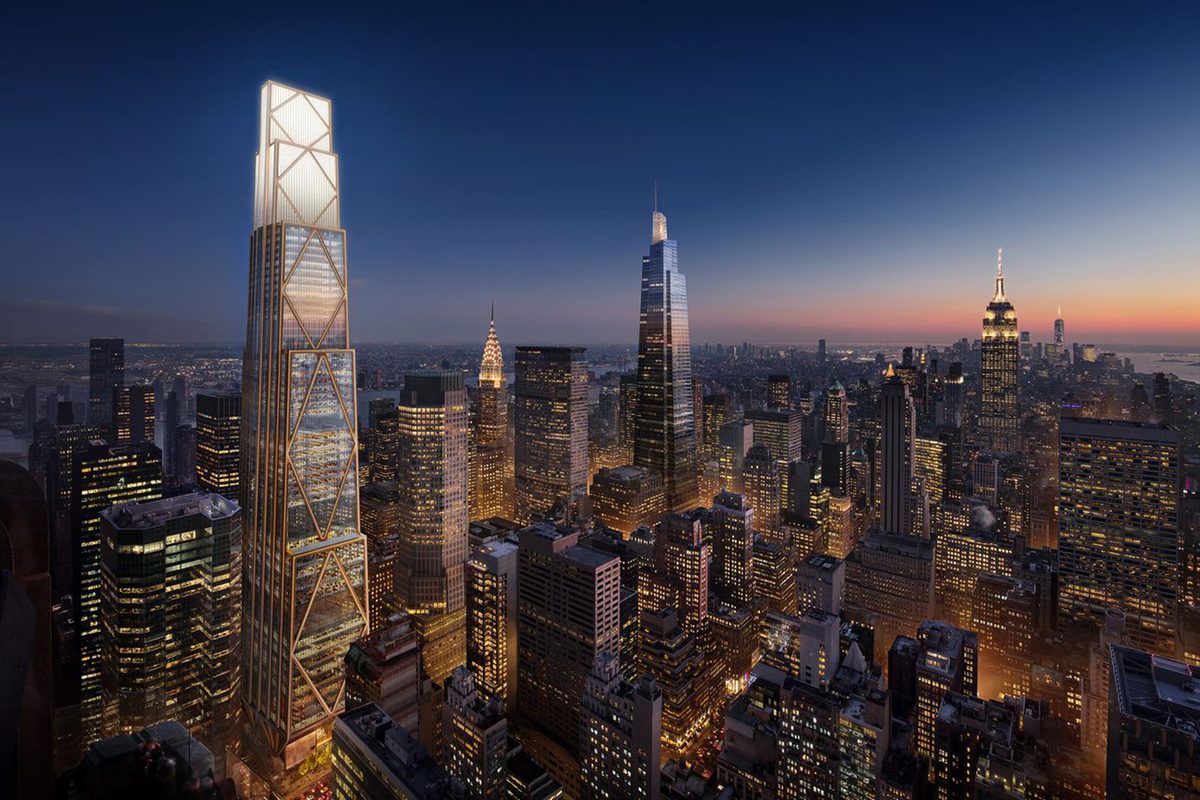
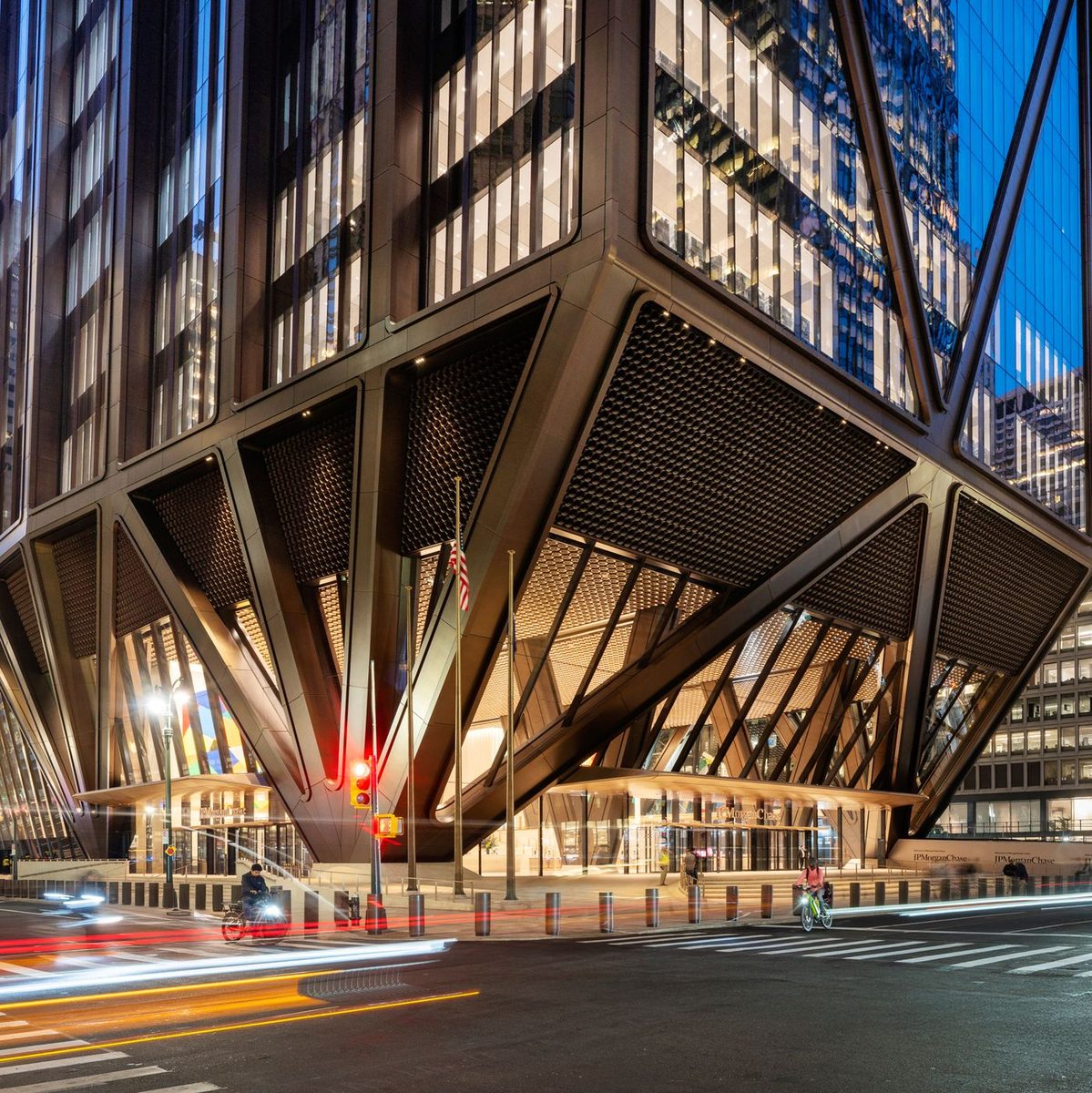
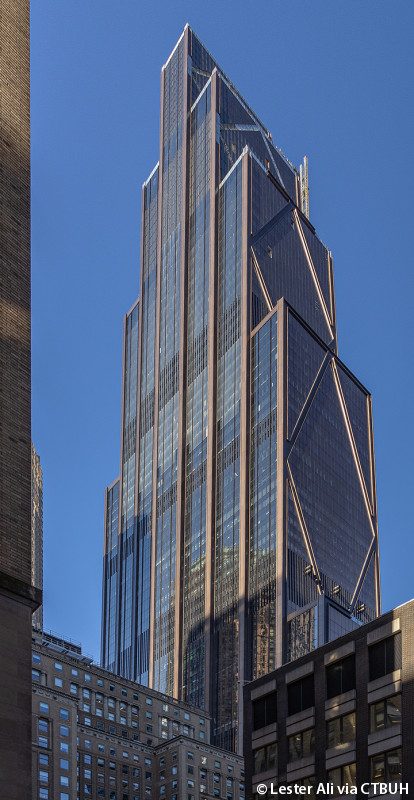
For 60 years, the Union Carbide Building stood at 270 Park Avenue—a 52-story modernist landmark designed by pioneering woman architect Natalie de Blois. JPMorgan Chase demolished it and built something nearly twice as tall: a 1,388-foot supertall skyscraper that runs entirely on hydroelectric power, houses 14,000 employees, and never burns a drop of fossil fuel.

The $3-4 billion project represents the largest voluntary building demolition in New York City history and produces the world's largest all-electric skyscraper. As New York's Local Law 97 begins penalizing buildings that exceed carbon limits, JPMorgan's new headquarters offers a glimpse of what corporate real estate may need to become—while also serving as a lavish bet that the office isn't dead.

Key Indicators

1,388 ft
Building height
Sixth-tallest building in New York City and among the tallest new buildings in the United States
$3-4B
Total project cost
Includes demolition, construction, and interior buildout over seven years
100%
Renewable energy
Powered entirely by hydroelectric energy from New York State, achieving net-zero operational emissions
14,000
Employee capacity
Designed to house roughly 14,000 of JPMorgan's 24,000 New York-based employees
97%
Materials recycled
Demolition materials from the former Union Carbide Building were recycled, reused, or upcycled

Interactive

Exploring all sides of a story is often best achieved with Play.

J. P. Morgan

J. P. Morgan

(1837-1913) · Gilded Age · finance

Fictional AI pastiche — not real quote.

"A monument to power requires no apology—only capital and will. The fools who fret over a demolished building understand neither progress nor permanence. Hydroelectric or coal-fired, what matters is this: they built the tallest tower on the street, and every man who enters knows whose house he stands in."

Ever wondered what historical figures would say about today's headlines?

Sign up to generate historical perspectives on this story.

Sign Up

Debate Arena

Two rounds, two personas, one winner. You set the crossfire.

People Involved

Jamie Dimon
Jamie Dimon
Chairman and Chief Executive Officer, JPMorgan Chase (Leading company's return-to-office mandate alongside headquarters opening)
Norman Foster
Norman Foster
Founder, Foster + Partners (Lead architect of 270 Park Avenue design)
Natalie de Blois
Natalie de Blois
Architect, Union Carbide Building (1960) (Deceased (1921-2013))

Organizations Involved

JPMorgan Chase & Co.
Financial Services Company
Status: Building owner and occupant

America's largest bank by assets, with over 300,000 employees worldwide and 24,000 based in New York City.

Foster + Partners
Foster + Partners
Architecture Firm
Status: Lead architect

British architecture firm known for high-tech sustainable designs including Apple Park, the Reichstag dome, and London's 30 St Mary Axe.

New York City Landmarks Preservation Commission
Municipal Agency
Status: Declined to protect Union Carbide Building

City agency responsible for designating and protecting historically significant buildings and districts.

Timeline

  1. Grand Opening Ceremony

    Milestone

    JPMorgan Chase formally opens its new global headquarters, marking completion of the world's largest all-electric skyscraper.

  2. First Employees Move In

    Operations

    JPMorgan begins phased relocation, with the first employees moving into the new headquarters.

  3. JPMorgan Mandates Five-Day Office Return

    Policy

    JPMorgan informs employees that all staff must work from the office five days a week, ending hybrid arrangements for roughly 40% of employees.

  4. Tower Tops Out at 1,388 Feet

    Construction

    The final steel beam is raised, marking the structural completion of New York's sixth-tallest building.

  5. Demolition Complete, Steel Rising

    Construction

    Demolition wraps up and the new structure's steel superstructure begins to rise. Approximately 97% of demolition materials are recycled or upcycled.

  6. Demolition Begins

    Construction

    Scaffolding goes up around the tower, beginning an 18-month demolition of what becomes the largest building ever voluntarily demolished.

  7. JPMorgan Announces Demolition Plan

    Announcement

    JPMorgan Chase announces it will demolish the Union Carbide Building and construct a new headquarters nearly twice as tall. Preservation groups object.

  8. Landmark Status Denied

    Regulatory

    New York City Landmarks Preservation Commission declines to designate 270 Park Avenue as a protected landmark.

  9. Building Achieves LEED Platinum

    Milestone

    270 Park Avenue becomes the largest renovation project to achieve LEED Platinum certification, making its subsequent demolition controversial.

  10. Manufacturers Hanover Acquires Building

    Acquisition

    Manufacturers Hanover Corporation purchases the building from Union Carbide and moves its headquarters to 270 Park Avenue.

  11. Union Carbide Building Opens

    Construction

    The 52-story International Style skyscraper designed by Natalie de Blois at SOM opens at 270 Park Avenue, praised as a "post-war miracle" by architecture critic Ada Louise Huxtable.

Scenarios

1

270 Park Avenue Becomes Template for Corporate Sustainability

Discussed by: Architecture publications including Architectural Record and Dezeen; sustainability consultants

As New York's Local Law 97 imposes escalating penalties on carbon emissions and other cities follow suit, major corporations look to 270 Park Avenue as proof that all-electric, net-zero skyscrapers are viable for large-scale office use. The building's systems—hydroelectric power, AI-optimized HVAC, triple-glazed facades—become standard features in new corporate headquarters worldwide.

2

Return-to-Office Push Faces Continued Resistance

Discussed by: Fortune, Bloomberg, employee advocacy groups

Despite the lavish amenities at 270 Park Avenue—19 restaurants, wellness centers, outdoor terraces—JPMorgan employees continue pushing back against the five-day mandate. The building becomes a test case for whether premium office space can overcome worker preferences for flexibility. If attrition rises or productivity suffers, other firms may reconsider similar mandates.

3

Historic Preservation Standards Tighten After Demolition Controversy

Discussed by: Docomomo US, American Institute of Architects New York, preservation advocates

The demolition of a LEED Platinum-certified building designed by a pioneering woman architect prompts New York to strengthen landmark protections. Future attempts to demolish significant mid-century modern buildings face greater scrutiny, and carbon costs of demolition-and-rebuild projects receive more weight in planning decisions.

4

All-Electric Claims Face Environmental Scrutiny

Discussed by: The Architect's Newspaper, environmental analysts, embodied carbon researchers

Critics who questioned the environmental logic of demolishing a recently renovated LEED Platinum building continue to scrutinize 270 Park Avenue's net-zero claims. Analysis of the project's embodied carbon—the emissions from demolition, new materials, and construction—may complicate the sustainability narrative, potentially influencing how regulators evaluate similar projects.

Historical Context

Lever House and the Birth of Park Avenue Modernism (1952)

1952

What Happened

Gordon Bunshaft of SOM designed Lever House, the first glass curtain wall skyscraper on Park Avenue. The 21-story building broke from the masonry towers that defined New York's skyline, pioneering the International Style that would come to dominate corporate architecture for decades.

Outcome

Short Term

The building sparked a wave of glass-and-steel office towers along Park Avenue, including the Seagram Building and Union Carbide Building.

Long Term

Park Avenue became synonymous with corporate modernism. Lever House was designated a landmark in 1982, setting precedent for protecting mid-century architecture—though that protection didn't extend to its neighbor at 270.

Why It's Relevant Today

The new 270 Park Avenue represents another inflection point for Park Avenue's identity. Just as Lever House defined post-war corporate architecture, Foster's supertall may set expectations for what 21st-century headquarters should look like: sustainable, amenity-rich, and designed to draw workers back.

Apple Park Opens in Cupertino (2017)

April 2017

What Happened

Apple opened its $5 billion headquarters designed by Norman Foster—a circular, all-electric campus powered entirely by renewable energy. The 2.8-million-square-foot ring-shaped building runs on 17 megawatts of rooftop solar and imports no fossil fuels.

Outcome

Short Term

The campus became an instant architectural landmark and recruitment tool, demonstrating that tech giants would invest billions in physical headquarters.

Long Term

Apple Park established a template for sustainable corporate campuses that prioritize employee wellness and environmental performance. It helped normalize multi-billion-dollar headquarters investments.

Why It's Relevant Today

Both buildings were designed by Foster + Partners and share a commitment to all-electric operation and renewable energy. Where Apple Park sprawls horizontally in suburban California, 270 Park Avenue proves the same sustainability principles can scale vertically in dense urban Manhattan.

Penn Station Demolition Sparks Landmarks Law (1963)

October 1963

What Happened

The original Pennsylvania Station—a Beaux-Arts masterpiece with 150-foot ceilings and massive Doric columns—was demolished to make way for Madison Square Garden. The destruction of the 1910 McKim, Mead & White building provoked public outrage and grief.

Outcome

Short Term

Architecture critic Ada Louise Huxtable wrote that New York had "lost one of the finest buildings of its age" to construct "something not nearly as good."

Long Term

The backlash led directly to the 1965 creation of the New York City Landmarks Preservation Commission. Ironically, that same commission would twice decline to protect the Union Carbide Building, enabling its 2019 demolition.

Why It's Relevant Today

The Union Carbide demolition echoes Penn Station's loss—a significant building destroyed for something larger. But unlike Penn Station, the replacement at 270 Park Avenue may prove architecturally superior and environmentally progressive, complicating the usual preservation narrative.

12 Sources: