
Pull to refresh
Logo
Daily Brief
Following
Why
Gateway program transforms America's busiest rail corridor

Gateway program transforms America's busiest rail corridor

Built World
By Newzino Staff |

A 115-year-old bridge and century-old tunnels finally get their replacements

February 13th, 2026: Portal North Bridge Track Cutover Begins

Overview

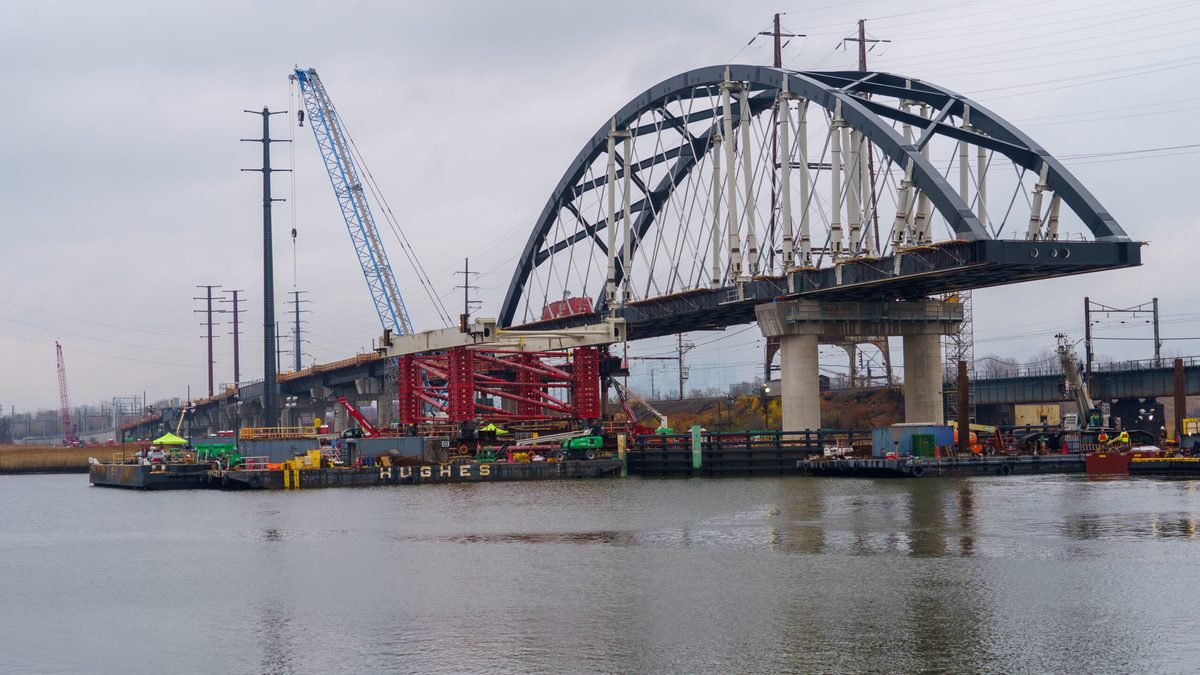
The Portal Bridge was built in 1910, the same year William Howard Taft was president. On February 13, 2026, Amtrak began connecting its replacement to the Northeast Corridor—the first major infrastructure upgrade on America's busiest rail line in over a century. The new Portal North Bridge sits 50 feet above the Hackensack River, high enough that ships can pass underneath without the bridge opening, eliminating a chokepoint that has caused 2,000 hours of delays since 2014.

The bridge is the first completed piece of the $16 billion Gateway Program, which aims to double rail capacity between Newark and New York by building new tunnels under the Hudson River. But the larger project faces an existential threat: the Trump administration froze federal funding in September 2025, and construction on the Hudson Tunnel halted on February 5, 2026. New York, New Jersey, and the Gateway Development Commission have filed lawsuits to unfreeze the money. The outcome will determine whether the Northeast Corridor—which carries 750,000 passengers daily and contributes $50 billion annually to the national economy—gets its first new trans-Hudson capacity since 1910.

Key Indicators

115
Years Old
Age of the original Portal Bridge being replaced
750K
Daily Riders
Passengers using the Northeast Corridor each day
$16B
Total Program Cost
Full cost of the Gateway Program, with 70% federal funding
53%
Service Reduction
Temporary train cuts during the four-week cutover period

Interactive

Exploring all sides of a story is often best achieved with Play.

Ever wondered what historical figures would say about today's headlines?

Sign up to generate historical perspectives on this story.

Sign Up

Debate Arena

Two rounds, two personas, one winner. You set the crossfire.

People Involved

Kris Kolluri
Kris Kolluri
Former CEO, Gateway Development Commission (Departed November 2024)
Tony Coscia
Tony Coscia
Vice Chair, Gateway Development Commission; Amtrak Commissioner (Active)
Chris Christie
Chris Christie
Former Governor of New Jersey (Left office January 2018)

Organizations Involved

Gateway Development Commission
Bi-State Infrastructure Authority
Status: Lead agency for Gateway Program; currently suing federal government

The bi-state agency overseeing the $16 billion Gateway Program, created by New York and New Jersey to manage the largest infrastructure project on the Northeast Corridor.

Amtrak
Amtrak
Federally Chartered Corporation
Status: Primary operator of Northeast Corridor intercity service; leading Portal North Bridge cutover

The national passenger rail operator that owns most of the Northeast Corridor infrastructure and is executing the Portal North Bridge track cutover.

NJ Transit
NJ Transit
State Transit Agency
Status: Managing commuter service disruptions during cutover

New Jersey's statewide public transit corporation, which operates commuter rail service through the Portal Bridge to Penn Station New York.

Timeline

  1. Portal North Bridge Track Cutover Begins

    Construction

    Amtrak begins transferring rail service from the 115-year-old Portal Bridge to the new Portal North Bridge, triggering four weeks of reduced service.

  2. Hudson Tunnel Construction Halts

    Construction

    Work on the Hudson Tunnel Project stops after $2 billion spent, as funding runs dry without federal reimbursements.

  3. Gateway Commission Sues Federal Government

    Legal

    The Gateway Development Commission files a breach of contract lawsuit in the U.S. Court of Federal Claims seeking release of frozen funds.

  4. Trump Administration Freezes Gateway Funding

    Political

    The Trump administration announces an indefinite freeze on all federal Gateway funding, halting reimbursements for work already completed.

  5. Gateway Secures Full $16 Billion Funding

    Funding

    The Gateway Development Commission signs a $6.9 billion Full Funding Grant Agreement with the Federal Transit Administration, completing the project's funding package.

  6. Portal North Bridge Reaches Halfway Milestone

    Construction

    Amtrak and NJ Transit announce the bridge is 50% complete, on schedule, and potentially under the $1.5 billion budget.

  7. Portal North Bridge Construction Begins

    Construction

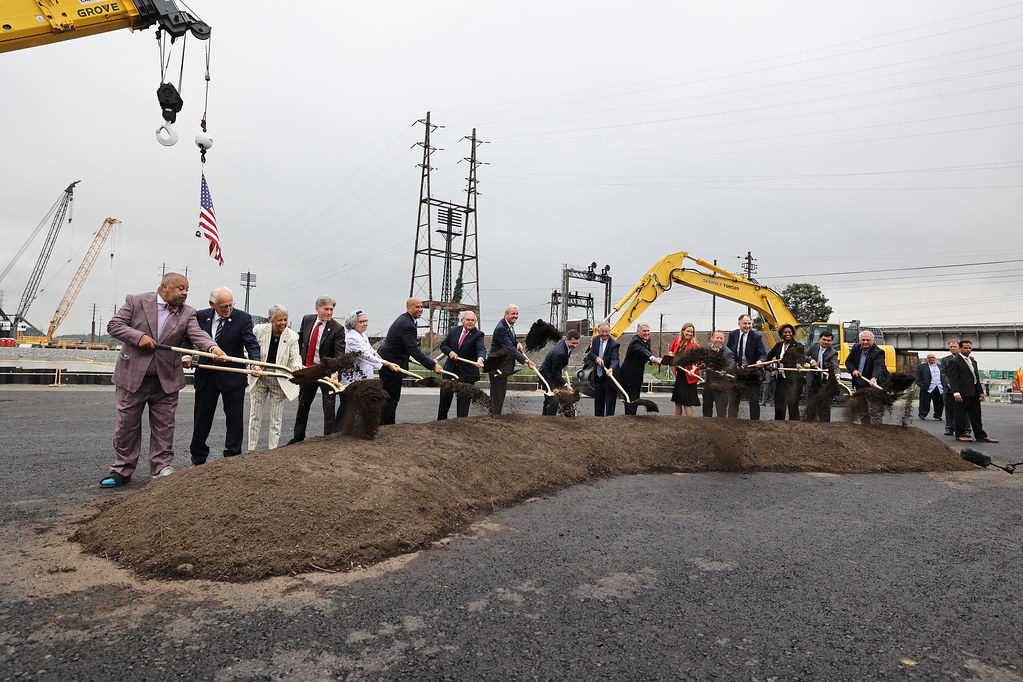
    Skanska and Traylor Bros. break ground on the $1.56 billion Portal North Bridge, the first major Gateway component to enter construction.

  8. Trump Official Labels Gateway a 'Local Project'

    Political

    A Federal Transit Administration official declares Gateway a local project rather than a national priority, casting doubt on federal funding commitments.

  9. Trump Administration Withdraws from Gateway Board

    Political

    The United States Department of Transportation permanently withdraws from the Gateway Development Commission board of trustees.

  10. Obama Administration Agrees to 50-50 Funding Split

    Funding

    Governors Cuomo and Christie secure agreement from the Obama administration for the federal government to pay half of the projected $20 billion Gateway cost.

  11. Hurricane Sandy Floods North River Tunnels

    Disaster

    Superstorm Sandy inundates the century-old North River Tunnels with up to six feet of saltwater, causing ongoing corrosion and structural damage that persists today.

  12. Amtrak Unveils Gateway Program

    Proposal

    Amtrak President Joseph Boardman announces a $13.5 billion Gateway Program to add rail capacity between Newark and New York, replacing the canceled ARC project.

  13. Christie Kills ARC Tunnel Project

    Political

    New Jersey Governor Chris Christie cancels the $8.7 billion Access to the Region's Core tunnel, citing potential cost overruns. The decision delays new trans-Hudson capacity by over a decade.

  14. Train Derails After Bridge Fails to Close

    Incident

    A rail sits 5 inches too high after the swing bridge fails to close properly, derailing a train. Maximum speed on the bridge is permanently reduced to 60 mph.

  15. Original Portal Bridge Opens

    Infrastructure

    The Pennsylvania Railroad opens the Portal Bridge, a two-track swing bridge over the Hackensack River, as part of the new rail connection to Pennsylvania Station in Manhattan.

Scenarios

1

Courts Unfreeze Funds, Gateway Resumes on Schedule

Discussed by: Gateway Development Commission statements; New York and New Jersey governors' offices

Federal courts rule the funding freeze illegal and order the Department of Transportation to resume reimbursements. Construction on the Hudson Tunnel Project resumes within weeks, with the project still targeting 2035 completion. The Portal North Bridge opens on schedule in March 2026, demonstrating the program can deliver despite political opposition.

2

Funding Battle Drags On, Tunnel Delayed Years

Discussed by: Bloomberg; New Jersey Monitor; infrastructure policy analysts

Legal battles continue for months or years as appeals work through federal courts. The Hudson Tunnel Project remains frozen, pushing completion past 2038. Meanwhile, the aging North River Tunnels continue degrading, with increasing service disruptions. The Portal North Bridge opens but provides only marginal capacity improvement without the tunnel expansion.

3

States Fund Gap to Keep Construction Moving

Discussed by: Regional Plan Association; state transportation officials

New York and New Jersey, unwilling to lose construction momentum and contractor expertise, advance their own funds to continue tunnel work while litigation proceeds. This strains state budgets but preserves the project timeline. If courts eventually rule in Gateway's favor, states are reimbursed; if not, they absorb billions in additional costs.

4

Gateway Program Collapses, Corridor Crisis Deepens

Discussed by: Engineering News-Record; infrastructure critics

Prolonged funding freeze causes contractors to demobilize and tunnel boring machines to sit idle. Cost estimates balloon as delays compound. Political will evaporates. The North River Tunnels continue deteriorating until one fails entirely, forcing emergency shutdowns and devastating regional transportation. A future administration eventually launches a replacement project at far higher cost.

Historical Context

Access to the Region's Core Cancellation (2010)

October 2010

What Happened

New Jersey Governor Chris Christie canceled the $8.7 billion ARC tunnel project, which would have built two new rail tunnels under the Hudson River to a new station beneath 34th Street in Manhattan. Christie cited potential cost overruns that could exceed $2 billion, though critics noted the state had already spent $600 million on the project.

Outcome

Short Term

New Jersey forfeited $3 billion in committed federal funding. The Gateway Program emerged as ARC's replacement, but starting from scratch delayed new trans-Hudson capacity by over a decade.

Long Term

The cancellation became a cautionary tale about political interference in major infrastructure. Gateway's advocates structured its funding to minimize state liability, but the project remained vulnerable to federal political opposition.

Why It's Relevant Today

The ARC cancellation directly created Gateway—and demonstrated how a single political decision can delay critical infrastructure for a generation. Today's funding freeze raises the specter of history repeating.

Boston's Big Dig (1991-2007)

1991-2007

What Happened

The Central Artery/Tunnel Project rerouted Interstate 93 through a 1.5-mile tunnel beneath downtown Boston. Originally budgeted at $2.6 billion with a 1998 completion date, the project ultimately cost $14.6 billion and took 16 years to complete. Construction quality issues led to a fatal ceiling collapse in 2006.

Outcome

Short Term

The project opened to widespread criticism of cost overruns and construction defects. Federal and state investigations led to reforms in megaproject oversight.

Long Term

Despite its troubled history, the Big Dig transformed Boston's waterfront and is now considered largely successful. But its cost overruns became a reference point for infrastructure skeptics opposing projects like Gateway.

Why It's Relevant Today

Gateway opponents cite Big Dig-style cost overruns as justification for federal skepticism. Gateway's proponents note the project is under budget and on schedule—unlike Boston's experience—but the political shadow of megaproject failures persists.

Pennsylvania Railroad's Original Hudson Crossing (1903-1910)

1903-1910

What Happened

The Pennsylvania Railroad spent seven years and over $100 million (roughly $3 billion in today's dollars) tunneling under the Hudson River and building Pennsylvania Station, creating the first direct rail link between New Jersey and Manhattan. The project required pioneering engineering in compressed-air tunneling and electrified propulsion.

Outcome

Short Term

Penn Station opened in 1910 as the largest train station in the world, transforming Manhattan's West Side and enabling through-service to New England.

Long Term

The tunnels and infrastructure built over a century ago remain in daily use today—handling 450 trains per day far beyond their designed capacity. No new trans-Hudson rail capacity has been added since.

Why It's Relevant Today

Gateway aims to accomplish what the Pennsylvania Railroad did in 1910: build new tunnels under the Hudson to expand rail capacity. The original infrastructure has lasted 115 years but is now failing, making its eventual replacement both overdue and unavoidable.

12 Sources: