
Pull to refresh
Logo
Judge approves Bayer fund for current and future Roundup cancer claims

Judge approves Bayer fund for current and future Roundup cancer claims

Rule Changes

Up to $7.25 billion over 21 years, with about 200 federal cases left outside the deal

Overview

Updated 33 minutes ago

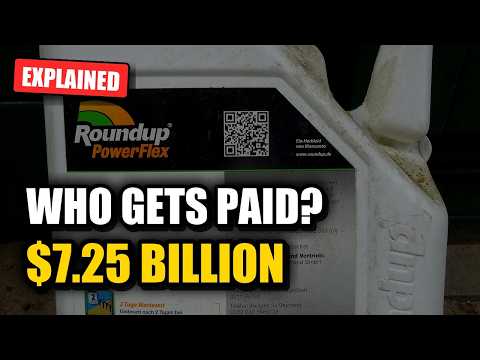
A St. Louis judge gave final approval Friday to a Bayer fund that will pay people who say Roundup caused their non-Hodgkin lymphoma, including those diagnosed up to 16 years from now. The program runs up to $7.25 billion in payments over as many as 21 years.

The order converts a decade of individual cancer lawsuits into an administrative claims process with fixed tiers, where average awards run from about $10,000 to $165,000. It excludes roughly 200 cases consolidated in federal court in California, and it lands five months after the U.S. Supreme Court overturned a $1.25 million Roundup verdict, weakening the failure-to-warn theory most of those cases rest on.

Why it matters

The ruling caps Bayer's cancer liability at $7.25 billion and moves thousands of claims out of courtrooms into a fixed payment schedule.

Questions about this story

Free account needed to ask — your question is kept and asked for you right after sign-up. Answers are public.

No questions yet — be the first to ask.

Key Indicators

$7.25B
Settlement cap
Most Bayer pays into the class fund, inclusive of payments already made.
65,000
Cancer claims filed
People who say Roundup caused their cancer, as counted at the time of approval.
$165K
Top average award
Upper end of average per-claimant payments, which start around $10,000.
21
Years of payments
Bayer makes declining, capped annual payments for up to 21 years.
$10.9B
2020 settlement
Bayer's earlier global deal, whose future-claims portion a court refused to approve.
~200
Federal cases outside the deal
Cases consolidated in the federal multidistrict litigation in California.

Voices

Curated perspectives — historical figures and your fellow readers.

Sign up to generate historical perspectives on this story.

People Involved

Organizations Involved

Timeline

March 2015 November 2026

6 events Latest: Yesterday
Tap a bar to jump to that date
  1. Bayer closes its purchase of Monsanto

    Corporate

    Bayer completes a roughly $63 billion acquisition, taking on the company that made Roundup.

  2. WHO cancer agency rates glyphosate probably carcinogenic

    Science

    The International Agency for Research on Cancer classified the active ingredient in Roundup as probably carcinogenic to humans.

Scenarios

1

Remaining federal Roundup cases wind down under the preemption ruling

Likely Resolves by End of 2028

Discussed by: Bayer's November 20 statement and Law.com's coverage of the approval

About 200 cases sit outside the class because they are consolidated in the federal multidistrict litigation in California. Bayer argues the Supreme Court's 2026 ruling should foreclose failure-to-warn claims, including for plaintiffs who opted out of the class. If trial courts accept that, the remaining docket shrinks to a handful of cases built on other theories, and Bayer's legal costs fall faster than the 21-year payment schedule implies.

2

An appeal freezes payouts for a year or more

Possible Resolves by Q2 2028

Discussed by: Objectors whose arguments Judge Boyer overruled, as reported by The Guardian and the Spokesman-Review

Objectors argued that per-person payouts trail what earlier claimants received and that the class traps people who would rather sue. Boyer rejected every objection, which leaves an appeal as their remaining route. An appellate stay would hold up money for claimants with terminal diagnoses, the exact delay Boyer cited as a reason to approve the deal quickly.

3

Average payouts land at the bottom of the range

Uncertain Resolves by Q2 2028

Discussed by: Claimant attorneys quoted in AP and St. Louis Business Journal coverage of the tiers

The program pays averages of $10,000 to $165,000 depending on exposure and age, with the top of that range reserved for a subset of claimants. Earlier confidential settlements paid more per person, which was the core complaint Boyer dismissed. If the claims administrator's first published averages come in near the floor, the deal will look less like compensation and more like a cap on liability.

Historical Context

3 moments from history that rhyme with this story — and how they unfolded.

March 2015

WHO cancer agency classifies glyphosate (2015)

The International Agency for Research on Cancer, the World Health Organization's cancer arm, rated glyphosate as probably carcinogenic to humans after reviewing studies of agricultural exposure. Glyphosate is the active ingredient in Roundup, sold since the 1970s. Regulators in the United States and Europe kept the herbicide on the market and disputed the finding.

Then

The rating gave plaintiffs' lawyers a scientific anchor and set off a wave of lawsuits against Monsanto.

Now

The dispute between the cancer agency's rating and regulators' assurances became the central factual fight of the litigation.

Why this matters now

Every claim in the new fund rests on the causal link the rating asserted, and Bayer's defense has leaned on the regulators who disagree with it.

August 2018

Johnson v. Monsanto verdict (2018)

A San Francisco jury found Monsanto liable for Dewayne Lee Johnson's non-Hodgkin lymphoma and awarded $289 million, later reduced to $78 million. It was the first verdict tying Roundup to cancer, and it landed two months after Bayer closed its purchase of Monsanto.

Then

Bayer's share price fell and thousands of similar suits followed.

Now

The verdict set the template for the litigation and pushed Bayer toward the 2020 and 2026 settlements.

Why this matters now

Average awards under the new fund run from $10,000 to $165,000, far below the Johnson verdict. That gap is the objection Judge Boyer overruled.

June 2020

Bayer's first global Roundup settlement (2020)

Bayer announced about $10.9 billion in settlements, including up to $1.25 billion for a class covering people not yet diagnosed. The company billed it as the end of the litigation.

Then

A court refused to approve the $1.25 billion future-claims portion, leaving Bayer exposed to new diagnoses.

Now

The failure stretched the litigation out six more years and forced a second attempt at the same problem.

Why this matters now

The 2026 settlement is that second attempt, and this time a judge approved it.

Sources

(8)