
Pull to refresh
Logo
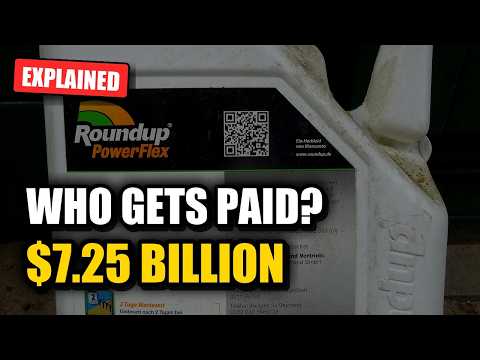
Judge approves $7.25 billion Roundup settlement

Judge approves $7.25 billion Roundup settlement

Rule Changes

The deal binds future cancer claimants, the piece that sank Bayer's last nationwide settlement in 2020.

Overview

Updated 2 hours ago

A Missouri judge approved Bayer's $7.25 billion settlement with people who say its Roundup weedkiller caused their non-Hodgkin lymphoma. The money covers roughly 65,000 existing claimants and anyone diagnosed in the future, paid out over about two decades.

The future-claimants piece is the mechanism that matters. Bayer's last nationwide deal fell apart in 2020 when a judge refused to bind people who were not yet sick. This one binds them, and it caps a liability the company has been fighting since 2015.

Why it matters

Bayer has capped 20 years of cancer claims at a fixed number. Future patients get paid, but give up the right to sue.

Questions about this story

Free account needed to ask — your question is kept and asked for you right after sign-up. Answers are public.

No questions yet — be the first to ask.

Key Indicators

$7.25B
Total settlement
Payable in installments over roughly 17 to 21 years.
65,000
Claims covered
Existing and future non-Hodgkin lymphoma claims combined.
$10K–$165K
Average payment per claimant
Amount depends on how the person used Roundup.
$1B
Security fund
Backstop if payouts outrun the settlement fund.

Voices

Curated perspectives — historical figures and your fellow readers.

Sign up to generate historical perspectives on this story.

People Involved

Organizations Involved

Timeline

March 2015 November 2026

7 events Latest: Yesterday
Tap a bar to jump to that date
  1. Bayer closes the Monsanto purchase

    Corporate

    Bayer becomes the owner of Roundup and its legal exposure.

  2. Bayer agrees to buy Monsanto

    Corporate

    The deal bets Bayer's future on seeds and crop chemicals.

  3. Cancer agency labels glyphosate probable carcinogen

    Science

    The World Health Organization's cancer research arm classifies glyphosate as probably carcinogenic to humans.

Scenarios

1

Supreme Court shuts down failure-to-warn claims

Possible Resolves by Q2 2027

Discussed by: Bayer, in its statement on the settlement approval

Bayer says a pending Supreme Court case should foreclose claims that it failed to warn users about cancer risk, the theory behind most Roundup suits. A ruling for Bayer would not undo this settlement, but it would cut off the remaining cases and any new ones filed outside the class.

2

Appeals court throws out the settlement

Unlikely Resolves by Q2 2028

Discussed by: Objectors whose challenges Judge Boyer rejected

Objectors can appeal the approval to a Missouri appellate court or the federal Eighth Circuit. A reversal would return tens of thousands of cases to the docket and reopen the future-claims problem the deal was built to solve.

3

The settlement fund runs short

Uncertain Resolves by End of 2030

Discussed by: Bayer, which built a $1 billion backstop into the deal

Payouts depend on how many people are diagnosed over the next two decades. Bayer set aside $1 billion to cover a shortfall. If claims arrive faster than projected, that backstop gets tested and the company's cost ceiling moves.

Historical Context

3 moments from history that rhyme with this story — and how they unfolded.

August 2018

Dewayne Johnson verdict (2018)

A California jury found Monsanto liable for a school groundskeeper's terminal non-Hodgkin lymphoma and awarded $289 million. The judge later cut the award to $78 million.

Then

Monsanto appealed and lost again at the state appellate level.

Now

The verdict signaled that juries would accept a causation argument regulators had rejected, and thousands of suits followed.

Why this matters now

It turned a regulatory dispute into a mass tort, which is what this settlement is now closing out.

2020

Bayer's global settlement collapses (2020)

Bayer announced a package worth roughly $10 billion to settle existing cases and create a class covering future claims. A federal judge overseeing the consolidated Roundup cases in San Francisco rejected the future-claims portion.

Then

Bayer withdrew that part of the deal and kept litigating case by case.

Now

The failure set the template for this settlement: a future-claims class had to be built so a court would accept it.

Why this matters now

This settlement exists because the 2020 version could not bind people who were not yet sick.

November 2007

Merck's Vioxx settlement (2007)

Merck agreed to pay $4.85 billion to resolve about 27,000 heart attack and stroke claims over Vioxx, which it had pulled from the market in 2004. The company admitted no causation.

Then

The deal ended most of the litigation and set aside money for pending cases.

Now

It became the standard example of a company capping a mass-tort tail with a fixed payment while denying the underlying claim.

Why this matters now

Bayer is running the same play: a fixed, multiyear payment in exchange for ending the suits.

Sources

(9)