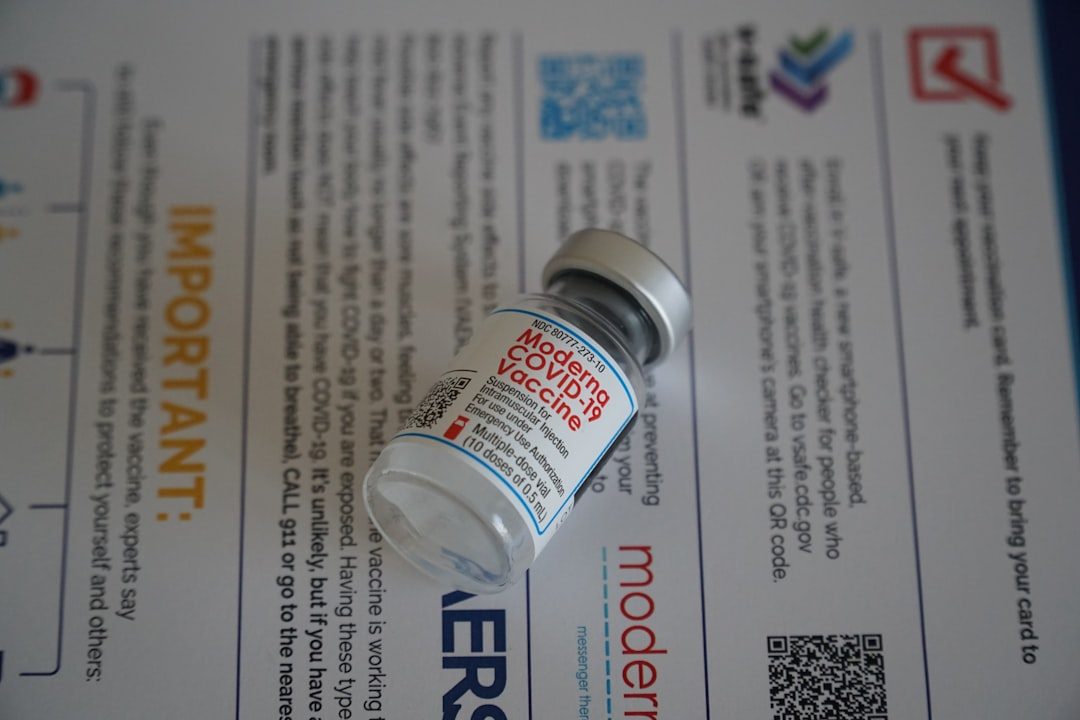
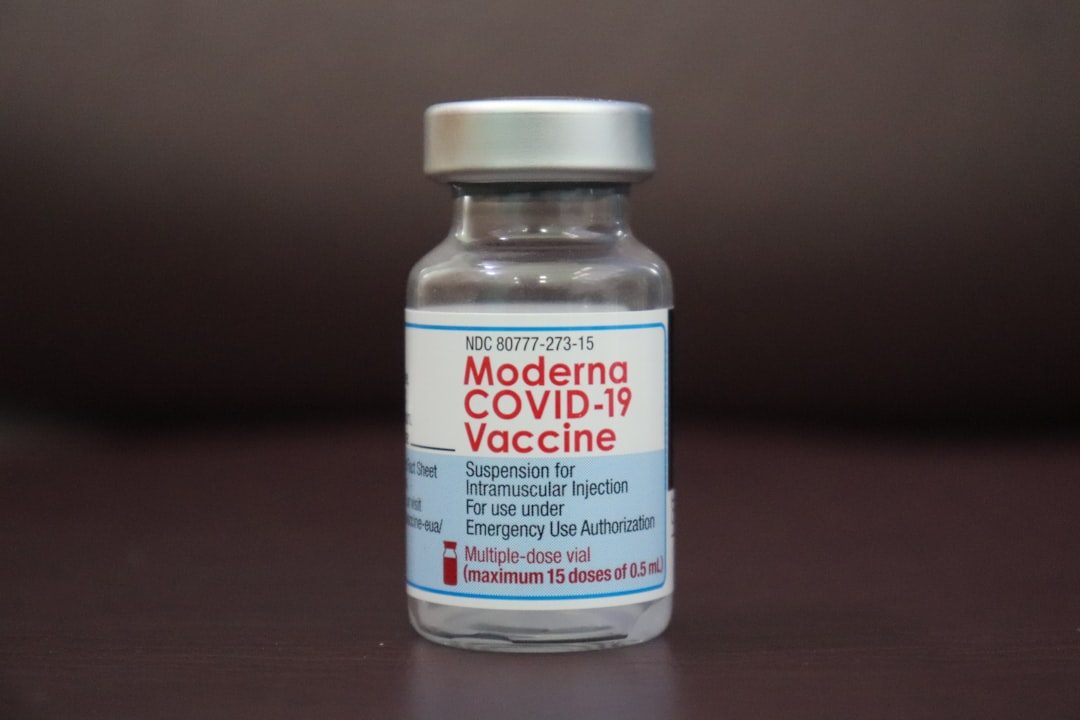
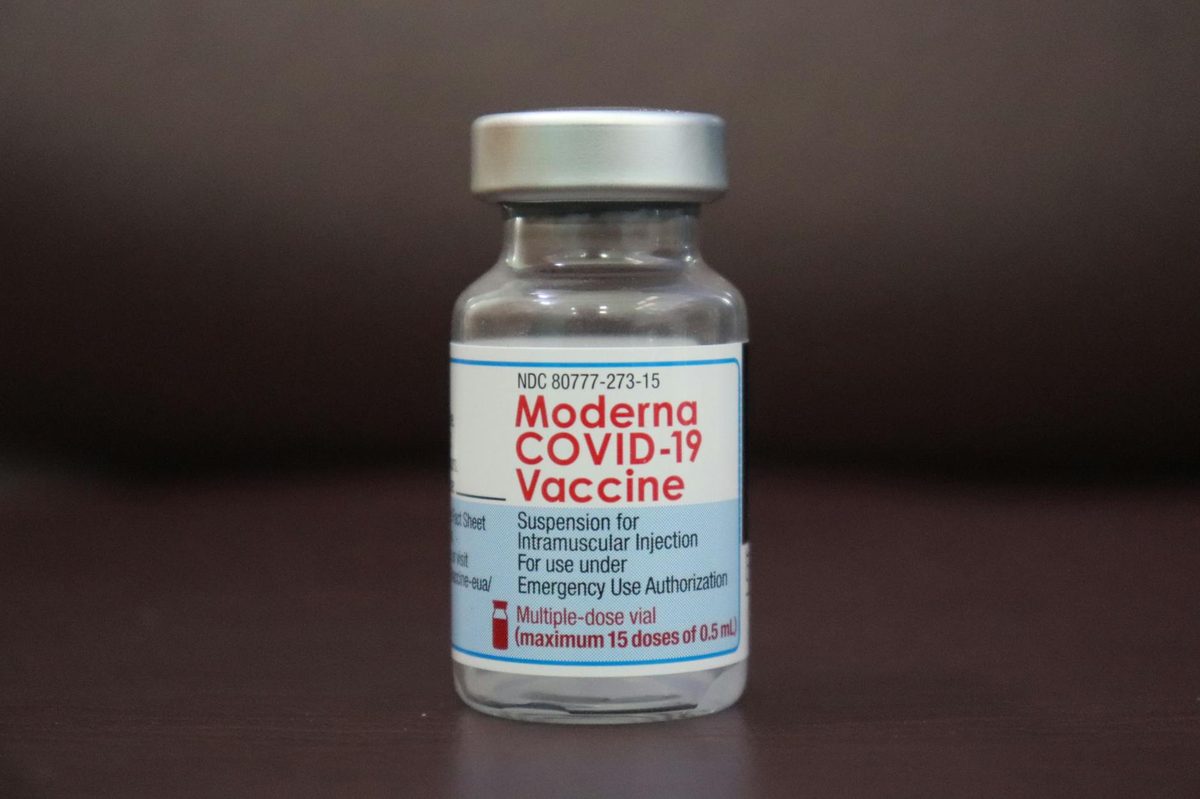
For four years, Moderna faced questions about whether it owed billions for technology at the heart of its COVID-19 vaccine. Less than a week before a jury trial in Delaware, Moderna agreed to pay $2.25 billion to settle patent claims from Arbutus Biopharma and Genevant Sciences. The court found it infringed four valid patents, and if paid in full, it would be the largest disclosed patent settlement in pharmaceutical history, surpassing a $2.15 billion Pfizer-Takeda settlement in 2013.
The technology in dispute is the delivery mechanism: lipid nanoparticles, microscopic fat bubbles that protect fragile mRNA molecules and ferry them into human cells. Without them, the genetic instructions degrade before reaching their target. This delivery system was developed over decades by researchers at the University of British Columbia and commercialized through a chain of companies now held by Roivant Sciences.
The settlement validates those patents and sets a precedent for a potentially larger lawsuit against Pfizer and BioNTech. Both companies use the same technology in Comirnaty, which accounts for roughly two-thirds of global COVID vaccine sales.
Questions about this story
Free account needed to ask — your question is kept and asked for you right after sign-up. Answers are public.
No questions yet — be the first to ask.
Key Indicators
$2.25B
Maximum settlement
Includes $950 million guaranteed upfront and $1.3 billion contingent on a federal appeals court ruling on government-contractor immunity.
$950M
Guaranteed payment
Lump sum due by July 8, 2026, regardless of how the Section 1498 appeal resolves. No ongoing royalties.
80/20
Genevant/Arbutus split
Genevant (Roivant subsidiary) receives 80% of settlement proceeds; Arbutus receives 20%, after litigation costs.
~16%
Moderna stock gain
Shares rose from $49.83 to $57.86 as analysts noted the settlement was well below the roughly $5 billion plaintiffs originally sought.
18 events
Latest: March 4th, 2026 · 7 months ago
Showing 8 of 18
JK to step
Tap a bar to jump to that date
Jump to
March 2026
Moderna settles for up to $2.25 billion
LatestSettlement
Less than a week before trial, Moderna agreed to pay $950 million upfront plus a contingent $1.3 billion. The deal includes a consent judgment of infringement on four patents and grants Moderna a global non-exclusive license for lipid nanoparticle technology in infectious disease vaccines, with no ongoing royalties.
February 2026
Court narrows Moderna's invalidity defenses
Legal
Judge Wolson applied inter partes review estoppel, barring Moderna from reasserting patent invalidity arguments it had previously raised or could have raised at the PTAB, eliminating key defenses before trial.
Judge limits government-contractor defense to 1.25% of doses
Legal
Judge Joshua Wolson ruled that Section 1498 government-contractor immunity only covers vaccines provided directly to government employees—approximately 1.25% of total government-purchased doses—not the broader public who received the shots.
August 2025
Court sends case to jury
Legal
The court denied most of Moderna's summary judgment arguments, ruling that factual disputes about patent validity and infringement required a jury to decide.
March 2025
Plaintiffs launch international enforcement
Legal
Genevant and Arbutus filed five international patent infringement actions against Moderna targeting infringing activities in 30 countries, including in Japan and the Unified Patent Court covering 28 European nations.
April 2024
Claim construction ruling favors plaintiffs
Legal
Judge Mitchell Goldberg issued a 38-page claim construction order largely rejecting Moderna's proposed patent interpretations, strengthening Arbutus and Genevant's position heading toward trial.
April 2023
Arbutus and Genevant sue Pfizer and BioNTech
Legal
Arbutus and Genevant filed a parallel patent infringement suit in the District of New Jersey against Pfizer and BioNTech over the same lipid nanoparticle technology in their Comirnaty vaccine.
February 2022
Arbutus and Genevant sue Moderna
Legal
Arbutus and Genevant filed a patent infringement lawsuit in the U.S. District Court for the District of Delaware (Case No. 1:22-cv-00252), alleging Spikevax infringed six U.S. patents covering lipid nanoparticle technology.
The court denied Moderna's motion to dismiss under 28 U.S.C. Section 1498, rejecting the argument that the federal government—not Moderna—should bear liability for patent infringement because vaccines were manufactured under government contract.
December 2020
Spikevax receives emergency authorization
Milestone
The Food and Drug Administration authorized Moderna's COVID-19 vaccine for emergency use. The vaccine relies on lipid nanoparticle delivery technology covered by Arbutus's surviving patents.
July 2020
Moderna loses third and final patent challenge
Legal
The PTAB upheld all 22 claims of Arbutus's '069 patent. The Federal Circuit later dismissed Moderna's appeal for lack of standing, leaving core lipid nanoparticle patents intact.
September 2019
Moderna wins one patent challenge, loses another
Legal
The PTAB invalidated all claims of Arbutus's '127 patent but upheld key claims of the '435 patent. Moderna achieved only partial success in clearing the intellectual property landscape.
April 2018
Arbutus and Roivant launch Genevant Sciences
Corporate
Arbutus and Roivant Sciences created Genevant Sciences as a joint venture, with Arbutus licensing exclusive rights to its lipid nanoparticle platform for RNA applications outside hepatitis B and Roivant providing $37.5 million in seed capital.
February 2018
Moderna launches patent invalidation campaign
Legal
Rather than negotiate a license, Moderna filed inter partes review petitions at the Patent Trial and Appeal Board seeking to invalidate three Arbutus lipid nanoparticle patents.
Acuitas settlement ends Moderna's sublicense path
Legal
A settlement between Arbutus and Acuitas in British Columbia left intact only four narrow sublicenses to Moderna for specific viral targets—none covering coronaviruses. A pre-trial injunction against Acuitas had been in place since January 2017.
August 2016
Arbutus accuses Acuitas of unauthorized sublicensing
Legal
Arbutus notified Acuitas that sublicensing lipid nanoparticle technology to Moderna constituted a material breach of their cross-license agreement.
2013
Arbutus licenses LNP technology to Acuitas
Licensing
Arbutus Biopharma licensed some of its lipid nanoparticle technology to Acuitas Therapeutics, a Canadian company also founded by Pieter Cullis. Acuitas later sublicensed certain rights to Moderna for four specific viral targets.
1992
Inex Pharmaceuticals founded at UBC
Origin
Pieter Cullis founded Inex Pharmaceuticals in Vancouver, beginning decades of research into lipid-based delivery systems for nucleic acids—the technology that would eventually make mRNA vaccines possible.
Scenarios
1
Moderna wins Section 1498 appeal, total bill stays at $950 million
Possible
Discussed by: Legal analysts at IPWatchdog and patent law firms; Moderna's settlement filings outline this contingency explicitly
Moderna appeals to the Federal Circuit arguing that its COVID vaccine manufacturing was done at the direction of the U.S. government under Operation Warp Speed, making the government—not Moderna—liable for patent infringement under 28 U.S.C. Section 1498. The district court already ruled this defense covers only about 1.25% of doses, but the Federal Circuit could take a broader view. If it reverses, Moderna's total liability stays at $950 million. This would also establish a precedent potentially shielding other pandemic-response manufacturers from patent claims.
2
Appeal fails, Moderna pays full $2.25 billion
Likely
Discussed by: BioPharma Dive, STAT News, and Zacks equity analysts covering the settlement structure
If the Federal Circuit upholds the district court's narrow reading of Section 1498, Moderna must pay an additional $1.3 billion within 90 days. The total $2.25 billion would surpass the 2013 Pfizer-Takeda Protonix settlement of $2.15 billion to become the largest disclosed patent settlement in pharmaceutical history. However, Moderna could pursue further review through an en banc hearing or Supreme Court petition—if it ultimately prevails through those channels, Arbutus and Genevant must refund the $1.3 billion plus interest.
3
Pfizer and BioNTech face comparable or larger settlement over Comirnaty
Possible
Discussed by: Roivant CEO Matt Gline in his settlement statement; Chardan and TD Cowen equity analysts
Arbutus and Genevant are pursuing a parallel lawsuit in the District of New Jersey over the same lipid nanoparticle patents used in Comirnaty. Pfizer and BioNTech's vaccine generated roughly twice the global revenue of Spikevax. A favorable Markman ruling in September 2025 and the now-validated patent estate from the Moderna consent judgment strengthen the plaintiffs' negotiating position. Roivant CEO Gline explicitly flagged this as the next target.
4
Settlement reshapes licensing norms for mRNA platform technology
Likely
Discussed by: IPWatchdog, Bristows patent attorneys, academic patent law commentators
The settlement establishes that foundational delivery technology patents command substantial compensation even when deployed during a public health emergency. The zero-royalty, lump-sum structure may become a template for future disputes. mRNA vaccine developers targeting influenza, cancer, and other diseases will likely need to secure lipid nanoparticle licenses upfront rather than build first and negotiate later—increasing development costs but creating a more predictable licensing market.
Historical Context
3 moments from history that rhyme with this story — and how they unfolded.
1 of 3
April 1976 – July 1991
Polaroid v. Kodak (1976–1991)
Polaroid sued Eastman Kodak in 1976 for infringing seven patents related to instant photography. Kodak had entered the instant camera market that same year, directly competing with Polaroid's core product. After a decade-long trial, a federal judge ruled in Polaroid's favor in 1986, forcing Kodak to exit the instant photography business entirely and destroy its product line.
Then
Kodak paid $925 million in 1991—then the largest patent damages award ever satisfied—and shuttered its entire instant photography division.
Now
The case established that even dominant corporations cannot simply adopt a competitor's patented technology and litigate later. It became a foundational precedent for aggressive patent enforcement.
Why this matters now
Like Polaroid's instant photography patents, Arbutus's lipid nanoparticle patents cover a foundational enabling technology that a larger competitor used without a license. In both cases, the infringer attempted to challenge patent validity rather than negotiate, and in both cases the patent holder prevailed after years of litigation.
2 of 3
June 2013
Pfizer-Takeda v. Teva-Sun Protonix settlement (2013)
Pfizer and its partner Takeda agreed to pay $2.15 billion to settle patent infringement claims related to their acid reflux drug Protonix (pantoprazole). Pfizer received $1.376 billion and Takeda received $774 million from the generic manufacturers Teva and Sun Pharmaceutical who had launched competing versions before the patent expired.
Then
The payment resolved years of litigation and removed uncertainty over one of the pharmaceutical industry's most commercially important drug patents.
Now
The settlement stood as the largest disclosed patent settlement in pharmaceutical history for over a decade, illustrating that blockbuster drug revenues create proportionally massive patent liability.
Why this matters now
The Moderna settlement could surpass this record if the full $2.25 billion is paid. Both cases illustrate a pattern: when a patented technology generates tens of billions in revenue, the original patent holders can extract settlements in the low single-digit billions—a fraction of total sales but an enormous sum in absolute terms.
3 of 3
March 2006
BlackBerry/NTP patent settlement (2006)
Research In Motion, maker of the BlackBerry, agreed to pay NTP Inc. $612.5 million to settle a patent dispute over wireless email push technology. NTP, a small patent-holding company founded by the late inventor Thomas Campana, had obtained an injunction that threatened to shut down BlackBerry service for millions of users, including members of Congress and White House staff.
Then
RIM paid $612.5 million to avoid a service shutdown that could have disrupted communications across the U.S. government and corporate America.
Now
The case demonstrated that essential-use technologies create enormous settlement leverage for patent holders, as the cost of shutting down a widely deployed product far exceeds any reasonable royalty.
Why this matters now
Like the BlackBerry case, the Moderna dispute involved technology that became critical infrastructure during a crisis. The pandemic created urgency that made it impractical to negotiate a license before deployment—but did not eliminate the obligation to compensate the patent holders afterward. In both cases, the threat of a trial (or injunction) forced a large settlement.