
Pull to refresh
Logo
Daily Brief
Following
Why Sign Up
Kazakhstan replaces its constitution, centralizing power in the presidency

Kazakhstan replaces its constitution, centralizing power in the presidency

Rule Changes
By Newzino Staff |

A referendum merges parliament into a single chamber, restores a presidential vice-president, and may reset Tokayev's term limits

Today: Referendum held; turnout exceeds 70 percent

Overview

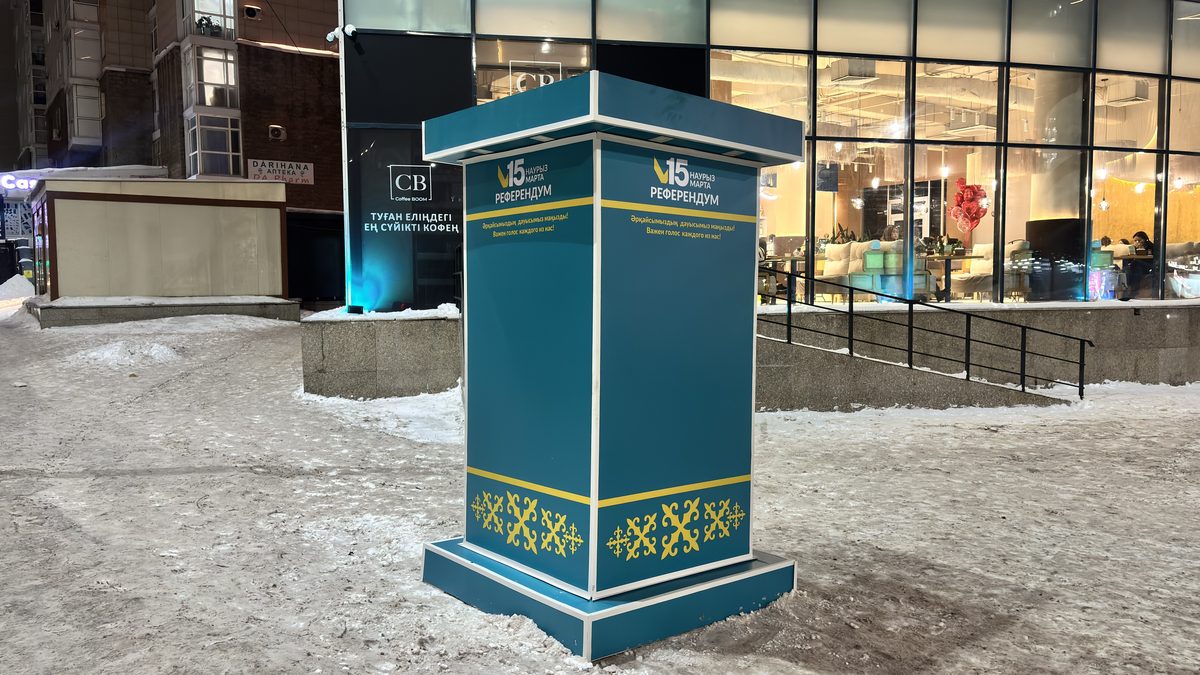
Kazakhstan's 1995 constitution survived three decades. On March 15, 2026, voters approved a replacement that merges the country's two parliamentary chambers into a single body, grants the president authority to appoint all government officials, and creates a new presidential advisory council with the power to initiate legislation. The vote exceeded the 50 percent turnout threshold needed for validation, though Almaty—the country's largest city and a center of past protest movements—recorded just 32 percent participation.

Key Indicators

70%+
Referendum turnout
Nationwide turnout by 6 p.m. local time, surpassing the 50 percent threshold required to validate the vote
32%
Almaty turnout
Turnout in Kazakhstan's largest city, less than half the national rate and a signal of urban dissent
40+
Articles changed
Number of constitutional articles affected, enough to constitute an entirely new constitution rather than amendments
~2M bbl/day
Oil production
Kazakhstan's daily crude output, making it one of the world's top ten oil exporters

Interactive

Exploring all sides of a story is often best achieved with Play.

Ever wondered what historical figures would say about today's headlines?

Sign up to generate historical perspectives on this story.

Sign Up

Debate Arena

Two rounds, two personas, one winner. You set the crossfire.

People Involved

Organizations Involved

Timeline

  1. Referendum held; turnout exceeds 70 percent

    Referendum

    Kazakhstanis voted on the new constitution at more than 10,000 polling stations. Nationwide turnout reached 70.98 percent by 6 p.m. Some regions reported over 90 percent participation, while Almaty recorded just 32 percent. Journalists were briefly detained and critics of the reforms had been fined or summoned by police in the weeks prior.

  2. Draft constitution published with no revision period

    Legal

    The final text of the new constitution was made public, with no mechanism for further amendments before the vote. The compressed timeline drew criticism from the OSCE and legal analysts.

  3. Referendum decree signed, date set for March 15

    Legal

    Tokayev signed a presidential decree scheduling the constitutional referendum for March 15, 2026. The draft constitution was published the next day, giving voters roughly one month to review it.

  4. Tokayev announces entirely new constitution

    Political

    Tokayev unexpectedly revealed the proposed changes would affect more than 40 constitutional articles—equivalent to replacing the constitution entirely—and accelerated the referendum timeline from 2027 to March 2026.

  5. Tokayev proposes unicameral parliament

    Political

    In his annual State of the Nation address, Tokayev proposed abolishing the Senate and moving to a single-chamber legislature, initially suggesting a referendum in 2027.

  6. Tokayev wins snap presidential election

    Election

    Tokayev won an early presidential vote with 81 percent support, beginning a seven-year term set to expire in 2029 under the newly amended constitution.

  7. First constitutional referendum passes with 77% approval

    Referendum

    Voters approved 56 amendments stripping Nazarbayev of remaining constitutional privileges, introducing a single non-renewable seven-year presidential term, and expanding parliamentary powers. Turnout was 68.4 percent.

  8. Tokayev announces "New Kazakhstan" reform agenda

    Political

    In a State of the Nation address, Tokayev pledged constitutional amendments to transition from a "super-presidential" system to a "presidential republic with a strong Parliament."

  9. Tokayev declares emergency, removes Nazarbayev

    Political

    President Tokayev declared a state of emergency, accepted the prime minister's resignation, and removed Nazarbayev as Security Council chairman. He invited Russian-led Collective Security Treaty Organization (CSTO) troops to help restore order.

  10. Mass protests erupt across Kazakhstan

    Crisis

    Demonstrations sparked by a fuel price increase in the oil city of Zhanaozen spread nationwide, turning violent in Almaty. Protesters rallied around the slogan "Old man, get out!" targeting former President Nazarbayev's lingering influence. Over the following week, 227 people were killed and more than 9,900 arrested.

Scenarios

1

Tokayev resets term limits, runs again in 2029 or calls snap election

Discussed by: Carnegie Russia Eurasia Center analyst Temur Umarov; Radio Free Europe/Radio Liberty; The Diplomat

Under the new constitution, Tokayev could argue that the 2022 single-term limit applied to the old constitutional order and no longer binds him. This mirrors the playbook used by Putin in Russia (2020) and Mirziyoyev in Uzbekistan (2023), both of whom used constitutional overhauls to reset their term clocks. Tokayev could either serve out his current term through 2029 and then run again, or call a snap election before then to begin a fresh term under the new framework. The vice-presidential post—fully appointed by the president—would provide a succession mechanism if he chooses not to run.

2

New constitution takes effect July 1 but economic discontent triggers instability

Discussed by: Washington Post reporting; International Crisis Group; Carnegie Endowment analysts

With inflation at 11.7 percent in February 2026 and oil export revenues under pressure from both Caspian Pipeline Consortium disruptions and the Strait of Hormuz closure, Kazakhstan faces significant economic headwinds. Analysts who tracked the 2022 protests note that fuel prices were the trigger then. Almaty's 32 percent referendum turnout suggests the country's urban population remains disengaged or opposed. If economic conditions worsen, the new constitution's concentration of authority could become a liability rather than a stabilizer, as the presidency would have fewer institutional buffers to share blame with.

3

Tokayev uses vice-president post to manage succession within the system

Discussed by: ConstitutionNet analysis; Times of Central Asia; Bloomsbury Intelligence and Security Institute

The restored vice-presidential office, last used from 1991 to 1996, could serve as a grooming position for a chosen successor. Unlike the current system, where the Senate chairman is next in line, the vice-president would be entirely the president's pick. This would allow Tokayev to manage a controlled transition without the unpredictability that marked Nazarbayev's failed succession plan. However, this scenario depends on Tokayev voluntarily stepping aside—something no Central Asian leader has done successfully since independence.

4

International partners accept the outcome, prioritizing energy and geopolitical stability

Discussed by: Euronews; Caspian Post; energy market analysts

Western governments and international organizations issue critical statements but take no meaningful action, prioritizing Kazakhstan's role as an energy supplier and geopolitical counterweight to Russia in Central Asia. With the Strait of Hormuz closed and European energy markets seeking non-Russian crude, Kazakhstan's strategic leverage is at a peak. This would follow the established pattern from the 2022 referendum, which drew OSCE criticism but no diplomatic consequences.

Historical Context

Russia's Constitutional Term Reset (2020)

January–July 2020

What Happened

President Vladimir Putin proposed sweeping constitutional changes that included roughly 200 amendments—but the most consequential provision "zeroed" his previous terms, allowing him to run for president twice more after 2024. A national vote held from June 25 to July 1 approved the package with 77.9 percent support, amid widespread reports of voter coercion and irregularities.

Outcome

Short Term

Putin secured legal authority to remain president until 2036. International observers and opposition figures called the process a sham, but no foreign government imposed consequences.

Long Term

The term reset normalized the use of constitutional referendums as succession-management tools across the former Soviet space, setting a direct precedent for Uzbekistan in 2023 and now Kazakhstan.

Why It's Relevant Today

Tokayev's new constitution follows the same structural logic: wrap a term-limit reset inside a broader package of institutional changes, submit it to a popular vote with limited debate time, and secure legitimacy through high reported turnout. Carnegie analysts have explicitly drawn this comparison.

Uzbekistan's Constitutional Overhaul and Snap Election (2023)

April–July 2023

What Happened

President Shavkat Mirziyoyev put forward a new constitution extending presidential terms from five to seven years and nullifying his previous terms. The referendum passed with 90.2 percent approval on April 30. Eight days later, Mirziyoyev called a snap presidential election, which he won on July 9, beginning a fresh seven-year term.

Outcome

Short Term

Mirziyoyev secured a path to remain in power potentially until 2037. The OSCE noted an absence of genuine political pluralism.

Long Term

Uzbekistan demonstrated that the Russian constitutional playbook could be replicated with little international friction in Central Asia, lowering the political cost for neighboring leaders.

Why It's Relevant Today

Kazakhstan's referendum follows Uzbekistan's by less than three years, and analysts have identified the same mechanisms at work: a broadly worded constitutional overhaul that embeds a term-limit reset, a compressed timeline for public review, and a controlled media environment that limits opposition voices.

Kazakhstan's January 2022 Protests ("Bloody January")

January 2022

What Happened

A fuel price hike in the oil city of Zhanaozen triggered demonstrations that spread to Almaty and other cities. Protests escalated from economic grievances to demands for political change, targeting former President Nazarbayev. Security forces killed 227 people, and over 9,900 were arrested. Tokayev invited Russian-led CSTO troops to restore order.

Outcome

Short Term

Tokayev consolidated control by removing Nazarbayev from the Security Council and purging associates of the former president from government and business.

Long Term

The protests gave Tokayev both the political opening and the stated justification for successive rounds of constitutional reform, framed as democratization but culminating in the 2026 power consolidation.

Why It's Relevant Today

The 2022 crisis is the origin point of the entire reform arc. Every subsequent constitutional change—from the 2022 referendum to the 2026 replacement—has been presented as a response to the protests' demand for a "New Kazakhstan," even as the structural outcome has concentrated more authority in the presidency.

Sources

(12)