

Pull to refresh
Logo
Daily Brief
Following
Why
Peru's revolving presidential door

Peru's revolving presidential door

Rule Changes
By Newzino Staff |

A Decade of Congressional Removals and Constitutional Crisis

4 days ago: Congress elects new interim president

Overview

Peru swore in its eighth president in a decade on February 18, 2026, hours after Congress removed José Jerí over undisclosed meetings with a Chinese businessman. The vote—75 in favor, 24 against—marked the second presidential ouster in less than six months and the latest use of a constitutional provision so vaguely worded that legislators can remove any president they choose.

The mechanism driving this instability is Article 113 of Peru's 1993 constitution, which allows Congress to declare a president has 'permanent moral incapacity' without defining what that means. Since 2016, Congress has used this clause or the threat of it to cycle through seven leaders. Meanwhile, organized crime has metastasized: extortion complaints have risen 540 percent since 2023, and over 75 percent of Peruvians now report being afraid to leave their homes. The country holds general elections on April 12, but whoever wins will inherit a state where Congress holds de facto power over the executive.

Key Indicators

8
Presidents in 10 years
Peru has had eight different heads of state since 2016, more than any other democracy in the period.
540%
Extortion increase
Reported extortion complaints surged from 2023 to over 15,000 in 2024, with 2025 on pace to set another record.
75%
Fear leaving home
Three-quarters of Peruvians report being scared when leaving their homes due to the crime wave.
36
Presidential candidates
A record number of candidates registered for the April 2026 election, reflecting public fragmentation.

Interactive

Exploring all sides of a story is often best achieved with Play.

Ever wondered what historical figures would say about today's headlines?

Sign up to generate historical perspectives on this story.

Sign Up

Debate Arena

Two rounds, two personas, one winner. You set the crossfire.

People Involved

José Jerí
José Jerí
Former Interim President of Peru (Oct 2025–Feb 2026) (Removed from office, under investigation for influence peddling)
Dina Boluarte
Dina Boluarte
Former President of Peru (Dec 2022–Oct 2025) (Removed from office for 'moral incapacity')
Zhihua Yang
Zhihua Yang
Chinese businessman at center of 'Chifagate' scandal (Under investigation by Peru's Attorney General)
Keiko Fujimori
Keiko Fujimori
Presidential candidate, leader of Fuerza Popular party (Running in fourth presidential campaign)
Rafael López Aliaga
Rafael López Aliaga
Presidential frontrunner, former Mayor of Lima (Leading polls for April 2026 election)

Organizations Involved

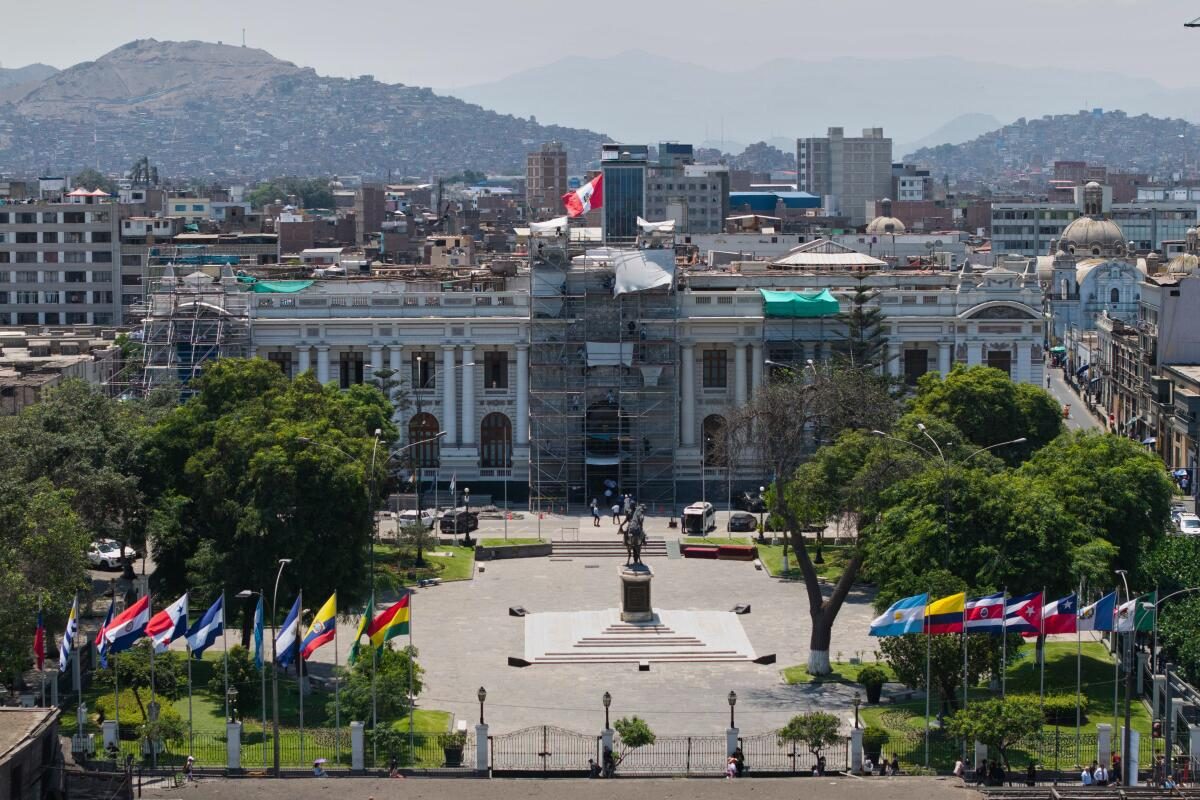
Congress of the Republic of Peru
National Legislature
Status: Primary driver of presidential removals

Peru's unicameral legislature of 130 members, which holds constitutional power to remove presidents for 'moral incapacity' with a two-thirds vote.

AT
Attorney General's Office of Peru
Prosecutorial Authority
Status: Investigating Jerí and Yang for influence peddling

Peru's federal prosecutorial authority, which opened an investigation into Jerí and businessman Zhihua Yang for possible illegal sponsorship and aggravated influence peddling.

Timeline

  1. Congress elects new interim president

    Political

    Congress convenes to elect a new legislative leader who will also serve as interim president until the April election winner takes office.

  2. Congress removes Jerí in 'Chifagate' vote

    Political

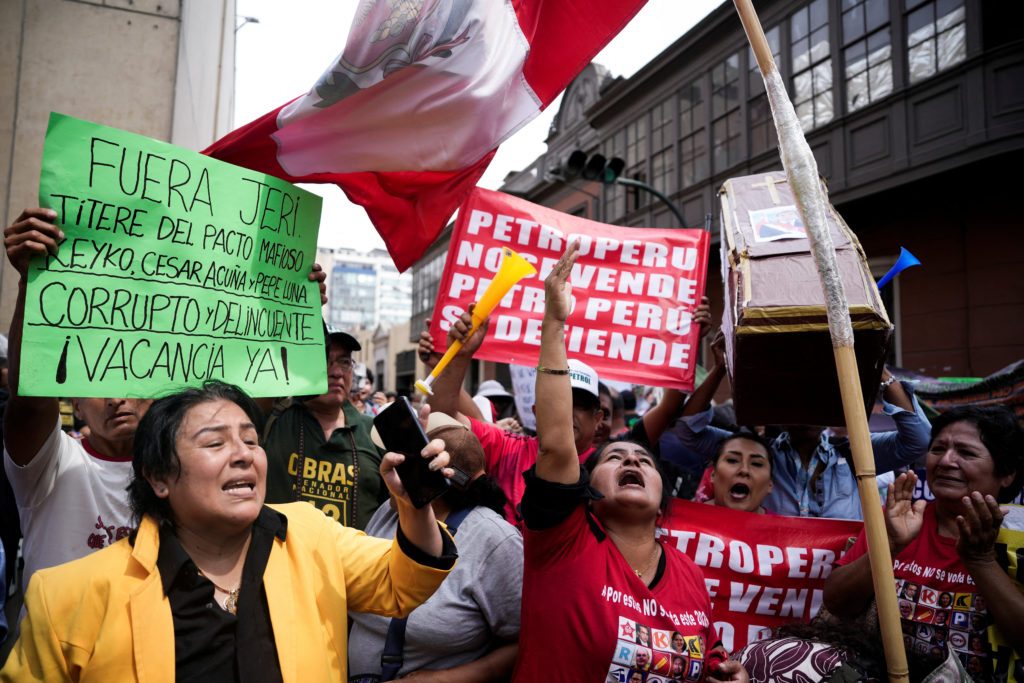
    Congress votes 75-24 to remove Jerí over the undisclosed meetings. He becomes the second president ousted in under five months.

  3. Second undisclosed Jerí-Yang meeting

    Scandal

    Jerí meets Yang again at a Chinese goods store, arriving in sunglasses. This meeting is also not disclosed officially.

  4. Jerí meets Chinese businessman in disguise

    Scandal

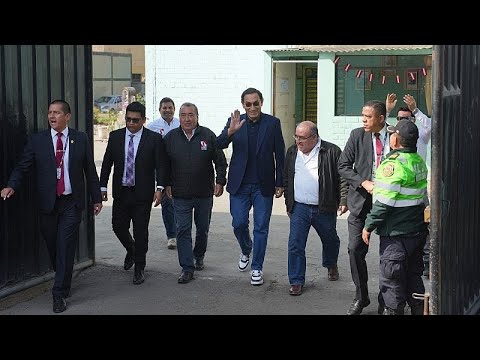
    President Jerí enters a Lima restaurant wearing a hoodie to meet businessman Zhihua Yang. The meeting is not recorded in presidential logs.

  5. Congress unanimously removes Boluarte

    Political

    Following a military club shooting and public outrage over crime, Congress votes 121-0 to remove Boluarte. José Jerí becomes president.

  6. State of emergency declared over crime

    Security

    Government declares third state of emergency in a year, suspending basic liberties to combat the crime wave.

  7. Castillo removed after failed self-coup

    Political

    Castillo attempts to dissolve Congress unconstitutionally. Congress removes him within hours. VP Dina Boluarte becomes president.

  8. Pedro Castillo inaugurated

    Political

    Left-wing rural schoolteacher Castillo becomes president after defeating Keiko Fujimori in the runoff.

  9. Merino resigns after five days

    Political

    After protests leave two dead and 200 injured, Merino resigns. Francisco Sagasti becomes interim president.

  10. Congress removes Vizcarra

    Political

    Congress ousts President Vizcarra for 'moral incapacity' over corruption allegations. Manuel Merino becomes president.

  11. PPK resigns ahead of impeachment

    Political

    Kuczynski resigns over Odebrecht bribery allegations on the eve of an impeachment vote. VP Martín Vizcarra becomes president.

  12. Pedro Pablo Kuczynski inaugurated

    Political

    PPK becomes president after narrowly defeating Keiko Fujimori, beginning the period of acute instability.

Scenarios

1

Elected President Completes Term, Stability Returns

Discussed by: Americas Society/Council of the Americas, Atlantic Council optimistic scenarios

The April 2026 winner governs with enough congressional support to avoid removal, potentially by building a coalition or benefiting from voter exhaustion with instability. This scenario requires either a president from the same political bloc as the congressional majority or constitutional reforms limiting the 'moral incapacity' clause. Neither condition currently exists.

2

Ninth President Removed Before 2031

Discussed by: Council on Foreign Relations, Peru Support Group, political analysts noting the pattern

The April winner faces the same hostile Congress and eventually falls to impeachment or resignation, continuing the decade-long pattern. With 36 candidates splitting the vote, the eventual president will likely lack a legislative majority. No structural reforms to Article 113 are on the table.

3

Constitutional Reform Rebalances Power

Discussed by: International IDEA, constitutional scholars, reform advocates

A new government initiates amendments to define 'moral incapacity' more narrowly or require supermajorities for removal, restoring executive independence. This would require Congress to voluntarily limit its own power—something it has shown no inclination to do despite repeated calls from civil society.

4

Crime Crisis Triggers Authoritarian Turn

Discussed by: Human Rights Watch, Atlantic Council analysts on populist openings

Public fear of crime—with 75 percent afraid to leave home—creates demand for strongman leadership willing to bypass constitutional norms. A populist president extends states of emergency, expands military authority, and marginalizes Congress. The precedent exists: Alberto Fujimori's 1992 self-coup was initially popular.

Historical Context

Italy's Tangentopoli Scandal (1992–1994)

February 1992 – 1994

What Happened

Judge Antonio Di Pietro arrested a Socialist Party official for bribery in February 1992, triggering the 'Mani Pulite' (Clean Hands) investigation. Over two years, prosecutors revealed that bribes worth $4 billion annually flowed between businesses and politicians. More than half of parliament came under indictment. Prime Minister Bettino Craxi fled to Tunisia to avoid conviction.

Outcome

Short Term

All four governing parties dissolved. The 'First Republic' political system collapsed entirely.

Long Term

Italy's 'Second Republic' emerged with new parties, but systemic reform proved elusive. Political instability continued with frequent government changes.

Why It's Relevant Today

Peru's crisis shares the pattern of endemic corruption destroying public trust in institutions. But where Italy's crisis led to complete party realignment, Peru's instability operates within unchanged constitutional structures, allowing the same dynamics to repeat.

Thailand's Constitutional Court Removals (2006–2025)

September 2006 – present

What Happened

The Thai military overthrew elected Prime Minister Thaksin Shinawatra in September 2006, then rewrote the constitution to expand judicial power over elected officials. The Constitutional Court subsequently removed multiple prime ministers—including Thaksin's sister Yingluk in 2014 and his daughter Paetongtarn in 2025—on ethics or election violation charges. A second coup in 2014 reinforced military dominance.

Outcome

Short Term

Each removal triggered new elections that returned pro-Thaksin parties, perpetuating the cycle.

Long Term

Thailand developed a hybrid system where elected governments operate under constant threat of judicial or military intervention.

Why It's Relevant Today

Peru's Congress functions similarly to Thailand's Constitutional Court: an unelected or semi-accountable body that can override electoral results through vaguely defined constitutional mechanisms. Both cases show how institutional design can hollow out democratic governance.

Ecuador's Presidential Instability (1997–2007)

February 1997 – November 2007

What Happened

Ecuador cycled through seven presidents in a decade, with Congress removing Abdalá Bucaram in 1997 for 'mental incapacity' and Lucio Gutiérrez in 2005 for 'abandoning his post.' Mass street protests typically preceded or accompanied congressional action. Economic crises and corruption scandals drove public anger.

Outcome

Short Term

Each removal brought only temporary political reconfiguration without addressing underlying grievances.

Long Term

Rafael Correa's 2007 election and subsequent constitutional rewrite ended the cycle by concentrating power in the executive, trading instability for a different set of governance problems.

Why It's Relevant Today

Ecuador shows that congressional removal powers, combined with public protests and weak party systems, can create sustained instability. Peru has replicated this pattern but without Ecuador's eventual authoritarian consolidation—so far.

12 Sources: