

Pull to refresh
Logo
Daily Brief
Following
Why Sign Up
Peru holds most fragmented presidential election in its modern history

Peru holds most fragmented presidential election in its modern history

Rule Changes
By Newzino Staff |

Thirty-five candidates compete as Peruvians elect a Senate for the first time since 1992

Today: Peru votes in most fragmented first round in modern history

Overview

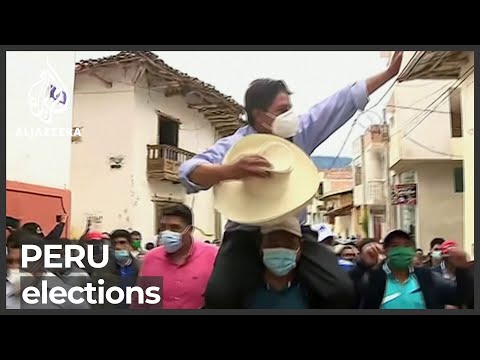
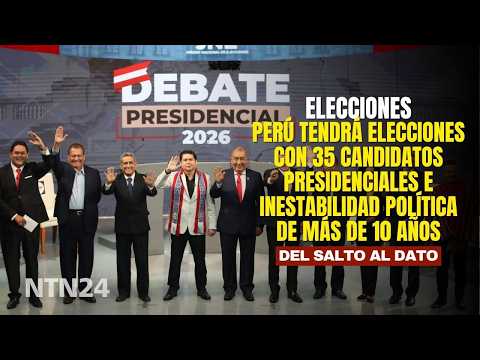
Peru's last Senate election was in 1990. On April 12, 2026, Peruvians voted to fill 60 Senate seats for the first time in 34 years, alongside 130 seats in the Chamber of Deputies and a first-round presidential contest featuring a record 35 candidates — the most fragmented field in the country's modern history. No candidate was expected to clear the 50-percent threshold needed to win outright, sending the top two to a June 7 runoff.

Why it matters

Peru's institutional collapse has let organized crime surge sixfold in five years — this election tests whether democracy can still deliver governance.

Key Indicators

35
Presidential candidates on the ballot
The most fragmented field in Peru's modern electoral history, up from 18 candidates in 2021.
~18.5%
Frontrunner's polling share
Keiko Fujimori led pre-election polls with roughly 18.5 percent of valid votes — meaning over 80 percent of voters preferred someone else.
34 years
Gap since last Senate election
Peru last elected senators in 1990, before Alberto Fujimori dissolved Congress and abolished the upper chamber in 1992.
7
Presidents since 2016
Peru has cycled through seven heads of state in a decade, reflecting deep institutional dysfunction.
2%
Boluarte's approval rating at removal
Outgoing president Dina Boluarte was removed by Congress in October 2025 with the lowest approval rating of any world leader.

Interactive

Exploring all sides of a story is often best achieved with Play.

Ever wondered what historical figures would say about today's headlines?

Sign up to generate historical perspectives on this story.

Sign Up

Debate Arena

Two rounds, two personas, one winner. You set the crossfire.

People Involved

Organizations Involved

Timeline

  1. Peru votes in most fragmented first round in modern history

    Election

    Peruvians went to the polls to elect a president, 130 members of the Chamber of Deputies, and 60 senators — the first Senate election since 1990. No candidate was expected to clear 50 percent, sending the top two to a June 7 runoff.

  2. Final permitted polls show Fujimori leading, Álvarez surging

    Polling

    The last Ipsos poll before the electoral silence period showed Keiko Fujimori at approximately 13-15 percent of raw voting intention, with comedian Carlos Álvarez surging to second at 9-12 percent, overtaking López Aliaga in some surveys.

  3. One candidate dies, reducing field from 36 to 35

    Campaign

    Napoleón Becerra, one of the 36 registered presidential candidates, died in a traffic accident, bringing the field to 35 — still the most candidates in Peru's modern electoral history.

  4. Keiko Fujimori and Rafael López Aliaga formalize candidacies

    Campaign

    Both frontrunners officially entered the race, with López Aliaga resigning as Lima's mayor. The field would eventually swell to a record 35 candidates.

  5. Congress removes President Boluarte by unanimous 122-0 vote

    Impeachment

    With her approval rating at 2 percent and extortion cases surging sixfold since 2019, Congress voted unanimously to remove Boluarte on "moral incapacity" grounds. Congressional leader José Jerí was sworn in as interim president.

  6. Congress approves constitutional reform restoring bicameral legislature

    Legislative

    Peru's unicameral Congress voted to restore the Senate, creating a 60-seat upper chamber alongside the 130-seat Chamber of Deputies for the 2026 elections — the first bicameral legislature since Fujimori abolished it in 1992.

  7. Pedro Castillo attempts self-coup, is removed and arrested

    Constitutional Crisis

    Hours before a third impeachment vote, Castillo announced he was dissolving Congress and ruling by decree — echoing Fujimori's 1992 playbook. His own cabinet resigned on the spot, the military refused to back him, and Congress removed him within hours. Vice President Dina Boluarte was sworn in.

  8. Pedro Castillo defeats Keiko Fujimori by 44,263 votes

    Election

    Rural schoolteacher Pedro Castillo won Peru's most polarized modern election in a runoff that split the country between Lima and the rural south. Fujimori contested the results for weeks before conceding.

  9. Pedro Pablo Kuczynski inaugurated, beginning era of instability

    Political

    Kuczynski took office after narrowly defeating Keiko Fujimori, but faced a hostile Congress controlled by her party. He resigned under impeachment threat in March 2018, beginning a cycle that would burn through seven presidents in a decade.

  10. Alberto Fujimori dissolves Congress, abolishes the Senate

    Constitutional

    President Alberto Fujimori executed an autogolpe (self-coup), dissolving the bicameral Congress, suspending the constitution, and purging the judiciary. The 1993 Constitution he imposed replaced the Senate and Chamber of Deputies with a single 120-seat unicameral legislature.

Scenarios

1

Fujimori reaches runoff, loses for the fourth time

Discussed by: Americas Quarterly, AS/COA poll tracker analysts, and multiple Peruvian pollsters including Ipsos and Datum International

Keiko Fujimori advances to the June 7 runoff as the first-place finisher but faces the same structural problem that has defeated her three times: a high rejection rate. In every previous runoff, anti-Fujimori voters consolidated behind her opponent regardless of ideology. If the second-place finisher is Álvarez or López Aliaga, opposition voters may again unite against the Fujimori name, producing a fourth consecutive narrow loss. This scenario would likely end her political career as a presidential contender.

2

Fujimori finally wins the presidency on her fourth attempt

Discussed by: CSIS, Polymarket prediction markets, and Bloomberg reporting on late-campaign dynamics

Fujimori advances to the runoff and, for the first time, faces an opponent who cannot consolidate the anti-Fujimori vote effectively. If the second finalist is a deeply polarizing figure in their own right — or a political novice like Álvarez without a strong organizational base — Fujimori's name recognition and party infrastructure could be enough to close the deal. A Fujimori presidency would carry heavy symbolic weight: the daughter of the man who abolished the Senate would govern alongside the institution he destroyed.

3

Comedian Carlos Álvarez shocks his way into the runoff

Discussed by: Atlantic Council, Al Jazeera, and Datum International polling showing his late surge

Álvarez's momentum in the final weeks carries him past López Aliaga into second place, setting up an establishment-vs-outsider runoff against Fujimori. This would follow the pattern of Peru's 2021 election, when rural schoolteacher Pedro Castillo surged from obscurity to win the presidency. Álvarez's lack of governing experience and institutional backing would raise familiar questions about whether an outsider can actually govern Peru's fractured political landscape — but his anti-crime platform resonates with an electorate that watched extortion cases increase sixfold in five years.

4

Whoever wins inherits ungovernable fragmentation

Discussed by: FTI Consulting, GIS Reports, and the Atlantic Council's analysis of Peru's institutional crisis

Regardless of who wins the runoff, the next president enters office with a Congress fragmented among dozens of parties, no reliable governing coalition, and a track record suggesting that the legislature will move to obstruct or remove the executive at the first sign of weakness. Peru's last three elected presidents were all removed before completing their terms. The restored Senate adds a new institutional variable — potentially a stabilizing check on the lower chamber's impeachment impulses, or another veto point in an already gridlocked system.

Historical Context

Peru's 2021 election: Castillo vs. Fujimori (2021)

April–July 2021

What Happened

Eighteen candidates split the first-round vote so thoroughly that Pedro Castillo, a rural schoolteacher from Cajamarca with no governing experience, advanced to the runoff with just 19 percent. He defeated Keiko Fujimori by 44,263 votes — her third consecutive razor-thin loss — in a contest that divided Peru along geographic and class lines.

Outcome

Short Term

Castillo took office but struggled to govern, cycling through over 70 cabinet ministers in 17 months as corruption allegations mounted around his inner circle.

Long Term

Castillo's December 2022 attempt to dissolve Congress and rule by decree failed within hours, leading to his arrest and further deepening public distrust in elected leaders. The episode demonstrated that outsider candidates could win elections but not necessarily govern.

Why It's Relevant Today

The 2026 race replicates the same fragmentation dynamic — even more extreme, with 35 candidates — and the same core question: whether Peru's broken party system can produce a president capable of actually wielding power.

Alberto Fujimori's autogolpe and Senate abolition (1992)

April 1992

What Happened

President Alberto Fujimori dissolved Congress on April 5, 1992, suspended the constitution, and purged the judiciary, claiming the legislature was obstructing his fight against the Shining Path (Sendero Luminoso) insurgency and hyperinflation. The move was popular domestically despite international condemnation. The 1993 Constitution he imposed replaced the bicameral legislature with a single chamber of 120 seats.

Outcome

Short Term

Fujimori consolidated power and oversaw the defeat of the Shining Path and stabilization of the economy, earning broad public support.

Long Term

The unicameral system became a lasting feature of Peruvian governance for over three decades, concentrating legislative power in a single chamber that critics argued was too easily dominated by the executive or too prone to impulsive action. Fujimori himself was later convicted of human rights abuses and corruption.

Why It's Relevant Today

The 2026 election reverses Fujimori's most enduring structural change by restoring the Senate his father abolished — and his daughter Keiko is the frontrunner in the very election that implements this reversal.

Ecuador's 2023 snap election and outsider president (2023)

August 2023

What Happened

After President Guillermo Lasso dissolved Ecuador's Congress to avoid impeachment, snap elections produced a field of eight candidates in a country reeling from surging gang violence and cartel infiltration. Daniel Noboa, a 35-year-old banana heir with no political experience, won the runoff decisively, campaigning primarily on public safety.

Outcome

Short Term

Noboa declared a state of internal armed conflict and deployed the military against gangs within weeks of taking office, earning initial public support.

Long Term

The episode illustrated a pattern across the Andes: crime-driven voter anger, institutional collapse, and outsider candidates riding security platforms to power — with uncertain ability to deliver results.

Why It's Relevant Today

Peru's 2026 election mirrors Ecuador's dynamics almost exactly — surging extortion and homicide rates, a removed president, and outsider candidates campaigning on crime. The question is whether Peru's winner will face the same gap between security promises and institutional capacity.

Sources

(12)