
Pull to refresh
Logo
KenGen restarts Olkaria I geothermal plant at higher capacity

KenGen restarts Olkaria I geothermal plant at higher capacity

Built World

Africa's oldest geothermal station returns from a three-year shutdown producing 63 MW instead of 45 MW

Overview

Updated 1 hour ago

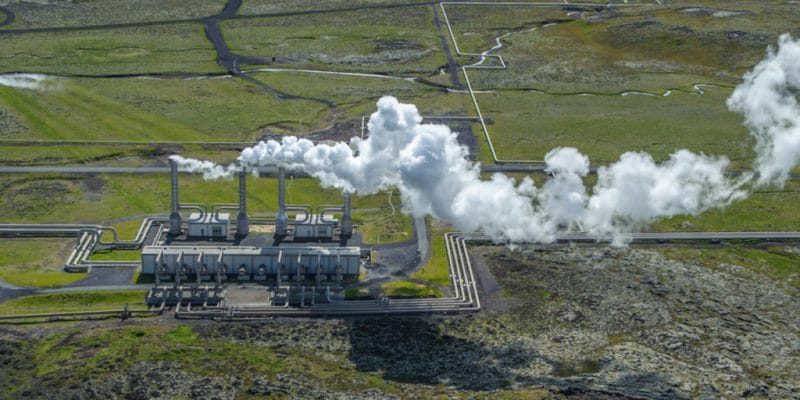
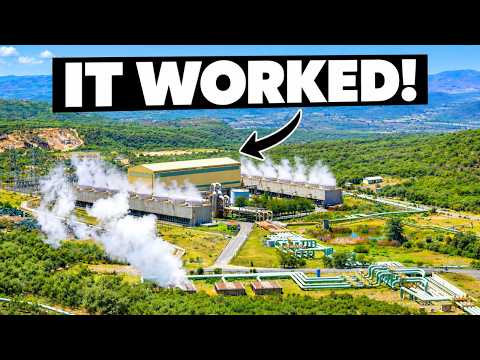
KenGen switched off the three units at Olkaria I in 2023 after more than four decades of service. On 30 October 2026 the company said the plant is back, producing 63 MW instead of 45 MW.

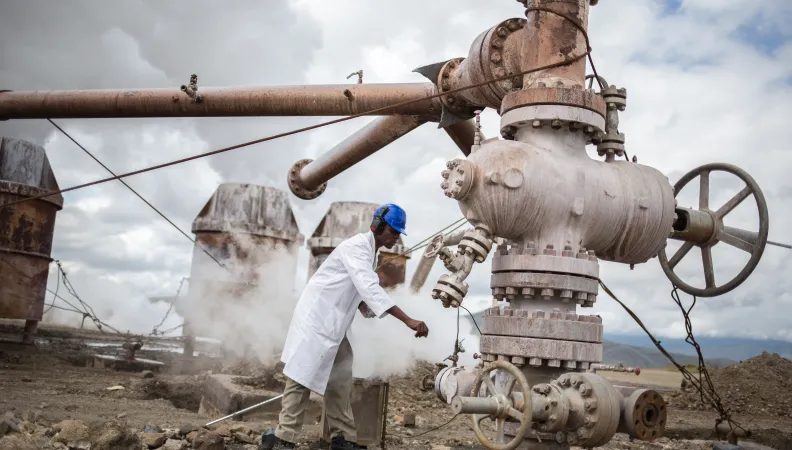
The extra 18 MW comes without new wells or additional steam. Engineers redesigned the steam-field pipeline and replaced condensers, cooling towers and pumps to pull more power from the same geothermal field.

Why it matters

Kenya added 18 MW of steady geothermal power without drilling new wells, capacity that helps balance a grid fed increasingly by weather-dependent wind and solar.

Questions about this story

Free account needed to ask — your question is kept and asked for you right after sign-up. Answers are public.

No questions yet — be the first to ask.

Key Indicators

63 MW
Olkaria I installed capacity after rehabilitation
Up from 45 MW before the plant was taken offline in 2023.
40.7%
Capacity increase
The gain KenGen and its contractor report from the same primary steam flow.
~2%
Share of Kenya's installed generation capacity
Figure given by KenGen electrical engineering manager Maurice Awuor.
~40%
Geothermal share of Kenya's electricity
According to the Energy and Petroleum Regulatory Authority.
1,681 MW
Geothermal capacity target for 2030
Goal set in the Kenya National Energy Compact 2025-2030.

Voices

Curated perspectives — historical figures and your fellow readers.

Sign up to generate historical perspectives on this story.

People Involved

Organizations Involved

Timeline

1981 October 2026

6 events Latest: Today
Tap a bar to jump to that date
  1. KenGen announces full 63 MW capacity

    Today Completion

    The company reports the rehabilitation finished, up from 45 MW, at its annual general meeting.

  2. Unit 2 restored; project 92% complete

    Milestone

    A KenGen financial report puts remaining work at less than a tenth of the project.

  3. Unit 3 reconnected to the grid

    Milestone

    The first rehabilitated unit returns to service and runs stably.

  4. KenGen announces contract award

    Contract

    SEPCOIII named EPC contractor, Toshiba named turbine and generator supplier, completion set for December 2026.

  5. Rehabilitation work begins

    Construction

    SEPCOIII starts rebuilding the three units after KenGen takes the plant offline.

  6. Olkaria I's first unit enters service

    Origins

    The plant becomes Africa's first geothermal power station. KenGen dates the plant's commissioning to 1980.

Scenarios

1

Olkaria I holds at 63 MW and anchors the Rift Valley fleet

Likely Resolves by Q2 2027

Discussed by: KenGen engineering staff and the project's own completion reporting

If the rebuilt units run at their new rating, Olkaria I becomes the reference case for further brownfield work in the same field. Its value is steadiness: geothermal output does not move with the weather, which is why KenGen frames it as grid-balancing capacity rather than a bulk addition. Watch the plant's availability figures rather than its nameplate rating.

2

KenGen commissions a second geothermal rehabilitation

Possible Resolves by End of 2027

Discussed by: KenGen's framing of Olkaria I as the first completed geothermal rehab in three years

A working rehabilitation model, a contractor already on site, and ageing units elsewhere in the Olkaria field make a repeat project plausible. The trigger would be a new engineering, procurement and construction award naming another Olkaria station.

3

The uprate falls short once the plant runs continuously

Unlikely Resolves by Q2 2027

Discussed by: Independent engineering literature on brownfield geothermal uprates

A 40% gain from the same steam flow depends on redesigned surface equipment, including gas extraction and condenser performance, behaving under sustained load. A preprints.org engineering study of the same project argues the gains hinge on replacing steam-jet ejectors with motor-driven vacuum pumps. If the equipment underperforms, output could settle below the announced rating.

Historical Context

2 moments from history that rhyme with this story — and how they unfolded.

1981

Olkaria I commissioning (1981)

Kenya built its first geothermal power station in the Rift Valley's Olkaria field, with the first unit entering service in 1981. It was the first geothermal plant in Africa, and it turned a volcanic field into a domestic power source for a country with no oil of its own.

Then

The plant supplied base-load power and proved that geothermal drilling in the Rift Valley could be developed at utility scale.

Now

Geothermal grew to supply roughly 40% of Kenya's electricity, per the Energy and Petroleum Regulatory Authority, and Olkaria became the country's main generating complex.

Why this matters now

The upgraded plant inherits a 45-year-old site and adds 18 MW to a fleet whose founding unit is now the thing being rebuilt.

2023

Olkaria I shutdown for rehabilitation (2023)

KenGen took the ageing plant offline to replace equipment whose original components had become hard to source. The work was originally contracted with completion set for December 2026.

Then

Kenya lost 45 MW of steady generation while the plant sat idle, with output from wind and solar unable to fill the gap on calm or cloudy hours.

Now

The completed upgrade returned 63 MW and, per KenGen, extends the plant's operating life by more than 25 years.

Why this matters now

It shows what a rehabilitation costs in lost output, and why the three-year gap matters for a grid that leans on geothermal for stability.

Sources

(7)