
Pull to refresh
Logo
Daily Brief
Following
Why
Ontario's nuclear fleet renewal

Ontario's nuclear fleet renewal

Built World
By Newzino Staff |

Canada's largest private-sector infrastructure project extends reactor life by 40 years

3 days ago: Bruce Power Unit 3 Construction Phase Complete

Overview

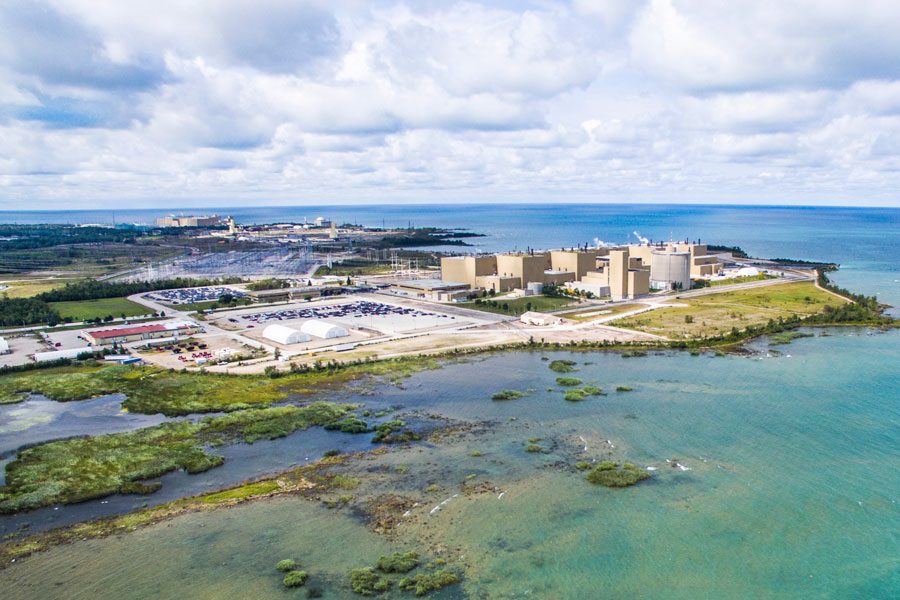
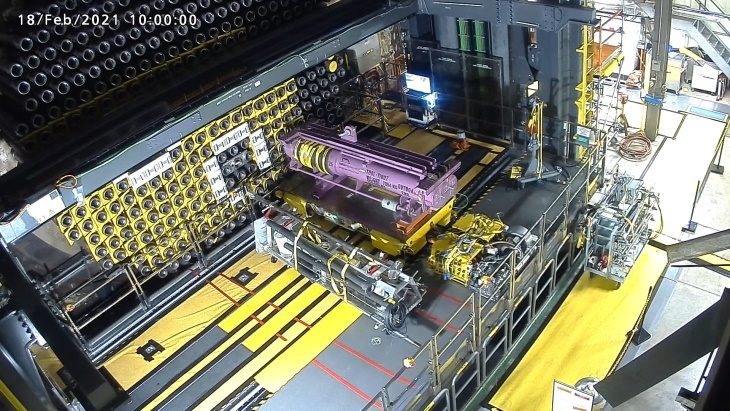
Bruce Power completed the construction phase of its Unit 3 nuclear reactor refurbishment on February 18, 2026—on budget and ahead of schedule. The reactor, one of eight at the world's largest operating nuclear facility by reactor count, will return to service in the coming months with enough capacity to power a city of 700,000 for 35 years. This marks the second of six units Bruce Power will refurbish by 2033 in a privately-funded program to extend the site's operational life through 2064.

Ontario is betting on nuclear to meet electricity demand the Independent Electricity System Operator projects will grow 75% by 2050, driven by electric vehicles, data centers, and industrial electrification. The province's two major refurbishment programs—Bruce Power's six-unit overhaul and Ontario Power Generation's recently completed Darlington project—represent over $25 billion in investment and will keep nuclear supplying roughly half of Ontario's electricity for decades. With Darlington's fourth and final unit completed in early 2026, attention now shifts to whether Bruce Power can replicate that success across its remaining units.

Key Indicators

2 of 6
Bruce Power units refurbished
Unit 6 returned to service in 2023; Unit 3 construction phase now complete
4 of 4
Darlington units refurbished
Ontario Power Generation completed all four Darlington reactors in February 2026
75%
Projected demand increase
Ontario electricity demand forecast to grow 75% by 2050 according to the Independent Electricity System Operator
~50%
Nuclear share of Ontario power
Nuclear energy provides roughly half of Ontario's electricity generation

Interactive

Exploring all sides of a story is often best achieved with Play.

Ever wondered what historical figures would say about today's headlines?

Sign up to generate historical perspectives on this story.

Sign Up

Debate Arena

Two rounds, two personas, one winner. You set the crossfire.

People Involved

Eric Chassard
Eric Chassard
President and CEO, Bruce Power (Leading refurbishment program execution)

Organizations Involved

Bruce Power
Bruce Power
Private Nuclear Generator
Status: Executing six-unit refurbishment program

Canada's only private-sector nuclear generator, operating eight CANDU reactors that supply roughly 30% of Ontario's electricity.

Ontario Power Generation (OPG)
Provincial Crown Corporation
Status: Completed Darlington refurbishment; planning Pickering refurbishment

Ontario's largest electricity generator, operating nuclear, hydroelectric, and thermal facilities across the province.

Independent Electricity System Operator (IESO)
Provincial Agency
Status: Forecasting 75% demand growth by 2050

Crown agency responsible for operating Ontario's electricity market and directing the real-time operation of the provincial power grid.

Timeline

  1. Bruce Power Unit 3 Construction Phase Complete

    Milestone

    Bruce Power completes the construction phase of Unit 3 refurbishment on budget and ahead of schedule, with the reactor expected to return to service in coming months.

  2. Darlington Refurbishment Complete

    Milestone

    Ontario Power Generation completes all four Darlington reactor refurbishments four months ahead of schedule and $150 million under the $12.8 billion budget.

  3. IESO Approves Unit 5 Refurbishment

    Regulatory

    The Independent Electricity System Operator verifies Bruce Power met requirements to proceed with Unit 5 refurbishment, scheduled for late 2025.

  4. Unit 4 Refurbishment Begins

    Construction

    Bruce Power begins Unit 4 Major Component Replacement, the third reactor to enter the refurbishment program.

  5. Unit 6 Returns to Commercial Service

    Operations

    Unit 6 declared commercially operational exactly 39 years after its original in-service date, completing the first full refurbishment cycle.

  6. Unit 6 Construction Phase Complete

    Milestone

    Bruce Power completes the construction phase of Unit 6 refurbishment on time and on budget, including replacement of 480 fuel channels and eight steam generators.

  7. Unit 3 Refurbishment Begins

    Construction

    Bruce Power begins the Major Component Replacement outage for Unit 3, the second reactor in the refurbishment sequence.

  8. Unit 6 Refurbishment Begins

    Construction

    Bruce Power takes Unit 6 offline to begin the first Major Component Replacement, marking the start of the refurbishment program.

  9. Bruce Power Signs $13 Billion Refurbishment Agreement

    Contract

    Bruce Power and the Ontario government sign an amended agreement for the Major Component Replacement program covering Units 3-8, extending site operations to 2064.

Scenarios

1

Bruce Power Completes All Six Refurbishments On Schedule By 2033

Discussed by: Bruce Power, Ontario Ministry of Energy, Independent Electricity System Operator

The refurbishment program continues its track record of on-time, on-budget delivery through Units 4, 5, 7, and 8. By 2033, all six reactors operate with extended 40-year lifespans, and output increases from 6,400 MW to over 7,000 MW through efficiency upgrades. Bruce Power maintains its position as North America's leading CANDU refurbishment operator, potentially positioning it for international contracts.

2

Cost Overruns and Delays Plague Later Units

Discussed by: Energy analysts, Canadian Centre for Policy Alternatives, past CANDU refurbishment critics

As the program progresses, supply chain constraints, labor shortages, or technical complications cause schedule slippage and budget increases on Units 5, 7, or 8. This would mirror the experience of New Brunswick's Point Lepreau refurbishment, which ran three years late and $1 billion over budget. Critics argue the early successes may not be replicable as the workforce spreads across multiple concurrent projects.

3

Bruce C Expansion Approved, New Reactors Planned

Discussed by: Ontario government, Bruce Power, Ontario Chamber of Commerce

Building on refurbishment success, Ontario approves the proposed Bruce C project to construct up to 4,800 MW of new nuclear capacity at the Bruce site. An Ontario Chamber of Commerce analysis projects this would add $217 billion to provincial GDP over the plant's lifespan and create 18,900 construction jobs annually. Construction could begin in the early 2030s as refurbishment wraps up.

4

Demand Growth Outpaces Nuclear Expansion

Discussed by: IESO planning outlooks, clean energy advocates, grid analysts

Even with successful refurbishments, the 75% demand growth forecast proves conservative as data centers, EV adoption, and industrial reshoring accelerate faster than expected. Ontario finds itself in supply shortfalls despite maintaining nuclear capacity, forcing reliance on natural gas peakers and imported power—undermining decarbonization goals.

Historical Context

Point Lepreau Refurbishment (2008-2012)

September 2008 - November 2012

What Happened

New Brunswick Power undertook Canada's first CANDU-6 refurbishment at the Point Lepreau Generating Station. The project was originally budgeted at $1.4 billion with an 18-month timeline. Technical challenges and scope changes pushed the final cost to approximately $2.4 billion, with the reactor returning to service three years late.

Outcome

Short Term

New Brunswick faced electricity shortfalls and higher costs during the extended outage, importing power from neighboring provinces.

Long Term

The experience established lessons for subsequent CANDU refurbishments, influencing planning approaches at Bruce Power and OPG. The reactor has since operated reliably with an extended lifespan.

Why It's Relevant Today

Point Lepreau's difficulties contrast sharply with Bruce Power's on-time, on-budget performance, suggesting the industry has learned from early refurbishment challenges. The comparison is central to evaluating whether Bruce Power's success can continue through four more units.

Wolsong Unit 1 Refurbishment (2009-2011)

April 2009 - July 2011

What Happened

Korea Hydro and Nuclear Power retubed the 679 MW Wolsong Unit 1 CANDU reactor in South Korea, marking the first successful CANDU-6 refurbishment completed on schedule. The project replaced all 380 fuel channels in 27 months, demonstrating that the technology could be refurbished efficiently.

Outcome

Short Term

Wolsong-1 returned to service with a 25-year life extension, validating the economic case for CANDU refurbishment.

Long Term

The success influenced decisions to proceed with Canadian refurbishment programs. South Korea's expertise became a benchmark for the global CANDU operator community.

Why It's Relevant Today

Wolsong demonstrated that CANDU refurbishment could be executed efficiently when properly planned, providing a model that informed Bruce Power's approach. The 27-month timeline set expectations for what well-managed projects could achieve.

Darlington Refurbishment (2016-2026)

February 2016 - February 2026

What Happened

Ontario Power Generation undertook refurbishment of all four Darlington reactors at a total cost of $12.8 billion, completing Unit 2 in 2020 and finishing the final Unit 4 in February 2026—four months ahead of schedule and $150 million under budget. The project was the largest infrastructure undertaking in Ontario's history.

Outcome

Short Term

Darlington's 3,500 MW of capacity returns to full service, providing electricity for 3.5 million homes with a lifespan extended to at least 2055.

Long Term

The successful completion, announced just weeks before Bruce Power's Unit 3 milestone, demonstrates Ontario's nuclear industry can deliver complex megaprojects on time.

Why It's Relevant Today

Darlington's completion sets a benchmark for the remaining Bruce Power refurbishments. Both projects share contractors and workforce, meaning lessons transfer directly. The combined success strengthens the case for continued nuclear investment in Ontario.

10 Sources: