


Pull to refresh
Logo
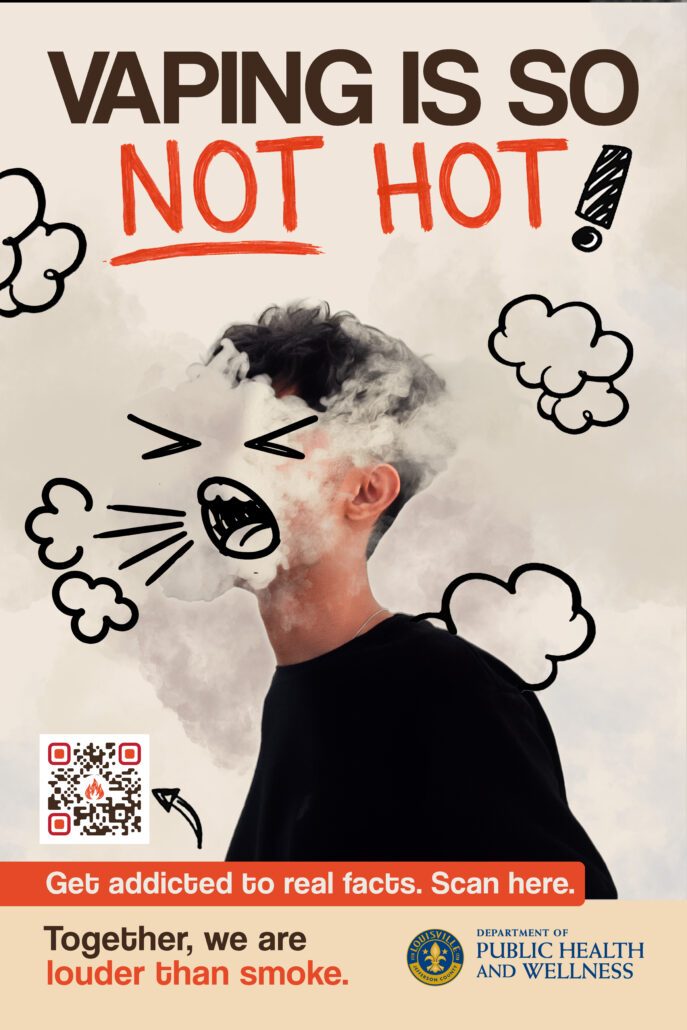
Louisville launches 'Louder Than Smoke' youth anti-vaping campaign

Louisville launches 'Louder Than Smoke' youth anti-vaping campaign

Rule Changes Louisville, KY local

City pairs TikTok and Instagram ads with bus placards to steer teens away from nicotine

Overview

Updated 1 hour ago

Louisville officials launched a youth-focused anti-vaping campaign Tuesday, pairing ads on TikTok and Instagram with placards on city buses. The 'Louder Than Smoke' initiative was built with input from teenagers and targets nicotine addiction before it takes hold.

The city's health agency says the social media arm already reached 4.4 million impressions from April through September. The campaign lands as national youth vaping sits at its lowest level in a decade, with about 1.44 million American teens still using e-cigarettes.

Why it matters

E-cigarette use can rewire teen brains; Louisville is testing whether local, youth-designed ads can push its vaping numbers down.

Monday: what changed in Louisville, KY

One short email a week with the openings, closings, permits and council votes we covered. Free. Unsubscribe in one click.

Questions about this story

Free account needed to ask — your question is kept and asked for you right after sign-up. Answers are public.

No questions yet — be the first to ask.

Key Indicators

4.4M
Social media impressions (April-Sept 2026)
Combined TikTok and Instagram reach before the official launch.
32,000
Clicks to educational resources
From the campaign's social media posts.
22,800
Unique website visitors
Traffic to the campaign's resource site since launch.
1.44M
US youth who currently vape
2025 National Youth Tobacco Survey figure.

Voices

Curated perspectives — historical figures and your fellow readers.

Sign up to generate historical perspectives on this story.

People Involved

Organizations Involved

Timeline

April 2026 October 2026

2 events Latest: 2 days ago
  1. Louisville launches Louder Than Smoke campaign

    Latest Announcement

    Mayor Craig Greenberg and the health department unveil the anti-vaping initiative with social media, bus ads, and a website.

  2. Campaign social media activity begins

    Program

    TikTok and Instagram posts start drawing impressions, later measured at 4.4 million through September.

Scenarios

1

Louisville expands Louder Than Smoke with new funding

Possible Resolves by End of 2027

Discussed by: LMPHW officials and local education advocates

If impressions and website traffic hold, the health department seeks budget to extend the campaign into school-based programming and additional platforms for the 2027-28 school year. The city council would need to approve new money beyond the initial allocation.

2

Louisville pairs campaign with stricter vaping rules

Unlikely Resolves by Q2 2028

Discussed by: Public health officials and tobacco-control advocates

The campaign could set the stage for city council action on flavored e-cigarette sales or retailer licensing, following moves in other cities. A council ordinance would represent a shift from education to regulation.

3

LMPHW publishes evaluation showing shift in teen vaping attitudes

Possible Resolves by Jan 31, 2028

Discussed by: LMPHW evaluation team

The department conducts a follow-up survey of local teens to measure campaign awareness and changes in vaping intentions, mirroring the FDA's Real Cost evaluation approach. A published report would give the city hard numbers on whether the ads moved behavior.

Historical Context

2 moments from history that rhyme with this story — and how they unfolded.

2018-present

FDA's Real Cost campaign e-cigarette expansion (2018)

The Food and Drug Administration expanded its youth tobacco prevention campaign to e-cigarettes, using digital video, gaming platforms, and social media to reach teens aged 12 to 17. The campaign targets the 'cost-free' mentality about vaping.

Then

Evaluation data between 2023 and 2024 estimated the campaign prevented about 444,252 American youth from starting to use e-cigarettes.

Now

The effort contributed to the lowest youth e-cigarette use in a decade, with about 1.44 million US teens still vaping as of the 2025 survey.

Why this matters now

Louisville's campaign applies the same playbook at the city level, using teen input and social media channels to replicate the FDA's national results locally.

February 2000

truth campaign launch (2000)

The American Legacy Foundation introduced 'truth,' a national anti-smoking campaign using edgy ads that spoke in teens' own language rather than lecturing them. It ran on TV, in print, and online.

Then

The campaign became one of the most studied youth tobacco interventions, with research linking it to faster declines in teen smoking rates.

Now

It established that youth-designed, non-judgmental messaging can measurably cut tobacco use, a model later applied to vaping.

Why this matters now

Louder Than Smoke borrows the same premise: give teens relatable messages created with their input, and they respond better than they do to scare tactics.

Sources

(3)