
Pull to refresh
Logo
OpenAI preprint claims matrix multiplication exponent is exactly 9/4

OpenAI preprint claims matrix multiplication exponent is exactly 9/4

New Capabilities

A matching lower bound would make 9/4 the exact exponent and end the search for faster asymptotic algorithms.

Overview

Updated 1 hour ago

For 57 years, researchers have pushed the theoretical cost of multiplying two matrices down from n^3 toward n^2.25. On November 24, OpenAI posted a preprint claiming the exponent is exactly 9/4, or n^2.25.

If the proof holds, no asymptotic improvement below 9/4 is possible. The result does not make today's computers faster; it sets a theoretical floor and could shift attention to constant factors and practical implementations. The claim covers formal arithmetic circuits over every field and has not yet been independently verified.

Why it matters

If the proof holds, no algorithm can multiply matrices faster than n^2.25 asymptotically, ending a 57-year search for faster exponents.

Questions about this story

Free account needed to ask — your question is kept and asked for you right after sign-up. Answers are public.

No questions yet — be the first to ask.

Key Indicators

9/4
Matrix multiplication exponent (ω)
OpenAI claims this exact value over every field.
n^{9/4}/2
Lower bound on multiplication or division gates
For two n×n matrices, even if linear operations are free.
n^3
Standard algorithm cost
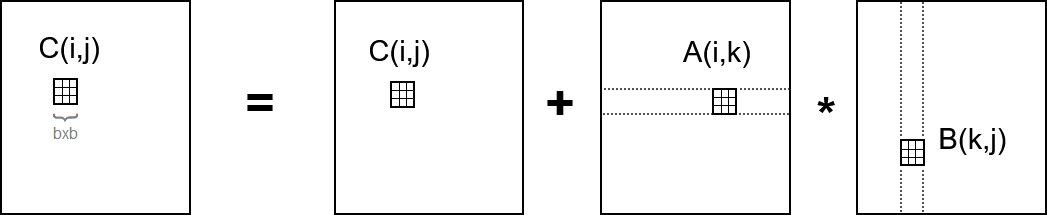
Multiplying rows by columns takes order n cubed operations.
n^2.77
Previous best algorithm reported
DeepMind's 2022 method improved on Strassen's n^2.8.

Voices

Curated perspectives — historical figures and your fellow readers.

Sign up to generate historical perspectives on this story.

People Involved

Organizations Involved

Timeline

October 2026 November 2026

3 events Latest: Yesterday
  1. OpenAI claims matching lower bound

    Latest Research

    Preprint says every field has exponent exactly 9/4.

  2. Lean formalizations released

    Formalization

    OpenAI releases machine-checked files for the headline equality and related results.

  3. OpenAI posts upper bound of 9/4

    Research

    Preprint proves ω ≤ 9/4 over complex numbers.

Scenarios

1

Peer review confirms the 9/4 exponent

Possible Resolves by End of 2027

Discussed by: OpenAI preprint; Kingy.ai; New Scientist

The proof passes journal review or an independent team reproduces the lower bound. That would turn the preprint's claim into a settled theorem and end the search for asymptotic improvements below 9/4.

2

Independent Lean check validates the lower bound

Possible Resolves by Q2 2027

Discussed by: Kingy.ai; Carlos Toledo

OpenAI has released Lean formalizations. An independent team compiles and checks them without extra axioms, turning the proof into machine-verified mathematics.

3

A fatal gap forces OpenAI to withdraw the lower bound

Unlikely Resolves by End of 2027

Discussed by: Lobsters commenters; Carlos Toledo

Mathematicians find a flaw in the tensor-network argument or in the reduction from list testing. The 9/4 equality would revert to an upper bound only.

Historical Context

2 moments from history that rhyme with this story — and how they unfolded.

1969

Strassen's seven-product algorithm (1969)

Volker Strassen showed that two 2×2 matrices can be multiplied with seven scalar multiplications instead of eight. The trick reduced the asymptotic cost below n^3 and opened the search for faster matrix multiplication.

Then

The algorithm gave the first asymptotic improvement over the standard method.

Now

It set a pattern: share work across entries to lower the exponent.

Why this matters now

OpenAI's preprint claims the final exponent is 9/4, ending the line Strassen started.

2022

DeepMind's AI-discovered matrix algorithms (2022)

DeepMind used AI to discover faster techniques for multiplying matrices. New Scientist reported the methods reached around n^2.77, slightly better than Strassen's n^2.8.

Then

The results set new records for some matrix sizes.

Now

They showed machine search could contribute to algorithm design, but did not settle the asymptotic exponent.

Why this matters now

OpenAI's claimed lower bound would cap this line of improvement at 9/4.

Sources

(6)