

Pull to refresh
Logo
Two high school students crack an open math problem with AI assistance

Two high school students crack an open math problem with AI assistance

New Capabilities

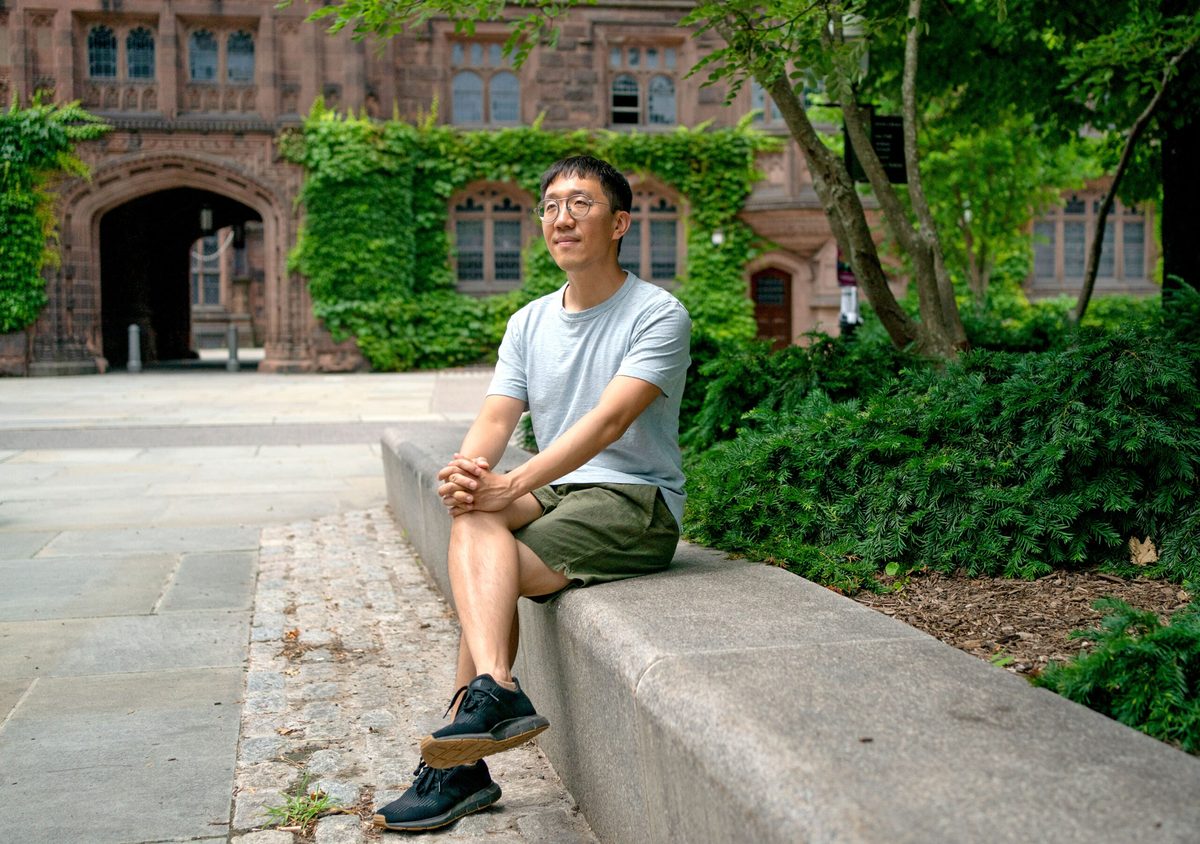
Paper extends Fields Medalist June Huh's Lorentzian polynomial work to any degree; 25 Fields Medalists had just warned AI is 'destroying mathematics.'

Today: Students and postdoc post Lorentzian polynomial paper

Overview

Updated 1 hour ago

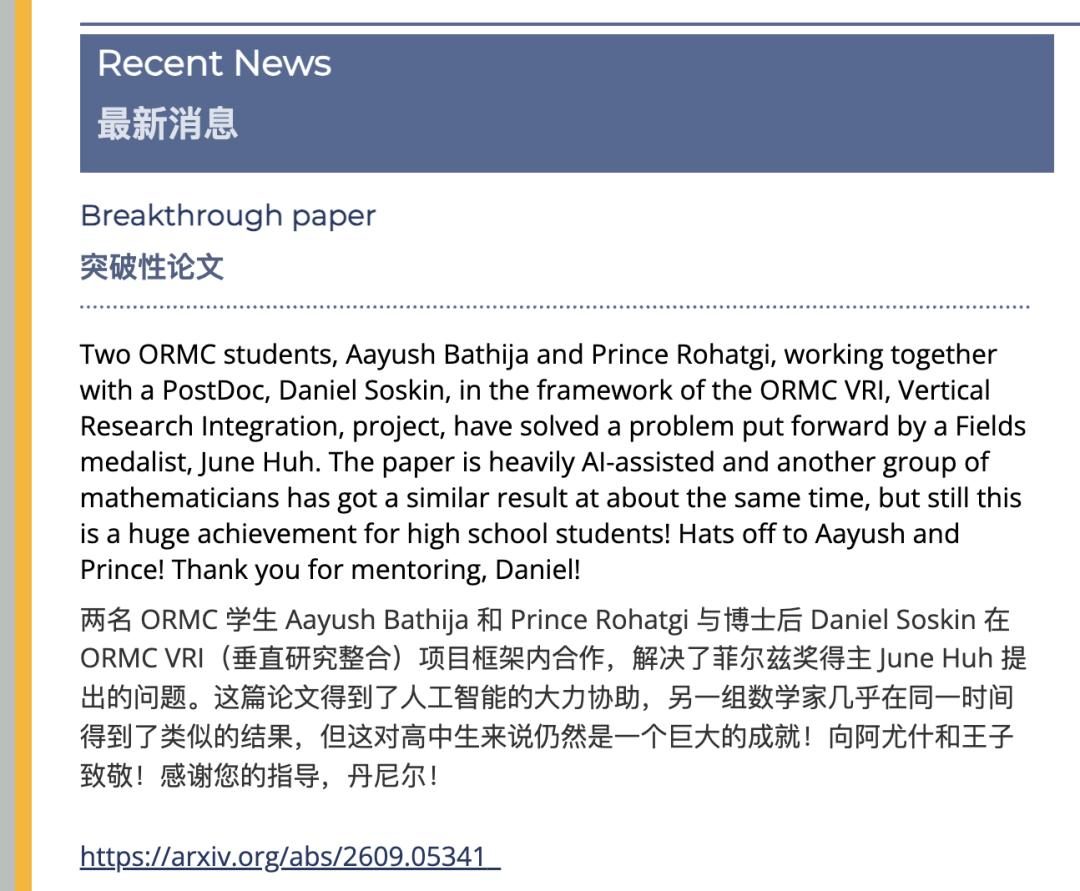
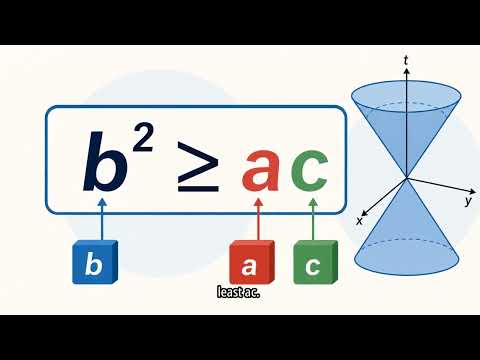
Two high school students from Oak Park High School in California, working with a UCLA postdoc, posted a paper that appears to finish a problem Fields Medalist June Huh worked on without closing. It describes, for any Lorentzian polynomial of any degree in any number of variables, exactly which coefficient ratios are universally bounded — and the tightest possible bound in the three-variable case.

The students say Claude Opus 5 and GPT-5.6 Sol helped them explore, generate proof ideas, and edit, and that they verified every calculation independently. The paper lands in a bitter fight: days earlier, 25 Fields Medalists including Huh and Terence Tao signed a declaration warning AI is destroying mathematics itself.

Why it matters

If this proof holds, AI put high schoolers at a research frontier — just as 25 Fields Medalists warned AI is 'destroying mathematics itself.'

Questions about this story

Free account needed to ask — your question is kept and asked for you right after sign-up. Answers are public.

No questions yet — be the first to ask.

Key Indicators

75 pages
Length of the arXiv paper
'Bounded ratios for Lorentzian polynomials' runs 75 pages.
2
High school student co-authors
Aayush Bathija and Prince Rohatgi, both at Oak Park High School.
25
Fields Medalists who signed the September 2026 open letter
Signatories, including Huh and Tao, warned AI is damaging mathematical rigor.

Voices

Curated perspectives — historical figures and your fellow readers.

Ever wondered what historical figures would say about today's headlines?

Sign up to generate historical perspectives on this story.

People Involved

Organizations Involved

Timeline

July 2022 September 2026

4 events Latest: Today
Tap a bar to jump to that date
  1. Students and postdoc post Lorentzian polynomial paper

    Today Publication

    Bathija, Rohatgi, and Soskin posted 'Bounded ratios for Lorentzian polynomials' to arXiv, extending Huh's quadratic-case result to any degree.

  2. OpenAI claims Navier-Stokes Millennium solution

    Announcement

    OpenAI said its system solved the Navier-Stokes Millennium Prize problem, intensifying the AI-math debate.

  3. 25 Fields Medalists sign anti-AI declaration

    Statement

    Huh, Tao, and 23 others warned that AI-assisted mathematical output is destroying mathematics itself, per reporting.

  4. June Huh wins Fields Medal

    Award

    Huh recognized for linking combinatorics, algebraic geometry, and matroids — work that led to Lorentzian polynomial theory.

Scenarios

1

Proof verified; AI-assisted math gains credibility

Possible Resolves by Sep 14, 2027

Discussed by: UCLA professor Quanquan Gu and supporters of AI-assisted research

The proof survives independent scrutiny and passes peer review without substantial revision. It becomes evidence that AI can lower the barrier to frontier research by pre-university mathematicians, countering the Fields Medalists' declaration. The students' disclosure that some AI suggestions were misleading, and that they verified everything by hand, becomes the template for credible AI-assisted mathematics.

2

A gap surfaces, feeding AI skepticism

Possible Resolves by Sep 14, 2027

Discussed by: Critics of AI-assisted mathematics; signatories of the September declaration

A reviewer or mathematician finds an error in the proof. The students acknowledged some AI suggestions were misleading, so the risk is real. A retraction or correction of the main structural theorem becomes ammunition for the 25 Fields Medalists who signed the declaration, reinforcing their claim that AI output lacks rigor.

3

Math institutions impose AI disclosure rules

Likely Resolves by Mar 14, 2027

Discussed by: Terence Tao, June Huh, and other declaration signatories

The declaration leads to formal policy: major journals or the International Mathematical Union require authors to disclose AI use and its extent. This paper becomes an early test case for how much AI involvement is permissible and how it must be credited. The students' transparency about their AI use would already satisfy such a rule.

Historical Context

3 moments from history that rhyme with this story — and how they unfolded.

June 1976

Four Color Theorem (1976)

Kenneth Appel and Wolfgang Haken proved the four color theorem using 1,936 computer-checked cases. No human could verify the computer's work by hand, and mathematicians split over whether it counted as a proof.

Then

Many mathematicians refused to accept the result for years; simpler proofs were sought.

Now

The theorem was accepted, and machine-checked proof became a standard, legitimate tool in mathematics.

Why this matters now

The current AI-math dispute echoes the four color controversy: proofs that no person can fully trace face skepticism before eventual acceptance — or rejection.

June 1993 - September 1994

Wiles's Fermat proof gap (1993-1994)

Andrew Wiles announced a proof of Fermat's Last Theorem in June 1993. By that fall, a gap emerged in the argument. Wiles, with Richard Taylor, fixed it the following year.

Then

The corrected proof was published and accepted in 1995 after a lengthy review.

Now

The episode showed even celebrated proofs can hide flaws that only surface under close inspection by the community.

Why this matters now

AI-assisted proofs, with their long chains of computation, carry a similar risk of hidden gaps — verification is part of the result.

2026

Jacobian conjecture disproof (2026)

An Anthropic researcher used the company's Claude Fable model to disprove the decades-old Jacobian conjecture. The result drew tens of millions of views and opened the current debate over AI's role in mathematics.

Then

The disproof was widely discussed but also drew suspicion; the Fields Medalists' September declaration followed.

Now

It established a pattern: AI-assisted results get attention, scrutiny, and institutional pushback in equal measure.

Why this matters now

This is the immediate predecessor of the Lorentzian paper and the direct cause of the skepticism the students now face.

Sources

(6)