

Pull to refresh
Logo
Daily Brief
Following
Why Sign Up
Medtronic wins first FDA approval for a defibrillation lead that paces through the heart's natural wiring

Medtronic wins first FDA approval for a defibrillation lead that paces through the heart's natural wiring

New Capabilities
By Newzino Staff |

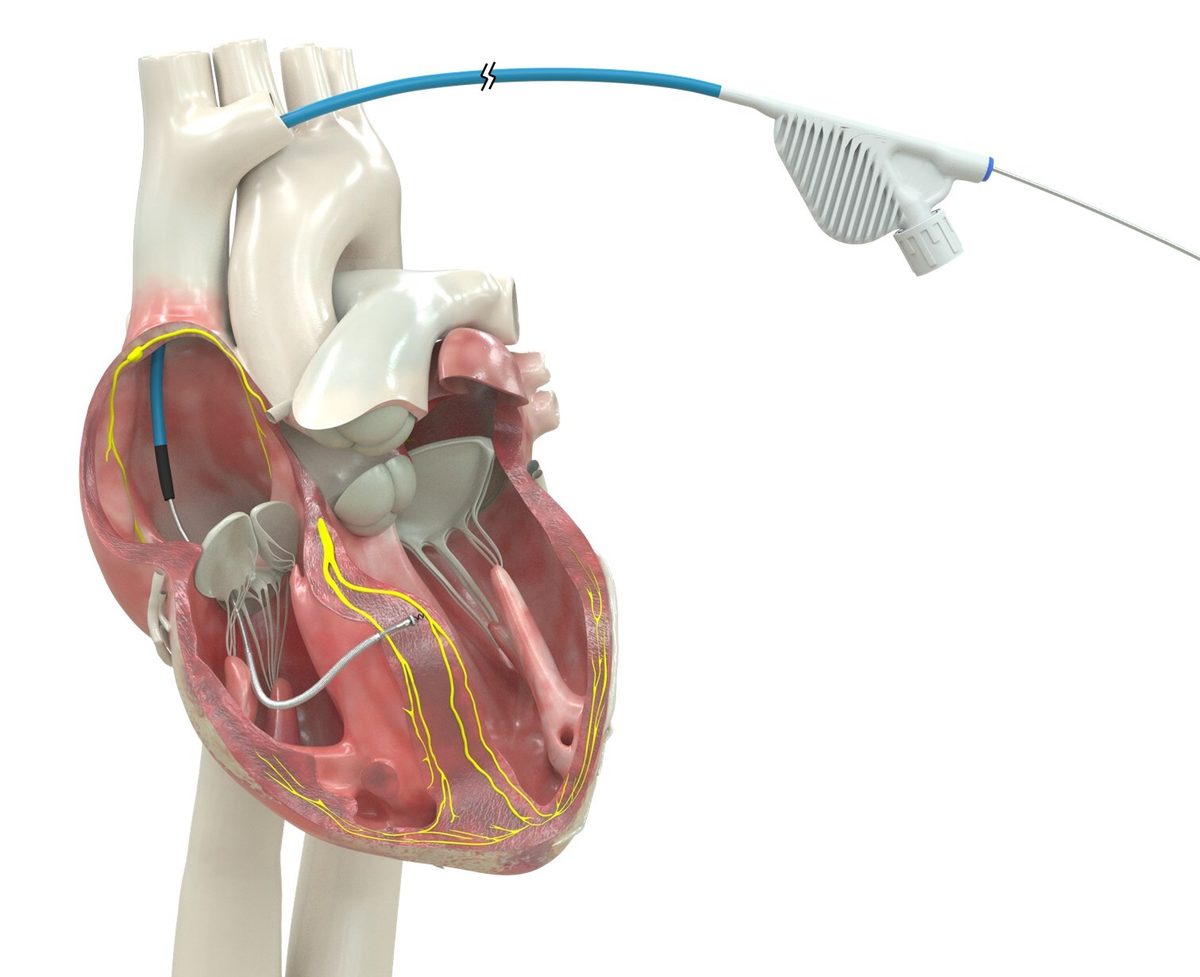
The OmniaSecure lead combines defibrillation protection with physiologic pacing, a pairing previously unavailable in a single device

Today: FDA approves OmniaSecure for conduction system pacing — a first for any defibrillation lead

Overview

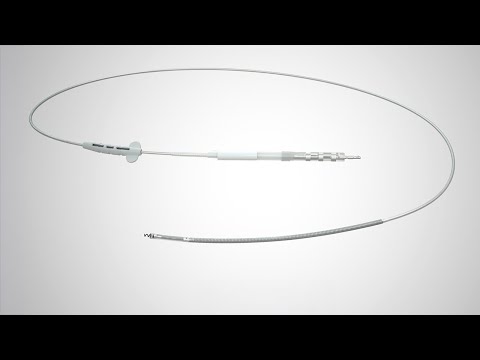
For decades, implantable defibrillators have saved lives by shocking dangerously fast heart rhythms back to normal — but the leads that deliver those shocks also pace the heart in an unnatural pattern that can itself cause damage over time. Medtronic's OmniaSecure lead, now cleared by the Food and Drug Administration (FDA) for placement in the left bundle branch area, is the first defibrillation lead that can also pace through the heart's own electrical wiring, closely mimicking natural heartbeats.

Why it matters

Patients needing defibrillators can now get physiologic pacing from the same lead, eliminating a forced trade-off that has persisted for decades.

Key Indicators

100%
Defibrillation success rate at implant
All tested patients were successfully defibrillated, exceeding the 88% prespecified goal
2.1%
Major complication rate at three months
OmniaSecure-related major complications in the LEADR LBBAP trial
95.8%
Successful implant rate
183 of 191 patients had successful left bundle branch area placement per protocol
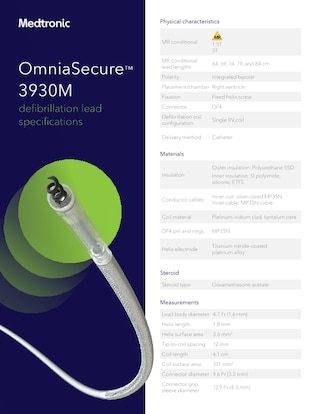
4.7 Fr
Lead diameter
World's smallest defibrillation lead at 1.6 millimeters, roughly the width of a pencil lead

Interactive

Exploring all sides of a story is often best achieved with Play.

Ever wondered what historical figures would say about today's headlines?

Sign up to generate historical perspectives on this story.

Sign Up

Debate Arena

Two rounds, two personas, one winner. You set the crossfire.

People Involved

Organizations Involved

Timeline

  1. FDA approves OmniaSecure for conduction system pacing — a first for any defibrillation lead

    Regulatory

    The FDA granted an expanded indication allowing the OmniaSecure to be placed in the left bundle branch area for conduction system pacing, making it the first defibrillation lead cleared for physiologic pacing. The approval also covers left bundle branch optimized cardiac resynchronization therapy (LOT-CRT).

  2. OmniaSecure launches commercially in the United States

    Commercial

    Medtronic began selling the OmniaSecure defibrillation lead to U.S. hospitals for right ventricular placement.

  3. LEADR LBBAP results published in Heart Rhythm journal

    Publication

    The full results of the LEADR LBBAP trial were published, showing 100% defibrillation success, 95.8% implant success, and 2.1% major complication rate at three months.

  4. OmniaSecure receives initial FDA approval for right ventricular placement

    Regulatory

    The FDA approved Medtronic's OmniaSecure as the world's smallest defibrillation lead (4.7 French / 1.6 mm) for conventional right ventricular placement. LEADR LBBAP results were simultaneously presented at Heart Rhythm 2025.

  5. Abbott announces first leadless pacing in the left bundle branch area

    Research

    Abbott performed the first-ever leadless pacing procedures in the left bundle branch area using its investigational AVEIR CSP device, eliminating the wire entirely. A feasibility study showed 100% implant success in 30 patients.

  6. Boston Scientific INGEVITY+ approved for left bundle branch area pacing

    Regulatory

    The FDA approved Boston Scientific's INGEVITY+ pacing lead for conduction system pacing in the left bundle branch area — the first lead of any kind cleared for this use, though it provides pacing only, not defibrillation.

  7. LEADR LBBAP trial begins enrolling patients

    Clinical Trial

    Medtronic began enrolling 323 patients at 24 centers across 11 countries in a prospective study of the OmniaSecure lead placed in the left bundle branch area.

  8. European Heart Rhythm Association publishes clinical consensus on conduction system pacing

    Guideline

    The European Heart Rhythm Association (EHRA) published a clinical consensus statement on conduction system pacing implantation, standardizing techniques and indications for the growing practice.

  9. Weijian Huang performs first left bundle branch area pacing

    Research

    At Wenzhou Medical University in China, Weijian Huang placed a pacing lead deep into the interventricular septum to capture the left bundle branch in a heart failure patient. The technique offered lower pacing thresholds and more stable lead positions than His bundle pacing.

  10. First permanent His bundle pacing achieved clinically

    Research

    Pramod Deshmukh and colleagues achieved the first clinical permanent His bundle pacing, three decades after Narula's initial demonstration, proving the concept could work long-term.

  11. First demonstration of His bundle pacing in humans

    Research

    Onkar Narula and colleagues demonstrated that pacing at the His bundle — part of the heart's natural conduction system — was technically feasible in humans, though not yet practical for permanent implants.

Scenarios

1

Conduction system pacing becomes standard of care for ICD patients within five years

Discussed by: Electrophysiology specialists and the European Heart Rhythm Association, whose consensus statements have increasingly endorsed conduction system pacing over traditional right ventricular pacing

With the OmniaSecure eliminating the forced trade-off between defibrillation protection and physiologic pacing, guideline committees update recommendations to favor conduction system pacing for most ICD recipients. Long-term data from LEADR LBBAP and competitor trials confirm durable benefits, and the technique's relatively fast learning curve (plateauing after roughly 10 cases) enables broad adoption. Medtronic captures significant ICD market share as the sole provider of a combined defibrillation-and-CSP lead.

2

Leadless conduction system pacing overtakes lead-based approaches

Discussed by: Abbott's clinical team and device analysts following the AVEIR CSP Breakthrough Device Designation and ASCEND pivotal trial

Abbott's AVEIR CSP leadless pacemaker — which eliminates the wire entirely — completes pivotal trials and receives FDA approval, offering conduction system pacing without any lead-related complications (fracture, infection along the lead). If defibrillation can be added via subcutaneous ICDs or future leadless defibrillators, the lead-based approach represented by OmniaSecure could face rapid obsolescence. This scenario depends on Abbott solving the engineering challenge of combining leadless CSP with reliable defibrillation.

3

Long-term data reveals complications specific to left bundle branch area defibrillation leads

Discussed by: Cardiology researchers awaiting longer-term LEADR LBBAP follow-up data, expected at Heart Rhythm Society 2026

The OmniaSecure's three-month safety data is strong, but placing a defibrillation lead deep in the interventricular septum is mechanically different from conventional right ventricular placement. If longer-term follow-up reveals higher rates of lead dislodgement, perforation, or sensing issues in the left bundle branch area, adoption could slow significantly. The projected 98.2% fracture-free rate at 10 years is based on the underlying Model 3830 platform, not direct long-term experience with the defibrillation configuration in this location.

4

Competitors rapidly close the gap with their own defibrillation-plus-CSP leads

Discussed by: Industry analysts and Boston Scientific, which already has FDA approval for a pacing-only CSP lead

Boston Scientific, Abbott, and Biotronik — all of which already have pacing leads approved for left bundle branch area placement — develop defibrillation versions of their own leads, eroding Medtronic's first-mover advantage. The competitive window may be narrow: the underlying concept is proven, and each competitor has deep experience with both defibrillation lead design and CSP lead placement. Medtronic's head start is measured in years, not decades.

Historical Context

Cardiac resynchronization therapy transforms heart failure treatment (2001-2005)

2001-2005

What Happened

In 2001, the FDA approved the first cardiac resynchronization therapy (CRT) device, which paced both ventricles simultaneously to coordinate their contraction in heart failure patients with electrical conduction delays. The landmark COMPANION trial (2004) and CARE-HF trial (2005) showed CRT reduced death and hospitalization by roughly 36% in appropriate patients, establishing it as standard of care.

Outcome

Short Term

CRT became the most significant advance in heart failure device therapy, with Medtronic, Boston Scientific, and St. Jude Medical (now Abbott) competing for a market that grew to several billion dollars annually.

Long Term

CRT proved that how you pace the heart matters as much as whether you pace it — but it still relied on pacing the left ventricle from outside the heart muscle, not through the conduction system. The search for more physiologic approaches continued.

Why It's Relevant Today

The OmniaSecure's conduction system pacing represents the next evolutionary step beyond CRT: instead of pacing both ventricles from outside the muscle, it activates the heart's own wiring. LOT-CRT, also enabled by this approval, combines both approaches.

Medtronic Sprint Fidelis lead recall reshapes device safety expectations (2007)

October 2007

What Happened

Medtronic issued a worldwide recall of its Sprint Fidelis defibrillation lead after reports of lead fractures that caused inappropriate shocks and, in some cases, failure to defibrillate when needed. Roughly 268,000 leads had been implanted. The fracture rate was approximately 2.5% at 30 months — small in percentage terms but affecting thousands of patients who faced difficult decisions about lead extraction surgery.

Outcome

Short Term

Medtronic pulled the lead from the market and faced billions in legal settlements. The recall damaged physician trust and shifted ICD market share to competitors for several years.

Long Term

The industry adopted more rigorous lead reliability testing and reporting standards. The FDA tightened post-market surveillance requirements for cardiac leads. Medtronic's subsequent lead designs, including the OmniaSecure, were developed with explicit long-term reliability projections.

Why It's Relevant Today

The OmniaSecure's projected 98.2% fracture-free rate at 10 years directly reflects lessons from the Sprint Fidelis failure. Its lumenless, cable-conductor design eliminates the conductor coil that fractured in the Fidelis lead. The specter of that recall also explains why the FDA required rigorous multicenter trial data before approving this novel lead placement.

His bundle pacing revival and the pivot to left bundle branch area pacing (2000-2019)

2000-2019

What Happened

After Pramod Deshmukh achieved the first permanent His bundle pacing around 2000, the technique grew slowly due to high pacing thresholds, difficult implant procedures, and unstable lead positions. By 2016, enthusiasm was building — but in 2017, Weijian Huang in China demonstrated a simpler alternative: pacing the left bundle branch area, which offered lower thresholds, higher sensing, and a faster learning curve (roughly 10 cases to proficiency versus 30 for His bundle pacing).

Outcome

Short Term

Left bundle branch area pacing rapidly overtook His bundle pacing as the preferred conduction system pacing technique. By 2023, EHRA published a consensus statement endorsing both approaches.

Long Term

LBBAP became the dominant form of conduction system pacing worldwide, creating the clinical foundation and physician expertise that made the OmniaSecure's expanded indication commercially viable.

Why It's Relevant Today

The OmniaSecure's FDA approval for left bundle branch area placement is the culmination of this pivot. Without Huang's 2017 breakthrough making conduction system pacing technically accessible to a broad base of electrophysiologists, a defibrillation lead designed for this location would have had too small a market to justify development.

Sources

(9)