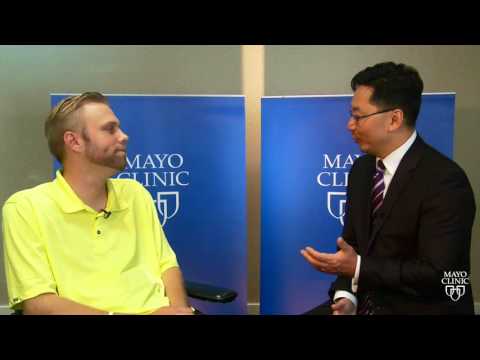
Blood pressure instability has long burdened people with spinal cord injuries. Among those with cervical injuries, 78% experience dangerous drops when sitting upright, yet only 28% receive effective treatment. ONWARD Medical just enrolled the first participant in a trial testing whether an implanted spinal cord stimulator can restore the autonomic signals that paralysis disrupts.
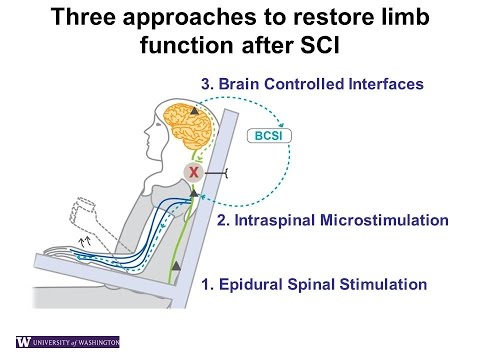
The Empower BP trial applies spinal cord stimulation technology to a new problem. While epidural stimulators have already enabled paralyzed individuals to walk again in research settings, this study targets a less visible but serious consequence of spinal cord injury: the inability to maintain stable blood pressure during everyday activities like sitting, eating, or physical therapy.
Questions about this story
Free account needed to ask — your question is kept and asked for you right after sign-up. Answers are public.
No questions yet — be the first to ask.
Key Indicators
10
FDA Breakthrough Device Designations
ONWARD Medical's ARC-IM system has received breakthrough status for movement, blood pressure, trunk stability, bladder control, and spasticity
78%
Tetraplegia patients with orthostatic hypotension
Blood pressure drops when sitting or standing affect the majority of people with cervical spinal cord injuries
~350,000
Affected individuals in US and Europe
People living with blood pressure instability secondary to spinal cord injury
20
Clinical trial sites
Leading neurorehabilitation centers across the US, Canada, and Europe participating in Empower BP
15 events
Latest: February 4th, 2026 · 8 months ago
Showing 8 of 15
JK to step
Tap a bar to jump to that date
Jump to
February 2026
First Patient Enrolled in Empower BP Pivotal Trial
LatestClinical Trial
ONWARD Medical enrolled the first participant at Craig Hospital in the randomized, double-blinded Empower BP study testing the implantable ARC-IM system for blood pressure instability after spinal cord injury.
November 2025
FDA Clears ARC-EX for Home Use
Regulatory
The FDA granted 510(k) clearance expanding the ARC-EX system indication to allow patients to use the non-invasive stimulator at home.
September 2025
Blood Pressure Feasibility Results Published
Research
Nature Medicine published multi-year feasibility data showing the ARC-IM implant produced immediate blood pressure increases, reduced symptoms, and improved quality of life lasting up to two years.
January 2025
First Commercial Sales of ARC-EX
Commercial
ONWARD Medical announced first commercial sales of the ARC-EX system in the United States, days after FDA approval.
December 2024
FDA Approves First Non-Invasive Spinal Cord Stimulator
Regulatory
The FDA granted De Novo classification to ONWARD's ARC-EX system, making it the first FDA-approved technology shown to improve hand strength and sensation after chronic spinal cord injury.
October 2024
Ottobock Invests €50M, Takes 10% Stake
Corporate
ONWARD Medical raised €50 million including a cornerstone investment from prosthetics leader Ottobock, establishing a strategic partnership for commercialization.
May 2024
UP-LIFT Trial Results Published
Clinical Trial
Nature Medicine published results from the 65-participant UP-LIFT trial showing 90% of participants improved upper limb strength or function with non-invasive ARC-EX stimulation.
May 2023
Brain-Spine Interface Enables Natural Walking
Research Breakthrough
Researchers published in Nature a brain-computer interface linked to spinal stimulation that enabled a man with chronic tetraplegia to walk naturally in community settings, with stability maintained for over one year.
February 2022
Same-Day Recovery Demonstrated in Complete Paralysis
Research Breakthrough
Three individuals with complete sensorimotor paralysis stood, walked, cycled, and swam within a single day of implant activation, published in Nature Medicine.
2021
ONWARD Medical Goes Public on Euronext
Corporate
The company completed its initial public offering on the Euronext stock exchange, raising capital to advance clinical development.
2020
FDA Grants First Breakthrough Designation for Movement Restoration
Regulatory
ONWARD Medical received its first FDA Breakthrough Device Designation for the ARC-IM system to restore leg motor function in people with spinal cord injury.
2018
Paraplegic Patients Walk with Targeted Stimulation
Research Breakthrough
EPFL and Lausanne University Hospital researchers demonstrated that activity-specific epidural stimulation programs enabled three paralyzed patients to walk, including outdoors, after five months of rehabilitation.
April 2014
Four Paralyzed Men Move Legs Voluntarily
Research Breakthrough
Expanded study published in Brain showed epidural stimulation enabled four men with complete paralysis to voluntarily control their legs, challenging the belief that complete paralysis is permanent.
2014
ONWARD Medical Founded
Corporate
Grégoire Courtine and Jocelyne Bloch founded GTX Medical (later renamed ONWARD Medical) to commercialize their spinal cord stimulation research from EPFL.
May 2011
First Paralyzed Patient Regains Movement with Epidural Stimulation
Research Breakthrough
Rob Summers, paralyzed after being struck by a vehicle, became the first person to regain voluntary movement through epidural electrical stimulation in a study published in The Lancet by University of Louisville, UCLA, and Pavlov Institute researchers.
Scenarios
1
FDA Approves Implant for Blood Pressure, Opens New Market
Likely
Discussed by: Industry analysts covering ONWARD Medical; medical device market reports
If Empower BP meets its primary endpoints, the FDA could approve the ARC-IM system for blood pressure instability by 2028-2029. This would create a new treatment category for approximately 350,000 people in the US and Europe who experience this complication. Given ONWARD's track record with breakthrough designations and the ARC-EX approval, the regulatory pathway appears established. Success would validate the company's strategy of expanding from movement restoration to autonomic function recovery.
2
ARC-IM Becomes Multi-Indication Platform
Possible
Discussed by: ONWARD Medical investor communications; neurotechnology researchers
With 10 FDA Breakthrough Device Designations covering movement, blood pressure, trunk stability, bladder control, and spasticity, ONWARD could pursue additional pivotal trials for the ARC-IM implant. A single surgical implant addressing multiple complications would substantially increase the value proposition for patients and healthcare systems. The company's partnership with Ottobock and recent brain-computer interface licensing suggest this platform strategy is underway.
3
Trial Fails, Setback for Autonomic Therapies
Unlikely
Discussed by: Clinical trial analysts; medical device investors
Pivotal trials are inherently uncertain. If Empower BP fails to meet its primary endpoints—demonstrating statistically significant improvement in orthostatic hypotension management compared to sham stimulation—it would delay autonomic function treatments for spinal cord injury patients and potentially impact ONWARD's stock and ability to fund additional indications. However, the strong feasibility data showing two-year benefit durability reduces this risk.
4
Major Medical Device Company Acquires ONWARD
Possible
Discussed by: Medical device industry analysts; investment banking reports
ONWARD's proven regulatory pathway, multiple breakthrough designations, and first-mover advantage in spinal cord stimulation for paralysis make it an acquisition target for larger neuromodulation companies like Medtronic, Abbott, or Boston Scientific. The €50 million Ottobock investment at a 10% stake implies a valuation that could attract strategic interest, particularly if the Empower BP trial succeeds.
Historical Context
3 moments from history that rhyme with this story — and how they unfolded.
1 of 3
1987-1997
Deep Brain Stimulation for Parkinson's Disease (1987-1997)
French neurosurgeon Alim-Louis Benabid discovered that high-frequency electrical stimulation of the thalamus could suppress tremors in Parkinson's patients. Medtronic commercialized the therapy, which received FDA approval in 1997 for essential tremor and 2002 for Parkinson's disease.
Then
Deep brain stimulation offered an alternative to brain lesioning surgery, with adjustable and reversible effects.
Now
DBS became standard of care for advanced Parkinson's, with over 200,000 patients treated. It established the business model and regulatory pathway for implantable neurostimulation therapies.
Why this matters now
ONWARD's spinal cord stimulators follow the same translation pattern: academic discovery, breakthrough device designation, pivotal trials, FDA approval, and commercialization by a specialized company. The DBS precedent shows how neurostimulation can evolve from experimental to standard of care over 10-15 years.
2 of 3
1984-present
Cochlear Implants Restore Hearing (1984-Present)
The FDA approved the first cochlear implant in 1984, enabling deaf individuals to perceive sound through direct electrical stimulation of the auditory nerve. Early devices provided limited benefit, but decades of refinement dramatically improved outcomes.
Then
Initial cochlear implants helped only profoundly deaf adults; children were not candidates until 1990.
Now
Over one million people worldwide now use cochlear implants. Most deaf children in developed countries receive implants, and many achieve near-normal language development. The technology created a multi-billion dollar industry.
Why this matters now
Like cochlear implants, spinal cord stimulation for paralysis replaces lost neural function with electrical signals. The cochlear implant trajectory—from crude early devices to sophisticated systems that restore near-normal function—suggests what may be possible as spinal cord stimulation technology matures over the next two decades.
3 of 3
1967-present
Spinal Cord Stimulation for Chronic Pain (1967-Present)
Norman Shealy implanted the first spinal cord stimulator for chronic pain in 1967, based on the gate control theory that electrical stimulation could block pain signals. Medtronic, Boston Scientific, and Abbott developed commercial systems that now represent a multi-billion dollar market.
Then
Early spinal cord stimulators were crude and had high complication rates, limiting adoption.
Now
The global spinal cord stimulation market reached approximately $2.5 billion annually, with devices implanted in hundreds of thousands of patients for failed back surgery syndrome and other chronic pain conditions.
Why this matters now
ONWARD's technology repurposes the same basic approach—epidural electrical stimulation—for a fundamentally different goal: restoring function rather than blocking pain. The established supply chains, surgical expertise, and reimbursement frameworks for pain stimulators provide infrastructure that could accelerate adoption of function-restoring stimulators.