
Pull to refresh
Logo
Daily Brief
Following
Why Sign Up
Miami's Signature Bridge spirals into legal battles and safety crises as costs pass $866 million

Miami's Signature Bridge spirals into legal battles and safety crises as costs pass $866 million

Built World
By Newzino Staff |

Design errors, defective concrete, and fatal construction incidents plague Florida's marquee highway project

April 1st, 2026: Construction resumes under heightened safety scrutiny

Overview

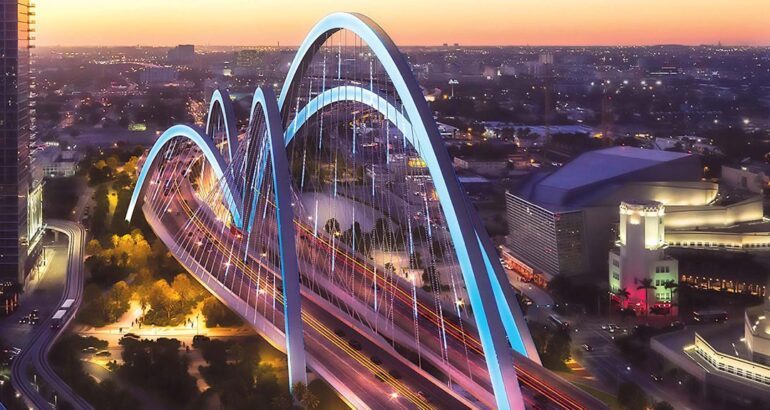
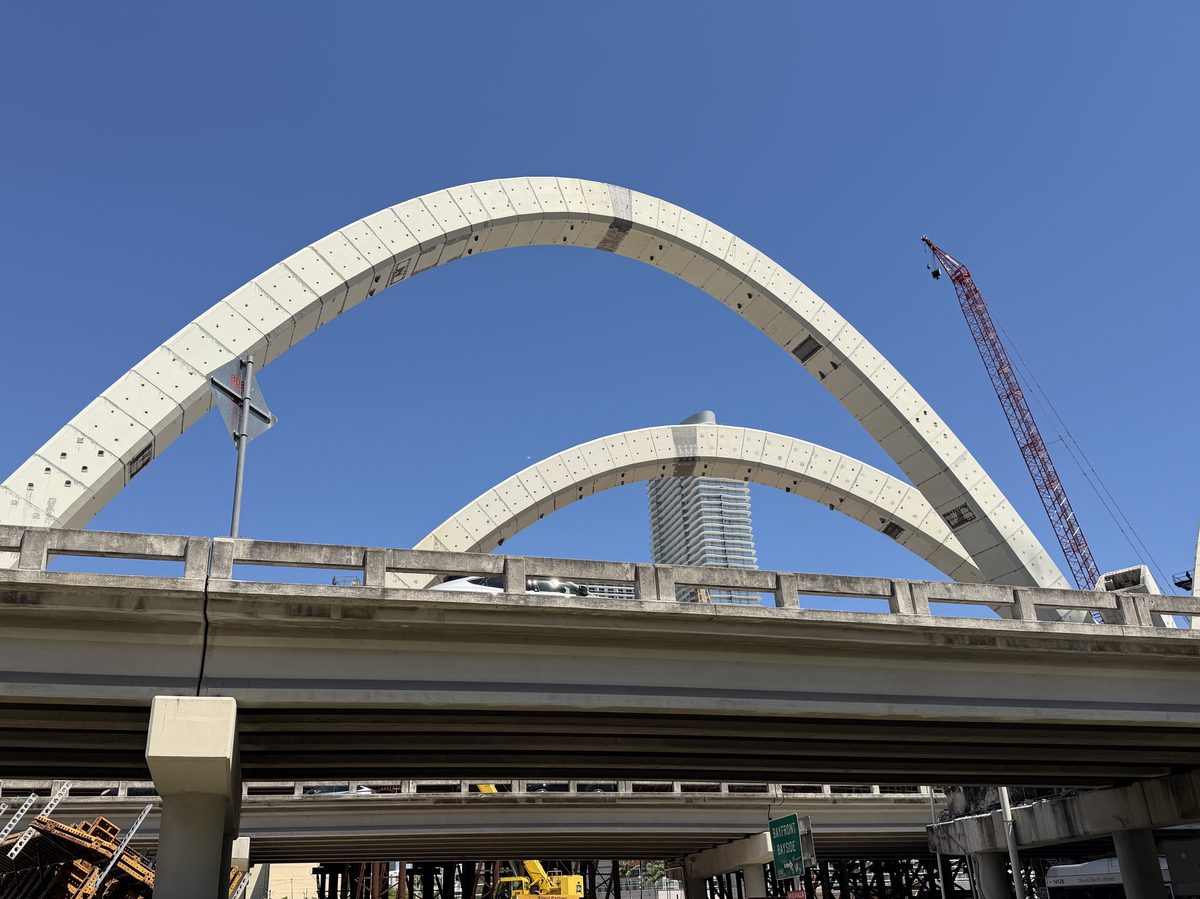
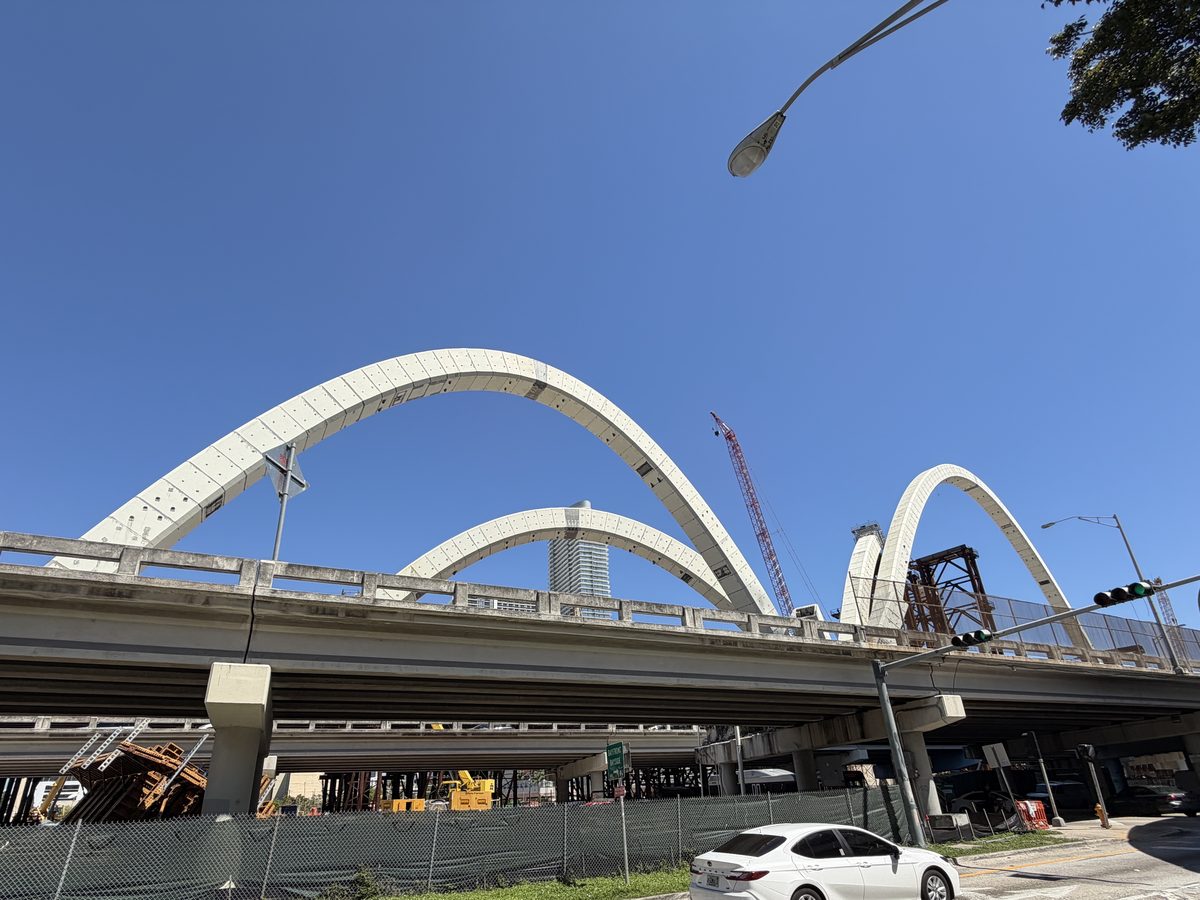
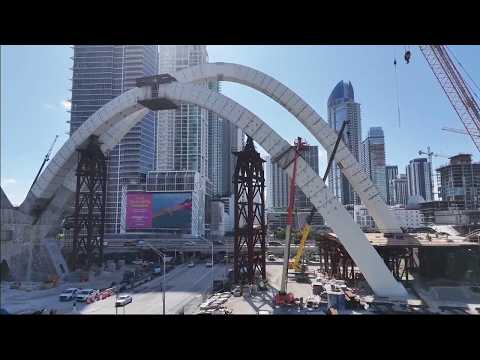
Florida's Department of Transportation (FDOT) hired a contractor team in 2017 to rebuild the interchange where three major Miami highways meet, anchored by a striking 1,000-foot arched bridge over Biscayne Boulevard. Eight years later, the $802 million project has ballooned to $866 million, completion has slipped from 2024 to 2029, and the parties are mired in lawsuits totaling hundreds of millions of dollars—all stemming from wind-load calculations that were wrong before a single footing was poured.

Why it matters

A single miscalculation on a design-build megaproject triggered $400 million in claimed losses, exposing how thinly insured major infrastructure work can be.

Key Indicators

$866M
Current project cost
Up from the original $802 million budget, a $64 million increase so far with litigation still pending.
$405M
Claimed extra costs
The amount the construction joint venture says HDR's design errors added to the project.
$12M
HDR settlement amount
Capped near HDR's $10 million professional liability policy limit after a judge ruled out gross negligence.
5 years
Schedule delay
Completion pushed from 2024 to late 2029, more than doubling the original construction timeline.
7
Workers killed or seriously injured
One worker died and six were critically injured in two separate incidents in early 2026.

Interactive

Exploring all sides of a story is often best achieved with Play.

Ever wondered what historical figures would say about today's headlines?

Sign up to generate historical perspectives on this story.

Sign Up

Debate Arena

Two rounds, two personas, one winner. You set the crossfire.

People Involved

Organizations Involved

Timeline

  1. Construction resumes under heightened safety scrutiny

    Construction

    Work restarts weeks after the fatal accident amid growing public concern and ongoing OSHA investigations into both incidents.

  2. Worker dies in fall from overpass

    Safety

    Jorge Eliud Galindo Thompson falls approximately 20 feet from an overpass onto Biscayne Boulevard before 4 a.m. and dies. FDOT halts all construction on the project. OSHA opens a second inspection.

  3. Beam collapse injures six workers

    Safety

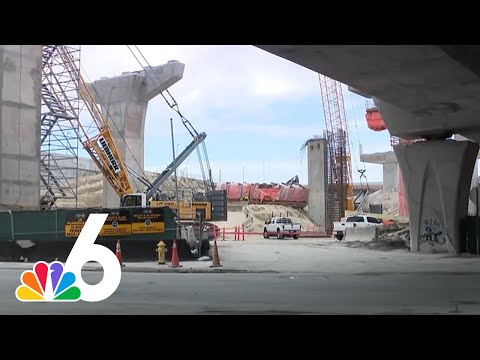
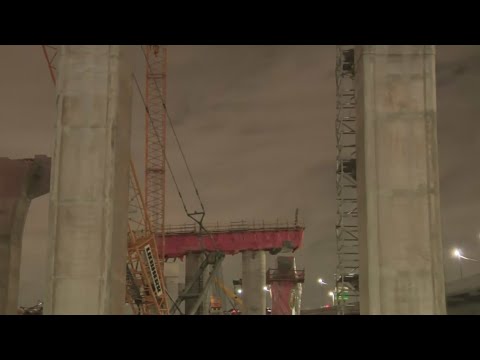
    A concrete beam topples at the construction site around 10 p.m., throwing six workers roughly 30 feet and trapping one. All six are taken to Ryder Trauma Center; five are listed in critical condition. FDOT orders a safety stand-down and OSHA opens an investigation.

  4. Completion date pushed to late 2029

    Schedule

    FDOT revises the project completion date from 2027 to December 2029 and raises the total cost estimate from $840 million to $866 million.

  5. JV sues HDR's excess insurers

    Legal

    Archer Western–de Moya files a new lawsuit against HDR's excess policy insurers, accusing them of refusing to contribute to the settlement after the primary $10 million policy was eroded by legal defense costs.

  6. HDR settles for $12 million

    Legal

    HDR agrees to pay $12 million without admitting liability. A judge's earlier ruling dismissing gross negligence capped HDR's exposure near its $10 million professional liability policy limit. The JV also releases $30 million in fees it had withheld from HDR.

  7. JV sues HDR in federal court

    Legal

    Archer Western–de Moya files a negligence, gross negligence, and breach-of-contract lawsuit against HDR in Miami federal court, seeking damages for design errors that allegedly added $405 million in costs.

  8. Defective concrete discovered at on-site plant

    Construction

    A broken valve at one of two on-site concrete plants causes excessive fly ash to contaminate concrete poured into roadway segments, piers, piles, and footings over three months. Sections must be demolished and rebuilt at an added cost of $3.6 million.

  9. FDOT approves redesigned bridge after wind-load errors found

    Design

    HDR's wind calculations are found to use the wrong code, gust factor, and drag coefficient. The arches as originally designed would not have withstood 140-mph winds. FDOT approves the corrected design, but 10 of 18 months of design time have already elapsed.

  10. JV commits to fixed price based on HDR's design

    Contract

    The joint venture locks in a guaranteed maximum price for construction, later alleging HDR's design was incomplete and under-designed at the time.

  11. FDOT issues notice to proceed

    Contract

    The Archer Western–de Moya Joint Venture receives its formal notice to proceed on the $802 million I-395/SR 836/I-95 design-build project, with HDR Engineering handling design.

Scenarios

1

Project limps to 2029 finish with costs near $1 billion

Discussed by: Engineering News-Record, Miami New Times, and Florida transportation analysts

The most likely path: construction continues under tighter safety oversight, OSHA investigations result in fines but no shutdown order, the insurance lawsuit settles or is decided without dramatically changing the financial picture, and FDOT absorbs the remaining overruns through state funds. The bridge opens around 2029 at a total cost approaching $1 billion—roughly 25 percent over the original budget. The project becomes a cautionary tale for design-build procurement but not a policy-changing scandal.

2

OSHA findings trigger extended shutdown, pushing completion past 2030

Discussed by: Construction safety advocates and Miami-area officials quoted in NBC Miami and Miami Today

If OSHA investigations reveal systemic safety failures—not isolated incidents—the agency could impose penalties severe enough to force an extended work stoppage or require a new safety plan before construction resumes. Combined with the ongoing legal disputes and public pressure after a worker death, this could push completion past 2030 and raise costs further. A third serious incident would make this scenario much more probable.

3

Excess insurers lose, opening HDR to larger payout

Discussed by: Bloomberg Law, insurance industry analysts

If the court rules that HDR's excess insurers must contribute beyond the $10 million primary policy, it could substantially increase the total payout to the joint venture—though still far short of the $405 million claimed. Such a ruling would set a precedent for how professional liability coverage works on design-build megaprojects, potentially reshaping insurance requirements industry-wide.

4

JV seeks additional damages from FDOT over project management

Discussed by: Construction law attorneys and industry observers at ENR

With the HDR settlement resolved and costs still climbing, the joint venture could turn to FDOT itself for additional compensation, arguing the agency's procurement structure and oversight contributed to the problems. Design-build contracts are meant to shift risk to the private sector, but when design errors this fundamental occur before construction begins, the question of who bore the risk of incomplete design at the time of the guaranteed maximum price becomes contested.

Historical Context

Boston's Big Dig cost overruns and ceiling collapse (1991–2007)

1991–2007

What Happened

Boston's Central Artery/Tunnel Project, known as the Big Dig, was approved at $2.8 billion and finished at $14.6 billion—a roughly fivefold increase. In 2006, a 26-ton concrete ceiling panel fell on a car in a connector tunnel, killing motorist Milena Del Valle. Investigators found the wrong type of epoxy had been used to anchor the panels.

Outcome

Short Term

Contractors paid more than $450 million in settlements. The Del Valle family received $28 million. Multiple state officials were fired over cost concealment.

Long Term

The Big Dig became the standard reference point for American infrastructure mismanagement and reshaped how states approach megaproject oversight, procurement transparency, and contractor liability.

Why It's Relevant Today

Like Miami's Signature Bridge, the Big Dig involved design and material failures discovered after commitments were locked in, cost increases that dwarfed the settlements extracted from responsible parties, and safety consequences that escalated public scrutiny. Both illustrate the gap between the damages caused by engineering errors and the professional liability coverage available to recover them.

San Francisco–Oakland Bay Bridge eastern span replacement (2002–2013)

2002–2013

What Happened

California's replacement of the Bay Bridge eastern span was estimated at $1.4 billion and finished at $6.5 billion. After opening in 2013, inspectors found cracked anchor rods, leaking bolt holes, and questionable steel quality. A state audit found the California Department of Transportation (Caltrans) concealed cost overruns and silenced engineers who raised safety concerns.

Outcome

Short Term

The main contractor sued Caltrans for $40 million; a separate $34 million settlement covered defective work. The bridge opened but required ongoing monitoring and repairs.

Long Term

The project damaged public trust in Caltrans and led to reforms in how the agency reports costs and manages dissent. It demonstrated that choosing an aesthetically ambitious design without adequate engineering expertise multiplies risk.

Why It's Relevant Today

Both projects chose architecturally distinctive bridge designs—Miami's six-legged arches, the Bay Bridge's self-anchored suspension span—that proved far more complex to engineer than anticipated. In both cases, the gap between the design ambition and the engineering capacity to deliver it created cascading delays and cost overruns that no single settlement could cover.

Sources

(10)