0
Do you think Microsoft really has achieved what they say?
Probably not to the standard the claim requires: the evidence is contested at a technical level, Nature itself hedged when it published the original paper, and Microsoft has retracted a near-identical claim before.
Why it matters: If Microsoft is right, it has a structural stability edge over every rival; if it's wrong, it has spent years on a dead end while Google, IBM, and IonQ scale real systems.
- When Nature published Microsoft's February 2025 paper, the journal added an editorial note saying the data alone does not prove Majorana zero modes exist — an unusual caveat that signals internal reviewer doubt.
- Legg's peer-reviewed critique identifies three specific problems: a coding error in the analysis, a flawed calibration step, and raw conductance data that was omitted — and argues ordinary material disorder explains the measurements just as well.
- Microsoft's 2021 Majorana paper was retracted from Nature after outside experts showed the same pattern: signals that looked like topological states but could be explained by material defects.
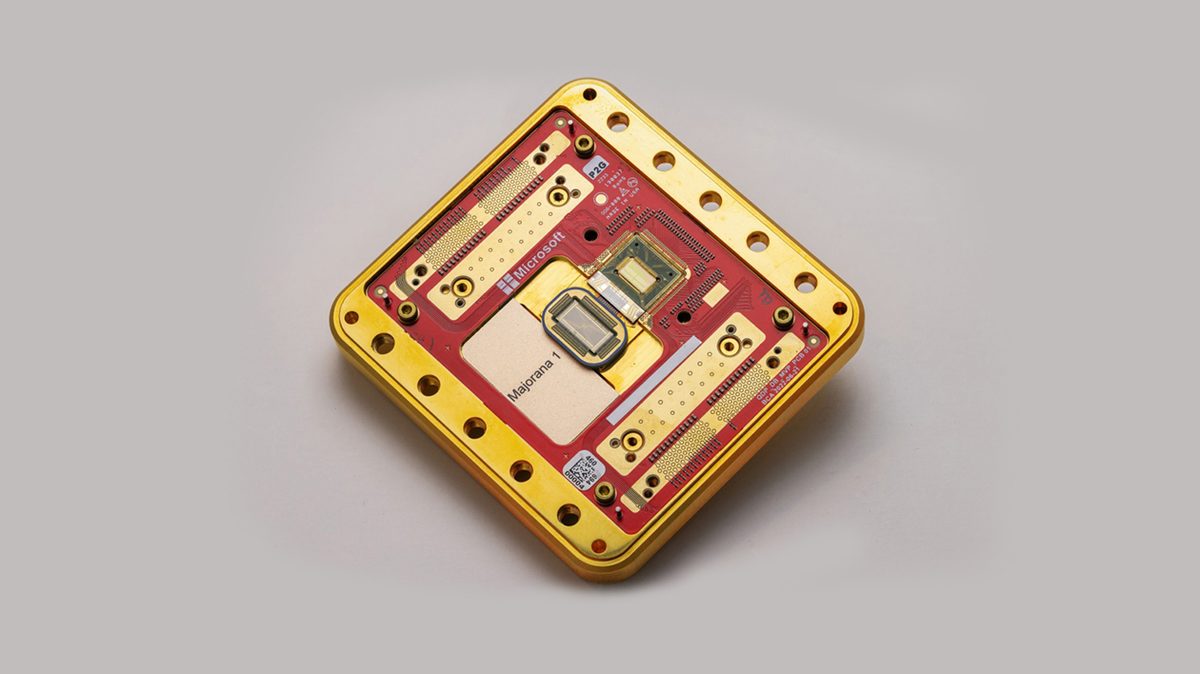
- Microsoft's June 2026 Majorana 2 chip claims 20-second qubit lifetimes but is based on an unreviewed preprint, and independent physicists note it shows only Z-axis measurements — half of what a verified topological qubit requires.
Room for disagreement
- Microsoft, via Chetan Nayak, argues the measurements do justify the topological qubit claim and points to advancing to the final phase of a DARPA evaluation as independent third-party validation — a fair point that critics haven't fully addressed.
- Sergey Frolov and Henry Legg hold that the gap between Microsoft's public claims and what the peer-reviewed data actually shows follows the same pattern as the 2021 retraction, meaning skepticism is the default until reproducible, complete measurements exist.
AI-generated with web search — may be wrong. Check the linked sources.