Anchor

Property cleanup order erases four Clarion Alley murals in San Francisco
Built World San Francisco, CA localClarion Alley Mural Project's 34-year reliance on verbal agreements collides with a single cleanup order
3 days ago: Mission Local reports the incidentNew here? Follow stories to track developments over time. Create a free account to get updates when stories you care about change.
Overview
Updated 1 hour agoA property manager ordered an employee to paint over four murals in Clarion Alley, San Francisco's most visited public art corridor. Three murals were completely covered before neighbor Doug Rhodes grabbed the paint and stopped the fourth.
The Clarion Alley Mural Project has run the alley for 34 years on verbal agreements, not written contracts. A single cleanup order erased four murals, and the owner has no legal duty to restore them. The organization is now seeking city help.
Why it matters
If one cleanup order can erase four murals, none of the 50-plus pieces drawing 200,000 visitors a year are safe without written agreements.
Questions about this story
Free account needed to ask — your question is kept and asked for you right after sign-up. Answers are public.
No questions yet — be the first to ask.
Key Indicators
4
Murals painted over
Three completely covered, one partially, in a single cleanup order.
34
Years CAMP has relied on verbal agreements
CAMP was founded in 1992; no written contracts cover most murals.
$35,000
CAMP fundraiser launched two weeks before incident
For restoration, organization sustainability, and alley cleanup.
200,000
Annual visitors to Clarion Alley
CAMP reports over 200,000 visitors each year.
50+
Murals in Clarion Alley
The alley contains more than 50 murals total.
Related Media
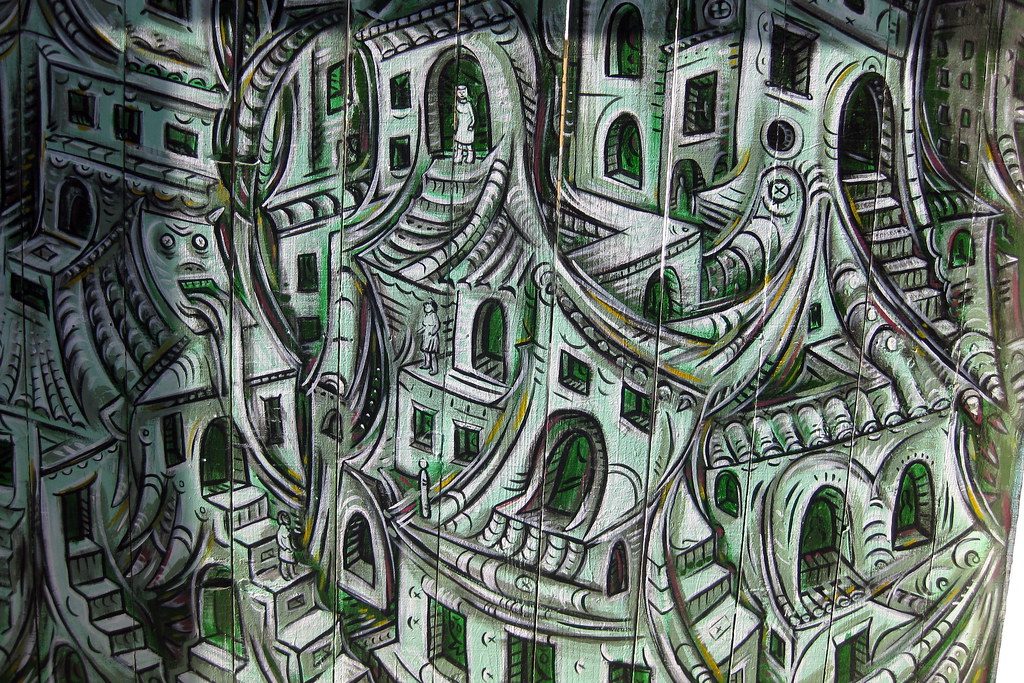
San Francisco - Mission District: Clarion Alley - Mural by Scott Hove
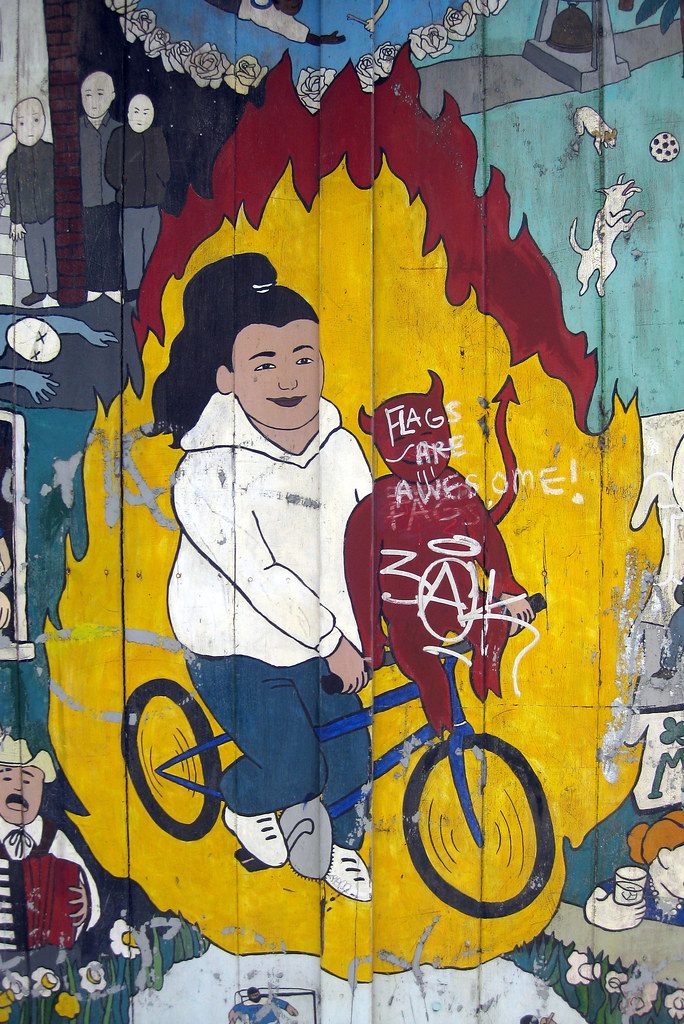
San Francisco - Mission District: Clarion Alley - Mural by Greta Shred
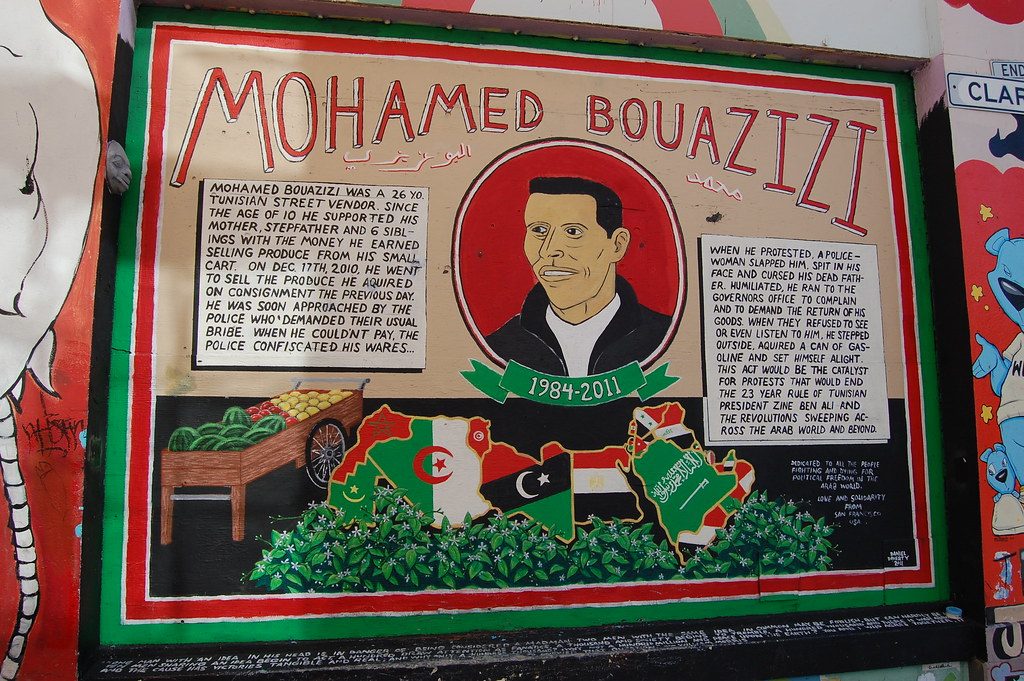
Clarion Alley Murals - Mohamed Bouazizi

19.3K views
12:38
Local Street Artist Forced To Remove Beloved Mural.
Judge Porter's Path
1.1K views
2:55
Passionate debate over removal of street murals
FOX 13 Tampa Bay
185 views
1:52
Argument FOR/AGAINST Removing Art | Town Destroyer
WORLD
Images from Openverse under Creative Commons licenses. Videos from YouTube.
Voices
Curated perspectives — historical figures and your fellow readers.
Play
Exploring all sides of a story is often best achieved with Play.
Most of these play right now — no account needed. Sign up to save scores, keep a streak, and unlock Debate and Predict.
Log in
Sign Up
Higher or Lower
A number from this story, against one from elsewhere in the news — guess which is bigger, then keep the chain going. 5 rounds, 3 strikes; a miss costs a strike and resets your streak.
Example
Anchor
EU tariff revenue
$52B
Big for this kind of number
Mystery
Pentagon AI contract
?
Round 1
Streak: 0
Mystery
?
Keyboard: ↓/L lower · ↑/H higher
0 pts
Best streak: 0 · Rounds: 0
0 points — sign up to put that on the leaderboard.
Now try on this story
Connections
Sixteen names from the news. Find the four hidden groups of four. Four mistakes max.
Loading today's puzzle…
0/4 groups
Mistakes
Sign up to keep a daily streak — a new puzzle lands every day.
Now try on this story
Exit debate?
Your progress in this debate will be lost.
How it works
- 1 Two AI personas square off on this story.
- 2 You predict who'll win each round — correct picks earn XP.
- 3 One crossfire question is yours to fire. Pick it carefully.
Couldn't generate a topic
Select Your Champions
Choose one persona for each side of the debate
DEBATE TOPIC
Choose personas with different perspectives for a more dynamic debate.
SIDE A (PRO)
Select debater for this side:
No debate personas available right now.
SIDE B (CON)
Select debater for this side:
No debate personas available right now.
VS
Get ready to make your prediction...
Round of
Claim
Evidence
Stakes
Crossfire Answer
Closing Statement
Claim
Evidence
Stakes
Crossfire Answer
Closing Statement
Your Crossfire Question
Generating arguments...
Who's Got This Round?
Make your prediction before the referee scores
The referee scores both sides on
Correct predictions earn +20 XP
· Press 1 or 2 to pick
Evidence
40%
Logic
30%
Detail
20%
Style
10%
Round Results
Your Pick
Not this time
(%)
Overall Score
/10
Your Pick
Not this time
(%)
Overall Score
/10
Set the Crossfire
Pick the question both personas must answer in the final round
Crafting crossfire questions...
Choosing a question earns +10 XP crossfire bonus
🏆
Total XP Earned
Cred Change
Predictions
Debate Oracle! You called every round!
Sharp Instincts! You know your debaters!
The Coin Flip Strategist! Perfectly balanced!
The Contrarian! Bold predictions!
Inverse Genius! Try betting the opposite next time!
XP Breakdown
Base completion
+20 XP
Rounds played ( rounds x 5 XP)
+ XP
Correct predictions ( correct x 20 XP)
+ XP
Crossfire bonus
+10 XP
Accuracy
%
Prediction History
Round
You picked:
✓
✗
Now try on this story
Keep debating to level up your credibility and unlock achievements
People Involved
Organizations Involved
Clarion Alley Mural Project (CAMP)
Nonprofit arts organization
Managing organization; seeking restoration funding and city support
Grassroots artist-run nonprofit producing socially engaged public art in San Francisco's Mission District since 1992.
Makras Real Estate
Property management company
Managed the cleanup order for the property owner
Manages the building at 3331 17th St. in Clarion Alley.
GE
Guerrero V. Espinoza Trust
Property owner
Owns 3331 17th St.; no public comment
Listed in city records as the owner of 3331 17th St., unchanged since 2001.
Timeline
January 1992 September 2026
9 events
Latest: 3 days ago
Tap a bar to jump to that date
-
Mission Local reports the incident
Latest ReportMission Local publishes details; CAMP confirms murals are restorable with unclear cost.
-
Four murals painted over
VandalismA worker paints over three murals; Doug Rhodes stops him mid-way through the fourth.
-
CAMP launches $35,000 fundraiser
FundingTwo weeks before the incident, CAMP launches a fundraiser for restoration and operations.
-
Graffiti Camp for Girls mural completed
ArtStudents complete a new mural this spring, one of the four later painted over.
-
Chuy Campusano mural restored
RestorationCommunity members restore the 33-year-old mural after a landlord painted it over.
-
Brydum memorial mural painted
ArtJohn Viola paints 'We're all in this together' memorializing activist Kirsten Brydum.
-
Adobe Books tribute mural painted
ArtDaniel Doherty paints 'Everything Must Go' honoring Adobe Books' former home.
-
Trust takes ownership of 3331 17th St.
OwnershipGuerrero V. Espinoza Trust becomes owner of the building where the murals were later painted over.
-
CAMP founded
MilestoneSix artists establish the Clarion Alley Mural Project, inspired by Balmy Alley.
Historical Context
3 moments from history that rhyme with this story — and how they unfolded.
November 2013 - February 2020
5Pointz whitewashing and the $6.7M verdict (2013-2020)
In 2013, a New York developer whitewashed the 5Pointz graffiti mecca in Queens overnight, destroying dozens of works. In 2018, a federal jury awarded $6.7 million to 21 artists under the Visual Artists Rights Act (VARA), which protects works of 'recognized stature.'
Then
The developer was ordered to pay damages.
Now
The Second Circuit upheld the award in 2020, establishing that mural destruction can carry legal consequences.
Why this matters now
Raises the question of whether VARA or similar protections could apply to Clarion Alley, where verbal agreements make legal claims harder to pursue.
2025-2026
Chuy Campusano mural painted over and restored (2025)
A landlord ordered a 33-year-old mural by Chuy Campusano in Clarion Alley painted over in 2025. Family members and friends later restored it. The mural was graffitied again earlier this year, showing how vulnerable these works remain.
Then
The mural was restored by community members, not the landlord.
Now
The cycle of painting over and restoring demonstrates the fragile, informal system governing the alley.
Why this matters now
Shows that community restoration is possible but offers no permanent protection against future erasure.
Early 1970s
Balmy Alley murals (1970s)
Artists in San Francisco's Mission District began covering Balmy Alley with murals protesting human rights abuses in Central America. The tradition of community muralism spread, and Clarion Alley was born in 1992.
Then
Balmy Alley became a model for community mural projects.
Now
The Mission District's mural culture became a defining feature of the neighborhood, drawing tourists worldwide.
Why this matters now
Explains the deep roots of Clarion Alley's mural tradition and why their destruction resonates beyond a single alley.
Sources
(2)Related Stories
Detroit events firm petitions to take over public alley for The Leland Green
Built World
Updated Aug 26
San Francisco board saves 25-year-old sycamore as city moves to limit tree appeals
Rule Changes
Updated Yesterday
St. Paul nuisance abatement appeal narrows to one vehicle at Wyoming Street property
Rule Changes
Updated Aug 27
Detroit City Council weighs emergency demolition of vacant Dakota house
Built World
Updated Aug 26
San Francisco pretrial diversion nonprofit files closure notice
Money Moves
Updated 4 days ago
Corpus Christi street projects move to public hearing before Type B board
Built World
Updated 3 days ago