



Pull to refresh
Logo
Uranium cube analysis shows Nazi Germany was far from an atomic bomb

Uranium cube analysis shows Nazi Germany was far from an atomic bomb

New Capabilities

New nuclear forensics challenges Heisenberg's claim that his final reactor was close to criticality

September 1st, 2026: PNAS Nexus study shows B8 was far from criticality

Overview

Updated 1 hour ago

Werner Heisenberg, the Nobel laureate who led Nazi Germany's nuclear program, always insisted his final reactor experiment was nearly working—just a bit more uranium from a chain reaction. New analysis of surviving uranium cubes shows he was wrong.

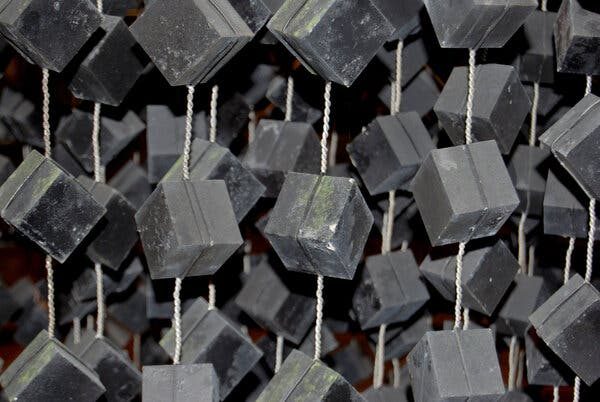
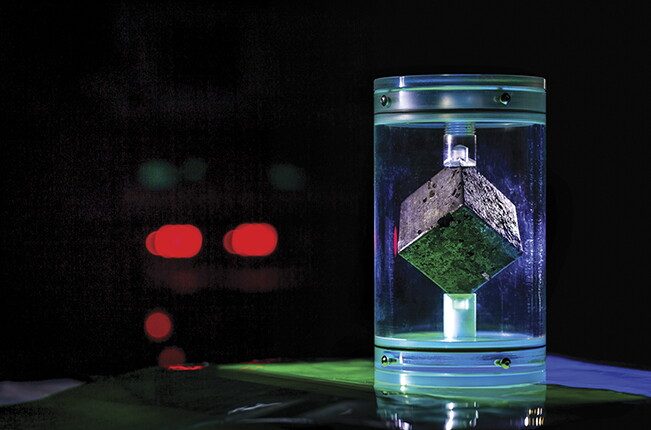
The B8 reactor, built in a cave cellar in April 1945, was far from criticality. The study, published in PNAS Nexus, found B8 would have needed roughly twice the uranium and more than twice the heavy water it had. Germany's entire wartime inventory of both materials fell short of what was needed.

Why it matters

For 80 years, how close Nazi Germany came to the bomb has shaped our understanding of World War II. The answer: not close.

Questions about this story

Free account needed to ask — your question is kept and asked for you right after sign-up. Answers are public.

No questions yet — be the first to ask.

Key Indicators

0.94
Neutron multiplication factor (keff) of B8 reactor
Below 1.0, the threshold for a self-sustaining chain reaction.
664
Uranium cubes used in B8 reactor
Heisenberg's team suspended 664 cubes in heavy water inside a cellar laboratory.
2x
Uranium needed for criticality vs. what B8 had
The reactor required about twice the uranium it contained to sustain a chain reaction.
1,836 kg
Heavy water available in Germany by 1945
At most 1,836 kg of heavy water existed in Germany, far short of the ~3.5 tonnes needed.

Voices

Curated perspectives — historical figures and your fellow readers.

Ever wondered what historical figures would say about today's headlines?

Sign up to generate historical perspectives on this story.

People Involved

Organizations Involved

Timeline

April 1940 September 2026

7 events Latest: September 1st, 2026 · 1 month ago
Tap a bar to jump to that date
  1. PNAS Nexus study shows B8 was far from criticality

    Latest Scientific Publication

    Nuclear forensics on surviving uranium cubes shows B8 had a neutron multiplication factor of 0.94, far below the 1.0 needed for criticality.

  2. Heisenberg publishes Nature article claiming B8 was 'just insufficient'

    Historical

    Heisenberg claims the B8 reactor was close to criticality, needing only a small amount more uranium.

  3. Allied mission retrieves uranium cubes from Haigerloch

    Historical

    A special Allied mission retrieves 659 uranium blocks from a field near Haigerloch.

  4. Heisenberg's team assembles B8 reactor in Haigerloch

    Historical

    Heisenberg's team suspends 664 uranium cubes in heavy water inside a cave cellar laboratory.

  5. Allied bombers destroy Norsk Hydro plant

    Historical

    U.S. bombers strike the Norsk Hydro complex, ending heavy water production in Europe.

  6. Norwegian commandos sabotage heavy water equipment

    Historical

    Norwegian commandos sabotage the heavy water equipment at Vemork, disrupting production.

  7. Germany takes control of Norsk Hydro heavy water plant

    Historical

    Germany takes control of the Norsk Hydro plant in Vemork, Norway, the only source of heavy water in Europe.

Scenarios

1

New analysis becomes the standard interpretation

Likely Resolves by End of 2027

Discussed by: Historians of science and nuclear historians

The PNAS Nexus findings are widely accepted, and the 'close but not quite' narrative is replaced. This requires the findings to withstand scrutiny and be incorporated into historical accounts of the German nuclear program.

2

Heisenberg's account defended in new scholarship

Possible Resolves by Q2 2027

Discussed by: Historians who have defended Heisenberg's postwar narrative

Scholars publish rebuttals or critiques of the study, arguing that Heisenberg's claims were reasonable given wartime conditions or that the study overstates its conclusions.

3

Further nuclear archaeology on German artifacts

Possible Resolves by End of 2028

Discussed by: Researchers in nuclear forensics

The methods used in this study are applied to other artifacts from the German program, potentially revealing more about its capabilities or confirming the findings.

Historical Context

2 moments from history that rhyme with this story — and how they unfolded.

1944–1945

Alsos Mission (1944–1945)

The Allied intelligence mission sent to assess German nuclear progress. It retrieved 659 uranium cubes from Haigerloch in 1945, the same cubes analyzed in the new study.

Then

The mission concluded Germany was far from a bomb, but Heisenberg's postwar claims kept the debate alive for decades.

Now

The retrieved materials became the basis for decades of historical analysis of the German program.

Why this matters now

The uranium cubes analyzed in the new study were originally retrieved by the Allied mission.

1942–1945

Manhattan Project (1942–1945)

The US program that built the atomic bomb, requiring massive resources: billions of dollars, thousands of workers, and industrial-scale enrichment facilities.

Then

The US built and used atomic bombs in August 1945, ending World War II.

Now

Set the standard for what a nuclear weapons program requires in resources and industrial capacity.

Why this matters now

Comparing the Manhattan Project's resources to Germany's shows the scale gap between a successful and failed nuclear program.

Sources

(9)