

Pull to refresh
Logo
Gold collisions at RHIC reveal unexpected dip in particle fluctuations

Gold collisions at RHIC reveal unexpected dip in particle fluctuations

New Capabilities

STAR experiment data hints at long-sought critical point in nuclear matter

September 22nd, 2026: STAR paper published in Physical Review Letters

Overview

Updated 2 hours ago

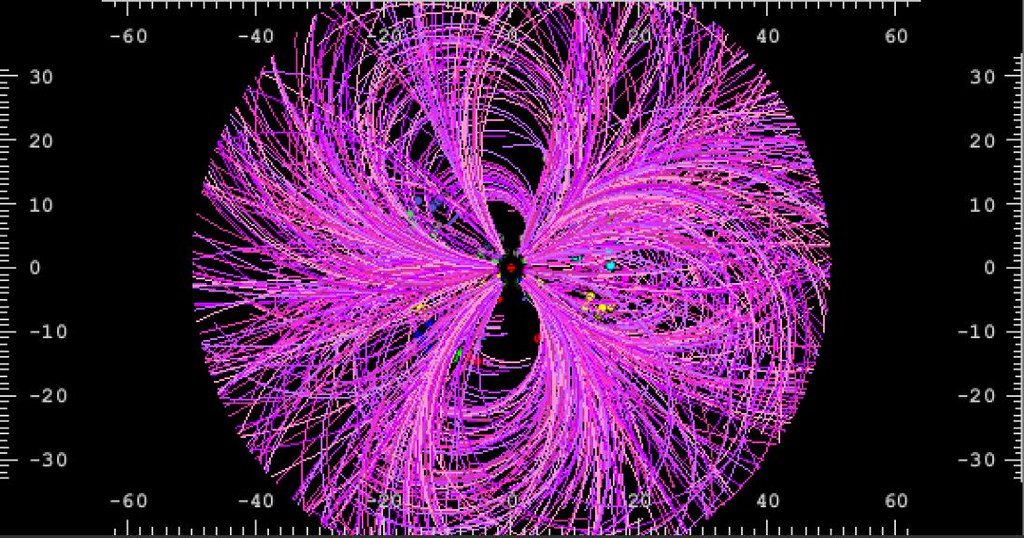
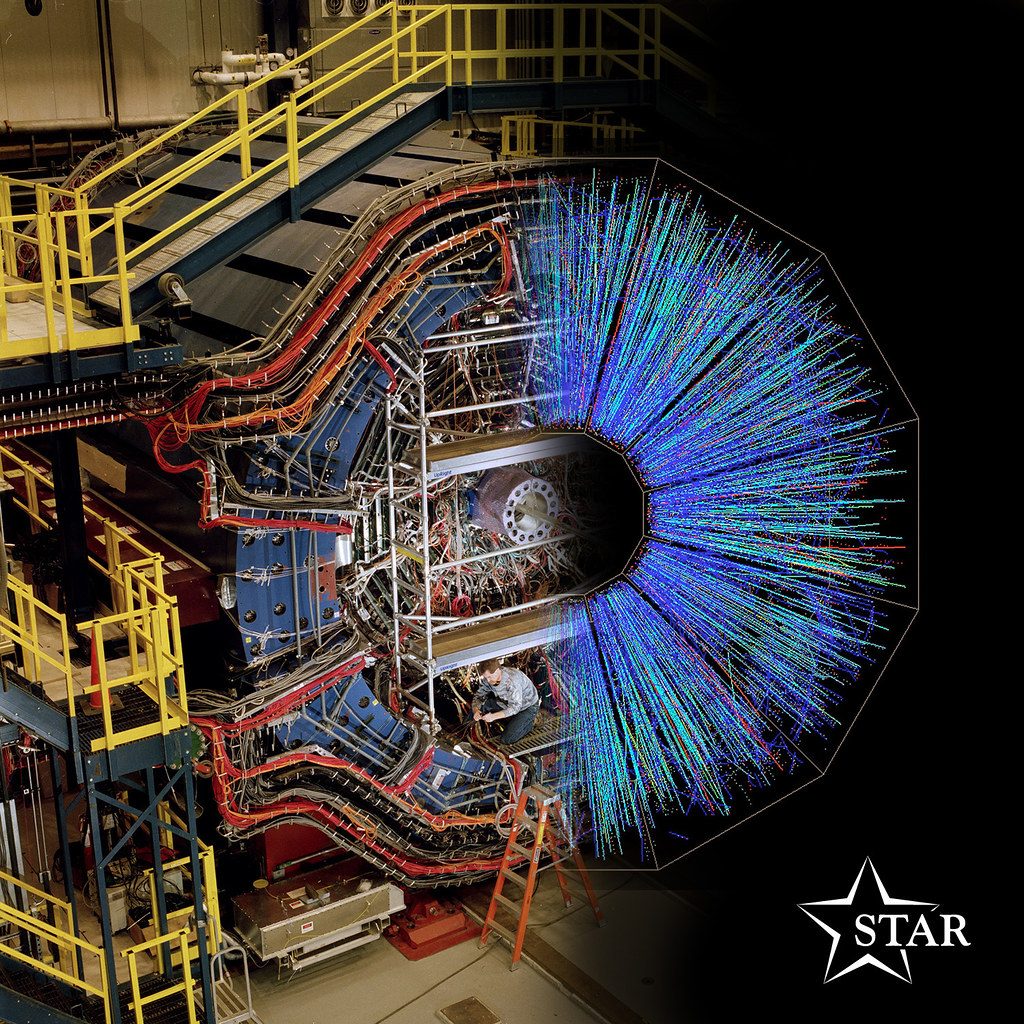
Physicists at Brookhaven National Laboratory smashed gold nuclei together at nearly light speed and found an unexpected pattern in the debris. The momentum of particles flung sideways from the collisions dipped, then rose again, as collision energy changed.

The dip, detected by the STAR experiment at the Relativistic Heavy Ion Collider (RHIC), could mark a long-sought 'critical point' in nuclear matter. That's a set of conditions where matter changes how it transforms from one form to another. If confirmed, it would help explain how the quark-gluon soup that filled the early universe condensed into protons and neutrons.

Why it matters

If the critical point exists, it maps how the universe's first matter cooled into the protons and neutrons that make up everything today.

Questions about this story

Free account needed to ask — your question is kept and asked for you right after sign-up. Answers are public.

No questions yet — be the first to ask.

Key Indicators

5 sigma
Statistical significance of the dip
The deviation from a smooth trend would occur by chance only once in 3.5 million tries.
~1 billion
Collisions analyzed
The STAR team analyzed roughly 1 billion gold-gold collisions at energies between 3 and 7.7 GeV.
3-7.7 GeV
Collision energy range studied
The lowest energies RHIC could produce, creating the densest matter the collider could make.

Voices

Curated perspectives — historical figures and your fellow readers.

Ever wondered what historical figures would say about today's headlines?

Sign up to generate historical perspectives on this story.

People Involved

Organizations Involved

Timeline

2000 September 2026

2 events Latest: September 22nd, 2026 · 2 weeks ago
  1. STAR paper published in Physical Review Letters

    Latest Publication

    STAR collaboration reports unexpected dip in momentum fluctuations at low collision energies.

  2. RHIC begins operations

    Milestone

    The Relativistic Heavy Ion Collider starts taking data at Brookhaven National Laboratory.

Scenarios

1

Critical point confirmed by follow-up measurements

Possible Resolves by End of 2027

Discussed by: STAR collaboration members and nuclear physics theorists

The STAR team plans to extract the specific heat of the hot matter and compare it with supercomputer simulations of quark-gluon behavior. If the simulations reproduce the dip, it would strengthen the case for a critical point. The team also plans to combine the momentum fluctuation data with other measurements, such as fluctuations in proton production.

2

Trivial effects explain the dip

Possible Resolves by Q2 2027

Discussed by: Physicists who note the dip could reflect changes in particle types at different energies

At higher energies, more mesons are produced; at lower energies, more protons and neutrons form. This change in particle composition could explain the dip without a critical point. A recent theory paper has already provided a non-critical-point explanation for the new STAR data.

3

Critical point remains unproven

Likely Resolves by End of 2028

Discussed by: STAR collaboration members

The dip is real but its cause remains ambiguous. Multiple measurements agree but don't definitively confirm the critical point. The STAR team notes that only when different measurements agree can they say confidently whether a critical point exists.

Historical Context

3 moments from history that rhyme with this story — and how they unfolded.

2005

Quark-gluon plasma discovery at RHIC (2005)

In 2005, experiments at RHIC announced they had created quark-gluon plasma, the state of matter that filled the universe microseconds after the Big Bang. The discovery confirmed a key prediction of quantum chromodynamics.

Then

Established RHIC as the world's premier facility for studying the early universe.

Now

Opened a new field of study and set the stage for the search for the critical point.

Why this matters now

The same facility and experiments that discovered quark-gluon plasma are now searching for the critical point, the next landmark in the nuclear phase diagram.

July 2012

Higgs boson discovery (2012)

Physicists at CERN's Large Hadron Collider announced the discovery of the Higgs boson, the last unconfirmed particle of the Standard Model. The signal had a statistical significance of 5 sigma, the same threshold as the current RHIC result.

Then

Confirmed the Standard Model's mechanism for mass generation.

Now

Led to the 2013 Nobel Prize in Physics and opened new questions about physics beyond the Standard Model.

Why this matters now

Shows how a 5-sigma signal, while statistically significant, is treated as a hint until confirmed by multiple independent measurements.

1869

Discovery of the critical point (1869)

Scottish physicist Thomas Andrews discovered the critical point of carbon dioxide, the temperature and pressure above which liquid and gas become indistinguishable. The concept became fundamental to understanding phase transitions.

Then

Explained why gases could not be liquefied above certain temperatures.

Now

Became a cornerstone of thermodynamics and the framework for understanding all phase transitions.

Why this matters now

Physicists use the same concept of a critical point to understand nuclear matter, where the smooth transition to quark-gluon plasma may become abrupt at certain densities.

Sources

(6)