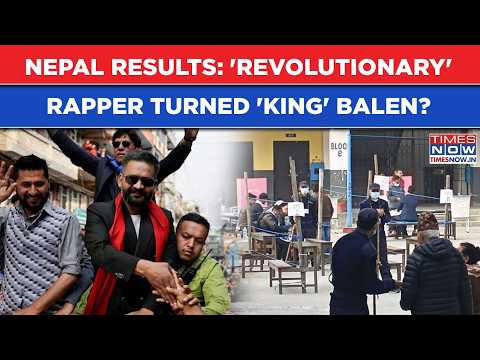
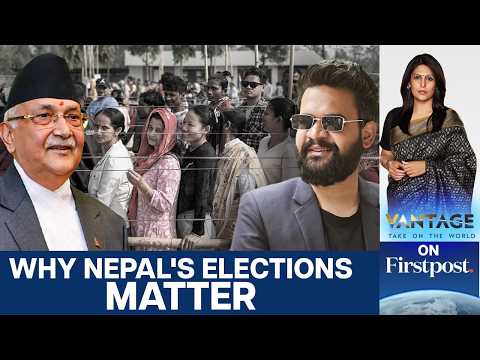
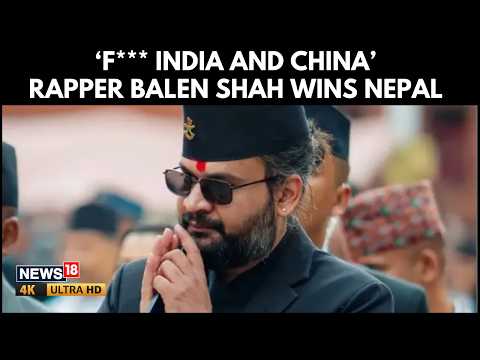
Two parties had traded control of Nepal's government for more than 30 years. On March 9-10, 2026, final counting confirmed the Rastriya Swatantra Party (RSP) won 125 of 165 directly elected parliamentary seats. Proportional representation results project 183-185 total seats and a two-thirds supermajority.
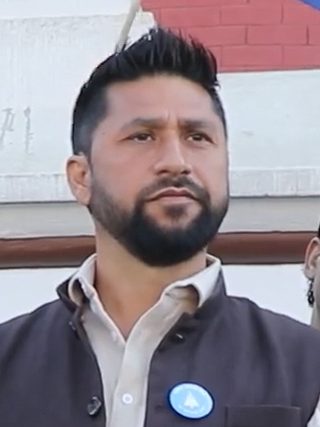
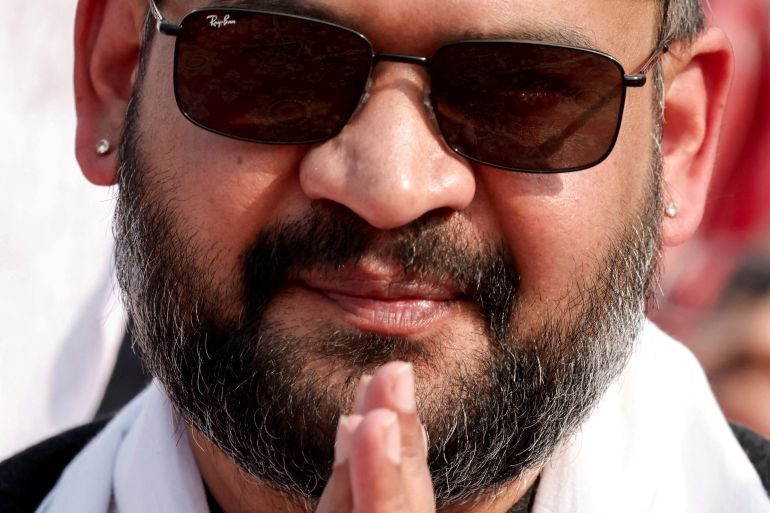
The RSP, founded less than four years ago and led by 35-year-old former rapper Balendra 'Balen' Shah, achieved a historic record: Shah secured 68,348 votes in Jhapa-5, the highest vote total ever recorded in Nepal's parliamentary elections.
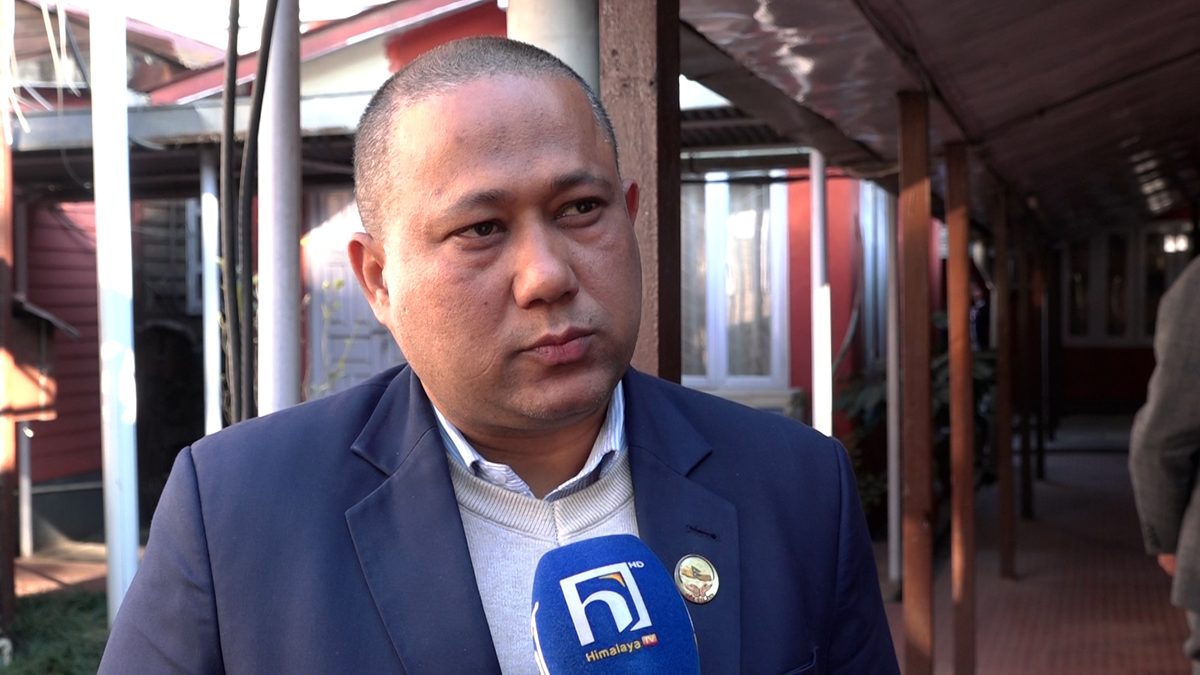
The landslide follows a September 2025 Gen Z uprising over a social media ban and corruption that forced four-time Prime Minister K.P. Sharma Oli to resign; Shah defeated Oli by nearly four-to-one. The Nepali Congress and Communist Party of Nepal (Unified Marxist-Leninist) collapsed to 17 and 7 seats respectively. Shah, lacking national experience, must now form a government and govern Nepal's 30 million people between India and China, facing expectations for economic stability and anti-corruption reform.
Questions about this story
Free account needed to ask — your question is kept and asked for you right after sign-up. Answers are public.
No questions yet — be the first to ask.
Key Indicators
125
Directly elected seats won by RSP (of 165)
Final count confirms 125 seats won; proportional votes result in total just short of 184-seat supermajority threshold.
182
Final total seats for RSP (of 275)
RSP secures approximately 57 proportional seats for 182 total, falling two seats short of two-thirds supermajority.
68,348
Shah's vote total in Jhapa-5
Highest vote total ever recorded in Nepal's parliamentary election history, surpassing previous record of 57,139 set by Oli in 2017.
4:1
Shah's margin over Oli
Shah won 68,348 votes to Oli's 18,734 in Jhapa-5, a margin of 49,614 votes.
24
Combined seats for former dominant parties
Nepali Congress (17-18) and CPN-UML (7-9)—their worst results ever.
~60%
Voter turnout
11.4 million of 19 million registered voters participated on March 5.
35
Shah's age
Youngest prime minister in Nepal's history if confirmed; also first Madhesi prime minister.
19 events
Latest: March 13th, 2026 · 7 months ago
Showing 8 of 19
JK to step
Tap a bar to jump to that date
Jump to
March 2026
Government formation process accelerates; parliament building remains under construction
LatestPolitical
Preparations underway to elect parliamentary party leader, appoint prime minister, and form cabinet as soon as statute amendment is approved. Parliament building in Singha Durbar remains under construction; oath-taking ceremony of newly elected MPs being prepared at alternative venue.
RSP prepares statute amendment to formalize Shah as parliamentary party leader
Political
The Rastriya Swatantra Party announced plans to amend its party statute through a central committee meeting to formally elect Balen Shah as parliamentary party leader, a prerequisite for his appointment as prime minister. Party chair Rabi Lamichhane is currently resting due to seasonal illness, delaying internal discussions.
Election Commission publishes final official results; RSP confirmed with 182 seats
Election
Nepal's Election Commission released final official results confirming RSP won 125 direct seats and 57 proportional representation seats for 182 total—the largest single-party majority since democracy was restored in 1991. Nepali Congress won 38 seats, CPN-UML 25 seats, and CPN-Maoist Centre 17 seats.
Vote counting completes; RSP falls two seats short of supermajority
Election
Election Commission finalizes results: RSP confirmed with 125 FPTP seats and ~57 PR seats for 182 total, just short of 184-seat two-thirds threshold. No single party has achieved supermajority since 1959.
Preparations begin to convene federal parliament
Political
Federal Parliament Secretariat announces plans to summon House session within 1-2 weeks after final results, per constitutional requirement (president must call within 30 days). Senior-most MP to preside initially.
With 58 proportional seats projected and over 5 million proportional votes counted, RSP's total seat count reaches 183-185, securing the 184-seat supermajority threshold. Final proportional seat allocation expected within 24 hours.
Vote count finalizes: RSP wins 125 direct seats, supermajority confirmed
Election
Final phase counting shows RSP at 125/165 direct seats and leading proportional votes for 185-190 total, securing two-thirds majority. Economists hope for stability after decades of coalitions.
RSP confirmed winner with at least 117 directly elected seats
Election
Results showed the RSP won at least 117 of 165 direct seats and swept all 15 Kathmandu Valley constituencies. Shah defeated Oli by 68,348 votes to 18,734. Nepali Congress leaders including party president Gagan Thapa also lost their seats.
Nepal holds first parliamentary election since the uprising
Election
Approximately 11.4 million voters—about 60% of those registered—cast ballots for 275 seats in the House of Representatives: 165 by direct vote and 110 by proportional representation.
December 2025
Balen Shah joins the Rastriya Swatantra Party
Political
Shah formally merged his political base with the RSP under a seven-point agreement covering anti-corruption reform and Gen Z movement demands, becoming the party's prime ministerial candidate.
September 2025
Sushila Karki sworn in as interim prime minister
Political
The former Chief Justice became Nepal's first female prime minister after being selected through a Discord poll of Gen Z protest organizers. She pledged to hold elections within six months.
Prime Minister Oli resigns
Political
Facing continued mass protests and the resignation of multiple cabinet ministers, Oli stepped down. Over the course of the uprising, at least 76 people were killed and more than 2,100 injured.
Deadly protests erupt in Kathmandu
Protest
Thousands of young Nepalis gathered at Maitighar Mandala. Police fired tear gas and rubber bullets. By day's end, 19 people were dead and more than 300 injured. The home minister resigned that evening, and the social media ban was lifted before midnight.
Oli government bans 26 social media platforms
Policy
The government blocked Facebook, YouTube, WhatsApp, and 23 other platforms, citing failure to comply with registration requirements. The ban came after weeks of viral #NepoKids content contrasting politicians' wealthy children with struggling workers.
October 2024
RSP founder Rabi Lamichhane arrested for cooperative fraud
Legal
Police arrested Lamichhane on charges of involvement in a cooperative fraud scheme allegedly involving billions of rupees funnelled through media companies. He denied wrongdoing.
July 2024
K.P. Sharma Oli sworn in as prime minister for the fourth time
Political
Oli returned to power through a coalition arrangement, beginning the term that would end with the Gen Z uprising 14 months later.
November 2022
RSP wins 20 seats in its first election
Election
Just five months after its founding, the party won 7 direct seats and 13 proportional seats with 10.7% of the party-list vote, becoming Nepal's fourth-largest party.
June 2022
Rabi Lamichhane founds the Rastriya Swatantra Party
Political
Television journalist Lamichhane launched the RSP with a 21-member central committee, positioning it as an anti-corruption alternative to Nepal's establishment parties.
May 2022
Balen Shah elected Kathmandu mayor as independent
Election
Shah won 38.6% of votes, defeating candidates from both the Nepali Congress and CPN-UML—the first independent to win the Kathmandu mayoral race.
Scenarios
1
RSP secures supermajority and governs with sweeping mandate
Likely
Discussed by: Kathmandu Post, Himalayan Times, and RSP vice president Dol Prasad Aryal, who predicted 186 total seats
Once proportional representation seats are allocated, the RSP crosses the 184-seat threshold for a two-thirds supermajority in the House of Representatives. This gives the party the power to impeach senior officials and pursue constitutional amendments—though the latter still requires a matching supermajority in the National Assembly, where the Nepali Congress and CPN-UML hold a majority from February 2026 elections. Shah forms a single-party government, Nepal's first in decades, and implements the RSP's anti-corruption and governance reform agenda.
2
Governing inexperience leads to early gridlock and disillusionment
Possible
Discussed by: Atlantic Council, The Diplomat, and Nepali political analysts who note the RSP has never governed nationally
The RSP's landslide raises expectations the party cannot meet quickly enough. Most of its parliamentarians have no legislative experience. Constitutional reform stalls because the National Assembly blocks amendments. Balancing India-China relations proves more complex than campaign rhetoric suggested. Nepal's structural challenges—20.8% youth unemployment, reliance on remittances, weak infrastructure—persist. Voter frustration returns within a year or two, echoing the cycle of hope and disappointment that characterized previous transitions.
3
Legacy parties regroup and constrain RSP through National Assembly
Possible
Discussed by: Nepal News, constitutional law analysts cited in Kathmandu Post
The Nepali Congress and CPN-UML, crushed in the lower house, leverage their majority in the National Assembly to block constitutional amendments and slow legislation. They rebuild at the provincial level for the next round of local elections. The RSP governs day-to-day but finds its transformative agenda—especially constitutional reform—hemmed in by institutional checks the old parties still control.
4
Nepal becomes a model for post-protest democratic renewal in South Asia
Uncertain
Discussed by: Carnegie Endowment for International Peace, Harvard T.H. Chan School of Public Health, Asia Society
Unlike Bangladesh and Sri Lanka, where youth uprisings ousted governments but the subsequent transitions remained unstable, Nepal's progression from protest to interim government to free election to new governing party represents a complete democratic cycle. If the RSP delivers on governance reforms and maintains stability, the Nepal model—leaderless uprising, technocratic interim government, new-party landslide—becomes a reference point for youth movements across the region.
Historical Context
3 moments from history that rhyme with this story — and how they unfolded.
1 of 3
July-August 2024
Bangladesh student uprising (2024)
Student protests against government job quotas escalated after security forces killed hundreds of demonstrators. Prime Minister Sheikh Hasina, who had governed for 15 consecutive years, fled the country on August 5, 2024. Nobel laureate Muhammad Yunus was installed as head of an interim government.
Then
Hasina was later sentenced to death in absentia for ordering the crackdown. An interim government under Yunus began reform efforts.
Now
As of early 2026, Bangladesh's transition remains incomplete, with elections not yet held and political instability continuing—a cautionary contrast to Nepal's faster electoral timeline.
Why this matters now
Nepal's Gen Z uprising closely paralleled Bangladesh's: both were triggered by specific government actions, organized through social media, and brought down long-serving leaders. Nepal's ability to hold elections within six months and produce a clear governing mandate represents the next chapter Bangladesh has not yet reached.
2 of 3
March-July 2022
Sri Lanka's Aragalaya movement (2022)
An economic crisis—12-hour power cuts, 50% inflation, empty fuel stations—drove hundreds of thousands of Sri Lankans into the streets. Protesters occupied the presidential palace in Colombo. President Gotabaya Rajapaksa fled the country on July 13, 2022. In a subsequent election, Anura Kumara Dissanayake of the Janatha Vimukthi Peramuna, a party that had never won more than a handful of seats, won the presidency in September 2024.
Then
Rajapaksa resigned from abroad. Parliament elected Ranil Wickremesinghe as a caretaker president to stabilize the economy.
Now
The 2024 election completed the realignment: voters chose an outsider party over the establishment. But governance challenges persisted, with Sri Lanka still under an International Monetary Fund bailout program.
Why this matters now
Sri Lanka's trajectory from mass protest to outsider-party victory is the closest parallel to Nepal's. Both countries saw protest energy translate into electoral support for parties previously considered fringe. Sri Lanka's ongoing struggles with governance after the transition offer a preview of the challenges the RSP may face.
3 of 3
June 1987
South Korea's 1987 democratic transition
Mass student-led protests against authoritarian rule forced military-backed President Chun Doo-hwan to accept direct presidential elections. The movement was triggered by the torture death of a student activist and a government attempt to suspend constitutional reform. Millions took to the streets across South Korean cities.
Then
The ruling party conceded direct elections. Roh Tae-woo won the 1987 election partly because opposition votes split between two candidates.
Now
South Korea completed its democratic transition over the following decade, becoming one of Asia's most robust democracies. The generation that protested in 1987 went on to reshape Korean politics for decades.
Why this matters now
South Korea shows that youth-led democratic movements can produce durable institutional change—but the process took years, not months. Nepal's protest generation has won its first election; whether it can build lasting institutions is the open question.