


Pull to refresh
Logo
Pentagon weighs battlefield nuclear weapons as senators demand reversal

Pentagon weighs battlefield nuclear weapons as senators demand reversal

Force in Play

A nuclear posture review would add lower-yield options for regional war. Two senators want the plans dropped and answers by December 15.

Overview

Updated 55 minutes ago

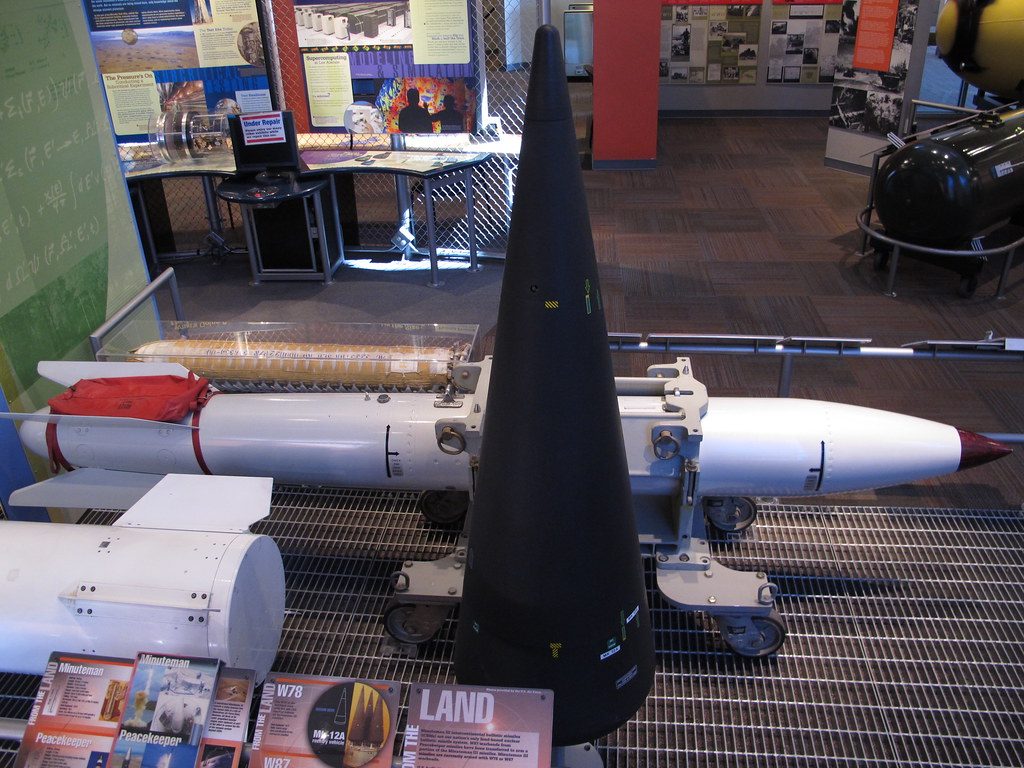
The United States has cut its stockpile of short-range battlefield nuclear weapons by more than 90% since 1991, on the argument that a small nuclear weapon is still a nuclear weapon. A Pentagon review now under way would add new lower-yield options for use in regional wars. On November 24, two Democratic senators wrote to Defense Secretary Pete Hegseth asking him to drop the plan.

The case for the change is choice. Undersecretary of Defense for Policy Elbridge Colby says smaller weapons give a president "credible, rational nuclear options" in a conflict with China or Russia, and a better chance of managing escalation. Senators Edward Markey and Jeff Merkley argue the reverse: that a weapon leaders believe they can use is a weapon more likely to be used.

Why it matters

Smaller warheads may look easier to use. Whether an adversary answers in kind, or escalates, is the risk the senators want the Pentagon to explain.

Questions about this story

Free account needed to ask — your question is kept and asked for you right after sign-up. Answers are public.

No questions yet — be the first to ask.

Key Indicators

50 kt
Yield of the B61-12 gravity bomb
About four times the explosive force of the bomb dropped on Hiroshima, per the Nuclear Watch reporting cited by critics.
90%+
Decline in the US tactical nuclear stockpile since 1991
The drop follows George H.W. Bush's decision to eliminate nearly all battlefield warheads.
3-5 years
Rapid Capabilities Program target for fielding new weapons
Down from a prior 10-year timeline, according to the senators' letter.
Dec 15, 2026
Deadline for Pentagon answers to the senators
Markey and Merkley also requested a classified briefing on the review.

Voices

Curated perspectives — historical figures and your fellow readers.

Sign up to generate historical perspectives on this story.

People Involved

Organizations Involved

Timeline

February 2026 November 2026

4 events Latest: Yesterday
Tap a bar to jump to that date
  1. Senators demand Pentagon drop tactical nuclear plans

    Latest Oversight

    Markey and Merkley's November 24 letter asks Hegseth for answers by December 15.

  2. Officials preview limited nuclear options

    Statement

    Colby and Correll say the review will recommend options below the strategic level, while keeping declaratory policy unchanged.

  3. Pentagon launches nuclear posture review

    Policy

    The Defense Department announces a review of US nuclear forces and employment guidance.

  4. New START lapses

    Treaty

    The last binding treaty capping US and Russian deployed strategic warheads expires.

Scenarios

1

Pentagon publishes review adding limited nuclear options

Likely Resolves by Q2 2027

Discussed by: Undersecretary Elbridge Colby, Adm. Richard Correll, and Arms Control Association analysts

Colby and Correll have already told an outside audience the review will recommend limited options below the strategic level. Formal adoption would give commanders and the president smaller-scale nuclear choices in a regional conflict with China or Russia, without changing the stated conditions for first use.

2

Congress bars funding for new tactical warheads

Possible Resolves by End of 2027

Discussed by: Sens. Markey and Merkley and allied arms control groups

The senators' letter is an opening move in the annual defense authorization and appropriations cycle. If enough lawmakers back them, a funding prohibition on new lower-yield warhead development could be written into law, which would not require the Pentagon to reverse its guidance.

3

Administration abandons the tactical nuclear expansion

Unlikely Resolves by Q2 2027

Discussed by: Markey and Merkley, who requested exactly this outcome

Hegseth would have to accept the senators' argument that lower-yield weapons raise rather than lower the risk of nuclear war. Nothing in the public record so far suggests the Pentagon is heading that way, and the officials running the review have defended the options publicly.

Historical Context

3 moments from history that rhyme with this story — and how they unfolded.

1983

Proud Prophet war game (1983)

The US military ran a classified exercise playing out a NATO-Warsaw Pact crisis. In the scenarios, introducing nuclear weapons did not produce a contained exchange; the games escalated toward all-out use.

Then

The exercise reinforced skepticism inside the US government about the idea of a winnable, limited nuclear war.

Now

It became a standard reference for the argument that any nuclear use carries a high risk of escalation.

Why this matters now

Markey and Merkley lean on this history in the current letter to argue that smaller yields do not guarantee restrained responses.

September 1991

Bush's unilateral nuclear initiative (1991)

President George H.W. Bush announced the US would eliminate nearly all of its tactical nuclear weapons, including artillery shells, short-range missile warheads, and naval depth bombs. The move was unilateral and intended to draw matching cuts from Moscow.

Then

Thousands of battlefield warheads were withdrawn and dismantled.

Now

The US tactical stockpile fell by more than 90% over the following decades, and battlefield nuclear planning largely stopped.

Why this matters now

The current review reopens a category of weapon that 1991 largely removed from the US arsenal.

2019

W76-2 lower-yield warhead (2019)

The 2018 Nuclear Posture Review called for a lower-yield variant of an existing submarine-launched ballistic missile warhead. The W76-2 entered the fleet during Trump's first term.

Then

The Navy fielded a smaller-yield option on ballistic missile submarines.

Now

It set a precedent for adding limited options rather than relying only on large strategic warheads.

Why this matters now

The senators cite it as the start of the trend the current review would extend, alongside a planned nuclear-armed sea-launched cruise missile.

Sources

(7)