The Energy Department published its secretly rewritten nuclear safety rules on February 26, about a month after NPR first reported their existence. By early March, Aalo Atomics had completed its Critical Test Reactor at Idaho National Laboratory — assembled in 40 days, the first new reactor built at INL in 50 years — and said it would go critical within weeks.
Legal opposition has grown on two fronts. Attorneys general from 12 states filed comments in March arguing the rules violate federal environmental law; in May, 13 advocacy groups told the Nuclear Regulatory Commission that the Reactor Pilot Program violates the Atomic Energy Act by bypassing required safety reviews. With the July 4 deadline now weeks away, the Energy Department says it expects at least three reactors to go critical on time.
Why it matters
If these deregulated reactors operate without incident, every future advanced reactor in America could be built under the same rules.
Questions about this story
Free account needed to ask — your question is kept and asked for you right after sign-up. Answers are public.
No questions yet — be the first to ask.
Key Indicators
750+
Pages Removed
Pages of safety requirements eliminated from DOE orders, leaving roughly one-third of original content
11
Reactor Designs
Advanced reactor projects from 10 companies selected for the Reactor Pilot Program
July 4, 2026
Target Date
Deadline for reactors to achieve criticality — DOE now expects at least three to meet the goal, up from Wright's November 2025 estimate of one or two
23
New Security Pages
Seven security directives totaling 500+ pages consolidated into a single 23-page order
$136M
First Project Cost
Aalo Atomics' Aalo-X reactor budget; construction completed March 2026 with criticality expected by July 4
Images from Openverse under Creative Commons licenses.
Videos from YouTube.
Voices
Curated perspectives — historical figures and your fellow readers.
Cecil Rhodes
(1853-1902) ·Victorian Era · industry
Fictional AI pastiche — not real quote.
"Ah, what magnificent audacity! To sweep away 750 pages of bureaucratic timidity in pursuit of harnessing the very power of the atom—this is the spirit that built empires. Though I confess, in my day we at least published our mining regulations before the shafts collapsed; secrecy may serve diplomacy, but it makes poor bedfellows with public confidence when one is quite literally splitting atoms."
0% found this insightful
Ever wondered what historical figures would say about today's headlines?
Sign up to generate historical perspectives on this story.
35 events
Latest: May 22nd, 2026 · 5 months ago
Showing 8 of 35
JK to step
Tap a bar to jump to that date
Jump to
May 2026
DOE Marks One-Year Anniversary; Expects Three Reactors to Meet July 4 Deadline
LatestPolicy
On the one-year anniversary of the nuclear executive orders, the Energy Department said it expects at least three pilot program reactors to reach criticality before July 4. That was an upgrade from Secretary Wright's November 2025 statement that only one or two would meet the deadline.
13 Organizations Claim Pilot Program Violates Atomic Energy Act
Legal
Thirteen organizations including the Nuclear Information and Resource Service and Beyond Nuclear filed NRC comments arguing the Reactor Pilot Program violates the Atomic Energy Act by allowing DOE-approved reactors to bypass required NRC safety reviews. Eleven state attorneys general filed separate concurring comments.
April 2026
NRC Announces Biggest Reorganization Since 1987
Institutional
The NRC announced a restructuring into three new 'business lines' — new reactors, operating reactors, and nuclear materials — each combining licensing and inspection under one authority. Implementation is set for midsummer 2026.
DOME Microreactor Test Bed Opens at Idaho National Laboratory
Infrastructure
Idaho National Laboratory opened DOME, the world's first microreactor test bed, housed inside the repurposed Experimental Breeder Reactor-II facility. It can host reactors up to 20 megawatts thermal, with Radiant Energy's Kaleidos reactor set for the first year-long test campaign.
March 2026
NRC Finalizes Part 53 Advanced Reactor Licensing Framework
Regulatory
The NRC voted to finalize Part 53, a risk-informed, technology-inclusive licensing framework for advanced reactors — the first new reactor licensing regulations since 1989. The rule took effect April 29, 2026, offering an alternative to the decades-old Part 50 process.
DOE Announces Nuclear Energy Launch Pad
Policy
The Energy Department and National Reactor Innovation Center announced the Nuclear Energy Launch Pad, a permanent authorization pathway expanding on the Reactor Pilot Program. It creates two tracks: one at Idaho National Laboratory covering more than 2,000 acres, and one for nuclear projects on non-federal land.
State Attorneys General Coalition Files Opposition to Nuclear Rules
Legal
Attorneys general from Washington, California, Illinois, Maryland, Massachusetts, Minnesota, New Mexico, New York, Nevada, Oregon, Vermont, and the District of Columbia filed a comment letter opposing DOE's categorical exclusion for advanced nuclear reactors. The coalition argued the exclusion violates the National Environmental Policy Act and the Administrative Procedure Act.
Aalo Atomics Completes Critical Test Reactor at INL
Construction
Aalo Atomics unveiled its Critical Test Reactor at Idaho National Laboratory, the first new nuclear reactor built at INL in 50 years. The building was constructed in 36 days; the reactor assembly took 40. The company said it expects to go critical 'well before' July 4.
February 2026
DOE Publishes Secretly Rewritten Nuclear Safety Rules
Regulatory
The Energy Department posted the rewritten nuclear safety orders on the Idaho Operations Office website. The release came in response to a Freedom of Information Act request; DOE said it had 'recently completed the process of making these Nuclear Energy Orders and Standards publicly available.'
January 2026
NPR Reveals Secret Safety Rule Rewrites
Investigation
NPR publishes investigation revealing DOE has overhauled nuclear safety orders without public notice, removing 750+ pages of requirements and sharing new rules only with regulated companies.
Congressional Democrats Condemn Secret Rulemaking
Political Response
House Energy and Commerce Ranking Member Frank Pallone Jr. states he has 'zero confidence' the administration can promote nuclear energy while maintaining public safety, calling the changes 'dangerous sabotage.' Democrats demand full transparency before considering nuclear legislation.
Union of Concerned Scientists Issues Formal Statement
Advocacy Response
Edwin Lyman releases statement calling the secret rulemaking 'deeply troubling' and confirming 'worst fears about the dire state of nuclear power safety and security oversight,' stating DOE 'has taken a sledgehammer to the basic principles that underlie effective nuclear regulation.'
DOE Commits to Publishing Rules 'Later This Year'
Agency Response
In response to NPR investigation, Department of Energy says it intends to make the rewritten rules public 'later this year,' while defending changes as removing 'administrative burdens' while still requiring reactors to be 'safe and secure.'
Pallone Reveals DOE Staffing Crisis in Hearing
Congressional Oversight
At Energy Subcommittee hearing, Ranking Member Pallone discloses that DOE has lost roughly 3,500 staff since Trump took office and is 'so understaffed that its Office of Nuclear Energy is asking for volunteers from universities to help review novel nuclear reactor designs.'
DOE Publishes Proposed Worker Safety Exclusions
Regulatory
Department of Energy publishes proposed rule changes excluding respiratory protection and welding standards from requirements.
DOE Formally Ends ALARA Standard
Regulatory
Secretary Chris Wright gives final approval to end the 'As Low As Reasonably Achievable' radiation exposure principle in place since 1954, citing need to 'reduce the economic and operational burden on nuclear energy while aligning with available scientific evidence.'
Trump Designates New NRC Chairman
Leadership
President Trump designates Commissioner Ho Nieh as 20th NRC chairman, replacing David Wright after less than one year. Republicans now hold a 3-2 majority on the commission following Hanson's June 2025 firing.
NRC Establishes Sunsetting Rules for Regulations
Regulatory
NRC promulgates sunsetting rules establishing a default one-year sunset date (January 8, 2027) for certain federal nuclear regulations unless extended on a case-by-case basis, as part of Executive Order 14300 deregulation push.
House Energy Subcommittee Holds Nuclear Safety Hearing
Congressional Oversight
Energy Subcommittee holds hearing on nuclear energy where Ranking Member Pallone characterizes 2025 as 'one of the worst years for the security and safety of America's civilian nuclear fleet since the splitting of the atom in 1945.'
December 2025
NRC Returns to Full Five-Member Commission
Leadership
Douglas Weaver, nominated by Trump and confirmed by Senate, sworn in as NRC commissioner for term ending June 30, 2026, restoring full five-member commission.
November 2025
Valar Atomics Achieves First Criticality in DOE Pilot Program
Program
Valar Atomics' NOVA Core reactor reached cold criticality at Los Alamos National Laboratory at 11:45 a.m. PT. The milestone made Valar the first company to achieve criticality in the DOE Reactor Pilot Program.
Aalo Atomics Reports Key Construction Milestones
Program
Aalo announces it has adopted precision vertical drilling for excavation—expected to finish at double the speed and half the cost of conventional methods—and completed preliminary design review with DOE.
Wright Acknowledges Deadline May Slip
Policy
Energy Secretary Chris Wright tells American Nuclear Society Winter Conference that only one or two reactors might meet the July 4, 2026 deadline, though others are 'close behind,' backing away from original goal of three reactors.
October 2025
Antares Nuclear Begins Fuel Fabrication
Program
Antares Nuclear starts fabrication of TRISO fuel from HALEU feedstock, declaring 'We will achieve k=1 before July 4, 2026!'—one of the most confident timelines among pilot program participants.
August 2025
Aalo Atomics Breaks Ground on First Pilot Reactor
Construction
Aalo Atomics becomes first company to break ground under the Reactor Pilot Program, starting construction on Aalo-X—a $136 million, 10-megawatt sodium-cooled reactor at Idaho National Laboratory targeting 11-month construction timeline to July 4, 2026 criticality.
DOE Selects 11 Reactor Designs for Pilot Program
Program
The Office of Nuclear Energy announces 11 advanced reactor projects from 10 companies have been selected for the Reactor Pilot Program.
DOE Begins Removing ALARA Requirements
Regulatory
Department of Energy starts eliminating the 'as low as reasonably achievable' radiation exposure standard from new rules.
June 2025
NRC Chair Christopher Hanson Fired
Leadership
Trump fires NRC Commissioner Christopher Hanson—the first such removal in the agency's 50-year history—without stated cause.
DOE Briefs Industry on New Approval Pathway
Policy
Department of Energy officials meet with Nuclear Energy Institute executives to present the accelerated regulatory pathway.
May 2025
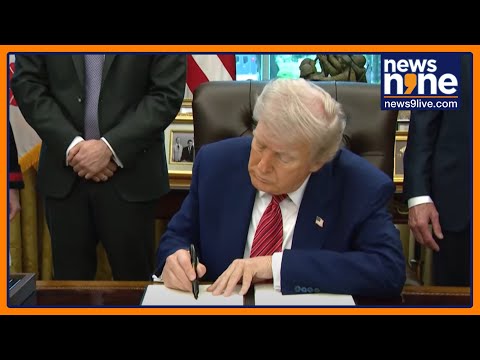
Trump Signs Four Nuclear Executive Orders
Policy
Executive orders establish the Reactor Pilot Program with a goal of three reactors achieving criticality by July 4, 2026, and target quadrupling U.S. nuclear capacity to 400 gigawatts by 2050.
February 2025
Chris Wright Confirmed as Energy Secretary
Leadership
The Senate confirms Liberty Energy founder Chris Wright as Secretary of Energy by 59-38 vote.
November 2023
NuScale's First SMR Project Cancelled
Industry Setback
NuScale and Utah Associated Municipal Power Systems terminate the Carbon Free Power Project after costs balloon from $5 billion to $9 billion and subscriptions fall short.
March 1979
Three Mile Island Partial Meltdown
Accident
The worst accident in U.S. commercial nuclear history triggers sweeping safety reforms and decades of regulatory caution.
January 1975
NRC Created as Independent Regulator
Institutional
Congress splits the Atomic Energy Commission, creating the Nuclear Regulatory Commission to separate safety regulation from nuclear promotion.
1954
ALARA Principle Established
Regulatory Precedent
The National Committee on Radiation Protection establishes that radiation exposures should 'be kept at the lowest practical level'—the foundation of what becomes the ALARA standard.
Scenarios
1
Reactors Achieve Criticality by July 4 Deadline
Unlikely
Discussed by: Department of Energy officials, nuclear industry executives
At least three experimental reactors reach criticality by the July 4, 2026 deadline, validating the accelerated approval pathway and encouraging further deregulation. Success would require construction timelines far faster than any comparable project—research reactors typically take at least two years to build once construction begins. Industry representatives argue the streamlined rules will enable this, though no company has publicly committed to the timeline.
2
Legal Challenge Blocks or Delays Program
Possible
Discussed by: Environmental groups, former NRC officials, legal analysts
Environmental organizations or state attorneys general file suit challenging either the process (secret rulemaking without public comment) or substance (relaxed discharge rules potentially violating the Clean Water Act). Former NRC counsel Tison Campbell warned loosened radiological discharge rules could cause companies to 'inadvertently violate' environmental statutes. Court injunctions could pause or substantially modify the program.
3
Safety Incident Triggers Regulatory Reversal
Uncertain
Discussed by: Union of Concerned Scientists, former DOE officials
A worker exposure incident, environmental release, or equipment failure at one of the pilot reactors forces a reassessment of the relaxed standards. Historical precedent—Three Mile Island prompted decades of tightened oversight—suggests even minor incidents could generate political pressure to restore safety requirements. The condensed security and safety protocols would face intense scrutiny.
4
Program Continues with Delayed Timeline
Likely
Discussed by: Nuclear industry analysts, former DOE Office of Nuclear Energy head Kathryn Huff
Reactors proceed under the new regulatory framework but miss the July 4 deadline—as Huff predicted—with first criticality achieved in 2027 or later. The precedent of DOE self-regulation for private reactors becomes established, potentially affecting how future advanced reactors are approved regardless of the specific timeline outcome.
Historical Context
3 moments from history that rhyme with this story — and how they unfolded.
1 of 3
March 1979
Three Mile Island Partial Meltdown (1979)
A combination of equipment malfunctions, design flaws, and operator errors caused Unit 2 at Pennsylvania's Three Mile Island plant to partially melt down. While radioactive releases were minimal and no deaths resulted, the accident exposed regulatory gaps and inadequate operator training. President Carter commissioned an investigation; the NRC imposed an emergency licensing moratorium.
Then
No new reactor orders for years. Seven similar reactors temporarily shut down. Sweeping requirements imposed on operating plants and those under construction.
Now
The industry created INPO for self-policing; NRC expanded resident inspector programs, tightened training requirements, and fundamentally restructured oversight. The accident became the defining reference point for U.S. nuclear safety culture.
Why this matters now
TMI established the regulatory framework now being overhauled. The Union of Concerned Scientists explicitly warns the new rules could lead to 'another Three Mile Island accident'—the first time in 47 years that comparison has been invoked by safety advocates for pending rule changes.
2 of 3
March 2011
Japan's Fukushima Disaster and Regulatory Capture (2011)
A tsunami overwhelmed the Fukushima Daiichi plant, causing three reactor meltdowns. Official investigations found TEPCO had 'manipulated the cozy relationship with regulators to take the teeth out of regulations.' The Nuclear and Industrial Safety Agency, housed within the ministry promoting nuclear power, had allowed operators to apply safety rules 'on a voluntary basis.'
Then
Japan shut down all 54 commercial reactors for safety reviews. Three reactors melted down, contaminating a wide area.
Now
Japan created an independent Nuclear Regulation Authority, though critics say reforms amount to 'cosmetic changes' and 'regulatory capture structures are still firmly maintained.'
Why this matters now
Fukushima demonstrated how combining promotion and regulation within one agency—and conducting safety oversight in secret collaboration with industry—can produce catastrophic results. The DOE's Reactor Pilot Program places both promotion and regulation of these reactors under the same department, with rules shared only with regulated companies.
3 of 3
November 2023
NuScale SMR Project Cancellation (2023)
NuScale Power and Utah Associated Municipal Power Systems cancelled the Carbon Free Power Project—planned for six small modular reactors at Idaho National Laboratory—after costs rose from $5 billion to over $9 billion and the per-megawatt-hour price climbed 53% in two years. Only 116 megawatts of the 462-megawatt plant's capacity had been subscribed.
Then
NuScale's stock dropped 33% in one day. Only $232.8 million of a $1.355 billion federal commitment had been spent.
Now
The cancellation raised questions about SMR economic viability but did not halt industry momentum; NuScale announced new partnerships by late 2025.
Why this matters now
The failed project highlights the gap between SMR timelines on paper and reality. It took NuScale over a decade to get NRC design certification—and even then, construction never began before cancellation. The Reactor Pilot Program's 14-month timeline from executive order to criticality represents an order-of-magnitude compression.