
Pull to refresh
Logo
NYCHA converts Seward Park Extension to Section 8, unlocking $209 million for repairs

NYCHA converts Seward Park Extension to Section 8, unlocking $209 million for repairs

Built World New York, NY local

The 1973 Lower East Side towers become the latest PACT conversion, with construction targeted for completion in 2029.

Overview

Updated 4 hours ago

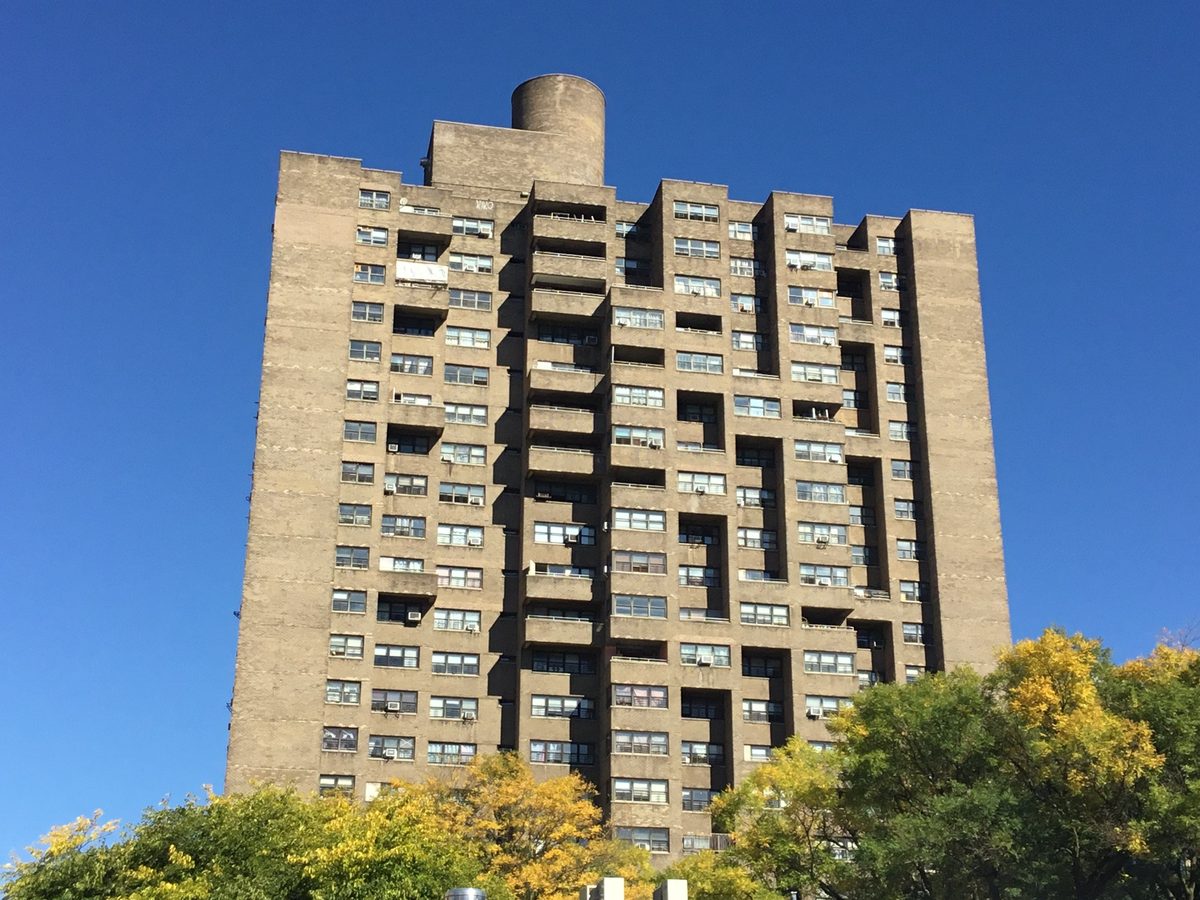
Seward Park Extension's two 23-story towers opened in 1973. On Nov. 5, the New York City Housing Authority closed on $209 million to renovate them, money the authority could not raise while the buildings were traditional public housing.

The closing moved 360 apartments into the federal Rental Assistance Demonstration program, which converts a public housing subsidy into a project-based Section 8 contract. That contract is what lenders will underwrite, paying for new kitchens, plumbing risers, windows and in-unit heating and cooling. NYCHA keeps the buildings and the rent rules; a private team takes over management and construction.

Why it matters

NYCHA has committed $11 billion across 121 developments this way. Whether it delivers here decides how the rest of the portfolio gets repaired.

Last Monday's email for New York, NY

Sent Nov 16. It carried:

Get next Monday's: one short email a week. Free. Unsubscribe in one click.

Questions about this story

Free account needed to ask — your question is kept and asked for you right after sign-up. Answers are public.

No questions yet — be the first to ask.

Key Indicators

$209M
Financing closed for the renovation
Covers two 23-story buildings and 360 apartments.
360
Apartments to be rehabilitated
Every unit gets a new kitchen, bathroom and a combination washer-dryer.
650+
Residents in the two buildings
Figure given by NYCHA at the financial closing.
$11B
PACT capital committed citywide
Across 121 developments, as of the Seward Park closing.
121
Developments converted under PACT
NYCHA's running count at the time of this closing.
2029
Target construction completion
End of 2029, per the project's construction partners.

Voices

Curated perspectives — historical figures and your fellow readers.

Sign up to generate historical perspectives on this story.

People Involved

Organizations Involved

Timeline

October 1973 November 2026

4 events Latest: November 5th, 2026 · 1 week ago
Tap a bar to jump to that date
  1. NYCHA closes $209 million and converts to Section 8

    Latest Financing

    The buildings move onto a project-based Section 8 contract, letting the partner team begin full rehabilitation. Target completion is the end of 2029.

  2. Partner team selected for a $318.1 million package

    Selection

    NYCHA names Essence Development, MDG Design & Construction and Wavecrest Management for three Lower East Side developments, Seward Park among them.

  3. Residents begin discussing a PACT conversion

    Organizing

    The Seward Park Extension resident association starts meeting with NYCHA about joining the program.

  4. Seward Park Extension opens

    Construction

    Both 23-story towers open on the Lower East Side after a two-year dispute over tenant selection.

Scenarios

1

Renovation finishes at Seward Park Extension by the end of 2029

Likely Resolves by Q2 2030

Discussed by: NYCHA and MDG Design & Construction, in the Nov. 5 closing announcement

Work moves building by building, with residents staying in place while risers, windows and mechanical systems are replaced and apartments get new kitchens and baths. The partners have publicly targeted completion at the end of 2029, which would make this one of the faster PACT rehabs relative to its size.

2

Work at Seward Park slips past 2030 or is scaled back

Possible Resolves by End of 2030

Discussed by: Housing-policy observers who track PACT construction timelines

Occupied-building rehabs routinely run long: crews work around tenants, and riser and mechanical replacements tend to turn up conditions that surveys did not. A slip past 2030 or a cut in scope would not be unusual for a project of this size and age.

3

Seward Park Extension is listed on the National Register of Historic Places

Possible Resolves by End of 2028

Discussed by: Construction Owners, reporting on the preservation scope of the renovation

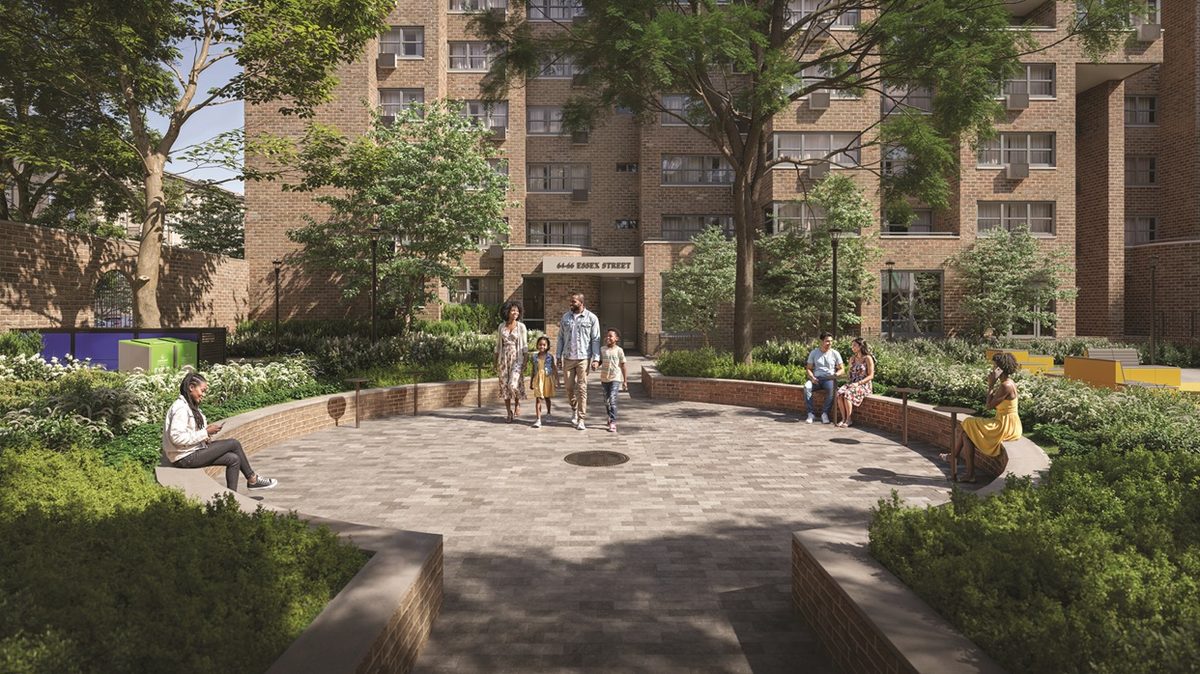
The renovation is designed around the site's Brutalist architecture and its sunken courtyards, masonry benches and brick retaining walls, and reporting on the project says a National Register listing is expected. Listing would add a layer of review to any future exterior work.

4

Hernandez Houses or Meltzer Tower closes its PACT financing next

Likely Resolves by Q2 2028

Discussed by: NYCHA's April 2024 announcement of the combined $318.1 million Lower East Side package

Seward Park was one of three developments in the same 2024 selection, and the other two have not yet closed. A closing at either would show whether the Seward Park transaction was a template or a one-off, and how fast NYCHA can move the rest of the package.

Historical Context

3 moments from history that rhyme with this story — and how they unfolded.

1954-1976

Pruitt-Igoe demolition (1972)

St. Louis built 33 eleven-story public housing towers in the mid-1950s and named them Pruitt-Igoe. Vacancies climbed, maintenance costs outran the rent the federal formula allowed the housing authority to collect, and the complex became uninhabitable. The first tower came down in March 1972, and the rest followed by 1976.

Then

Roughly 2,000 families were displaced, and the site sat mostly empty for decades.

Now

Pruitt-Igoe became the standard argument that high-rise public housing could not be saved, and federal policy shifted toward demolition and replacement.

Why this matters now

Seward Park Extension is the same kind of building, opened a year later, and is being repaired rather than razed. That is the change worth watching here.

1992 onward

HOPE VI (1992)

The Department of Housing and Urban Development created HOPE VI in 1992 to fund demolition of the worst public housing and replace it with mixed-income developments, often at lower density. Housing authorities competed for grants, and thousands of high-rise units came down.

Then

Many distressed developments were rebuilt, but far fewer subsidized units came back than were demolished.

Now

Replacement meant losing apartments and, in many cities, moving tenants out permanently. That record shaped the resistance PACT conversions now meet.

Why this matters now

PACT is the opposite bet: no demolition, no displacement, and the same number of subsidized units on the same footprint. Seward Park is a test of whether that version works.

2016

NYCHA's first PACT conversion at Ocean Bay (2016)

NYCHA closed its first conversion under the federal Rental Assistance Demonstration program at Ocean Bay Apartments in the Rockaways. The deal moved the development onto a project-based Section 8 contract so the authority could borrow against the new subsidy and fund repairs.

Then

The conversion established the template: NYCHA keeps ownership, a private team manages and builds, and rents stay tied to tenant income.

Now

The model became NYCHA's main capital strategy. Seward Park is the 121st development to go through it.

Why this matters now

Ten years on from Ocean Bay, this closing is routine machinery rather than a pilot. The question has shifted from whether PACT works to whether it can be run at scale.

Sources

(5)