
Pull to refresh
Logo
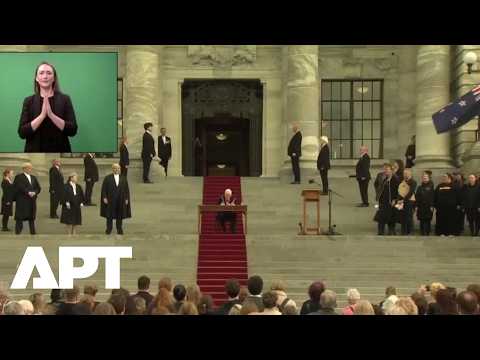
New Zealand Parliament dissolved ahead of tight November election

New Zealand Parliament dissolved ahead of tight November election

Rule Changes

National and Labour tied at 28% as the five-week campaign for the November 7 vote begins

Today: Writ Day

Overview

Updated Yesterday

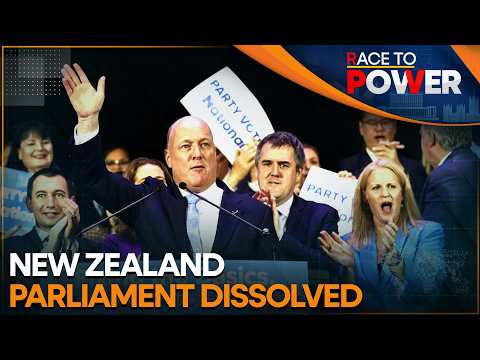
New Zealand's Parliament dissolved on October 1, opening the formal five-week campaign for a November 7 election in which the ruling centre-right coalition and a Labour-led bloc are running neck and neck. Polls put National and Labour at 28% each, with the Greens at 16%.

The stakes are structural. New Zealand hasn't ejected a government after a single three-year term since 1975, and a change would reverse the Luxon coalition's moves on mining, offshore oil and gas, and the central bank's single inflation-focused mandate.

Why it matters

A Luxon loss would oust a single-term government for the first time since 1975, reversing the central bank mandate and resource policy.

Questions about this story

Free account needed to ask — your question is kept and asked for you right after sign-up. Answers are public.

No questions yet — be the first to ask.

Key Indicators

Nov 7, 2026
Election Day
New Zealanders vote in the general election, with special votes counted over the following weeks.
28%
Poll support for National and Labour, tied
The two main parties are level as campaigning officially begins, with the Greens at 16%.
59
Seats projected for the governing centre-right bloc
In the 120-seat Parliament, 61 seats are needed for a majority.
51
Years since a single-term government was ousted
No New Zealand government has lost after one three-year term since 1975.

Voices

Curated perspectives — historical figures and your fellow readers.

Ever wondered what historical figures would say about today's headlines?

Sign up to generate historical perspectives on this story.

People Involved

Organizations Involved

Timeline

October 2026 Late 20

4 events Latest: Today
Tap a bar to jump to that date
  1. National-led coalition takes office

    Upcoming Election

    Christopher Luxon forms a three-party government with New Zealand First and ACT after the October 2023 election.

  2. Election Day

    Upcoming Election

    New Zealanders vote in the general election under the mixed-member proportional system.

  3. Writ Day

    Today Governance

    Governor-General issues the formal direction to the Electoral Commission to hold the election; nominations close.

  4. Parliament dissolved, campaign begins

    Governance

    Governor-General Cindy Kiro signs the proclamation ending the 54th Parliament, starting the formal campaign.

Scenarios

1

Labour-led bloc forms the next government

Possible Resolves by Nov 25, 2026

Discussed by: Reuters, RNZ and The Brief note the Labour-Greens-Opportunity-Te Pāti Māori bloc has a narrow seat projection advantage, with the Greens polling at 16%.

Labour, the Greens, Opportunity and Te Pāti Māori together reach 61 or more seats in the official result. Because Labour and New Zealand First have ruled each other out, a straightforward left-bloc majority would be the cleanest path to a new government, ending the Luxon coalition after a single term.

2

Luxon's coalition returns for a second term

Possible Resolves by Nov 25, 2026

Discussed by: Luxon's campaign and his coalition partners argue the government's record on the economy and cost of living warrants re-election.

National, New Zealand First and ACT hold their combined seat count and keep a majority. That outcome would extend the centre-right government past a single term and continue its policies on resource extraction and the Reserve Bank's single inflation mandate.

3

Hung Parliament breaks the two-bloc alignment

Unlikely Resolves by Nov 25, 2026

Discussed by: RNZ notes the blocs have ruled each other out as coalition partners, which leaves no obvious kingmaker if neither side reaches 61 seats.

With New Zealand First and Labour refusing to work together, and ACT and Te Pāti Māori similarly aligned to opposite blocs, a hung result would force a break in the stated lines of the campaign. Parties would either have to reverse their exclusions and negotiate or face an unstable minority government with the prospect of an early return to the polls.

Historical Context

3 moments from history that rhyme with this story — and how they unfolded.

1972-1975

Last single-term government ousted (1972-1975)

Labour under Norman Kirk won the 1972 election. Kirk died in office in 1974, Bill Rowling took over, and National's Robert Muldoon won the 1975 election, ending the government after one term.

Then

Muldoon led National for a full decade, until Labour's David Lange won in 1984.

Now

No New Zealand government has been removed after a single three-year term since.

Why this matters now

The 2026 election could end that record, which is why the tight polls matter.

1996

First MMP election makes coalitions the norm (1996)

New Zealand switched from first-past-the-post to mixed-member proportional representation, making it nearly impossible for one party to govern alone. Winston Peters' New Zealand First became the first MMP kingmaker, joining a coalition with National.

Then

Coalition government became the standard in New Zealand politics.

Now

Three decades on, every government is a coalition, and the 2026 race is again a two-bloc fight.

Why this matters now

It explains why a near-tie in seats can still produce stable government through coalitions, and why Peters has again been central to the arithmetic.

2017

The kingmaker election (2017)

National won the most seats in the 2017 election but could not form a government. Winston Peters chose to back Labour's Jacinda Ardern, who became prime minister with Green and New Zealand First support.

Then

A Labour-led government formed despite finishing second in seats.

Now

Established that coalitions, not raw seat counts, decide New Zealand governments.

Why this matters now

Peters is again a pivotal figure, but this time he has ruled out Labour, leaving two aligned blocs.

Sources

(9)