
Pull to refresh
Logo
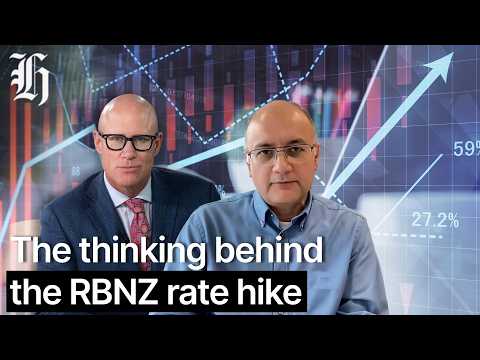
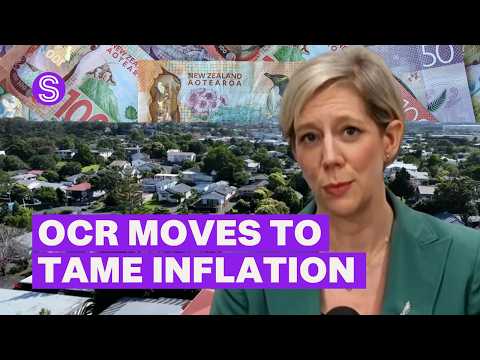
RBNZ holds rates at 2.75% in split vote, defying hike expectations

RBNZ holds rates at 2.75% in split vote, defying hike expectations

Money Moves

The hold pauses a tightening cycle driven by fuel prices and a weakening currency — all seven committee members expect rates to rise further.

Overview

Updated 1 hour ago

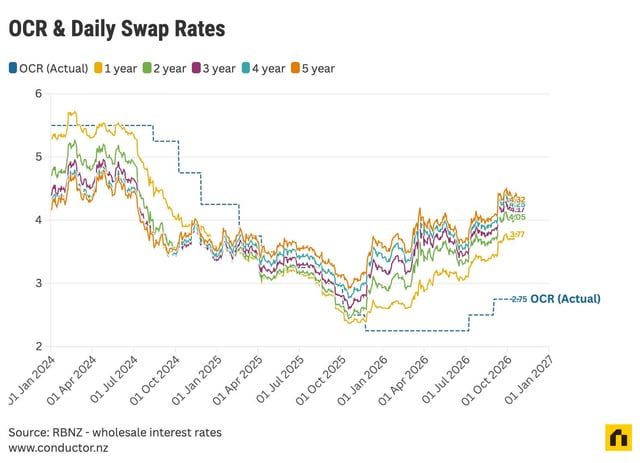
New Zealand's central bank held its official cash rate at 2.75% on a 4-3 vote, defying economists and markets who widely expected a hike. The hold follows two consecutive increases and comes with annual inflation at 3.7% — above the bank's 1 to 3 percent target band.

The disagreement is about timing, not direction. Three committee members wanted a 25-basis-point increase now; four preferred to wait and measure the effect of the earlier hikes. Fuel prices and a currency that has fallen about 3% since early September are pushing inflation toward a forecast 4.4% by December.

Why it matters

New Zealand mortgage holders face another rate rise within months as the central bank works to push inflation back to its 2% target midpoint.

Questions about this story

Free account needed to ask — your question is kept and asked for you right after sign-up. Answers are public.

No questions yet — be the first to ask.

Key Indicators

2.75%
Official cash rate
Held on a 4-3 vote after two prior increases in the tightening cycle.
3.7%
Annual CPI inflation, September quarter
Down from 4.1% in the June quarter; core measures sit near the top of the target band.
4.4%
Forecast inflation for December quarter
Projected rise driven by current futures prices for fuel.
4–3
Committee vote to hold
Three members wanted a 25-basis-point increase to 3% immediately.
80%
Market-assigned probability of a December hike
Traders priced this after the hold, per StoneX strategist David Scutt.
−3%
New Zealand dollar depreciation since early September
A weaker currency adds to imported inflation pressures.

Voices

Curated perspectives — historical figures and your fellow readers.

Sign up to generate historical perspectives on this story.

People Involved

Organizations Involved

Timeline

2026 October 2026

3 events Latest: Yesterday
  1. RBNZ holds OCR at 2.75% in surprise 4-3 vote

    Latest Monetary policy decision

    The Monetary Policy Committee held rates, defying market expectations. Three members pushed for an immediate hike to 3%; four preferred to wait and assess the two prior increases.

  2. Annual CPI inflation eases to 3.7%

    Economic data

    September-quarter inflation fell from 4.1% in June, below expectations. Core measures rose to the top of the 1 to 3 percent band, with price increases broadening across the basket.

  3. RBNZ delivers two rate increases

    Monetary policy decision

    Two consecutive OCR hikes sought to contain inflation risks linked to higher global energy prices, per the Investing.com account.

Scenarios

1

RBNZ hikes OCR to 3% at the December meeting

Likely Resolves by End of 2026

Discussed by: StoneX strategist David Scutt and financial markets, per MarketWatch

Traders assigned an 80% probability of a December hike after the hold. The Monetary Policy Statement gives the committee six more weeks of data. If fuel prices hold and core inflation stays broad, the three dissenters could win over enough colleagues to move rates to 3%.

2

Global downturn forces an about-turn and rate cuts

Possible Resolves by Q2 2027

Discussed by: RBNZ committee members Anna Breman and Prasanna Gai

Breman and Gai attached material risk to the possibility of an abrupt global shift — geopolitical escalation pushing fuel prices higher while weakening activity. In that case the bank's stated stance allows for easing. Commodity prices would fall, inflation would fade, and the OCR could move below today's level.

3

Inflation becomes entrenched, triggering faster hikes

Possible Resolves by Q2 2027

Discussed by: RBNZ dissenters Paul Conway, Hayley Gourley and Karen Silk

If fuel-price pass-through broadens and wage growth picks up, the minority's concern becomes the majority view. Conway's camp argued acting now guards against sustained inflation and reduces the risk of needing to do more later. That path points to the OCR reaching 3.5% or higher within a year.

Historical Context

2 moments from history that rhyme with this story — and how they unfolded.

October 1973 - March 1974

OPEC oil embargo (1973-1974)

Arab oil producers cut exports to the U.S. and its allies. Crude prices roughly quadrupled within months, driving broad inflation across Western economies.

Then

Consumers faced soaring energy and food prices; economic growth stalled while inflation climbed.

Now

The shock fed entrenched inflation expectations and wage-price spirals, contributing to the stagflation of the late 1970s.

Why this matters now

The RBNZ's current dilemma mirrors the embargo: a supply-driven fuel shock that risks becoming embedded in wages and pricing behavior if central banks wait too long.

October 2021 - May 2023

Post-pandemic global tightening cycle (2021-2023)

After Russia's invasion of Ukraine sent energy and food prices soaring, major central banks hiked aggressively. The RBNZ was among the first, lifting the OCR from a pandemic-era low near 0.25% to a peak of 5.5% by May 2023.

Then

Global inflation cooled through 2023-2024 as demand slowed under higher borrowing costs.

Now

The cycle showed how central banks weigh imported inflation against the risk of tipping economies into recession.

Why this matters now

It is the same mechanism playing out now — energy-driven inflation forcing a choice between acting early and risking an economic downturn.

Sources

(6)