
Pull to refresh
Logo
Daily Brief
Following
Why Ranks Sign Up
Nippon Steel finances its U.S. Steel takeover

Nippon Steel finances its U.S. Steel takeover

Money Moves

How a debt-heavy $14 billion deal gets refinanced, bond by bond

Today: First straight bond since the deal

Overview

Nippon Steel just borrowed money at its steepest cost in three decades. On June 10, 2026, the company sold ¥90 billion (about $560 million) of bonds, with the 10-year piece priced at a 3.202% coupon. That is its highest borrowing rate in roughly 30 years.

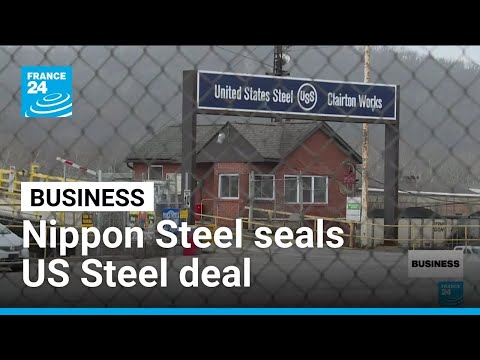
This is the first straight-bond sale since Nippon Steel closed its roughly ¥2 trillion (~$14 billion) purchase of U.S. Steel in June 2025. The deal left the balance sheet stretched. Each new bond shows what carrying that debt now costs, and whether investors still want to lend.

Why it matters

Nippon Steel's highest borrowing cost in 30 years shows the price of a debt-funded global takeover when interest rates and political risk both climb.

Questions about this story

No questions yet — be the first to ask.

Key Indicators

¥90B ($560M)
Bond sale size
Raised in the first straight-bond offering since the U.S. Steel deal closed.
3.202%
10-year coupon
Nippon Steel's highest borrowing cost in about 30 years.
54 bps
Spread over government bonds
The 10-year notes priced 54 basis points above Japanese government bonds, the widest since 1998.
~$14B
Acquisition cost
The roughly ¥2 trillion price tag that created the debt now being refinanced.
BBB
S&P credit rating
S&P Global cut Nippon Steel one notch with a negative outlook after the deal.

Voices

Curated perspectives — historical figures and your fellow readers.

Ever wondered what historical figures would say about today's headlines?

Sign up to generate historical perspectives on this story.

Play

Exploring all sides of a story is often best achieved with Play.

Log in to play. Track your picks, climb the leaderboards. Log in Sign Up
Predict 3 ways this could play out. Contrarian picks score more — points lock when the scenario resolves. Log in to play
Higher or Lower Two numbers from this story. Guess which is bigger. 5 rounds to set a streak. Log in to play
Timeline Five events from this story — drag them oldest to newest. Log in to play
Connections Sixteen names from the news. Find the four hidden groups of four. Log in to play

People Involved

Organizations Involved

Timeline

June 2025 June 2026

5 events Latest: Today
Tap a bar to jump to that date
  1. First straight bond since the deal

    Today Money Moves

    Nippon Steel sells ¥90 billion of straight bonds, upsized from a planned ¥50 billion on strong demand. The 10-year tranche carries a 3.202% coupon, its highest in about 30 years.

  2. Permanent financing completed

    Financing

    A roughly ¥900 billion co-financing led by Japan Bank for International Cooperation helps repay the entire bridge loan, completing the permanent capital structure.

  3. Convertible bonds issued

    Financing

    The company issues ¥600 billion of euro-denominated convertible bonds in two tranches, due 2029 and 2031.

  4. Subordinated term loan secured

    Financing

    Nippon Steel arranges a ¥500 billion committed subordinated term loan, an early step in replacing the bridge loan.

  5. Acquisition closes

    Money Moves

    Nippon Steel completes its roughly ¥2 trillion ($14 billion) purchase of U.S. Steel, funded by a large bridge loan. The U.S. government takes a golden share.

Historical Context

3 moments from history that rhyme with this story — and how they unfolded.

November 2008

InBev buys Anheuser-Busch (2008)

Belgium-based InBev bought Anheuser-Busch for about $52 billion, funded by a $45 billion bridge loan arranged just as the financial crisis hit. The combined brewer had to refinance that short-term debt in frozen markets.

Then

The company sold assets and issued record-sized bonds to repay the bridge loan over the next two years.

Now

Anheuser-Busch InBev became the world's largest brewer and a model for bridge-to-bond financing of mega deals.

Why this matters now

Like Nippon Steel, InBev funded a giant cross-border purchase with a bridge loan, then raced to replace it with long-term bonds at rising cost.

September 2016

SoftBank acquires ARM Holdings (2016)

Japan's SoftBank bought UK chip designer ARM for about £24 billion ($32 billion), largely with a bridge loan. The deal pushed SoftBank's debt sharply higher.

Then

SoftBank repaid the bridge with bond sales and by selling part of its ARM stake to its own investment fund.

Now

The debt-heavy approach defined SoftBank's strategy and drew years of scrutiny over its leverage.

Why this matters now

Another Japanese giant used a bridge loan for a landmark foreign acquisition, then leaned on the bond market and asset sales to bring debt down.

June 2018

Bayer acquires Monsanto (2018)

Germany's Bayer closed a $63 billion purchase of Monsanto, funded with a large bridge facility. The deal roughly doubled Bayer's net debt.

Then

Bayer refinanced through one of the year's biggest bond sales and equity issuance, and rating agencies cut its credit profile.

Now

Heavy debt and later litigation costs weighed on Bayer's stock for years.

Why this matters now

Bayer shows the rating downgrades and refinancing strain that follow a debt-funded mega deal, the same path Nippon Steel is now walking.

Sources

(5)