
Pull to refresh
Logo
Daily Brief
Following
Why Ranks Sign Up
Big pharma's debt-funded biotech buying spree

Big pharma's debt-funded biotech buying spree

Money Moves

Merck, Pfizer, and rivals tap bond markets to refill pipelines as major patents expire

6 days ago: Merck launches seven-tranche bond sale

Overview

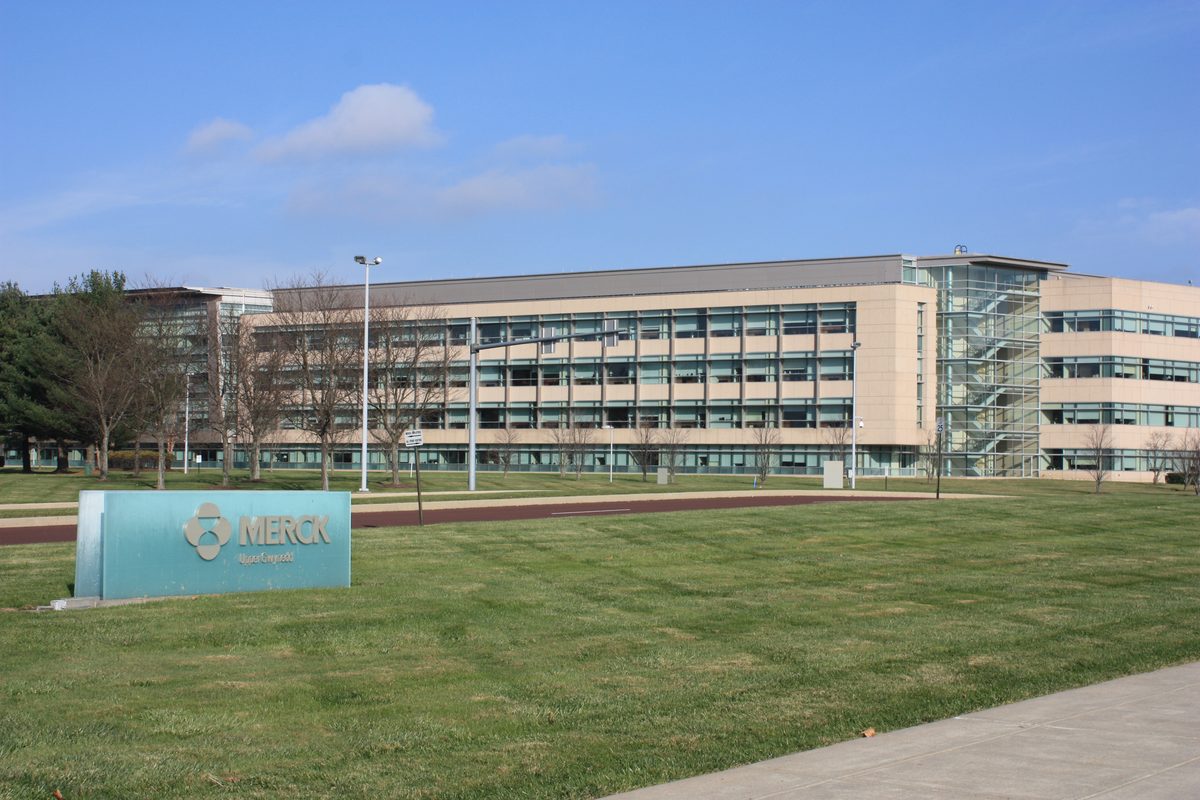
Merck borrowed billions in the investment-grade bond market on Monday. The cash refinances its $6.7 billion all-cash purchase of Terns Pharmaceuticals, a small California biotech the company closed on two weeks ago.

The deal fits a larger pattern. Big pharma is racing to replace blockbusters about to lose patent protection, and bond markets are bankrolling the shopping list.

Why it matters

Big pharma is buying biotechs to replace expiring blockbusters, with bond markets funding the bill so long as borrowing stays cheap.

Key Indicators

$6.7B
Terns acquisition price
All-cash deal Merck closed via tender offer on May 4, 2026.
7
Bond tranches in sale
Maturities laddered across short, intermediate, and 30-year debt.
+105 bps
30-year spread over Treasuries
Roughly 1.05 percentage points above the comparable U.S. Treasury yield at launch.
$29.5B
Keytruda 2024 revenue
Merck's cancer drug accounts for nearly half of company sales and loses U.S. exclusivity in 2028.
Breakthrough
FDA designation for TERN-701
Status that lets the FDA fast-track review based on early-stage efficacy data.

Voices

Curated perspectives — historical figures and your fellow readers.

Ever wondered what historical figures would say about today's headlines?

Sign up to generate historical perspectives on this story.

Play

Exploring all sides of a story is often best achieved with Play.

Log in to play. Track your picks, climb the leaderboards. Log in Sign Up
Predict 4 ways this could play out. Contrarian picks score more — points lock when the scenario resolves. Log in to play
Higher or Lower Two numbers from this story. Guess which is bigger. 5 rounds to set a streak. Log in to play
Timeline Five events from this story — drag them oldest to newest. Log in to play
Connections Sixteen names from the news. Find the four hidden groups of four. Log in to play

People Involved

Organizations Involved

Timeline

March 2023 May 2026

9 events Latest: 6 days ago
Tap a bar to jump to that date
  1. Merck launches seven-tranche bond sale

    Latest Financing

    Merck markets investment-grade bonds across seven maturities, with the 30-year tranche priced around 105 basis points over Treasuries.

  2. Terns tender offer closes

    Acquisition

    Merck completes the cash tender offer and Terns becomes a wholly owned subsidiary.

  3. Merck announces Terns acquisition

    Acquisition

    Merck agrees to buy Terns Pharmaceuticals for $6.7 billion in cash, citing TERN-701's Breakthrough Therapy Designation.

  4. TERN-701 mid-stage data released

    Clinical

    Terns reports positive Phase 1 data for its oral BCR-ABL inhibitor in chronic myeloid leukemia patients.

  5. Merck closes $1.3B Eyebiotech deal

    Acquisition

    Merck adds an experimental retinal disease platform through a small bolt-on purchase.

  6. Bristol-Myers buys Karuna for $14B

    Acquisition

    Bristol-Myers Squibb agrees to acquire Karuna Therapeutics, gaining a novel schizophrenia drug.

  7. AbbVie agrees to buy ImmunoGen for $10.1B

    Acquisition

    AbbVie acquires ImmunoGen to add an approved ovarian cancer drug to its pipeline.

  8. Merck closes $10.8B Prometheus deal

    Acquisition

    Merck completes its tender offer for Prometheus Biosciences, gaining an experimental drug for inflammatory bowel disease.

  9. Pfizer announces $43B Seagen acquisition

    Acquisition

    Pfizer agrees to buy cancer biotech Seagen for $43 billion, the largest pharma deal since Bristol-Myers bought Celgene in 2019.

Historical Context

3 moments from history that rhyme with this story — and how they unfolded.

February 2000

Pfizer–Warner-Lambert (2000)

Pfizer paid $90 billion in stock for Warner-Lambert, primarily to take full control of Lipitor, the cholesterol drug they had been co-marketing. At the time it was the second-largest corporate merger in U.S. history.

Then

Pfizer became the largest pharmaceutical company in the world and Lipitor went on to generate more than $125 billion in lifetime sales.

Now

When Lipitor lost U.S. patent protection in 2011, Pfizer's revenue dropped sharply. The company has been buying its way back to growth ever since.

Why this matters now

The Lipitor cycle is the template for the current wave: a single blockbuster carries a company for a decade, then patent expiration forces a buying spree to replace it. Merck is now in Pfizer's 2010 position with Keytruda.

November 2009

Merck–Schering-Plough (2009)

Merck paid $41 billion for Schering-Plough in a cash-and-stock deal, motivated by the 2012 patent expiration of asthma drug Singulair and the 2011 loss of cholesterol drug Cozaar. The combined company gained Schering's biologics platform and consumer health business.

Then

Merck absorbed Schering's R&D pipeline, including the drug that would later become Keytruda.

Now

Keytruda, originally a Schering-Plough asset, became the best-selling drug in the world by 2023. The acquisition is now cited as one of the most consequential pharma deals in history.

Why this matters now

The Schering deal shows how a single acquired asset can define a buyer for decades. Merck is now hoping Terns or one of its other bolt-ons can do the same as Keytruda's patent runs out.

November 2019

Bristol-Myers Squibb–Celgene (2019)

Bristol-Myers Squibb paid $74 billion for Celgene, then the largest pharma deal of its era. The combined company took on roughly $32 billion in new debt to fund the cash portion of the transaction.

Then

Bristol-Myers gained Celgene's blockbuster Revlimid for multiple myeloma along with a deeper oncology pipeline.

Now

Revlimid lost patent exclusivity in 2022, and Bristol-Myers has struggled to replace its revenue. The company has since launched its own series of bolt-on acquisitions, including the $14 billion Karuna deal in 2023.

Why this matters now

Bristol-Myers shows that even a $74 billion deal does not necessarily solve the patent cliff problem. The lesson many pharma CFOs have drawn is to buy earlier-stage assets like Terns rather than mature ones like Celgene.

Sources

(3)