


Pull to refresh
Logo
Hall and Woodford win 2026 Nobel economics prize for macroeconomic stabilization work

Hall and Woodford win 2026 Nobel economics prize for macroeconomic stabilization work

New Capabilities

The pair rebuilt macroeconomics on microeconomic foundations after the 1970s oil crises

Today: Nobel prize awarded to Hall and Woodford

Overview

Updated 59 minutes ago

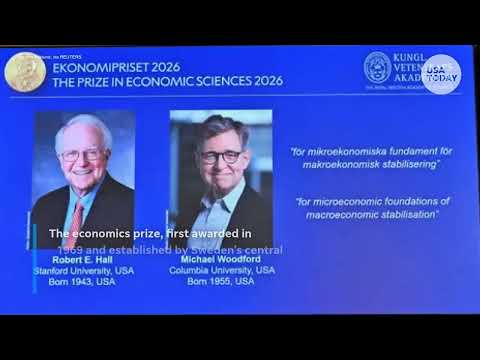
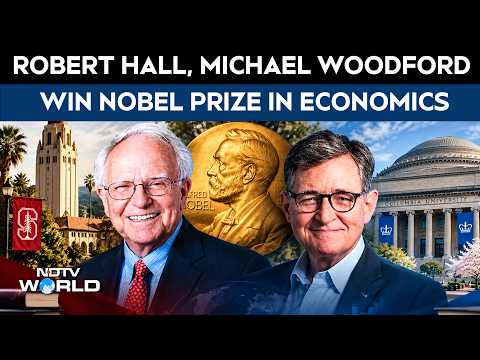
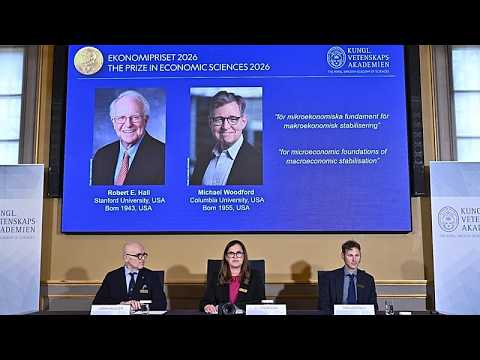
The Royal Swedish Academy of Sciences awarded the 2026 Nobel economics prize to Robert E. Hall and Michael Woodford for building the microeconomic foundations of macroeconomic stabilisation. Their models, developed over nearly five decades, are now the standard toolkit for central banks and governments worldwide.

The prize recognizes work that rebuilt macroeconomics after the 1970s oil crises, when Keynesian models failed to explain stagflation. Hall and Woodford built their framework on how individual households and firms make forward-looking decisions, giving policymakers tools like forward guidance that proved critical after 2008 and during Covid.

Why it matters

The models honored today are the same ones central banks use to set interest rates and guide expectations through recessions and crises.

Questions about this story

Free account needed to ask — your question is kept and asked for you right after sign-up. Answers are public.

No questions yet — be the first to ask.

Key Indicators

12M SEK
Prize amount
Shared equally between the two laureates.
2
Laureates
Robert E. Hall and Michael Woodford.
48
Years since Hall's 1978 paper
The seminal consumption-smoothing paper that launched the research program.

Voices

Curated perspectives — historical figures and your fellow readers.

Ever wondered what historical figures would say about today's headlines?

Sign up to generate historical perspectives on this story.

People Involved

Organizations Involved

Timeline

1978 October 2026

4 events Latest: Today
Tap a bar to jump to that date
  1. Nobel prize awarded to Hall and Woodford

    Today Award

    The Royal Swedish Academy of Sciences awards the prize for microeconomic foundations of macroeconomic stabilisation.

  2. Models used during Great Recession

    Application

    Policymakers used the models to steer the global economy through the financial crisis.

  3. Woodford publishes 'Interest and Prices'

    Research

    Woodford's monograph established the New Keynesian model as the main framework for monetary policy analysis.

  4. Hall publishes consumption-smoothing paper

    Research

    Hall's paper showed consumers make forward-looking decisions about saving and spending, challenging mechanical Keynesian rules.

Scenarios

1

New Keynesian models keep their grip on central bank policy

Likely Resolves by End of 2028

Discussed by: The Royal Swedish Academy of Sciences, which noted the models are 'now used by central banks and governments around the world'

The prize cements the framework's dominance. The Federal Reserve and European Central Bank continue to use New Keynesian models for policy analysis, and forward guidance remains a standard tool in their arsenals.

2

Supply shocks expose the framework's limits

Possible Resolves by End of 2028

Discussed by: The Nobel committee, which noted the models help deal with 'energy crises or sudden changes in how much households consume'

A major supply-side shock (energy crisis, pandemic, trade disruption) challenges the framework's demand-side focus. Central banks struggle to respond to simultaneous inflation and unemployment, prompting a public rethink.

3

The framework expands to more central banks worldwide

Possible Resolves by End of 2028

Discussed by: The Nobel committee, which noted the models are used by governments 'around the world'

The prize draws attention to the framework, and more central banks, particularly in emerging markets, adopt New Keynesian models and forward guidance as they modernize their policy frameworks.

Historical Context

3 moments from history that rhyme with this story — and how they unfolded.

1976

Lucas critique (1976)

Robert Lucas argued that econometric models based on historical relationships between variables would break down when policy changed, because households and firms adapt their expectations. The critique undermined the Keynesian consensus that had guided policy since the 1930s.

Then

The critique triggered a crisis in macroeconomics, as researchers realized the old models could not reliably guide policy.

Now

It set the agenda for rebuilding macroeconomics on microeconomic foundations, the project Hall and Woodford completed.

Why this matters now

Hall and Woodford's work is the constructive response to Lucas's critique, building models where expectations are forward-looking and policy-relevant.

1973-1979

1970s stagflation

The oil crises of the 1970s produced simultaneous high inflation and high unemployment across the West. Keynesian models, which assumed a stable trade-off between inflation and unemployment, could not explain or fix the situation.

Then

The West experienced a decade of low growth, high unemployment, and high inflation. Many economists concluded that stabilization policy had done more harm than good.

Now

The failure motivated the search for new microeconomic foundations, leading to the New Keynesian framework.

Why this matters now

The stagflation crisis is the problem Hall and Woodford's work was designed to solve.

2008-2009

2008 financial crisis

The Great Recession was the first major test of the New Keynesian framework. Policymakers used the models to steer the global economy away from a second Great Depression, and forward guidance became a key tool when interest rates hit zero.

Then

The framework helped guide the policy response, including unprecedented monetary easing and fiscal stimulus.

Now

The crisis cemented the New Keynesian model as the standard tool for central banks and governments.

Why this matters now

The 2008 crisis demonstrated the practical value of Hall and Woodford's work, which the Nobel committee cited in its decision.

Sources

(10)