


Pull to refresh
Logo
North Sea Link marks five years of Norway-UK power sharing

North Sea Link marks five years of Norway-UK power sharing

Built World

The 720-kilometre cable has carried 37 terawatt-hours since 2021, and its flows reversed twice in a single year

Overview

Updated 40 minutes ago

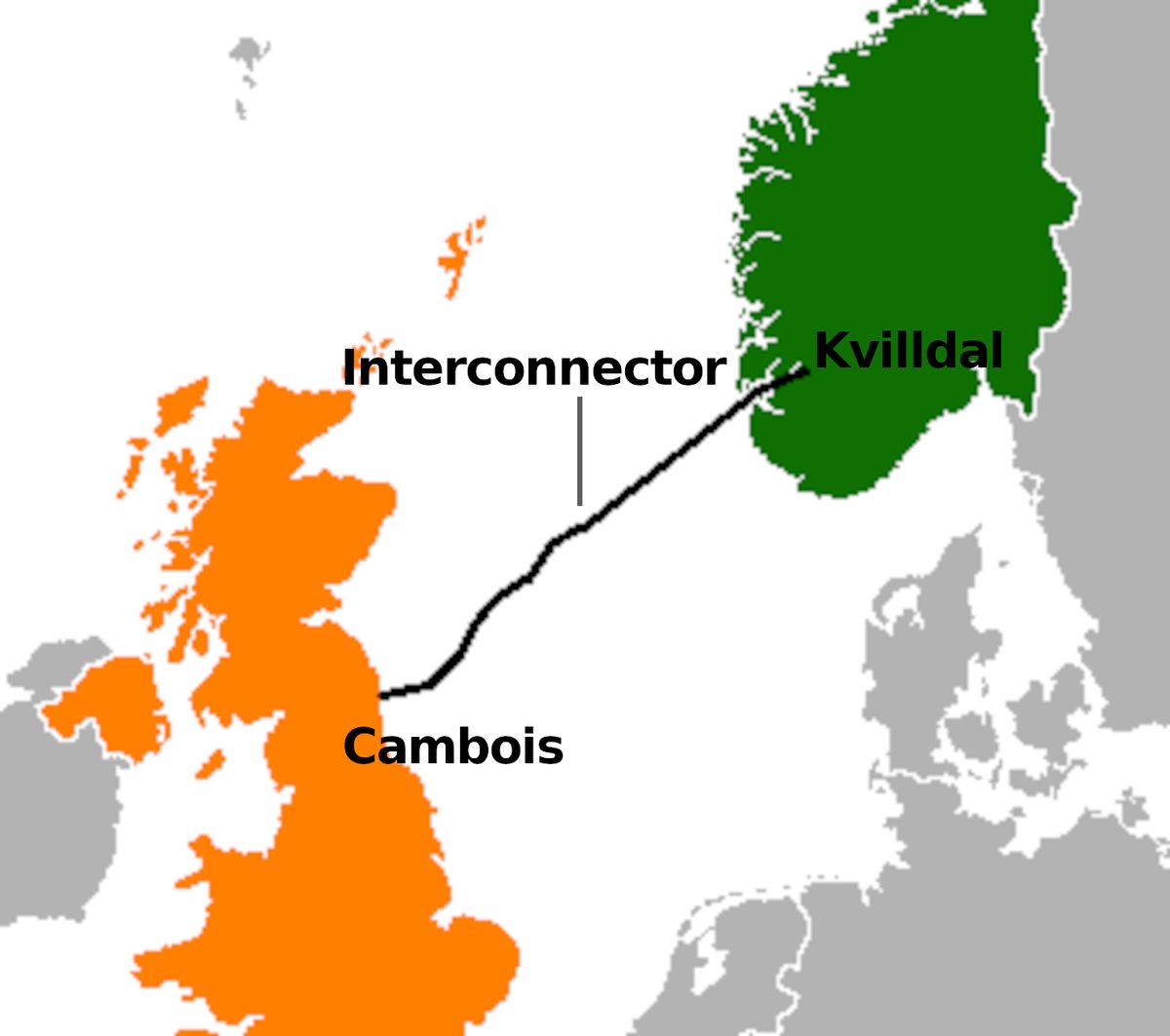
The North Sea Link entered commercial operation on 1 October 2021, connecting Blyth in Northumberland to Kvilldal in Norway with a 720-kilometre cable. On 16 November 2026, National Grid marked the link's fifth anniversary at Blyth, reporting that it had carried more than 37 terawatt-hours of electricity between the two countries.

The cable is a two-way valve between two very different power systems. Britain's grid leans on wind, which swings with the weather. Norway's leans on hydropower held in reservoirs, which can be released on demand. When British wind is strong, surplus power flows east and saves Norwegian water. When British wind drops, Norwegian hydro flows west.

Why it matters

One cable lets Britain rent Norway's reservoirs as a battery, and lets Norway sell stored water when prices peak.

Questions about this story

Free account needed to ask — your question is kept and asked for you right after sign-up. Answers are public.

No questions yet — be the first to ask.

Key Indicators

720 km
Cable length
Runs under the North Sea at depths of up to 700 metres.
1,400 MW
Transmission capacity
Enough to power about 1.4 million homes at full flow.
37 TWh
Electricity shared since 2021
Enough to power roughly 2.5 million British homes a year, according to National Grid.
£2bn
Net consumer benefit
National Grid's estimate for its six interconnectors since 2023, versus gas generation.
23m tonnes
CO2 emissions avoided by 2030
Projected at commissioning in 2021.

Voices

Curated perspectives — historical figures and your fellow readers.

Sign up to generate historical perspectives on this story.

People Involved

Organizations Involved

Timeline

2018 November 2026

6 events Latest: Today
Tap a bar to jump to that date
  1. Fifth anniversary marked in Blyth

    Today Milestone

    National Grid reports 37 TWh shared since 2021 and £2 billion in net consumer benefit across its interconnectors.

  2. Full 1,400 MW capacity reached

    Technical

    After a converter fault was resolved, the link operates at its designed maximum.

  3. Link switches to bipole operation

    Technical

    The converter system moves from monopole to bipole mode, allowing higher sustained flows.

  4. Commercial operation starts at half capacity

    Launch

    Trading begins at a maximum of 700 MW, with capacity to rise over three months.

  5. First electricity crosses the link

    Testing

    Transmission between Norway and Britain is tested for the first time after the cable is completed.

  6. Cable laying begins in the North Sea

    Construction

    Installation of the subsea cable starts, eventually requiring 5,880 working days at sea.

Scenarios

1

North Sea Link ends winter 2026-27 as a net importer to Great Britain

Possible Resolves by Apr 30, 2027

Discussed by: National Grid's anniversary analysis, which tracked flows switching direction twice in 2026

Cold weather and low Nordic hydro reserves pushed Britain into net exporter status early in 2026, before rising gas prices pulled flows back toward Britain in March. A repeat of a cold, dry Nordic winter would keep the cable importing. A mild, wet winter with strong British wind would flip it the other way.

2

National Grid and Statnett announce a capacity upgrade or a second Norway link

Unlikely Resolves by End of 2028

Discussed by: No party has proposed this publicly; it is a watch item, not a forecast

The link runs at its full 1,400 megawatts and its owners describe it as an essential asset. A further cable or an upgrade would require new permits in both countries and a fresh investment decision. Neither company has announced such a plan.

3

Norway restricts electricity exports through the link

Uncertain Resolves by End of 2027

Discussed by: Statnett has acknowledged interconnectors may on average raise Norwegian prices

Export limits would require a political decision in Oslo, not a technical one. Statnett's own framing is that links raise average Norwegian prices somewhat while improving supply security and curbing peaks. Any restriction would immediately change how the cable is used and how British prices respond.

Historical Context

3 moments from history that rhyme with this story — and how they unfolded.

May 2008

NorNed (2008)

A 580-kilometre, 700-megawatt cable linked Norway to the Netherlands, becoming the longest subsea power interconnector in the world at the time. It paired Norwegian reservoir hydro with a Dutch market that needed flexible supply.

Then

The cable traded actively from launch and demonstrated that long-distance subsea links could be commercially viable.

Now

It set the template that the North Sea Link and later cables followed: pair flexible hydro with a wind-heavy market and let prices decide the direction.

Why this matters now

NorNed proved the Norway-to-Europe hydro model a decade before Blyth was connected.

April 2011

BritNed (2011)

A 260-kilometre, 1,000-megawatt cable connected Great Britain to the Netherlands, giving Britain a second link to the continental market and more room to trade surplus power.

Then

It increased import capacity into Britain during a period of tightening supply margins.

Now

It established Britain's pattern of relying on interconnectors, rather than new domestic plants alone, to cover peak demand.

Why this matters now

The North Sea Link extended that strategy to a partner with storage rather than just a neighbouring market.

December 2023

Viking Link (2023)

A 765-kilometre, 1,400-megawatt cable between Britain and Denmark took the title of world's longest subsea interconnector from the North Sea Link.

Then

Britain gained another route to import and export power, further diversifying its supply options.

Now

The record has kept moving as cable length and capacity have grown, with the North Sea Link now one of several long links in a connected North Sea grid.

Why this matters now

It shows the North Sea Link is no longer a one-off curiosity but part of a growing mesh of cables around Britain.

Sources

(8)