

Pull to refresh
Logo
Daily Brief
Following
Why
Nuclear fusion's levitated dipole dark horse emerges from New Zealand

Nuclear fusion's levitated dipole dark horse emerges from New Zealand

New Capabilities
By Newzino Staff |

OpenStar Technologies demonstrates plasma confinement with a floating half-tonne magnet, reviving a reactor concept abandoned by the United States in 2011

February 17th, 2026: OpenStar levitates magnet in million-degree plasma

Overview

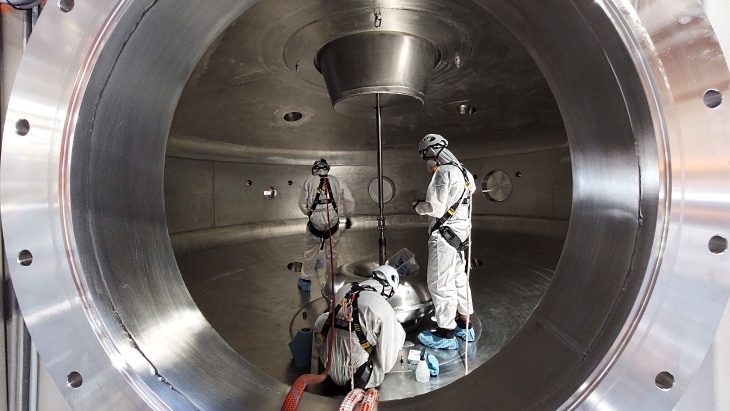
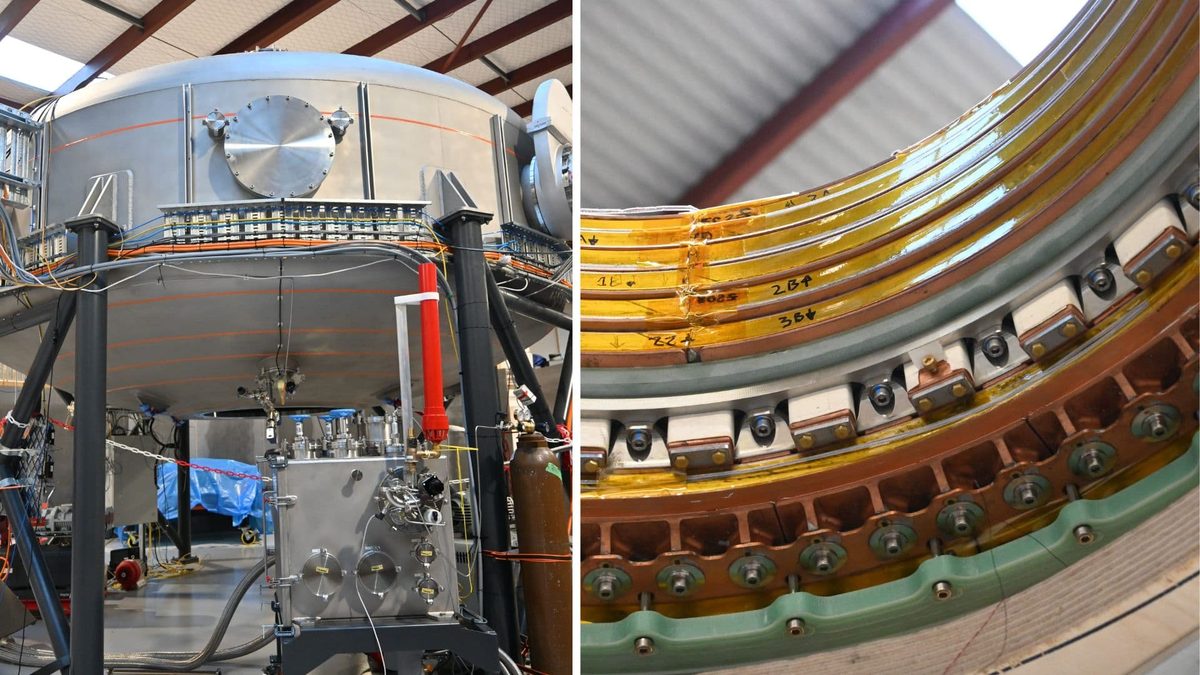
For the first time, a commercial company has confined plasma using a levitated dipole reactor — a design where a single half-tonne superconducting magnet floats freely inside a vacuum chamber, held aloft only by magnetic force, while superheated gas swirls around it at over one million degrees Celsius. On February 17, 2026, Wellington-based OpenStar Technologies publicly demonstrated this feat in its five-meter-wide "Junior" prototype, with New Zealand Prime Minister Christopher Luxon triggering the final stage of the experiment.

Key Indicators

1,000,000+°C
Plasma temperature achieved
Temperature of the plasma confined around the levitated magnet during Junior's demonstration
550 kg
Levitated magnet mass
Weight of the superconducting magnet floating wirelessly inside the vacuum chamber
<$10M
Cost to build Junior
Total cost of designing and constructing the Junior prototype in under two years
NZ$35M
Government funding secured
New Zealand Regional Infrastructure Fund commitment for OpenStar's next device, Tahi
$7.1B+
Global private fusion investment
Cumulative private funding flowing into fusion startups worldwide as of late 2025

Interactive

Exploring all sides of a story is often best achieved with Play.

Ever wondered what historical figures would say about today's headlines?

Sign up to generate historical perspectives on this story.

Sign Up

Debate Arena

Two rounds, two personas, one winner. You set the crossfire.

People Involved

RM
Ratu Mataira
Founder and Chief Executive, OpenStar Technologies (Leading development of next-generation Tahi device)
Darren Garnier
Darren Garnier
Director of Plasma Science, OpenStar Technologies (Overseeing plasma physics program)
Christopher Luxon
Christopher Luxon
Prime Minister of New Zealand (Publicly backed OpenStar at demonstration)

Organizations Involved

OpenStar Technologies
Fusion Energy Startup
Status: Transitioning from Junior prototype to next-generation Tahi device

A Wellington-based startup developing a levitated dipole fusion reactor, a design that uses a single floating superconducting magnet rather than the complex arrays of external magnets used in tokamaks.

MIT Plasma Science and Fusion Center
University Research Laboratory
Status: Formal collaboration partner with OpenStar

The MIT lab that built and operated the original Levitated Dipole Experiment from 1998 to 2011, proving the concept that OpenStar is now commercializing.

Fusion Industry Association
Industry Trade Group
Status: Tracking rapid growth in private fusion sector

The trade association representing private fusion companies, which reports that the industry raised over two and a half billion dollars in a single recent twelve-month period and directly employs more than 4,600 people.

Timeline

  1. OpenStar levitates magnet in million-degree plasma

    Milestone

    OpenStar publicly demonstrates its Junior prototype levitating a 550-kilogram superconducting magnet inside a five-meter vacuum chamber filled with plasma exceeding one million degrees Celsius — the first time a commercial company has achieved plasma confinement with a levitated dipole. New Zealand Prime Minister Christopher Luxon triggers the final stage of the experiment.

  2. New Zealand government commits NZ$35 million to OpenStar

    Funding

    The Regional Infrastructure Fund backs construction of OpenStar's next device, Tahi, which will generate a magnetic field four times stronger than Junior at up to twenty Tesla.

  3. Junior achieves first plasma

    Milestone

    OpenStar's Junior prototype produces and confines plasma lasting twenty seconds at 300,000 degrees Celsius in a mechanically supported configuration, validating the basic reactor concept.

  4. Pacific Fusion raises $900 million in stealth debut

    Funding

    A previously unknown fusion startup emerges with one of the largest first-round raises in fusion history, underscoring the scale of capital now flowing into the sector.

  5. Darren Garnier joins OpenStar from Commonwealth Fusion Systems

    Corporate

    The former chief experimentalist of MIT's original LDX experiment becomes OpenStar's Director of Plasma Science, bringing direct experience from the only prior levitated dipole experiment.

  6. National Ignition Facility achieves fusion ignition

    Scientific

    The United States' National Ignition Facility produces 3.15 megajoules of fusion energy from 2.05 megajoules of laser input, achieving net energy gain in a fusion device for the first time — though far from net electricity gain.

  7. OpenStar raises NZ$10 million seed round

    Funding

    Led by Outset Ventures with participation from Icehouse Ventures, Blackbird, and other New Zealand investors, the round funds construction of the Junior prototype.

  8. Ratu Mataira founds OpenStar Technologies

    Corporate

    A New Zealand physicist who recognized that advances in high-temperature superconductors could make the abandoned levitated dipole concept commercially viable founds OpenStar in Wellington.

  9. U.S. Department of Energy defunds LDX

    Policy

    The Department of Energy ends funding for the Levitated Dipole Experiment to concentrate resources on tokamak research, shelving the concept for nearly a decade.

  10. LDX achieves first levitated magnet operation

    Scientific

    The MIT-Columbia experiment successfully levitates its superconducting coil for forty minutes, demonstrating dramatically improved plasma confinement compared to mechanically supported operation.

  11. MIT and Columbia begin building the Levitated Dipole Experiment

    Scientific

    Physicists Jay Kesner of MIT and Michael Mauel of Columbia University begin construction of LDX, the first experiment to test Hasegawa's concept.

  12. Levitated dipole fusion concept first proposed

    Scientific

    Japanese physicist Akira Hasegawa theorized that a single levitating magnet could confine plasma for fusion, inspired by how planetary magnetospheres trap charged particles.

Scenarios

1

OpenStar's levitated dipole proves scalable, reaches grid power by late 2030s

Discussed by: OpenStar's published roadmap; Fusion Industry Association surveys showing 84% of fusion companies target grid delivery by end of 2030s

OpenStar successfully builds Tahi (four times Junior's field strength), then Maui (the first neutron-producing device), and ultimately Tama Nui at 50-200 megawatts. The simpler, cheaper levitated dipole design proves easier to manufacture and maintain than tokamaks, attracting utility-scale investment. Grid-connected fusion power arrives first in New Zealand, a country with a small grid and strong clean-energy policy incentives, before expanding internationally. This requires each successive device to work at increasing scale without encountering unforeseen plasma instabilities — a significant physics hurdle that has tripped up fusion programs before.

2

Tokamak and stellarator rivals reach commercialization first, levitated dipole remains niche

Discussed by: Commonwealth Fusion Systems roadmap; Helion's Microsoft power purchase agreement for 2028 delivery; industry analysts at TechCrunch, Bloomberg

Better-funded competitors — Commonwealth Fusion Systems with its SPARC tokamak, Helion Energy with its field-reversed configuration, or TAE Technologies — reach commercial milestones before OpenStar can scale from a five-meter prototype to a power-producing plant. The levitated dipole proves scientifically interesting but unable to close the engineering gaps fast enough to compete with reactor designs backed by billions in capital and decades of prior engineering. OpenStar becomes an important research contributor but not a commercial electricity producer.

3

Fusion commercialization stalls across the board, no company delivers grid power before 2040

Discussed by: Scientific American analysis of ITER delays; historical pattern of fusion timeline slippage; skeptical analysis from The Bulletin of the Atomic Scientists

Engineering challenges in materials science, plasma stability, and tritium supply prove harder to solve than current startup timelines assume. The pattern that has defined fusion for seventy years — "always thirty years away" — continues despite record private investment. ITER's repeated delays and cost overruns foreshadow similar problems at startup scale. Investor patience erodes as capital-intensive prototypes fail to meet milestones. Fusion remains a laboratory achievement, not a commercial power source, through the 2030s.

4

Multiple fusion approaches reach viability simultaneously, creating a diverse fusion industry

Discussed by: Fusion Industry Association's 2025 survey noting a half-dozen competing designs; venture capital analysts at General Catalyst, Breakthrough Energy Ventures

Rather than a single winner, several reactor designs prove commercially viable for different applications. Levitated dipoles like OpenStar's suit distributed generation and remote locations due to their mechanical simplicity. Large tokamaks serve baseload power for industrial grids. Inertial confinement systems find defense or specialized industrial uses. The fusion industry develops more like the early aviation industry — multiple viable airframe designs coexisting — than like a winner-take-all technology race.

Historical Context

The Levitated Dipole Experiment at MIT (1998-2011)

1998-2011

What Happened

Physicists Jay Kesner and Michael Mauel built the Levitated Dipole Experiment at MIT to test Akira Hasegawa's 1987 theory that a single floating magnet could confine fusion plasma. By 2007, LDX had demonstrated that levitating the magnet — rather than supporting it mechanically — dramatically improved plasma confinement. The experiment ran on a modest budget relative to major fusion projects.

Outcome

Short Term

The U.S. Department of Energy ended LDX funding in November 2011 to concentrate resources on tokamak research, which was considered the most mature path to fusion.

Long Term

The scientific results sat dormant for nearly a decade until OpenStar's founder recognized that advances in high-temperature superconductors had eliminated a key barrier. LDX's former chief experimentalist now leads OpenStar's plasma science program.

Why It's Relevant Today

OpenStar is directly commercializing the concept LDX proved. This is a case of publicly funded research producing validated results that a private company later revives with newer technology — a pattern familiar from the internet, GPS, and mRNA vaccines.

National Ignition Facility achieves fusion ignition (2022)

December 2022

What Happened

The National Ignition Facility at Lawrence Livermore National Laboratory in California achieved scientific fusion ignition for the first time, producing 3.15 megajoules of energy from 2.05 megajoules of laser input. The announcement generated global headlines about the arrival of fusion energy, though the facility's lasers consumed hundreds of megajoules of electricity to produce their beams.

Outcome

Short Term

The achievement validated that net energy gain from fusion was physically possible and generated a surge of investor and public interest in fusion startups.

Long Term

NIF's result demonstrated scientific proof-of-concept but highlighted the enormous gap between laboratory ignition and commercial power generation — a gap that private companies like OpenStar, CFS, and Helion are now racing to close through fundamentally different reactor designs.

Why It's Relevant Today

NIF's breakthrough reshaped public and investor perception of fusion from perpetual fantasy to plausible near-term technology. The post-2022 investment surge — including OpenStar's funding — is partly a consequence of this shift in credibility.

ITER's repeated delays and cost overruns (2006-present)

2006-present

What Happened

ITER, the multinational tokamak under construction in southern France, was originally projected to achieve first plasma in 2020 at a cost of roughly ten billion dollars. By 2024, the project had pushed its target for full operation to 2039 and added over five billion dollars in cost overruns, driven by manufacturing faults, the complexity of a first-of-a-kind machine, and design changes required by safety regulators.

Outcome

Short Term

Participating governments continued funding but with growing skepticism. The U.S. Congress commissioned reviews of American participation.

Long Term

ITER's struggles became a cautionary example of the tokamak approach's complexity and cost, helping catalyze the private fusion startup sector as investors and policymakers looked for faster, cheaper alternatives.

Why It's Relevant Today

OpenStar's pitch — a reactor built in under two years for under ten million dollars — gains its force partly from the contrast with ITER's decades of delays and tens of billions in costs. The levitated dipole's mechanical simplicity is a direct response to the engineering complexity that has plagued large tokamak projects.

Sources

(15)