

Pull to refresh
Logo
Daily Brief
Following
Why Ranks Sign Up
New York City tries to end at-will deactivation for app drivers

New York City tries to end at-will deactivation for app drivers

Rule Changes

A first-in-the-nation just-cause law for Uber and Lyft drivers was frozen by a federal judge six days before it was set to take effect.

Today: Effective date arrives, driver rules on hold

Overview

For an Uber or Lyft driver in New York, being fired can take one second. An algorithm flags the account, the app stops working, and the income stops with it. A new city law set out to change that. Then a federal judge blocked it six days before it took effect.

Local Law 52 would bar Uber and Lyft from cutting off a driver without 'just cause,' a real economic reason, or a legal requirement. It covers more than 80,000 drivers. On July 22, 2026, Judge Gregory Woods froze the law, ruling the companies would likely win their claim that it unlawfully rewrites their contracts with drivers.

Why it matters

If the law survives court, gig drivers in America's biggest ride-hail market get the closest thing yet to protection from being fired by algorithm.

Questions about this story

No questions yet — be the first to ask.

Key Indicators

80,000+
Drivers covered
For-hire vehicle drivers the law would shield from abrupt deactivation.
14 days
Notice required
Advance written warning platforms would owe before firing a driver in most cases.
46–5
Veto override vote
City Council margin to enact the law over the mayor's veto in January 2026.
6 days
Blocked before start
Gap between the judge's injunction and the law's July 28 effective date.

Voices

Curated perspectives — historical figures and your fellow readers.

Ever wondered what historical figures would say about today's headlines?

Sign up to generate historical perspectives on this story.

Play

Exploring all sides of a story is often best achieved with Play.

Log in to play. Track your picks, climb the leaderboards. Log in Sign Up
Predict 4 ways this could play out. Contrarian picks score more — points lock when the scenario resolves. Log in to play
Higher or Lower Two numbers from this story. Guess which is bigger. 5 rounds to set a streak. Log in to play
Timeline Five events from this story — drag them oldest to newest. Log in to play
Connections Sixteen names from the news. Find the four hidden groups of four. Log in to play

People Involved

Organizations Involved

Timeline

December 2025 July 2026

6 events Latest: Today
Tap a bar to jump to that date
  1. Drivers protest at Uber headquarters

    Statement

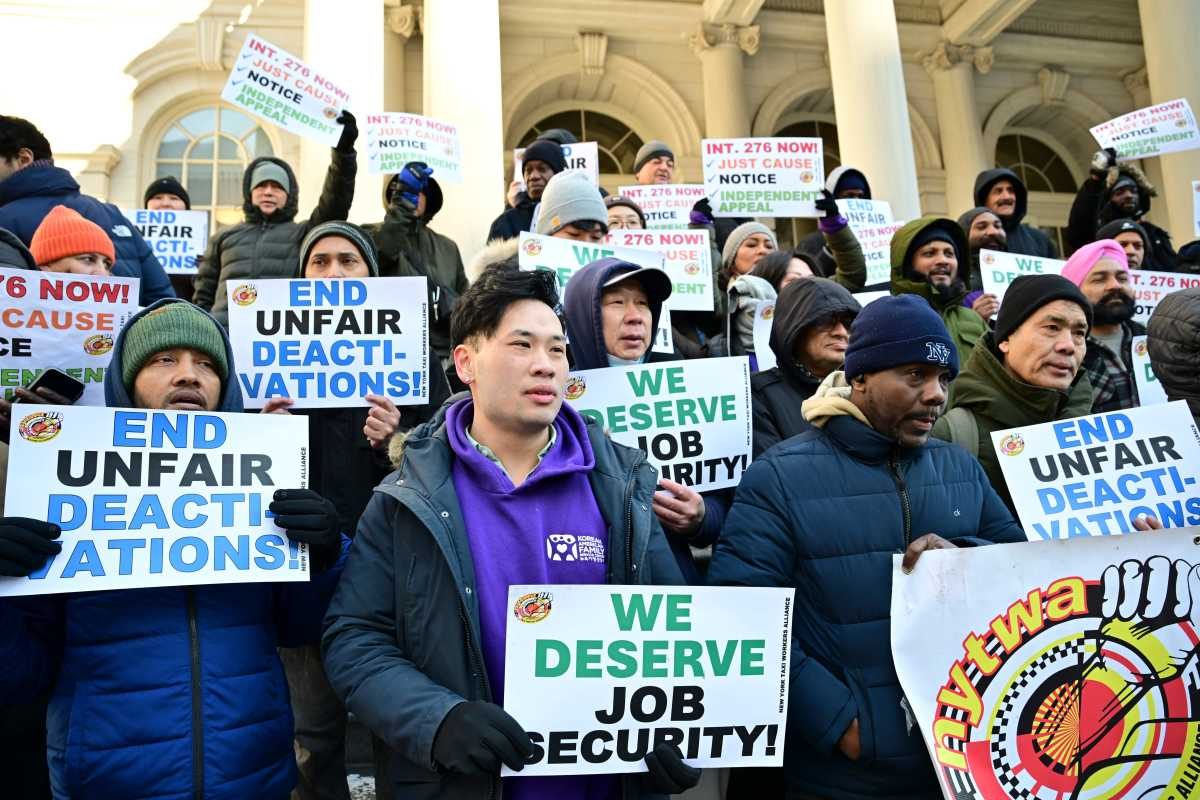
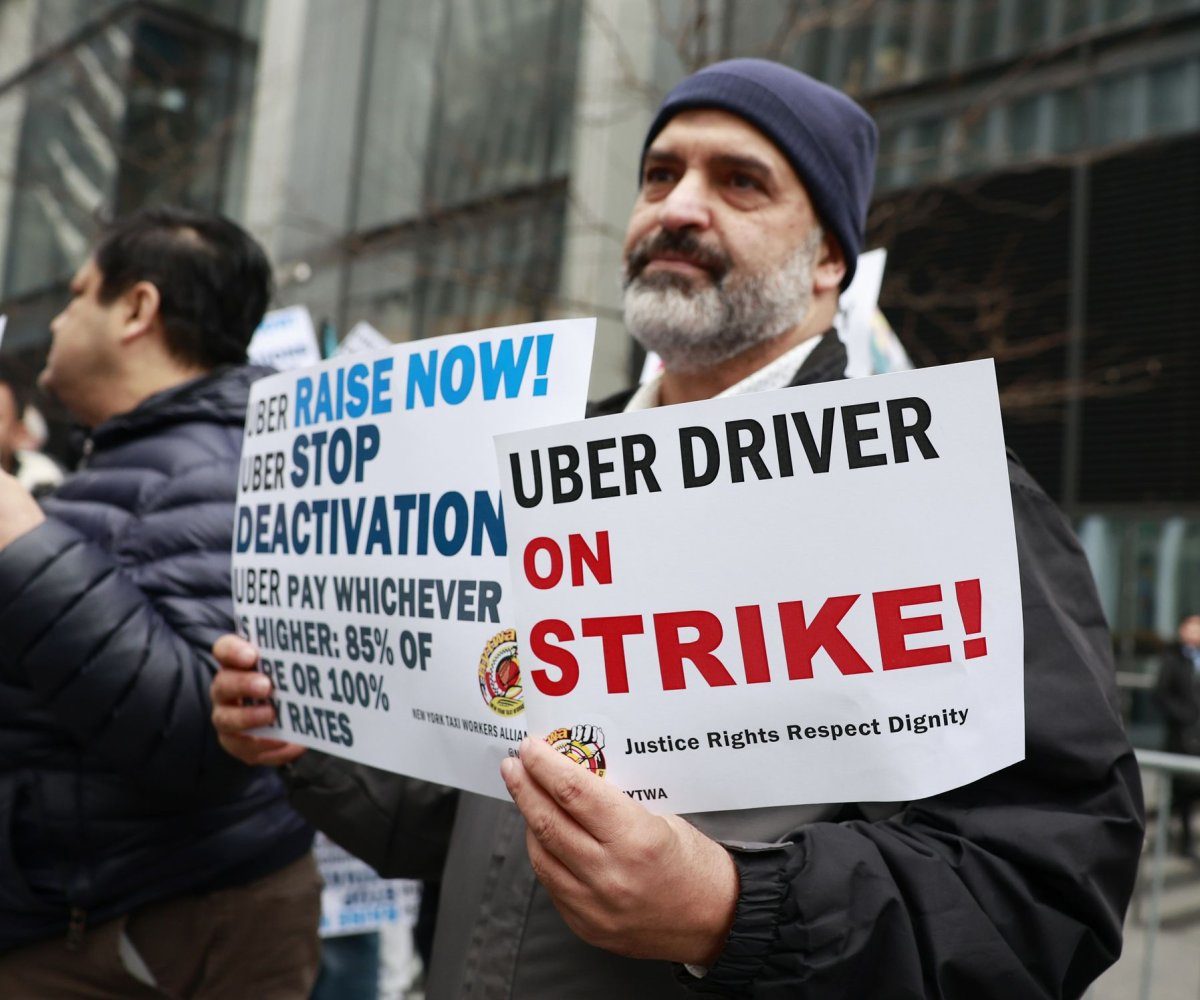
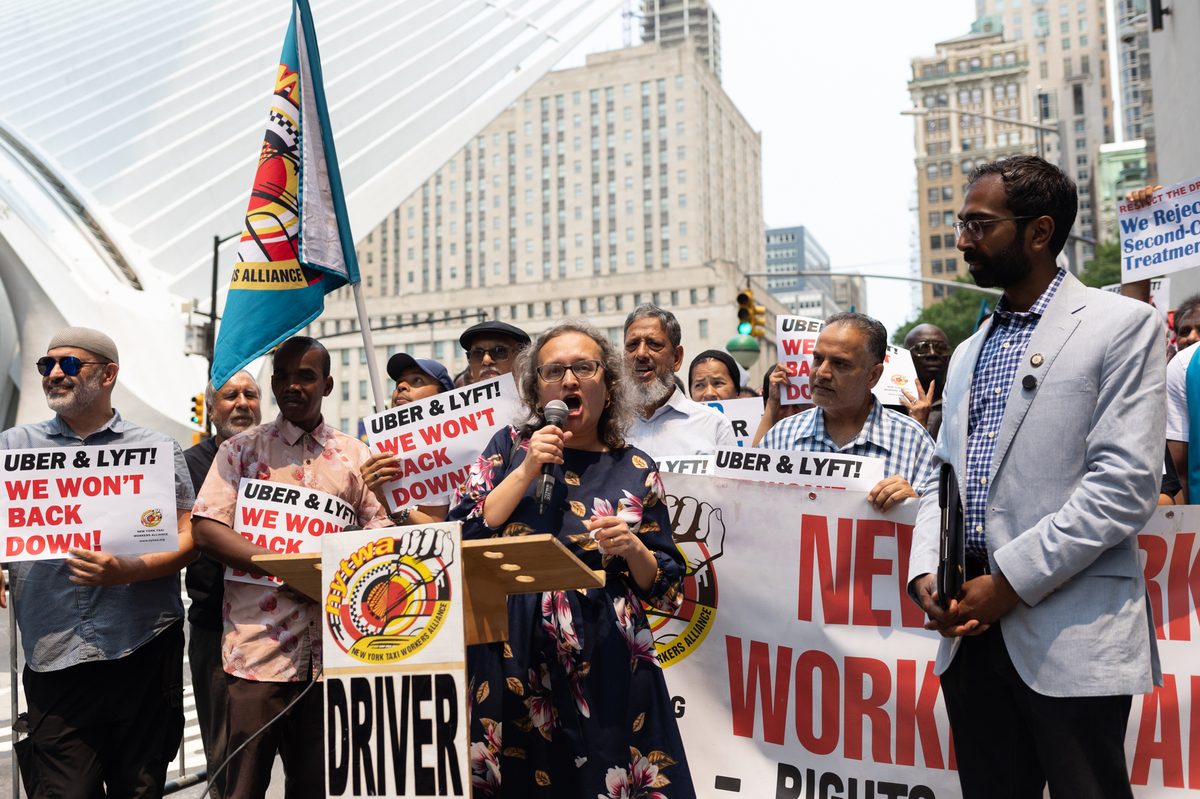
    The New York Taxi Workers Alliance rallies drivers outside Uber's NYC offices to defend the law.

  2. Council overrides veto, law enacted

    Legislative

    The City Council overrides the veto 46-5, making the measure Local Law 52 of 2026 with a July 28 effective date.

  3. Mayor vetoes the driver protection bill

    Legislative

    Then-Mayor Eric Adams vetoes the City Council bill barring app platforms from firing drivers without just cause.

Historical Context

3 moments from history that rhyme with this story — and how they unfolded.

2024–2026

Seattle app-based worker deactivation ordinance (2024–2026)

Seattle passed a law requiring gig platforms to give app workers 14 days' notice and an appeal before deactivation. It took effect January 1, 2025. Uber and Instacart sued on free-speech grounds. On March 4, 2026, a divided Ninth Circuit panel rejected their bid to block it.

Then

The ordinance stayed in force while the case moved through the courts.

Now

It gave labor advocates a federal appeals ruling that near-identical deactivation rules can survive a First Amendment challenge.

Why this matters now

New York's law copies Seattle's core design, including the 14-day notice. Yet a New York judge blocked it using a contract-impairment theory the Ninth Circuit never had to reach, showing the outcome may turn on which legal attack the platforms choose.

2021–2022

NYC fast-food just-cause law (2021)

In 2021, New York City became the first U.S. city to bar fast-food chains from firing workers without just cause. The Restaurant Law Center and the state restaurant association sued, arguing federal labor law preempted the rule. A federal judge rejected the challenge, and the law stood.

Then

DCWP began enforcing the protections, and covered workers gained a path to contest firings.

Now

The city gained a tested model for extending just-cause rules beyond traditional employment.

Why this matters now

It is the direct template for the driver law: same 'just cause' standard, same agency, same city. But the platforms are attacking the driver version on contract grounds, not the labor-preemption theory that failed against the fast-food rule.

November 2020

California Proposition 22 (2020)

App companies spent about $200 million to pass Proposition 22, a ballot measure keeping California drivers as independent contractors rather than employees. Labor groups challenged it for years. The California Supreme Court upheld the measure in 2024.

Then

Drivers stayed contractors, and the companies avoided full employee costs.

Now

It showed platforms will spend heavily and litigate for years to shape the rules that govern their drivers.

Why this matters now

The New York fight is the flip side of Prop 22: instead of who counts as an employee, it asks whether a city can give contractors employee-style firing protections. Both cases turn on how far the law can reach into the platform-driver relationship.

Sources

(8)