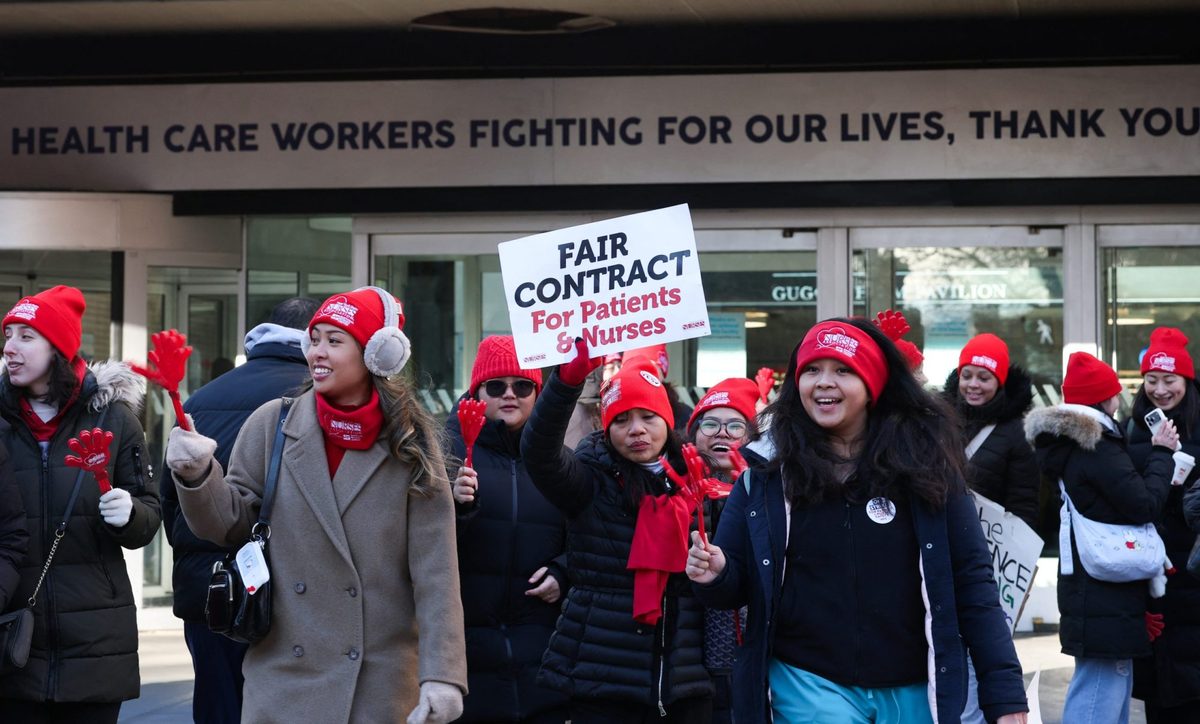
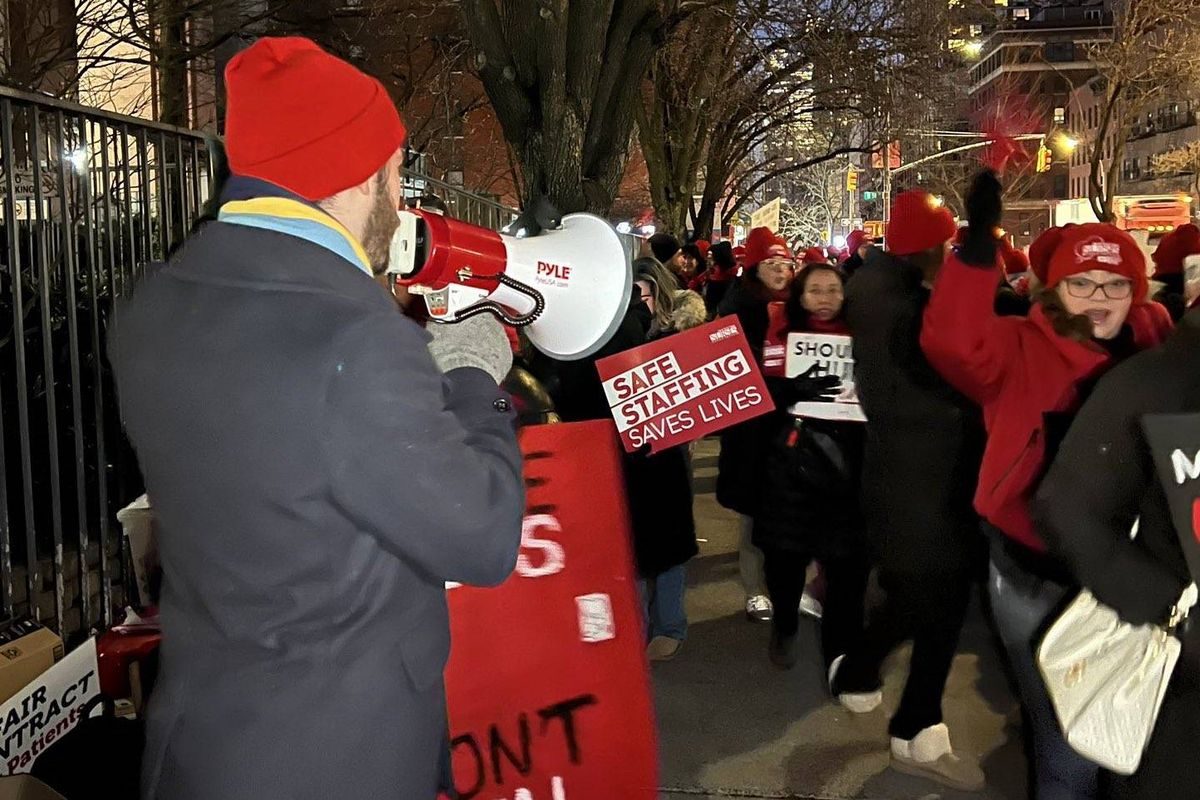
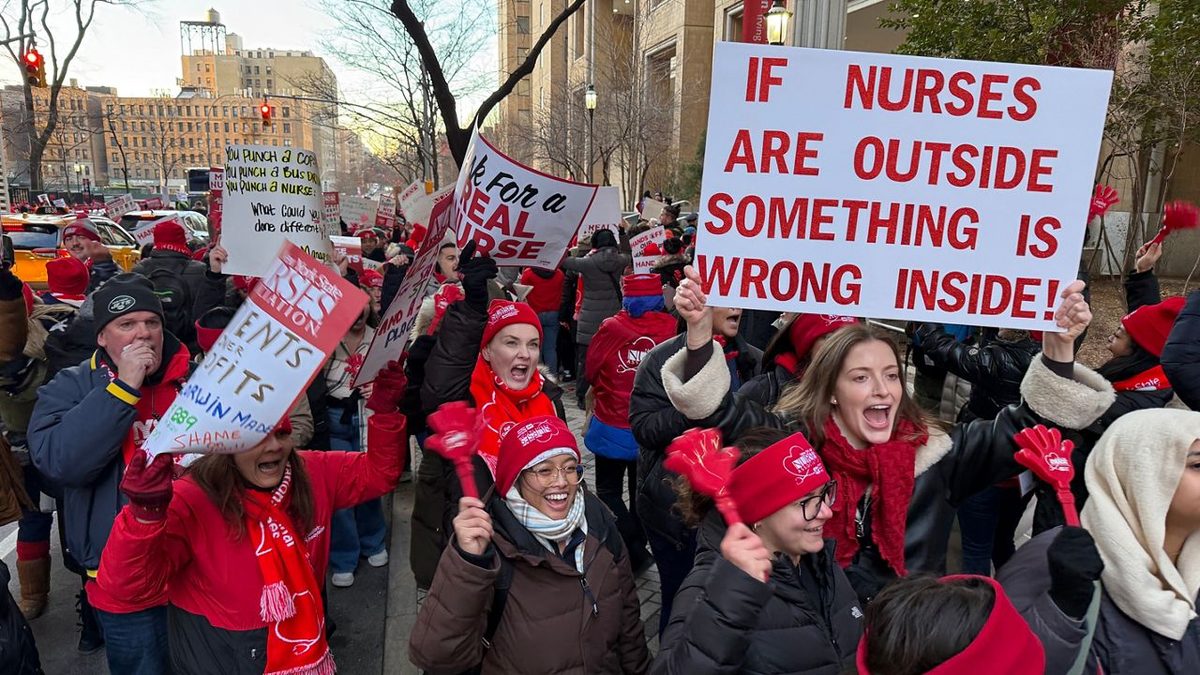
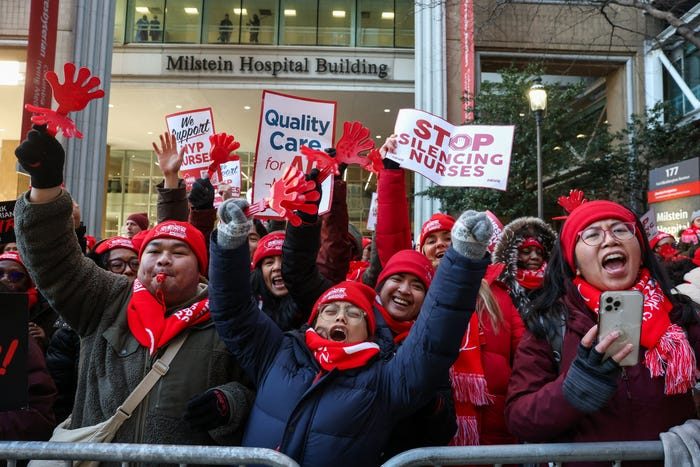
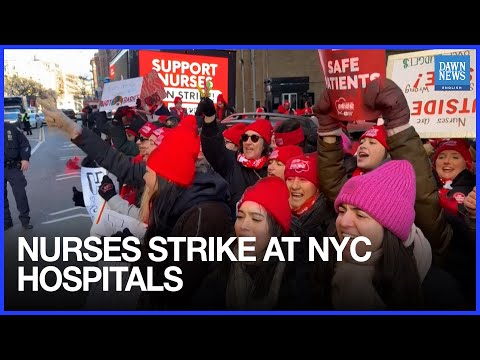
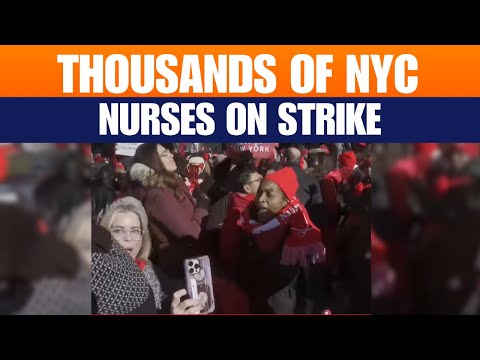
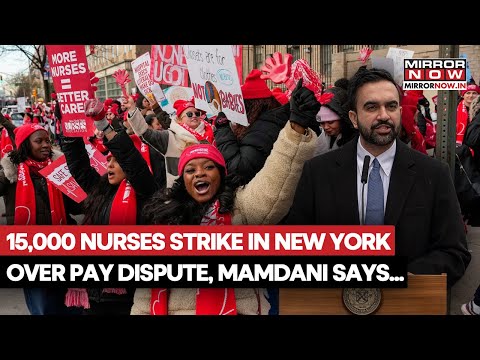
Nearly 15,000 nurses walked off the job at Mount Sinai, Montefiore, and NewYork-Presbyterian on January 12, 2026—the largest nurses' strike in New York City history. The walkout came three years after nurses at two of those same hospital systems won enforceable staffing ratios through a three-day strike. Now the hospitals want to roll those standards back, while also seeking to cut nurses' healthcare benefits.
As the strike enters its fifth week, negotiations continue at the Javits Center through mediators. On January 25, Mount Sinai and NewYork-Presbyterian agreed to maintain NYSNA Plan A health coverage without cuts. On February 4, tentative agreements were reached on artificial intelligence protections and hospital-specific issues.
However, nurses continue striking over safe staffing ratios and workplace violence protections. Union leaders say hospitals have shown little movement on these issues. On February 2, hundreds marched from Grand Central Terminal to Governor Hochul's Manhattan office to protest her January 9 order allowing traveling nurses to work in New York—a move nurses say has let hospitals drag out the strike.
The strike has drawn high-profile political support, with Senator Bernie Sanders and Mayor Zohran Mamdani joining picket lines on January 20-21. Governor Hochul has not visited the picket lines.
Questions about this story
Free account needed to ask — your question is kept and asked for you right after sign-up. Answers are public.
No questions yet — be the first to ask.
Key Indicators
~15,000
Nurses on Strike
Largest nursing strike in NYC history across three hospital systems
$100M+
Spent on Replacement Nurses
Hospitals' collective spending on temporary traveling nurses ahead of the strike
1,400
Traveling Nurses Deployed
Temporary replacement staff brought in to maintain hospital operations
$47M
Combined CEO Compensation
Total 2023-2024 compensation for CEOs of the three striking hospital systems
28 events
Latest: February 5th, 2026 · 8 months ago
Showing 8 of 28
JK to step
Tap a bar to jump to that date
Jump to
February 2026
Day 25 Rallies with Arrests and Allies
LatestLabor Action
Nurses rallied outside Mount Sinai Hospital and on Manhattan's West Side on Day 25; NAACP, Public Advocate Jumaane Williams and other allies joined. More than a dozen arrested for blocking entrance at 555 West 57th Street in civil disobedience action.
Tentative Agreements on AI Protections
Labor
NYSNA reaches tentative deals with hospitals on artificial intelligence protections and some individual hospital issues during Day 25 negotiations at Javits Center. Safe staffing and workplace violence remain key unresolved sticking points.
Strike Enters Day 23, Negotiations Continue
Labor
Union receives revised proposals from hospital management at Javits Center but reports they fail to address safe staffing concerns, a key sticking point in negotiations.
NYSNA Submits Comprehensive Revised Proposals
Labor
Union presents revised proposals at Javits Center aimed at improving staff levels with no takeaways on safe staffing accountability, protecting health benefits, preventing workplace violence, and increasing wages.
Nurses March to Governor Hochul's Office
Labor Action
Hundreds of striking nurses march from Grand Central Terminal to Governor Hochul's Manhattan office to protest her executive order allowing traveling nurses and to demand she pressure hospital executives to reach an agreement. Unlike Mayor Mamdani and Senator Sanders, Hochul has not visited picket lines.
January 2026
Labor Coalition Speak-Out Planned
Labor Action
Nurses and supporters plan speak-out outside NewYork-Presbyterian facilities to mark end of strike's third week. Labor groups including District Council 37, 32BJ SEIU, 1199 SEIU and NYC Central Labor Council expected to join.
Strike Enters Fourth Week, Negotiations Continue
Labor
Strike reaches 19th day with negotiations ongoing through mediators at Javits Center. NewYork-Presbyterian confirms another bargaining session being scheduled; Montefiore reports making 'meaningful proposals' on economics, staffing, safety and AI.
Negotiations Resume After Weather Break
Labor
Nurses and management return to bargaining table. NewYork-Presbyterian makes incremental progress and reaches one tentative agreement on non-economic matters.
Healthcare Benefits Breakthrough
Labor
Mount Sinai and NewYork-Presbyterian agree to maintain current NYSNA Plan A health coverage without cuts, clearing a major hurdle. However, full contracts remain unresolved with staffing and workplace violence protections still under negotiation.
Bernie Sanders and Mamdani Join Picket Line
Political
Senator Bernie Sanders and Mayor Zohran Mamdani join striking nurses at Mount Sinai West on the ninth day of the strike. Sanders tells nurses: 'Today we say to those hospitals: Sit down and negotiate a decent contract.'
NewYork-Presbyterian Negotiations End Without Deal
Labor
First mediated bargaining session between NewYork-Presbyterian and NYSNA ends with no resolution after several hours of talks.
All Three Hospitals Agree to Resume Negotiations
Labor
Mount Sinai, Montefiore, and NewYork-Presbyterian agree to meet with NYSNA and federal and state mediators, marking first progress since strike began.
Strike Enters Third Day
Labor Action
Nearly 15,000 nurses remain on picket lines; negotiations remain stalled with no talks scheduled at Mount Sinai or Montefiore.
Strike Enters Second Day
Labor Action
Nearly 15,000 nurses remain on picket lines; hospitals maintain operations with approximately 1,400 traveling nurses.
Mount Sinai Fires Three Nurses, Union Alleges Retaliation
Labor Dispute
Mount Sinai terminates three labor and delivery nurses via voicemail, claiming they sabotaged emergency drills by hiding supplies. NYSNA calls the firings illegal retaliation for refusing to train replacement nurses.
Strike Begins at Mount Sinai
Labor Action
Picket lines form at Mount Sinai Hospital at 6 AM, marking start of largest nurses' strike in NYC history.
Mayor Mamdani Joins Picket Line
Political
NYC Mayor visits NewYork-Presbyterian picket line, calls on all parties to return to negotiations.
Hochul Declares Emergency
Government Action
Governor issues Executive Order 56, declaring disaster emergency and allowing out-of-state medical staff to practice in New York.
Safety-Net Hospitals Reach Agreements
Settlement
Four safety-net hospitals (Flushing, Maimonides, Interfaith, Kingsbrook) reach tentative contracts; three more rescind strike notices.
NYSNA Issues Strike Notices
Labor
Union delivers 10-day strike notices to 12 NYC hospitals, setting January 12 deadline.
Mamdani Inaugurated as NYC Mayor
Political
Zohran Mamdani takes office; NYSNA president Nancy Hagans had served on his transition team.
December 2025
Contracts Expire at 12 NYC Hospitals
Labor
NYSNA contracts with a dozen NYC private sector hospitals expire without new agreements.
November 2025
Mount Sinai Disciplines Nurses Who Spoke About Shooting
Labor Dispute
Mount Sinai issues final written warnings to two nurses and suspends a third nurse the day after Thanksgiving for speaking out about safety concerns following the November 13 active shooter incident. NYSNA alleges illegal retaliation during contract negotiations.
Active Shooter Incident at Mount Sinai
Security Incident
A 20-year-old man enters Mount Sinai's Upper East Side emergency department and threatens to shoot. He is fatally shot by police outside the hospital after reportedly pointing a gun at officers. The incident underscores nurses' demands for workplace violence protections.
June 2025
NYSNA Endorses Mamdani for Mayor
Political
New York State Nurses Association endorses Zohran Mamdani in NYC mayoral race.
January 2023
2023 Strike Ends with Union Victory
Settlement
Nurses win 19% wage increases over three years and enforceable staffing ratios with financial penalties at both hospitals.
2023 NYC Nurses Strike Begins
Labor Action
Approximately 7,000 nurses at Mount Sinai and Montefiore walk out over staffing and wages.
2021
New York Passes Safe Staffing Law
Legislation
New York enacts law requiring 1:2 nurse-to-patient ratio in ICUs and mandating staffing committees at all hospitals.
Scenarios
1
Quick Settlement Mirrors 2023 Pattern
Possible
Discussed by: Healthcare labor analysts, comparisons to 2023 strike coverage in The City, NBC New York
Hospitals capitulate within days under political and public pressure. In 2023, a similar standoff at Mount Sinai and Montefiore ended after three days with the union winning 19% raises and enforceable staffing ratios. With Mayor Mamdani publicly backing nurses and Governor Hochul's emergency declaration raising stakes, hospitals may calculate that a prolonged strike costs more than concessions—particularly given the $100+ million already spent on traveling nurses.
Discussed by: Montefiore spokesperson (signaling multi-week preparation), Greater New York Hospital Association statements
Hospitals hold firm, calculating that accepting union demands would set an unsustainable precedent. Montefiore has explicitly prepared for a multi-week strike. If hospitals demonstrate they can maintain operations with traveling nurses through flu season, they may secure contracts with smaller wage increases and weakened staffing enforcement. This would represent a significant shift from the union's 2023 victory.
3
Government-Mediated Compromise Ends Standoff
Likely
Discussed by: Governor Hochul's statements, coverage of safety-net hospital negotiations
State mediators broker a deal that preserves some staffing ratio enforcement while granting hospitals flexibility on implementation and containing wage increases. The precedent exists: seven safety-net hospitals reached agreements with union help from mediators just before the strike deadline. Governor Hochul's dual messaging—supporting patient safety while acknowledging nurses' essential work—positions the state to facilitate middle-ground terms.
A serious adverse event at an affected hospital—whether from understaffing with traveling nurses unfamiliar with facilities, or from delays in emergency care—creates political pressure that forces one side to concede. The strike coincides with a severe flu season (128,000+ cases) that has already strained hospital capacity. This scenario represents the outcome both sides publicly claim to want to avoid.
Historical Context
3 moments from history that rhyme with this story — and how they unfolded.
1 of 3
January 2023
NYC Nurses Strike (2023)
Approximately 7,000 nurses at Mount Sinai and Montefiore walked out for three days over staffing levels and wages. The hospitals had resisted enforceable nurse-to-patient ratios for years, while nurses argued understaffing endangered patients.
Then
Nurses won 19% wage increases over three years and, for the first time, enforceable staffing ratios with financial penalties when hospitals failed to comply. Mount Sinai agreed to immediate staffing improvements; Montefiore added 170 nursing positions.
Now
The settlement established enforceable staffing standards at two major NYC systems. However, hospitals are now seeking to roll back these standards in the 2026 negotiations—making the previous victory the central issue of the current dispute.
Why this matters now
The current strike is a direct sequel: nurses won staffing ratios in 2023, and hospitals are now trying to weaken them. The three-day timeline of the 2023 strike may set expectations, though hospitals appear better prepared for a longer action this time.
2 of 3
September 2022
Minnesota Nurses Strike (2022)
Approximately 15,000 nurses across 15 Minnesota hospitals walked out for three days—at the time, the largest private-sector nurses' strike in U.S. history. The Minnesota Nurses Association sought wage increases to match inflation and relief from chronic understaffing.
Then
Nurses ratified contracts at all 15 hospitals with 18% wage increases over three years in the Twin Cities and 17% in Duluth—the largest pay raises in two decades.
Now
The strike demonstrated that coordinated action across multiple hospital systems could succeed and established a template for large-scale nursing labor actions.
Why this matters now
The NYC strike matches the Minnesota action in scale (approximately 15,000 nurses) and core issues (staffing, wages). Minnesota nurses' success through solidarity may inform NYSNA strategy, while hospitals may study how Minnesota systems eventually settled.
3 of 3
October 2023
Kaiser Permanente Strike (2023)
Over 75,000 Kaiser Permanente workers—including nurses, technicians, and pharmacists—launched a three-day strike across multiple states in what became the largest healthcare strike in U.S. history. Workers cited understaffing and inadequate wages.
Then
Kaiser and the Coalition of Kaiser Permanente Unions reached a tentative four-year agreement within nine days of the strike's start, ratified in November 2023.
Now
The settlement provided substantial wage increases and staffing commitments. The strike's scale demonstrated that even the largest healthcare systems face limits when workers coordinate across locations.
Why this matters now
The Kaiser action showed that healthcare workers across roles can coordinate effectively. Unlike Kaiser (a single integrated system), the NYC strike involves three separate hospital systems, raising questions about whether coordinated action against multiple employers can maintain unity.