



Oklahoma City seeks rezoning for MAPS 4 Restoration Center
Rule ChangesProposal includes supportive housing, faces neighborhood opposition
August 13th, 2026: Planning Commission hears Restoration Center rezoningNew here? Follow stories to track developments over time. Create a free account to get updates when stories you care about change.
Overview
Updated 1 hour agoOklahoma City wants to put a mental health and addiction center with 40 supportive housing units on a 2.6-acre industrial lot. The city filed to rezone the site, but neighbors and the Metro Park neighborhood association say the area already has too many social services and a detox near bars is a bad fit.
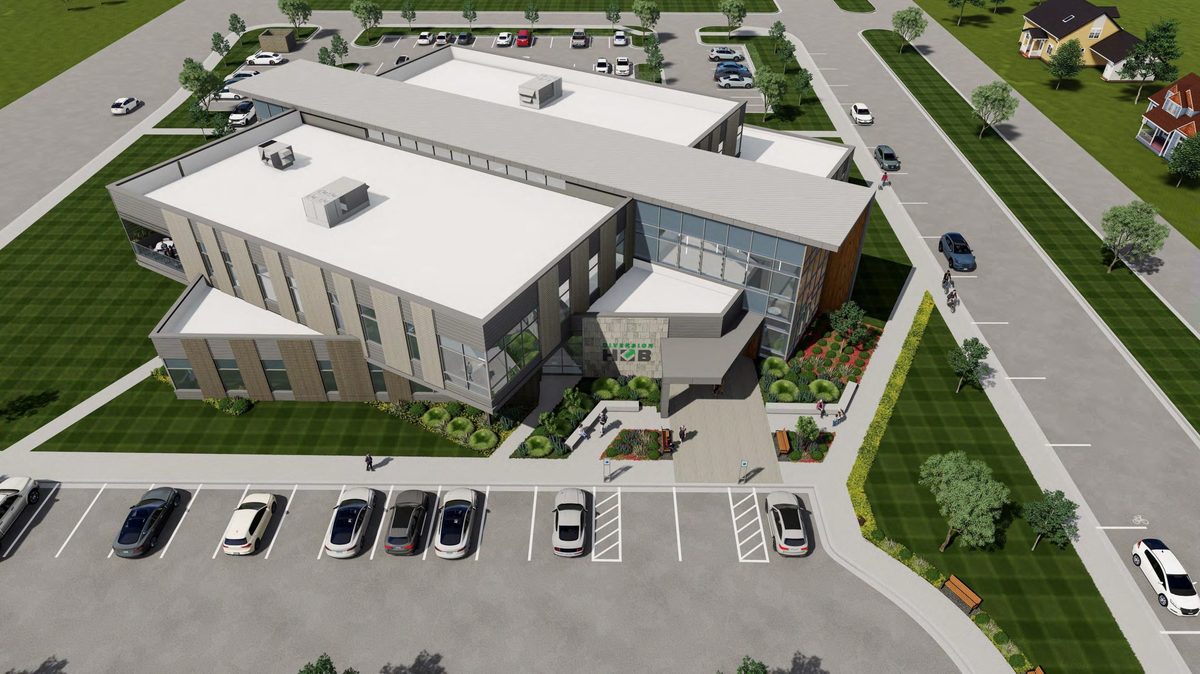
The rezoning request heads to the Planning Commission on August 13. If approved, it would create a 16-bed crisis stabilization unit, detox services, and housing for people in recovery. The project is part of MAPS 4, a $1.1 billion voter-approved program that also funds a separate crisis center on the OU Health Sciences campus.
Why it matters
Approval would bring a 16-bed crisis unit and 40 housing units to an overloaded neighborhood; denial could delay MAPS 4 mental health expansion.
Questions about this story
Free account needed to ask — your question is kept and asked for you right after sign-up. Answers are public.
No questions yet — be the first to ask.
Key Indicators
Voices
Curated perspectives — historical figures and your fellow readers.
Play
Exploring all sides of a story is often best achieved with Play.
WHO SAID WHAT?
Can you match the quotes to the right people?
- points for each correct match.
- time bonus when you answer in under seconds.
- streak bonus once you hit correct in a row.
— Who said this?
Tip: press 1– to answer.
points — sign up to put that on the leaderboard.
Higher or Lower
A number from this story, against one from elsewhere in the news — guess which is bigger, then keep the chain going. 5 rounds, 3 strikes; a miss costs a strike and resets your streak.
Keyboard: ↓/L lower · ↑/H higher
0 points — sign up to put that on the leaderboard.
Timeline
Order five events from this story, oldest at top. Each in the right slot scores 1 — neighbours within one slot count too. Your previous result — green ✓ for exact slots, yellow ~ for off by one. Cards now in true chronological order.
Sign up to save your score and track a streak across stories.
Connections
Sixteen names from the news. Find the four hidden groups of four. Four mistakes max.
Sign up to keep a daily streak — a new puzzle lands every day.
Exit debate?
Your progress in this debate will be lost.
- 1 Two AI personas square off on this story.
- 2 You predict who'll win each round — correct picks earn XP.
- 3 One crossfire question is yours to fire. Pick it carefully.
Couldn't generate a topic
Select Your Champions
Choose one persona for each side of the debate
DEBATE TOPIC
Choose personas with different perspectives for a more dynamic debate.
Select debater for this side:
No debate personas available right now.
Select debater for this side:
No debate personas available right now.
Who's Got This Round?
Make your prediction before the referee scores
The referee scores both sides on
Round Results
Set the Crossfire
Pick the question both personas must answer in the final round
Debate Oracle! You called every round!
Sharp Instincts! You know your debaters!
The Coin Flip Strategist! Perfectly balanced!
The Contrarian! Bold predictions!
Inverse Genius! Try betting the opposite next time!
XP Breakdown
Prediction History
People Involved
Organizations Involved
A city government overseeing MAPS 4 and the Restoration Center project.
Represents residents near the proposed site on NW 6th Street.
Mental health provider that will manage day-to-day operations of the Restoration Center.
State agency responsible for behavioral health services and the Restoration Center's operation.
Timeline
December 2019 August 2026
-
Planning Commission hears Restoration Center rezoning
Latest HearingCity seeks SPUD-1854 rezoning for 2.6 acres at 1120 NW 6th St.; neighbors and Metro Park association protest.
-
Groundbreaking for Robert Ravitz Crisis Center
ConstructionCity breaks ground on $12 million crisis center, a separate but related MAPS 4 project, at OU Health Sciences campus.
-
City Council receives Restoration Center design
ReportArchitect presents preliminary design for a 34,000-square-foot building with 16 crisis stabilization beds and outpatient spaces.
-
NorthCare selected to operate Restoration Center
DecisionCity picks nonprofit NorthCare as operating partner for the planned mental health and addiction facility.
-
Oklahoma City voters approve MAPS 4
ElectionVoters approve a 1-cent sales tax to fund $1.1 billion in projects, including new mental health services.
Historical Context
2 moments from history that rhyme with this story — and how they unfolded.
City of Cleburne v. Cleburne Living Center (1985)
Cleburne, Texas required a special use permit for a group home for people with intellectual disabilities, but not for similar facilities like boarding houses. The developer sued, and the Supreme Court ruled the zoning law violated the Equal Protection Clause because it was based on irrational prejudice.
Cleburne's permit denial was struck down, and the group home opened.
The precedent strengthened the right to place community-based care facilities without discriminatory zoning.
It shows how zoning can be used to exclude social services and that courts may limit such exclusions. Here, the city is trying to add a facility, but opponents want to use zoning to block it.
Fair Housing Act Amendments of 1988
Congress added people with disabilities to the Fair Housing Act, prohibiting discrimination in housing and requiring reasonable accommodations for group homes. This legal change encouraged deinstitutionalization and community-based facilities.
Disability advocates gained a tool to fight local zoning restrictions.
It led to waves of NIMBY conflicts as providers opened group homes; courts often sided with providers when cities used zoning to block them.
The Restoration Center and supportive housing are community-based services. The reasonable accommodation requirement may influence how Oklahoma City handles the opposition.
