Anchor

Salt Lake City planning commission recommends Glendale rezone for affordable homes
Rule Changes Salt Lake City, UT localUp to 35 units could replace single-family lots; city council has final say
Today: Commission recommends approvalNew here? Follow stories to track developments over time. Create a free account to get updates when stories you care about change.
Overview
Updated 1 hour agoSalt Lake City's Planning Commission voted Wednesday to recommend rezoning 1.25 acres in Glendale from single-family to low-density multifamily. The shift lets the property owner build up to 35 homes, with plans for about two dozen affordable, for-sale units.
More than 700 neighbors signed a petition against the change, and the Glendale Neighborhood Council opposed it unless density dropped to 8–10 units. The City Council holds the final vote, testing how Salt Lake balances its housing goals against a neighborhood's resistance.
Why it matters
If the rezone passes, Glendale trades single-family zoning for an affordable pocket neighborhood — and neighbors warn 10 more big lots could follow.
Questions about this story
Free account needed to ask — your question is kept and asked for you right after sign-up. Answers are public.
No questions yet — be the first to ask.
Key Indicators
24
Proposed for-sale homes
Applicant's plan for the 1.25-acre L-shaped site.
35
Maximum units under RMF-30
Upper range the low-density multifamily zone allows, per city staff.
700+
Petition signatures opposing
Online petition against the rezone, plus yard signs and a Facebook group.
1.25
Acres being rezoned
Three parcels: 1379 and 1395 Van Buren, and 1384 Harris.
80–100%
Area median income band for buyers
Homes would be sold to households earning 80–100% of AMI.
Related Media
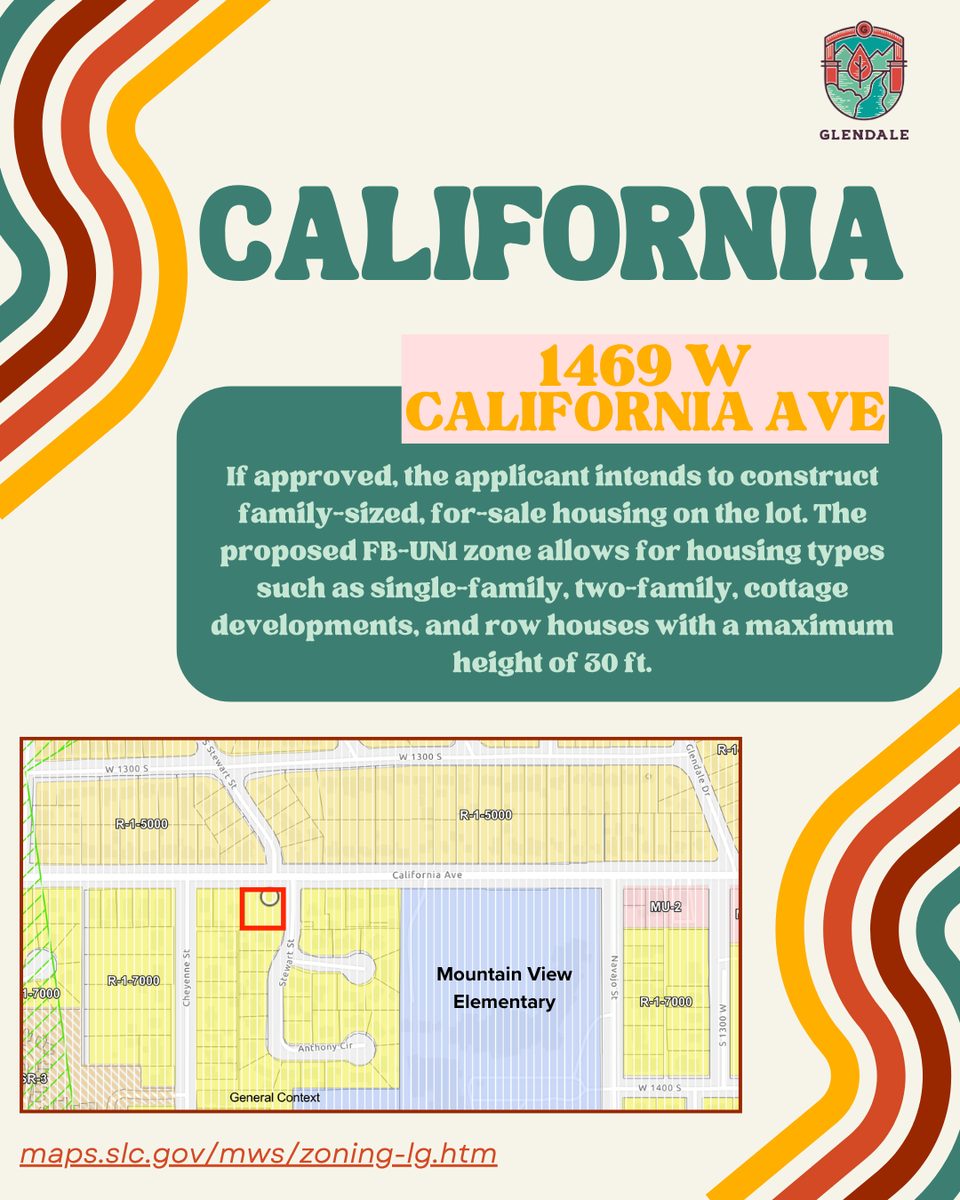
Van Buren & California Ave Rezone — Glendale Neighborhood Council | Salt Lake City, Utah
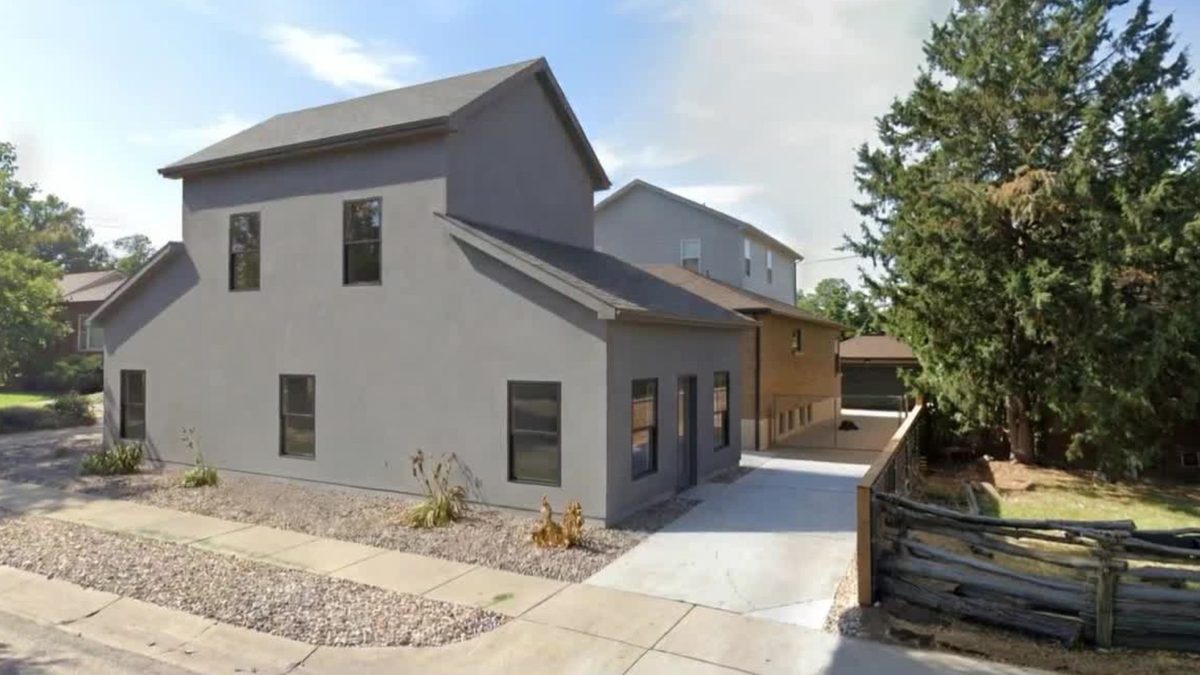
Glendale rezone fight opens broader debate over Salt Lake City housing proposal
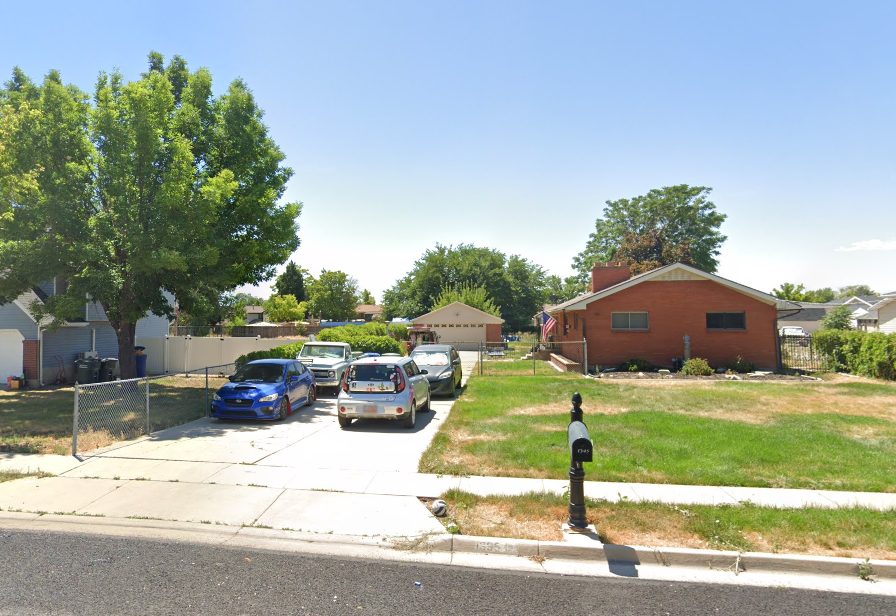
Glendale rezone proposal could lead to for-sale units near Jordan River - Building Salt Lake
867 views
2:36
Glendale rezone fight opens broader debate over Salt Lake ...
FOX 13 News Utah

850 views
11:37
Starter Homes Could Soon Make a Return in SLC
KSL News Utah
1.9K views
1:39
Salt Lake City considers changing 'family' definition to ease ...
FOX 13 News Utah
Images from Openverse under Creative Commons licenses. Videos from YouTube.
Voices
Curated perspectives — historical figures and your fellow readers.
Play
Exploring all sides of a story is often best achieved with Play.
Most of these play right now — no account needed. Sign up to save scores, keep a streak, and unlock Debate and Predict.
Log in
Sign Up
Higher or Lower
A number from this story, against one from elsewhere in the news — guess which is bigger, then keep the chain going. 5 rounds, 3 strikes; a miss costs a strike and resets your streak.
Example
Anchor
EU tariff revenue
$52B
Big for this kind of number
Mystery
Pentagon AI contract
?
Round 1
Streak: 0
Mystery
?
Keyboard: ↓/L lower · ↑/H higher
0 pts
Best streak: 0 · Rounds: 0
0 points — sign up to put that on the leaderboard.
Now try on this story
Connections
Sixteen names from the news. Find the four hidden groups of four. Four mistakes max.
Loading today's puzzle…
0/4 groups
Mistakes
Sign up to keep a daily streak — a new puzzle lands every day.
Now try on this story
Exit debate?
Your progress in this debate will be lost.
How it works
- 1 Two AI personas square off on this story.
- 2 You predict who'll win each round — correct picks earn XP.
- 3 One crossfire question is yours to fire. Pick it carefully.
Couldn't generate a topic
Select Your Champions
Choose one persona for each side of the debate
DEBATE TOPIC
Choose personas with different perspectives for a more dynamic debate.
SIDE A (PRO)
Select debater for this side:
No debate personas available right now.
SIDE B (CON)
Select debater for this side:
No debate personas available right now.
VS
Get ready to make your prediction...
Round of
Claim
Evidence
Stakes
Crossfire Answer
Closing Statement
Claim
Evidence
Stakes
Crossfire Answer
Closing Statement
Your Crossfire Question
Generating arguments...
Who's Got This Round?
Make your prediction before the referee scores
The referee scores both sides on
Correct predictions earn +20 XP
· Press 1 or 2 to pick
Evidence
40%
Logic
30%
Detail
20%
Style
10%
Round Results
Your Pick
Not this time
(%)
Overall Score
/10
Your Pick
Not this time
(%)
Overall Score
/10
Set the Crossfire
Pick the question both personas must answer in the final round
Crafting crossfire questions...
Choosing a question earns +10 XP crossfire bonus
🏆
Total XP Earned
Cred Change
Predictions
Debate Oracle! You called every round!
Sharp Instincts! You know your debaters!
The Coin Flip Strategist! Perfectly balanced!
The Contrarian! Bold predictions!
Inverse Genius! Try betting the opposite next time!
XP Breakdown
Base completion
+20 XP
Rounds played ( rounds x 5 XP)
+ XP
Correct predictions ( correct x 20 XP)
+ XP
Crossfire bonus
+10 XP
Accuracy
%
Prediction History
Round
You picked:
✓
✗
Now try on this story
Keep debating to level up your credibility and unlock achievements
People Involved
Jonathan Marsh
Property owner and rezone applicant
Seeking RMF-30 zoning for his parcels
Carrie Marsh
Presented the project to the Planning Commission
Advocating for the rezone
JM
Jennifer Madrigal
Chair, Glendale Neighborhood Council; planning staff
Opposes rezone unless density capped
Ross Whitaker
Neighbor leading opposition
Opposing the rezone
CS
Cindy Spangler
Neighbor opposing rezone
Opposed
Organizations Involved
Salt Lake City Planning Commission
Municipal advisory body
Recommended approval with conditions
Appointed body that holds public hearings on zoning changes and makes recommendations to the City Council.
Glendale Neighborhood Council
Community council
Opposed unless density capped at 8–10 units
Elected community council that advises the city on planning issues for the Glendale neighborhood.
Salt Lake City Council
Municipal governing body
Final decision pending
Elected body that holds the final public hearing and votes on the zoning map amendment.
Building Salt Lake
News outlet
Reporting on the decision
Salt Lake City development news outlet that first reported the commission's vote.
Timeline
January 2024 September 2026
4 events
Latest: Today
Tap a bar to jump to that date
-
Commission recommends approval
Today DecisionPlanning Commission votes to recommend the RMF-30 rezone, sending it to City Council.
-
Commission tables rezone for conditions
HearingPlanning Commission deliberates, tables the request while staff and applicant discuss limits.
-
Neighbors learn of proposal
CommunityResidents say they first heard of the rezone in 2026, despite planning since 2024.
-
Applicant begins planning project
PlanningJonathan Marsh starts planning the housing development on his Glendale parcels.
Historical Context
2 moments from history that rhyme with this story — and how they unfolded.
December 2018
Minneapolis 2040 (2018)
Minneapolis became the first major U.S. city to end single-family-only zoning, allowing up to three units on every residential lot citywide. The plan passed after years of advocacy over housing costs and segregation.
Then
The city saw modest new construction and a wave of legal and political backlash from homeowners.
Now
In 2025, the Minnesota legislature intervened, curbing parts of the policy as part of a state preemption fight.
Why this matters now
Shows how upzoning can pass on affordability grounds, then face years of organized homeowner resistance and partial rollback.
June 2019
Oregon House Bill 2001 (2019)
Oregon banned single-family-only zoning in cities over 10,000 people, requiring duplexes and townhomes on most residential lots. It was the first statewide law of its kind.
Then
Cities delayed implementation and fought over details of lot sizes and parking rules.
Now
Several years in, most cities had not met the state's deadlines, and the legislature pushed enforcement.
Why this matters now
Illustrates how top-down density mandates collide with local control and slow-walked implementation, a risk for the Glendale project.