




Pull to refresh
Logo
Onkos expands NanoCept coating to more titanium limb-salvage implants

Onkos expands NanoCept coating to more titanium limb-salvage implants

New Capabilities

A fourth FDA clearance since 2024 adds proximal femurs, tibial baseplates, augments and cemented stems to the antibacterial-coated ELEOS system.

Overview

Updated 1 hour ago

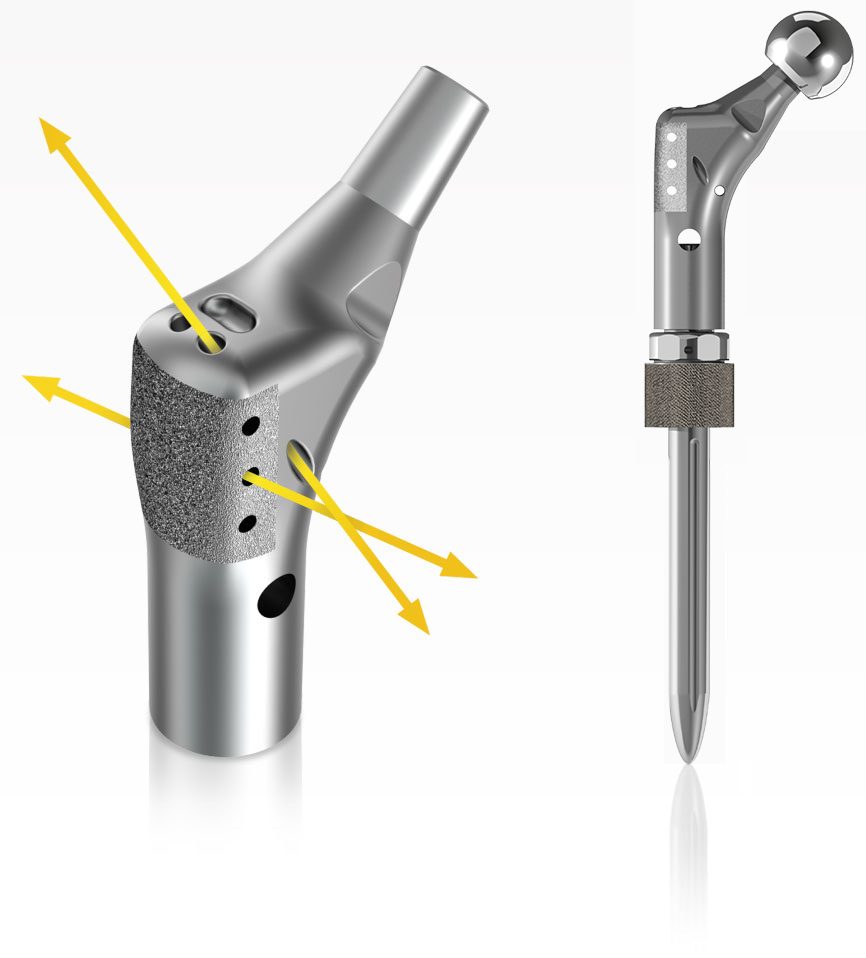
Onkos Surgical won FDA clearance on Nov. 6 to put its NanoCept antibacterial coating on more titanium parts of its ELEOS limb-salvage system. The newly covered parts include proximal femurs, tibial baseplates and augments, and cemented bowed segmental stems.

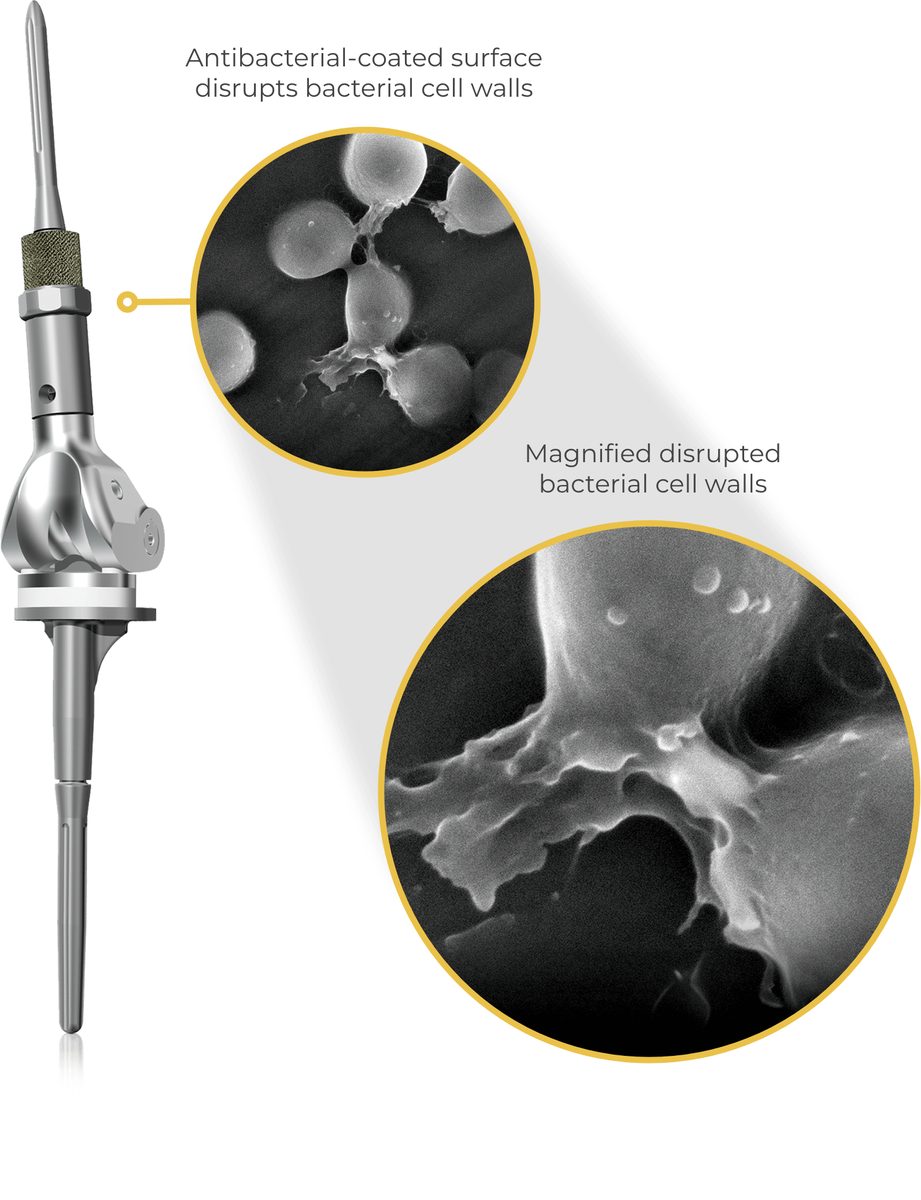
The coating is designed to kill bacteria that land on an implant in the operating room, before it goes into the body. It does not treat existing infections, and no human trial has shown that it prevents them. The clearance widens the portion of the implant that can carry that protection.

Why it matters

For patients whose limb-salvage surgery already carries elevated infection risk, more of the implant can now carry a bacteria-reducing coating.

Questions about this story

Free account needed to ask — your question is kept and asked for you right after sign-up. Answers are public.

No questions yet — be the first to ask.

Key Indicators

4
FDA 510(k) clearances since 2024
Clearances for NanoCept since the April 2024 De Novo authorization.
500+
Patients with NanoCept implants
Patients who had received ELEOS implants with NanoCept as of September 2026.
99.999%
Preclinical bacterial reduction
Reduction in common operating-room bacteria on coated surfaces in laboratory testing.
0
Human trials of infection prevention
Completed human trials testing whether the coating reduces infection in patients.

Voices

Curated perspectives — historical figures and your fellow readers.

Sign up to generate historical perspectives on this story.

People Involved

Organizations Involved

Timeline

April 2024 November 2026

6 events Latest: 3 days ago
Tap a bar to jump to that date
  1. More titanium components cleared

    Latest Regulatory

    FDA clears the coating for proximal femurs, tibial baseplates, augments and cemented stems.

  2. Total femoral adapter launched

    Launch

    Onkos releases a total femoral adapter with NanoCept, first coated at Bridgewater.

  3. Titanium implants added

    Regulatory

    FDA clears NanoCept for titanium implants across a broader ELEOS range.

  4. Proximal tibia cleared with coating

    Regulatory

    FDA clears the ELEOS Proximal Tibia with NanoCept.

  5. Coated implants reach patients

    Launch

    NanoCept-coated ELEOS midsections reach patients in complex knee and hip reconstructions.

  6. NanoCept wins De Novo authorization

    Regulatory

    FDA grants De Novo authorization for NanoCept on cobalt-chromium ELEOS implants.

Scenarios

1

Onkos extends NanoCept to the remaining ELEOS titanium line

Likely Resolves by End of 2027

Discussed by: Onkos Surgical CEO Patrick Treacy, who said the company will keep expanding the coated implant system.

The November clearance covers several large titanium components but not the entire ELEOS catalog. If Onkos follows the pattern of the past two years, it files another 510(k) for the remaining parts and announces commercial availability. The trigger is a new FDA clearance or a company launch notice.

2

First human data ties NanoCept to fewer infections

Possible Resolves by End of 2029

Discussed by: FDA clearance documents, which state that the clinical impact has not been evaluated in human clinical trials.

Preclinical testing shows large reductions in bacteria on coated surfaces. Whether that translates into fewer periprosthetic joint infections is unknown. A registry analysis or company-sponsored study could report the first human comparison between coated and uncoated ELEOS implants.

3

Zimmer Biomet wins US approval for its iodine-coated hip

Possible Resolves by End of 2027

Discussed by: BONEZONE, which reported the Japanese approval and FDA Breakthrough Device designation.

Zimmer Biomet's iTaperloc Complete and iG7 hip system uses a porous oxide layer that releases iodine. It has Japanese approval and FDA Breakthrough Device designation, which speeds review but is not US marketing authorization. A US clearance would put a second antibacterial surface technology on the market.

Historical Context

3 moments from history that rhyme with this story — and how they unfolded.

1970s–present

Antibiotic-loaded bone cement (1970s onward)

Orthopaedic surgeons began mixing antibiotics such as gentamicin into polymethyl methacrylate bone cement during joint replacement. The drug leaches locally at the implant site, with low systemic exposure. It became common in revision surgery and in treating infected joints.

Then

Local antibiotic delivery became a standard tool in infected and revision joint surgery.

Now

The approach showed that placing antimicrobial agents at the implant site can work, but proof that it prevents infection in routine cases remained limited.

Why this matters now

Onkos is applying similar logic to a surface coating rather than cement, and faces the same demand for human outcome data.

1990s

Silver-coated urinary catheters (1990s)

Manufacturers coated catheters with silver alloy to reduce bacteria on the device surface and lower urinary tract infections. Laboratory tests showed less bacterial colonization. Clinical trials found smaller and inconsistent benefits.

Then

Hospitals adopted coated catheters selectively.

Now

The episode became a caution that surface-level bacterial reduction does not automatically translate into fewer patient infections.

Why this matters now

NanoCept's preclinical reduction figures face the same gap between laboratory results and patient outcomes.

2025

Zimmer Biomet's iodine-treated hip (2025)

Zimmer Biomet developed a porous oxide layer on hip implants that releases iodine to kill bacteria and fungi. Its iTaperloc Complete and iG7 system received regulatory approval in Japan and FDA Breakthrough Device designation.

Then

The company described it as the first iodine-treated total hip replacement system.

Now

The FDA designation speeds review but does not equal US approval.

Why this matters now

It shows Onkos is not alone in betting that implant surfaces can reduce infection, and that US regulators are open to faster review of the category.

Sources

(5)