

Pull to refresh
Logo
Oracle introduces Fusion Claw runtime for autonomous enterprise AI agents

Oracle introduces Fusion Claw runtime for autonomous enterprise AI agents

New Capabilities

New runtime pairs AI reasoning with deterministic computation across 25 new agentic applications

Yesterday: Oracle announces Fusion Claw

Overview

Updated Yesterday

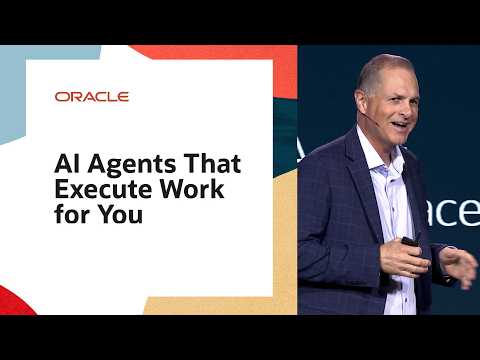
Oracle announced Fusion Claw on September 29, a runtime that lets AI agents carry out complex business processes inside Fusion Applications. The company also released 25 new Claw-powered agentic applications, bringing its portfolio to 75.

The economics flip the usual AI approach. Instead of calling a language model at every step, Fusion Claw reasons only where intelligence is needed. For high-volume work, it relies on deterministic computation, approved algorithms, and business rules.

Oracle EVP Chris Leone says reusing approved plans can cut reasoning costs by 50% or more. The runtime also gates what agents can do, what data they see, and how much autonomy they get, with an auditable receipt for every job.

Why it matters

If Fusion Claw delivers its claimed cost cuts, enterprises pay far less to automate finance, staffing, and supply-chain work.

Questions about this story

Free account needed to ask — your question is kept and asked for you right after sign-up. Answers are public.

No questions yet — be the first to ask.

Key Indicators

75
Agentic applications in Oracle's portfolio
Up from 50 before the 25 new Claw-powered apps launched.
25
New Claw-powered agentic applications
Includes Ledger, Workforce Staffing, Shipping Consolidation, and Account Territory Growth Plan.
50%+
Claimed reasoning cost reduction
Oracle EVP Chris Leone says reusing approved plans cuts reasoning costs by 50% or more.
2
Frontier model providers powering Fusion Claw
Google's Gemini and OpenAI models run on Oracle Cloud Infrastructure, with more planned.

Voices

Curated perspectives — historical figures and your fellow readers.

Ever wondered what historical figures would say about today's headlines?

Sign up to generate historical perspectives on this story.

People Involved

Organizations Involved

Timeline

1 event Latest: Yesterday
  1. Oracle announces Fusion Claw

    Latest Product launch

    Oracle unveils Fusion Claw, a governed agentic execution runtime, plus 25 Claw-powered agentic applications. The portfolio grows to 75 total.

Scenarios

1

Fusion Claw wins named enterprise deployments

Likely Resolves by Q2 2027

Discussed by: Analysts cited by CIO expect existing Fusion customers with standardized processes to adopt first

Finance reconciliation, supply-chain planning, and staffing are the early candidates because they combine analysis with repeatable execution. Adoption becomes measurable when Oracle publishes named customer case studies with quantified outcomes, such as resolving accounting exceptions or filling staffing gaps faster.

2

SAP or Workday responds with a governed agent runtime

Possible Resolves by Sep 29, 2027

Discussed by: Forbes frames Fusion Claw as Oracle taking on SAP and Workday

If Fusion Claw shows cost advantages, rivals may announce their own governed execution layers for AI agents. A competitive response would validate the architecture and put pricing pressure on the market.

3

Oracle changes its AI unit pricing model

Possible Resolves by Q1 2027

Discussed by: Analysts cited by CIO warn about consumption-based AI unit pricing, including expired pooled units and 30-day pricing notice

CIOs may push back on the AI units model, which charges for business outcomes rather than raw tokens. If demand for per-outcome pricing grows, Oracle could adjust the model or introduce new pricing tiers.

Historical Context

3 moments from history that rhyme with this story — and how they unfolded.

2011-2016

IBM Watson enterprise push (2011-2016)

After winning Jeopardy in 2011, IBM pushed Watson into healthcare and other industries, promising AI that could transform enterprise decision-making. The effort produced mixed results as customers struggled with complexity and unclear return on investment.

Then

The enterprise push stumbled, and IBM eventually sold its Watson Health unit.

Now

It became a cautionary tale about overpromising AI capabilities and underestimating integration and cost.

Why this matters now

Fusion Claw's cost claims and governance focus directly address the complexity problem that sank Watson-scale AI deployments.

September 2016

Salesforce Einstein (2016)

Salesforce announced Einstein at its Dreamforce conference, embedding AI prediction and recommendations into the CRM apps sales teams already used. It was one of the first big pushes to put AI directly into enterprise software rather than as a separate product.

Then

Einstein rolled out across Salesforce's product line over the following years, with features appearing gradually across clouds.

Now

It set the template for embedding AI into enterprise suites, a pattern Oracle, SAP, and Workday all followed.

Why this matters now

Fusion Claw follows the same embedding playbook but gives agents far more autonomy than Einstein's predictive features.

2017-2022

RPA boom (2017-2022)

Robotic process automation firms like UiPath and Automation Anywhere rode a wave of demand for automating repetitive office work using rules-based software bots. UiPath went public in 2021 at a multi-billion-dollar valuation.

Then

RPA became a standard enterprise tool, but rules-based bots proved brittle and hard to maintain.

Now

The limits of deterministic automation created the opening for AI agents that can reason and adapt.

Why this matters now

Fusion Claw keeps RPA's deterministic execution but adds AI reasoning on top, splitting the two to control costs.

Sources

(9)