


Pull to refresh
Logo
Oracle adds an AI help assistant and shared risk library to Primavera Cloud

Oracle adds an AI help assistant and shared risk library to Primavera Cloud

New Capabilities

The construction scheduling platform now answers user questions from its own documentation and stores reusable risks at the workspace level

Overview

Updated 7 hours ago

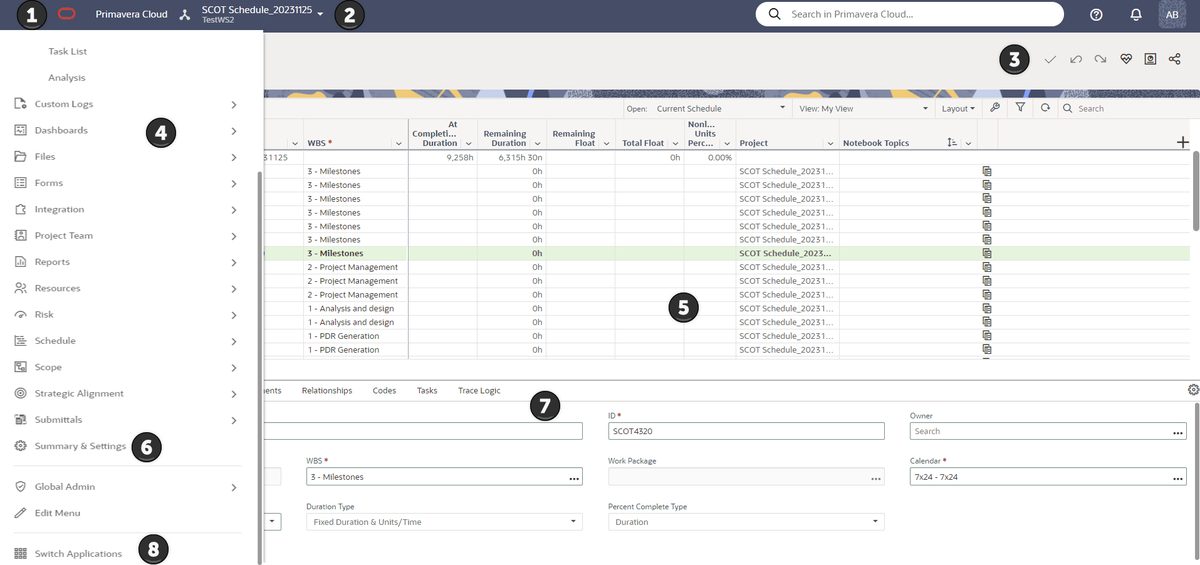
Oracle added three features to its construction scheduling software on November 19: an AI assistant that answers questions about how to use the product, a shared library of reusable project risks, and a rebuilt pull planning tool. All three are generally available, though the assistant needs an administrator to switch it on and works only in selected regions.

The change is about where project knowledge sits. Risks move from individual project files into a workspace-level list that can be linked across jobs. Pull plans move from sticky notes into a workflow that stays tied to the contract schedule. Whether teams keep those libraries current is a discipline question that software cannot settle.

Why it matters

Project knowledge usually dies when a job ends. Oracle is now selling construction firms a shared place to keep it.

Questions about this story

Free account needed to ask — your question is kept and asked for you right after sign-up. Answers are public.

No questions yet — be the first to ask.

Key Indicators

3
Capabilities in the release
AI help assistant, workspace risk library, updated pull planning.
2
Documentation sources the assistant draws on
Official product help pages and REST API documentation.
1
Clicks to move an approved pull plan to the work plan page
Oracle says approved task sequences transfer without re-entry.

Voices

Curated perspectives — historical figures and your fellow readers.

Sign up to generate historical perspectives on this story.

People Involved

Organizations Involved

Timeline

2008 November 2026

2 events Latest: Yesterday
  1. Oracle ships AI assistant, risk library and pull planning update

    Latest Product release

    Oracle announces three generally available Primavera Cloud features; the AI assistant requires administrator activation and is limited to select regions.

  2. Oracle buys Primavera Systems

    Acquisition

    Oracle acquires the Primavera scheduling business, folding standalone project scheduling into its enterprise software portfolio.

Scenarios

1

Oracle keeps the assistant inside the manual

Likely Resolves by Q2 2027

Discussed by: Investors Hangout, BIM Manager Academy and German market coverage all read the assistant's scope as documentation navigation rather than project control

Oracle described the assistant as answering questions from official help pages and REST API documentation, with links back to the source. If answers stay reliable and support tickets fall, there is little commercial pressure to widen it. The feature stays a faster manual.

2

Assistant graduates to live project data

Possible Resolves by Nov 30, 2027

Discussed by: Analysts quoted in trade coverage flagged the narrow scope as the feature's main limitation

The obvious next step is an assistant that answers questions about a specific schedule, such as which activities are slipping or which risks lack owners. That requires connecting a language model to live project records, which Oracle has not announced. A release along those lines would turn a help tool into a scheduling tool.

3

Risk library gets a named customer deployment

Uncertain Resolves by Q3 2027

Discussed by: Trade coverage singled out cross-project risk reuse as the release's most consequential piece

The risk library only matters if firms populate it and link it across jobs. A published customer account describing use across multiple linked projects would show the feature moving past demo status. No such account exists yet.

Historical Context

3 moments from history that rhyme with this story — and how they unfolded.

1997–2007

Microsoft Office Assistant, 'Clippy' (1997–2007)

Microsoft shipped an animated helper in Office 97 that watched what users typed and offered suggestions. It was on by default for years, widely disliked, switched off by default in Office 2007 and later removed.

Then

Users learned to dismiss the assistant without reading it.

Now

In-application help agents carried a reputation problem for a decade, and vendors shifted toward search and documentation instead.

Why this matters now

Oracle's assistant is deliberately limited to answering questions from its own documentation. That constraint is the lesson Clippy taught: an assistant that guesses at intent loses trust fast.

2008

Oracle acquires Primavera Systems (2008)

Oracle bought Primavera, the dominant scheduling package for large construction and engineering projects, and folded it into its industry software portfolio. The product later moved to a cloud edition covering scheduling, resources and risk across programs.

Then

Scheduling moved from standalone desktop software into enterprise contracts.

Now

Primavera remained the reference schedule of record on capital projects, which is why its feature releases get attention from contractors.

Why this matters now

The risk library follows the same pattern: take something a project team already does locally and move it up to the enterprise account.

1990s

Last Planner System and pull planning (1990s)

Glenn Ballard and Greg Howell developed the Last Planner System, a construction planning method where crews plan backward from a milestone and commit to near-term tasks. Pull planning sessions traditionally run on sticky notes and whiteboards.

Then

Crews coordinated trade sequence and responsibility without waiting on a master schedule.

Now

The method spread through lean construction practice, but the plans often lived apart from the contractual schedule.

Why this matters now

Oracle's updated pull planning claims to close that gap by keeping the field plan connected to the critical path schedule. That link is the part worth testing.

Sources

(8)