


Pull to refresh
Logo
Engineered virus stalls pancreatic tumors in first three patients

Engineered virus stalls pancreatic tumors in first three patients

New Capabilities

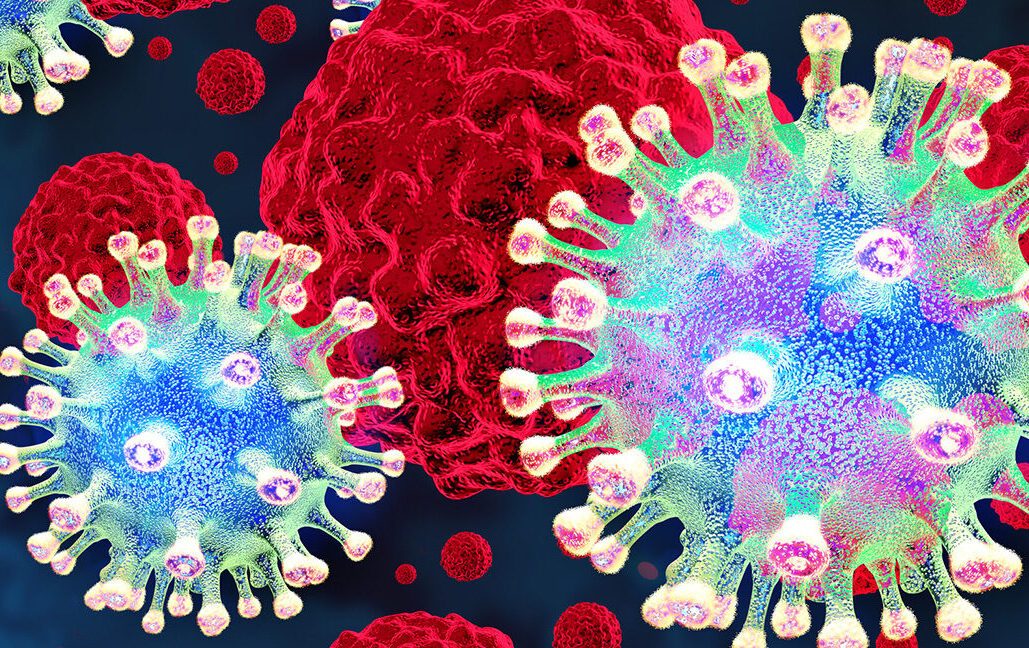
A tumor-selective adenovirus injected straight into inoperable pancreatic cancers was given at one-tenth the target dose. The cancers stopped growing.

Overview

Updated 1 hour ago

Three people with pancreatic tumors that surgeons could not remove had a genetically engineered virus injected directly into their cancers. The tumors stopped growing. All three have lived past six months, and one has had stable disease for 15 months, according to a University of Minnesota account of the trial.

Pancreatic cancer usually kills within three to six months of diagnosis, and its fibrous tumors shrug off chemotherapy. The results cover three patients in an uncontrolled safety trial, so they cannot show the virus works. They do show that the lowest dose was tolerable, which is what allows the team to test higher ones.

Why it matters

Pancreatic cancer usually kills within months of diagnosis. If higher doses shrink tumors, some inoperable patients could become surgical candidates.

Questions about this story

Free account needed to ask — your question is kept and asked for you right after sign-up. Answers are public.

No questions yet — be the first to ask.

Key Indicators

3
Patients with stable disease
All three in the lowest-dose group; none of their tumors has grown since treatment.
18
Planned trial enrollment
Estimated size of the single-center Phase I dose-finding study.
10
Share of target dose given so far
The first cohort received one-tenth of the dose the trial is aiming for.
15 months
Longest reported disease control
One participant's cancer has been described as controlled for 15 months.
3–6 months
Typical survival after diagnosis
Most pancreatic cancers are found after they have spread and cannot be removed.

Voices

Curated perspectives — historical figures and your fellow readers.

Sign up to generate historical perspectives on this story.

People Involved

Organizations Involved

Timeline

December 2024 May 2026

5 events Latest: May 29th, 2026 · 6 months ago
Tap a bar to jump to that date
  1. New Scientist publishes the account

    Latest Publication

    The report describes tumors that stopped growing at one-tenth the target dose.

  2. Results presented in Boston

    Presentation

    Yamamoto reports three patients with stable disease at a gene and cell therapy meeting.

  3. University reports 15 months of disease control

    Update

    A Minnesota account says one participant's disease has been controlled for 15 months.

  4. First patient treated

    Trial

    A patient with a 7-centimetre pancreatic tumor receives the virus at the lowest dose.

  5. Phase I trial opens

    Trial

    The University of Minnesota begins a dose-finding study of an engineered adenovirus in pancreatic adenocarcinoma.

Scenarios

1

Higher doses shrink tumors enough for surgery

Possible Resolves by Oct 15, 2028

Discussed by: Masato Yamamoto and the University of Minnesota trial team

Yamamoto argues the tumors may start to shrink once the virus has more time to replicate and the immune system learns to recognise the cancer. Fifteen more patients are to receive escalating doses, and the team's stated goal is to shrink inoperable tumors until a surgeon can remove them.

2

Trial closes at Phase I with no further development

Uncertain Resolves by Oct 15, 2029

Discussed by: Kai Brown, Royal North Shore Hospital

Brown's caution is that a three-patient, uncontrolled conference report is a hypothesis, not a result. If higher doses bring toxicity without added benefit, the program ends where it started: a safety study with no path forward.

3

Combination trial with checkpoint inhibitors opens

Possible Resolves by Q2 2028

Discussed by: Masato Yamamoto and Edward Greeno

The team plans to pair the virus with drugs that release the immune system's brakes. The logic is that bursting cancer cells open exposes the tumor to immune attack, possibly including tumors the virus never reached. A registered combination study would show the approach cleared its first hurdle.

Historical Context

3 moments from history that rhyme with this story — and how they unfolded.

1996-2000

ONYX-015 and the first tumor-selective adenoviruses (late 1990s)

Researchers deleted a gene from an adenovirus so it could only replicate in cells with faulty p53, a defect common in tumors. The virus, ONYX-015, was injected into head and neck cancers in trials through the late 1990s, often alongside chemotherapy.

Then

Some injected tumors shrank, mainly when combined with chemotherapy, but the program did not reach approval.

Now

Later tumor-selective viruses kept the design: a single genetic switch tied to a trait cancer cells share.

Why this matters now

The Minnesota virus uses the same strategy with a different switch, driven by an enzyme called cyclooxygenase-2 that cancer cells carry at far higher levels than healthy tissue.

October 2015

First oncolytic virus approved in the United States (2015)

A herpes simplex virus modified to carry an immune-stimulating protein was injected into melanoma lesions. The Food and Drug Administration approved it as Imlygic.

Then

It became the first oncolytic virus cleared for sale in the United States.

Now

Its use stayed limited, and it acts mainly on the tumors it is injected into.

Why this matters now

It shows regulators will approve a virus that attacks tumors, and that injected viruses struggle to reach disease elsewhere in the body.

2020s

VCN-01 tested in a randomized pancreatic cancer trial (2020s)

Another engineered adenovirus, VCN-01, was added to chemotherapy and compared with chemotherapy alone in a randomized phase 2b trial in metastatic pancreatic cancer.

Then

Median progression-free survival was 5.6 months with VCN-01 against 4.6 without, a statistically significant difference. Median overall survival was 10.6 months against 8.6, which did not reach significance.

Now

It remains the closest thing to a controlled test of the approach in this disease.

Why this matters now

It suggests a virus can slow pancreatic cancer's progression without yet proving it extends life, which is the bar the Minnesota team now faces.

Sources

(6)