
Pull to refresh
Logo
PECO works through holiday weekend to restore power after Thanksgiving nor'easter

PECO works through holiday weekend to restore power after Thanksgiving nor'easter

Built World Philadelphia, PA local

About 225,000 PECO customers lost electricity at the storm's peak; roughly 34,000 remained dark Friday morning, with most due back by Saturday night

Overview

Updated 1 hour ago

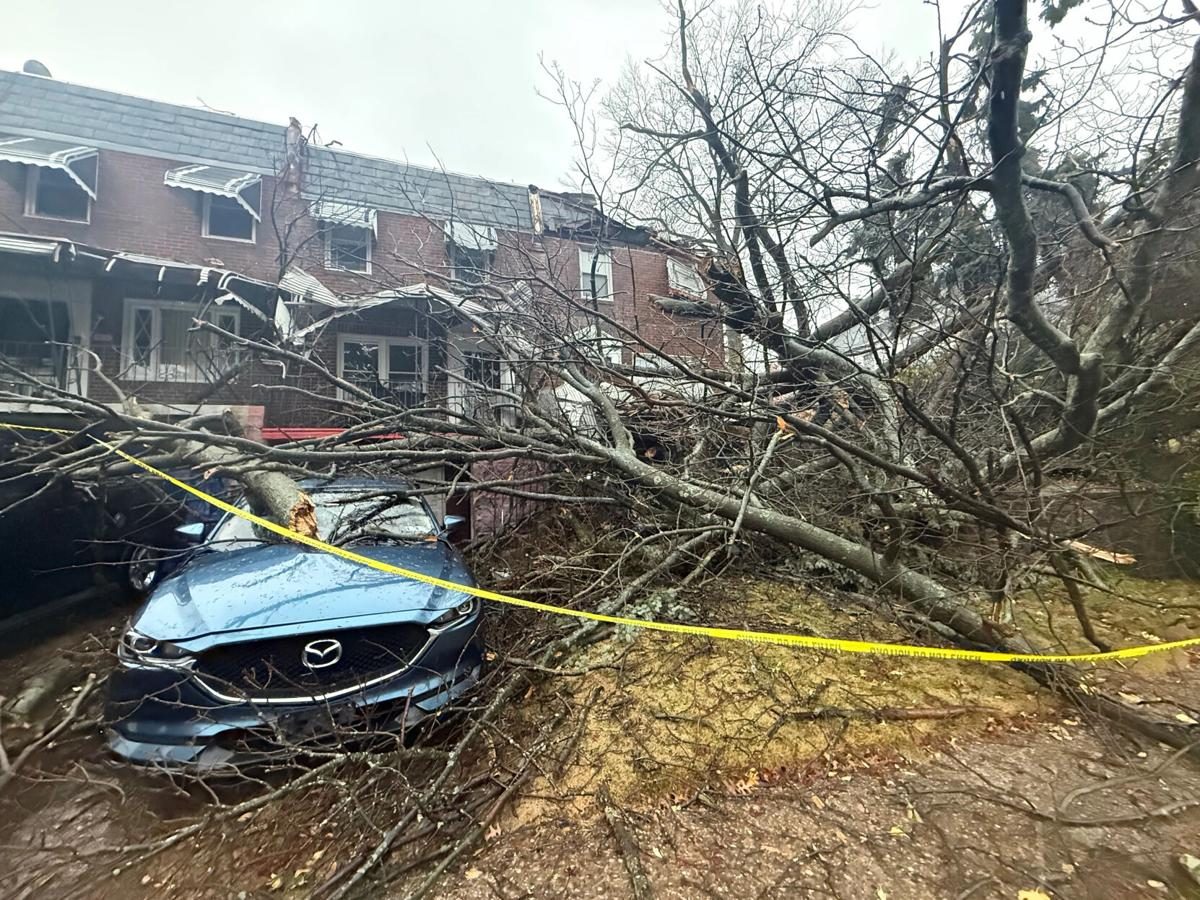
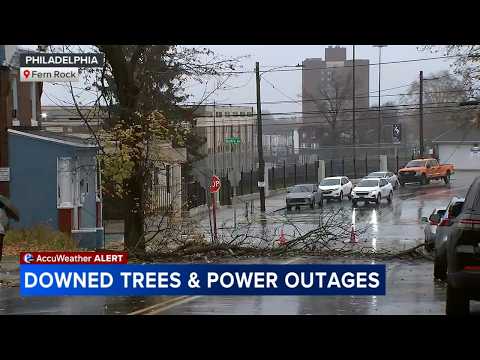
Thousands of households across southeastern Pennsylvania spent the day after Thanksgiving in the dark. A nor'easter that arrived on the holiday cut power to roughly 225,000 PECO customers — about the 20th worst storm in the utility's history — and by Friday morning about 34,000 were still waiting, most of them in Chester and Delaware counties.

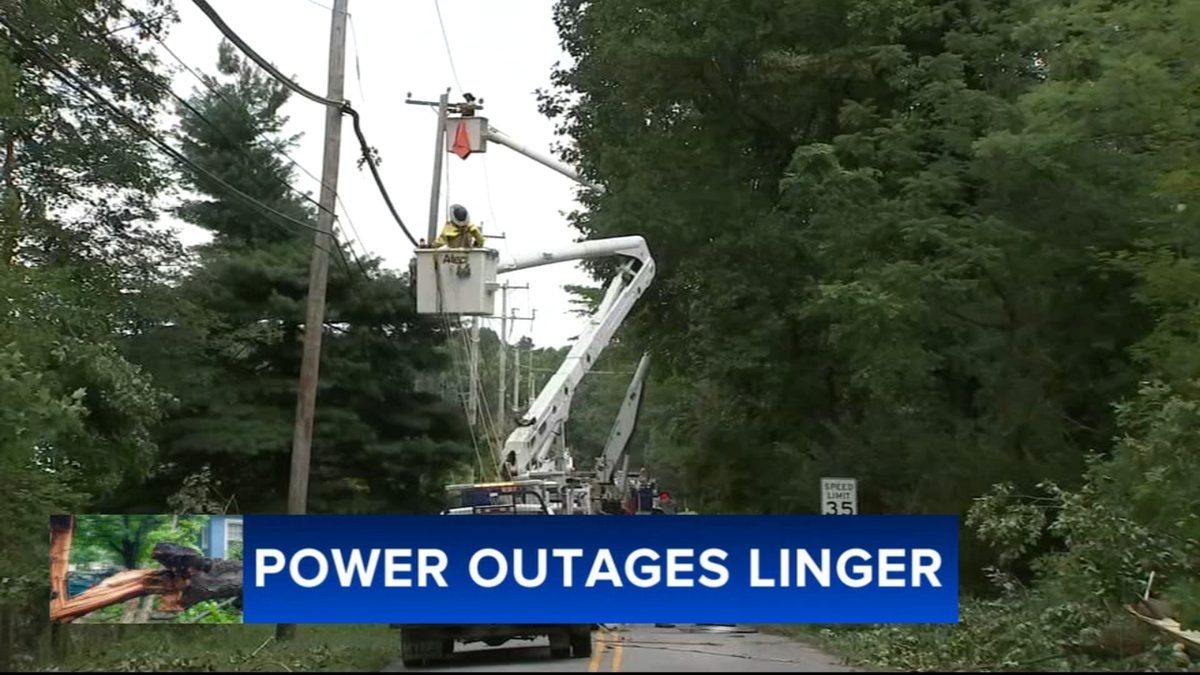
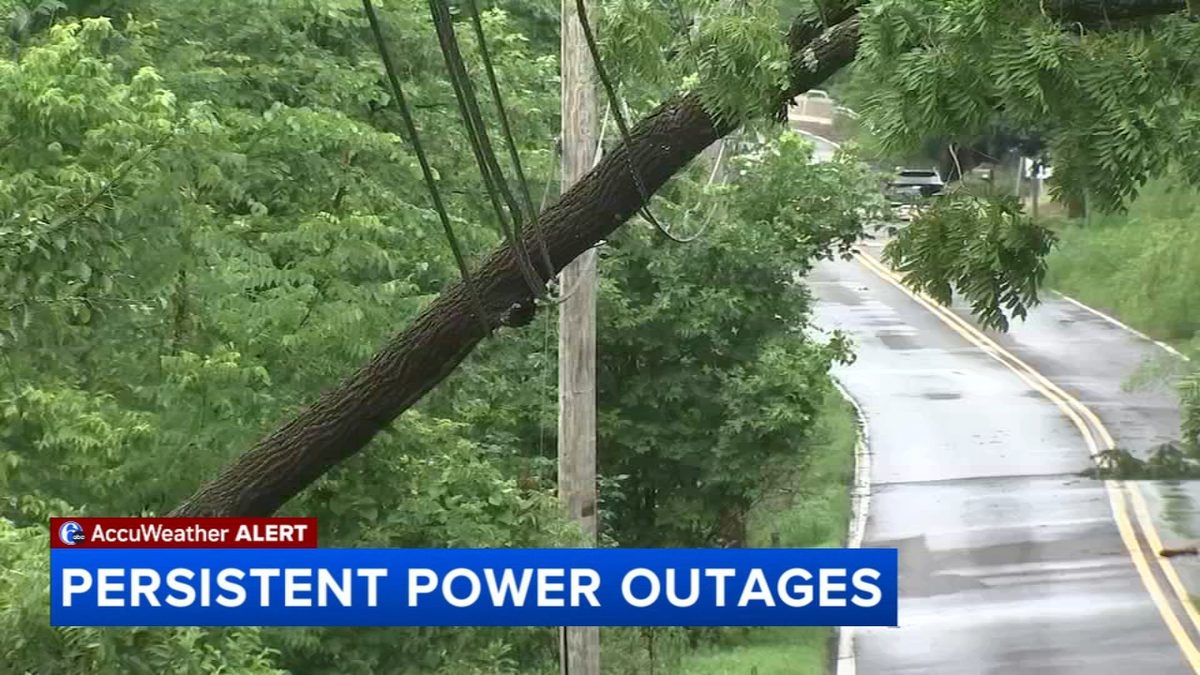
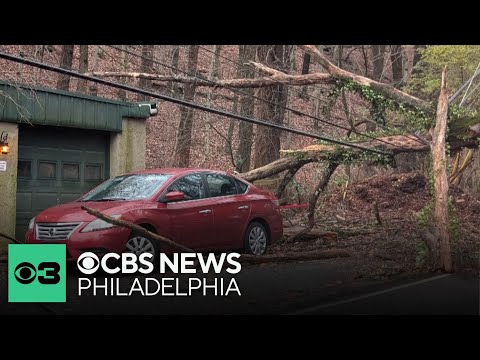
Getting the rest back online is a physical problem before it is a scheduling one. Bucket trucks cannot raise crews when sustained winds top 30 mph, and the storm left snapped poles and heavy tree debris that take far longer per customer than a downed line. PECO says most customers should have service by midnight Saturday, with isolated heavily damaged pockets possibly running into Sunday.

Why it matters

How fast a 225,000-customer outage gets fixed depends on mutual-aid crews, bucket-truck wind limits and tree damage, not on the storm alone.

Last Monday's email for Philadelphia, PA

Sent Nov 23. It carried:

Get next Monday's: one short email a week. Free. Unsubscribe in one click.

Questions about this story

Free account needed to ask — your question is kept and asked for you right after sign-up. Answers are public.

No questions yet — be the first to ask.

Key Indicators

225,000
PECO customers who lost power
Roughly the 20th worst storm in the utility's history, according to PECO.
34,000
Customers still without power Friday morning
Down from the storm's peak, with Chester and Delaware counties accounting for most of what remains.
85%
Share of affected customers restored by Friday morning
Roughly 150,000 had service back by midnight Thursday, PECO said.
1,300
Field workers on the restoration
Includes more than 650 mutual-assistance line workers from Tennessee, Florida and Canada.
2,000+
Total personnel supporting restoration
Field crews plus planners, dispatchers and call-center staff.
9.41 ft
Record high tide at Cape May Harbor
Surpassed the 9.36-foot mark set during a January 2016 nor'easter.

Voices

Curated perspectives — historical figures and your fellow readers.

Sign up to generate historical perspectives on this story.

People Involved

Organizations Involved

Timeline

6 events Latest: Yesterday
Tap a bar to jump to that date
  1. PECO: roughly 34,000 still without power

    Latest Infrastructure

    Utility says 85% restored; most customers due back by midnight Saturday.

  2. Nor'easter hits on Thanksgiving Day

    Weather

    Gusts to 70 mph and heavy rain knock out power across Pennsylvania, New Jersey and Delaware.

  3. Record tide at Cape May Harbor

    Weather

    Morning high tide reaches 9.41 feet, topping the 9.36-foot record from January 2016.

  4. Thanksgiving parade canceled

    Disruption

    Philadelphia cancels its Thanksgiving Day parade, held annually since 1920.

  5. Outages climb into the evening

    Infrastructure

    More than 61,000 PECO customers were out as of 10:41 p.m. Thursday.

  6. New Jersey declares state of emergency

    Government

    Gov. Mikie Sherrill declares a statewide emergency the evening before the storm arrives.

Scenarios

1

PECO clears nearly all remaining outages by Sunday night

Likely Resolves by Nov 30, 2026

Discussed by: PECO executives at the Nov. 27 briefing, who said most customers would be back by midnight Saturday and only isolated heavily damaged areas would run into Sunday

Winds ease, mutual-aid crews work through the weekend, and the broken poles and tree debris in Chester and Delaware counties get cleared faster than the worst-case estimate. PECO reaches out directly to any customer facing a Sunday restoration, so the tail of the outage is known in advance rather than discovered.

2

Scattered outages drag past the weekend

Possible Resolves by Dec 7, 2026

Discussed by: PECO itself, which flagged that individual service lines and heavily damaged pockets could extend restoration into Sunday and beyond

The remaining work is the slowest kind: single-service drops, poles that must be reset, and debris that blocks access to specific properties. Crews finish the neighborhood-level repairs but a small number of customers stay dark into the following week, which is typical when a storm ranks among a utility's worst.

3

State regulators open a review of the storm response

Unlikely Resolves by Feb 28, 2027

Discussed by: No public calls for an inquiry have been reported; Pennsylvania utilities answer to the state Public Utility Commission for service reliability

After a storm that knocked out power to hundreds of thousands of customers across multiple utilities, the Pennsylvania Public Utility Commission opens a formal docket examining restoration times, mutual-aid arrangements and tree-trimming practices. Utilities file testimony; the proceeding typically runs for months and can end in recommendations rather than penalties.

Historical Context

2 moments from history that rhyme with this story — and how they unfolded.

January 2016

January 2016 nor'easter

A coastal storm brought heavy snow, damaging winds and significant tidal flooding to southern New Jersey. At Cape May Harbor, the high tide reached 9.36 feet — a record that stood for a decade. WHYY reported at the time that strong winds, a coastal storm and a full moon had combined to produce record tidal flooding, and that water levels in parts of Cape May County exceeded those seen during Superstorm Sandy.

Then

Coastal roads and bridges closed, and shore communities dealt with flooding and scattered outages.

Now

The 9.36-foot Cape May Harbor mark became the benchmark forecasters and residents used to describe how bad a tidal flood was.

Why this matters now

This week's storm broke that record, reaching 9.41 feet at Cape May Harbor — a concrete measure of how the Thanksgiving nor'easter compared with the region's recent worst.

October 2012

Superstorm Sandy (2012)

Sandy came ashore near Atlantic City on Oct. 29, 2012, driving storm surge into the Jersey Shore and New York Harbor and knocking out power to millions of customers across the eastern United States. Flooding and wind damage forced utilities across the mid-Atlantic to rebuild distribution lines rather than repair them, stretching restoration into weeks in the hardest-hit areas.

Then

Widespread road closures, flooded shore towns and prolonged outages across several states.

Now

Utilities and regulators put more weight on storm staging, mutual-aid agreements and tree-trimming programs, the same tools PECO mobilized this week.

Why this matters now

Sandy is the reference point for what a worst-case storm does to the region's grid; this week's nor'easter is being measured against it on tide, not on outage scale.

Sources

(5)