

Pull to refresh
Logo
Daily Brief
Following
Why Ranks Sign Up
Supreme Court reverses Mississippi death sentence over jury selection bias

Supreme Court reverses Mississippi death sentence over jury selection bias

Rule Changes

Pitchford v. Cain revives Batson scrutiny after Mississippi struck four of five Black jurors at a 2006 capital trial

Yesterday: Supreme Court reverses 5-4

Overview

Terry Pitchford has sat on Mississippi's death row for nearly two decades. On May 28, 2026, the Supreme Court threw out his conviction and ordered the state to start over, ruling 5-4 that the prosecutor's jury selection violated his constitutional rights.

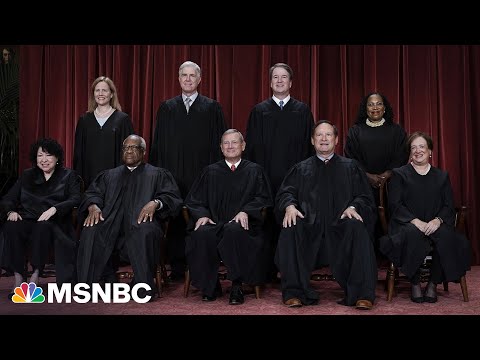
Justice Brett Kavanaugh wrote the majority opinion. He was joined by Chief Justice John Roberts and the Court's three liberals, while Justices Gorsuch, Thomas, Alito, and Barrett dissented. The ruling restores teeth to Batson v. Kentucky, the 1986 case that barred prosecutors from striking jurors based on race.

Why it matters

State courts cannot use procedural shortcuts to dodge claims of racial bias in jury selection. Defendants get a clearer path to challenge prosecutors' strikes.

Key Indicators

5-4
Vote margin
Kavanaugh and Roberts joined the three liberal justices; Gorsuch, Thomas, Alito, and Barrett dissented.
4 of 5
Black jurors struck
The prosecutor used peremptory strikes against four of the five Black potential jurors in the venire.
11-1
Final jury composition
Eleven white jurors and one Black juror convicted Pitchford in 2006.
20 years
Time on death row
Pitchford has been awaiting execution since his 2006 conviction in Grenada County.
1986
Batson precedent year
Batson v. Kentucky set the three-step framework for evaluating race-based peremptory strikes.

Voices

Curated perspectives — historical figures and your fellow readers.

Ever wondered what historical figures would say about today's headlines?

Sign up to generate historical perspectives on this story.

Play

Exploring all sides of a story is often best achieved with Play.

Log in to play. Track your picks, climb the leaderboards. Log in Sign Up
Predict 4 ways this could play out. Contrarian picks score more — points lock when the scenario resolves. Log in to play
Higher or Lower Two numbers from this story. Guess which is bigger. 5 rounds to set a streak. Log in to play
Timeline Five events from this story — drag them oldest to newest. Log in to play
Connections Sixteen names from the news. Find the four hidden groups of four. Log in to play

People Involved

Organizations Involved

Timeline

April 1986 May 2026

11 events Latest: Yesterday Showing 8 of 11
Tap a bar to jump to that date
  1. Flowers v. Mississippi decided

    Precedent

    The US Supreme Court overturns the murder conviction of Curtis Flowers, prosecuted by the same Doug Evans, citing a pattern of striking Black jurors. Kavanaugh writes the 7-2 opinion.

  2. Grenada grocery store robbery and killing

    Incident

    Terry Pitchford, 18, and Eric Bullins, 16, rob the Crossroads Grocery near Grenada, Mississippi. Bullins shoots and kills the owner, Reuben Britt.

  3. Supreme Court decides Batson v. Kentucky

    Precedent

    The Court bars prosecutors from striking jurors on the basis of race and creates a three-step framework for raising and rebutting such challenges.

Historical Context

3 moments from history that rhyme with this story — and how they unfolded.

April 1986

Batson v. Kentucky (1986)

James Batson, a Black man, was tried for burglary in Kentucky after the prosecutor used peremptory strikes to remove all four Black potential jurors. The Supreme Court ruled 7-2 that the Equal Protection Clause forbids race-based strikes.

Then

Batson's conviction was vacated and the Court created a three-step test for raising and rebutting race-discrimination claims in jury selection.

Now

The Batson framework became the central tool defendants use to challenge prosecutor strikes, though enforcement has been inconsistent for four decades.

Why this matters now

Pitchford is a direct application of Batson's step three, where the defense must be allowed to rebut the prosecutor's race-neutral reasons. The Mississippi courts skipped that step.

May 2016

Foster v. Chatman (2016)

Timothy Foster, a Black death-row prisoner in Georgia, obtained prosecutors' jury-selection notes through an open-records request. The notes highlighted every Black juror's name in green and ranked them by who to strike first.

Then

The Supreme Court ruled 7-1 that the strikes were racially motivated and vacated Foster's death sentence.

Now

Foster set a high-water mark for proving Batson violations with documentary evidence; most cases lack such smoking guns.

Why this matters now

Foster showed the Court would dig into trial records to find Batson violations. Pitchford extends that scrutiny to procedural rulings that effectively block defendants from making their case.

June 2019

Flowers v. Mississippi (2019)

Curtis Flowers was tried six times for the same 1996 quadruple murder by District Attorney Doug Evans, the same prosecutor in Pitchford. Across the six trials, Evans struck 41 of 42 prospective Black jurors. The Supreme Court overturned the sixth conviction 7-2.

Then

Flowers was released after charges were dropped in 2020. Justice Kavanaugh, writing for the majority, called the prosecutor's pattern of strikes 'relentless.'

Now

The Flowers ruling put Evans's office under national scrutiny and amplified calls to reform peremptory strikes entirely. Several states have since limited their use.

Why this matters now

Evans prosecuted both Flowers and Pitchford. Kavanaugh wrote both majority opinions. The pattern documented in Flowers gave context to Pitchford's claim that the strikes in his own case were not innocent.

Sources

(6)