
Pull to refresh
Logo
Serbia's Vučić resigns as president to run for prime minister

Serbia's Vučić resigns as president to run for prime minister

Rule Changes

The move triggers a presidential election by year's end, with a parliamentary vote set for October 25 after two years of student-led protests

Today: Vučić resigns as president; Brnabić becomes acting president

Overview

Updated 1 hour ago

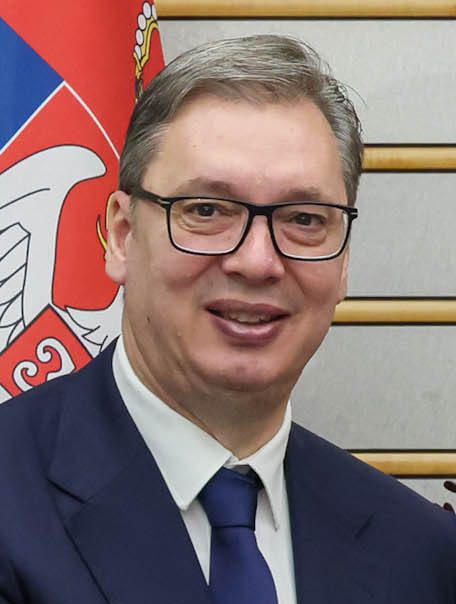
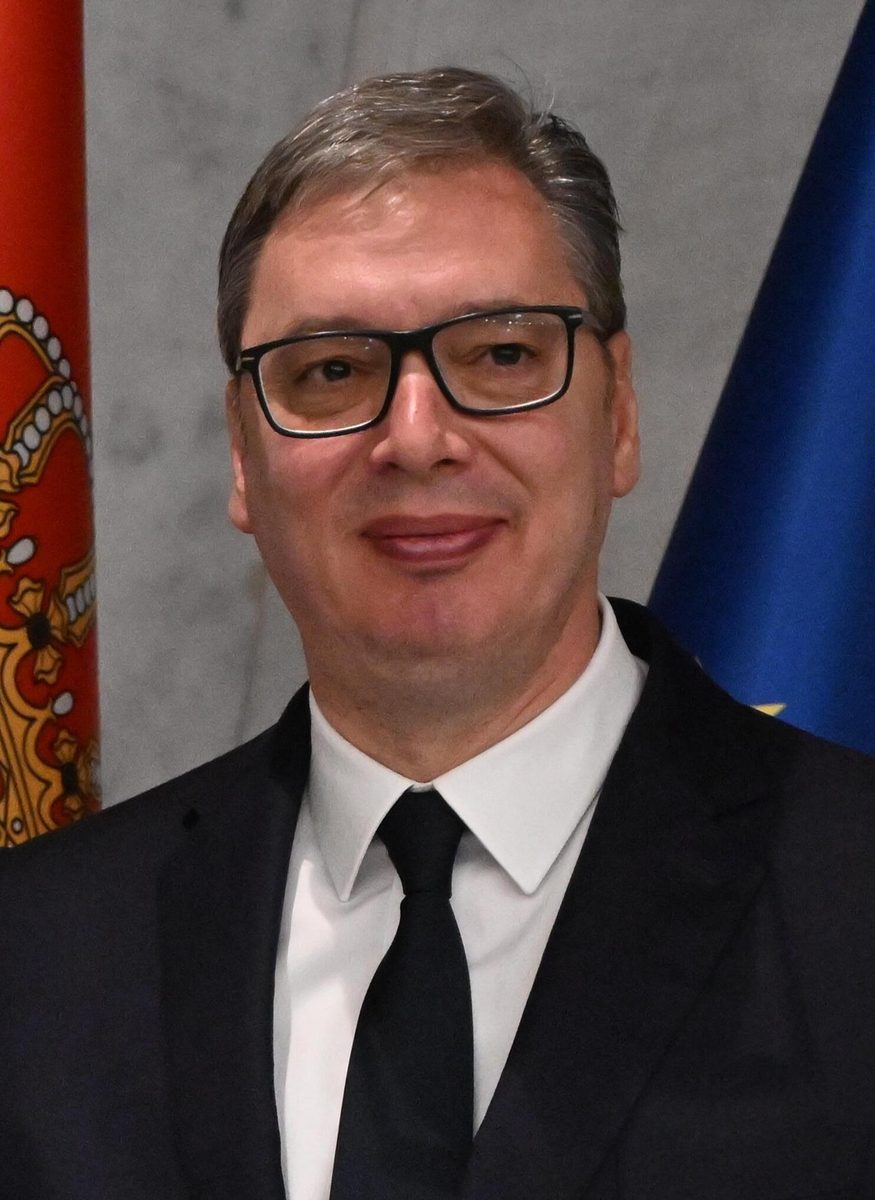
Aleksandar Vučić resigned as Serbia's president on September 27, 2026, to run for prime minister in the October 25 parliamentary election. The maneuver lets him avoid a constitutional ban on a third presidential term while keeping his party's strongest campaigner on the ballot.

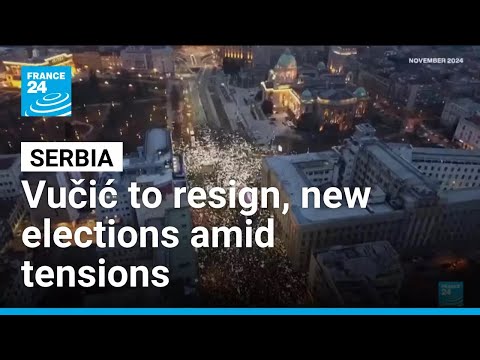
His resignation triggers a presidential election that must conclude by the end of the year, with National Assembly speaker Ana Brnabić serving as acting president. The contests cap nearly two years of student-led protests set off by the November 2024 collapse of a train station canopy in Novi Sad that killed 16.

Why it matters

The October 25 vote decides whether Vučić's 14-year dominance of Serbian politics survives a student movement that rose from a national tragedy.

Questions about this story

Free account needed to ask — your question is kept and asked for you right after sign-up. Answers are public.

No questions yet — be the first to ask.

Key Indicators

16
Killed in Novi Sad canopy collapse
The tragedy that sparked the protest movement.
12
Years Vučić has held top office
As prime minister (2014–2017) then president (2017–2026).
49
People pardoned before resignation
Includes 23 linked to the protest movement.
90
Days to hold presidential election
Constitutional deadline after the president's resignation.

Voices

Curated perspectives — historical figures and your fellow readers.

Ever wondered what historical figures would say about today's headlines?

Sign up to generate historical perspectives on this story.

People Involved

Organizations Involved

Timeline

November 2024 September 2026

5 events Latest: Today
Tap a bar to jump to that date
  1. Vučić resigns as president; Brnabić becomes acting president

    Today Resignation

    Vučić formally steps down, triggering a presidential election due by year's end. He pardons 49 people, including 23 tied to the protests. Ana Brnabić assumed the acting presidency the next day.

  2. Snap parliamentary election called for October 25

    Election

    Vučić schedules an early parliamentary vote for October 25, citing "major turbulence on the domestic political scene."

  3. Vučić announces he will resign as president

    Statement

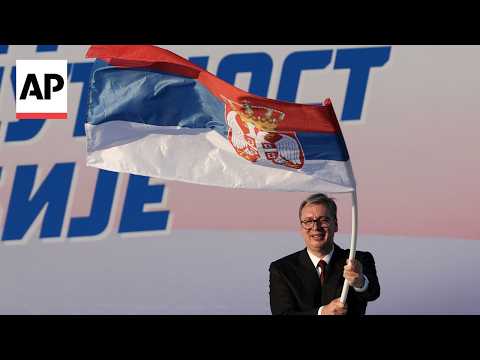
    At a Belgrade rally, Vučić declares he will step down to lead his party's election campaign. He waits three months before formally resigning.

  4. Student-led protests grow into sustained campaign

    Protest

    Students in Belgrade and other cities begin daily protests demanding accountability. Demonstrations at times draw hundreds of thousands, the largest since the fall of Slobodan Milošević in 2000.

  5. Train station canopy collapse kills 16 in Novi Sad

    Tragedy

    A concrete canopy at Novi Sad's railway station collapses, killing 16. The disaster is widely blamed on corruption and shoddy renovation work.

Scenarios

1

SNS wins October vote, Vučić becomes prime minister

Likely Resolves by Oct 25, 2026

Discussed by: Polls cited by Euractiv show SNS among the two strongest forces; the party has governed since 2012

Vučić's gamble pays off. SNS wins a plurality in the October 25 parliamentary election, forms a coalition, and Vučić returns as prime minister. The shift keeps him at the center of Serbian politics, though the protests may continue and international pressure over democratic backsliding remains.

2

Student List wins the election, ending SNS rule

Possible Resolves by Oct 25, 2026

Discussed by: Euractiv notes different surveys point to different potential winners; National Post calls Student List one of SNS's strongest adversaries ever

The student movement converts protest energy into seats, becomes the largest or second-largest force, and forms a government with opposition parties. Vučić's 14-year run ends and power shifts to new figures promising institutional reform and anti-corruption measures.

3

Opposition candidate wins the December presidential election

Uncertain Resolves by End of 2026

Discussed by: Euractiv reports the presidential race is uncertain with candidates not yet announced

Even if SNS wins the parliament, a non-SNS presidential candidate could take the December vote. That would create a divided government where the president's powers over policy and appointments could check Vučić as prime minister. The race remains wide open since no major candidates have formally entered.

Historical Context

2 moments from history that rhyme with this story — and how they unfolded.

November 1996 – February 1997

Serbian student protests (1996–1997)

After Slobodan Milošević's government annulled opposition local election victories in November 1996, students in Belgrade and other cities held months of daily street protests. Demonstrations drew hundreds of thousands at their peak.

Then

Milošević was forced to recognize opposition victories in local elections, ending the protests.

Now

The movement showed sustained student protest could force concessions from an autocratic leader, and helped lay groundwork for the 2000 uprising that ended Milošević's rule.

Why this matters now

Serbian students have a track record of challenging entrenched leaders. The current Student List movement draws directly on that tradition in its challenge to Vučić.

May 2008 – May 2012

Putin–Medvedev tandem (2008–2012)

Vladimir Putin, completing his second presidential term and barred from a third, stepped down and became prime minister under Dmitry Medvedev, a close ally. Medvedev then signed constitutional changes lengthening the presidential term to six years, and Putin returned as president in 2012.

Then

Putin retained effective power as prime minister while Medvedev held the presidency.

Now

The office swap became a template for leaders managing term limits in post-Soviet states.

Why this matters now

Bloomberg explicitly compares Vučić's move to Putin's. Both leaders switched from president to prime minister to stay at the center of power without violating term limits.

Sources

(5)