

Pull to refresh
Logo
PrimeStack tool writes large gene cargos into rice at precise sites

PrimeStack tool writes large gene cargos into rice at precise sites

New Capabilities

Prime-editing platform hits up to 45% integration efficiency, roughly seven times the prior best

Today: PrimeStack published in PLOS Biology

Overview

Updated 1 hour ago

For three decades, adding a gene to a crop meant random insertion and hoping it landed somewhere harmless. PrimeStack replaces that lottery. It writes multikilobase gene cassettes into predefined 'safe harbor' spots in the rice genome, at up to 45% efficiency—about seven times the prior best.

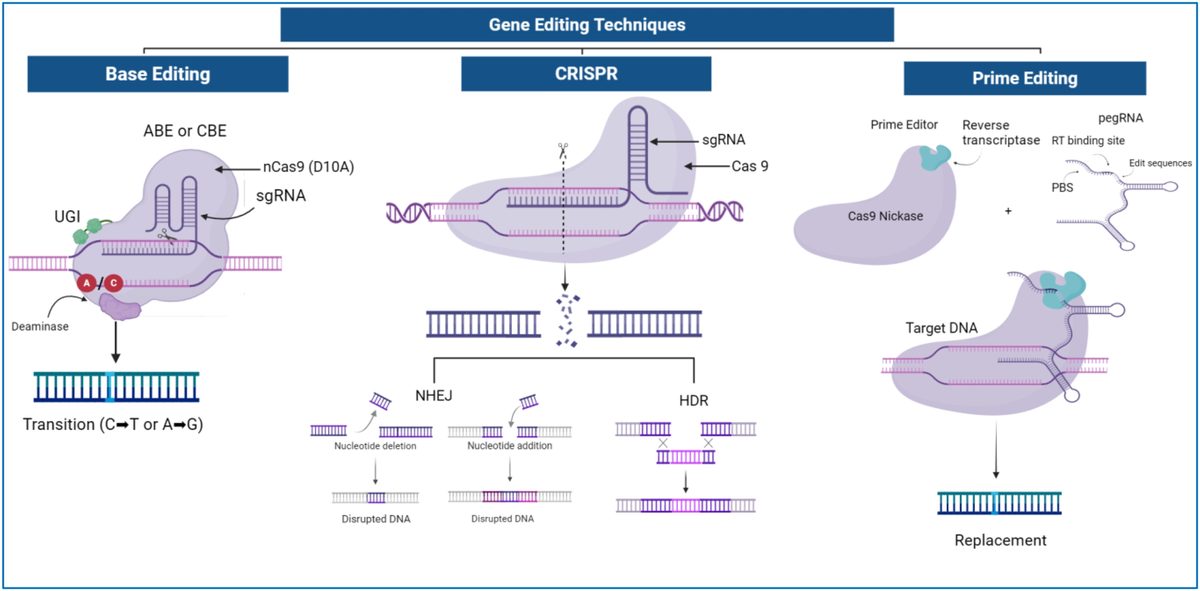
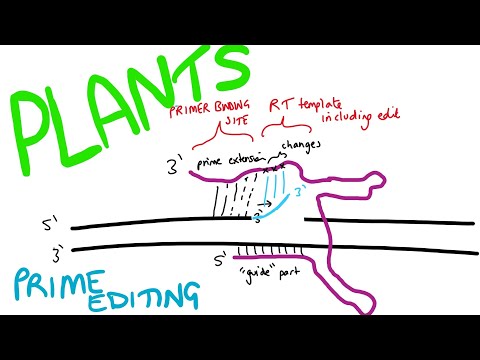
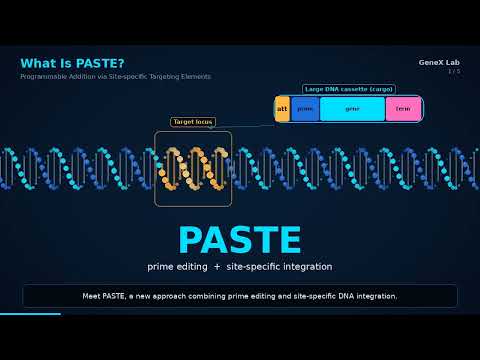
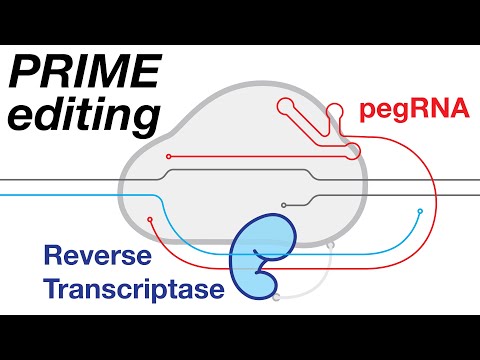
The platform, reported October 13 in PLOS Biology, pairs prime editing with the Bxb1 integrase. The recombination is unidirectional, so the insertion is irreversible and heritable. That opens the door to stacking multiple traits—disease resistance, drought tolerance, vitamin pathways—in one plant, predictably.

Why it matters

If PrimeStack transfers to staple crops, breeders can stack multiple traits in one plant predictably, cutting years off crop improvement cycles.

Questions about this story

Free account needed to ask — your question is kept and asked for you right after sign-up. Answers are public.

No questions yet — be the first to ask.

Key Indicators

45%
Peak integration efficiency
Highest PrimeStack insertion rate in regenerated rice plants, measured by junction-specific PCR.
6.3%
Prior best (PrimeRoot)
PrimeRoot's reported efficiency for a blast-resistance cassette in rice.
11.1 kb
Largest prior cargo
Largest DNA segment the previous PrimeRoot system inserted into a plant genome.

Voices

Curated perspectives — historical figures and your fellow readers.

Ever wondered what historical figures would say about today's headlines?

Sign up to generate historical perspectives on this story.

People Involved

Organizations Involved

Timeline

2023 October 2026

3 events Latest: Today
  1. PrimeStack published in PLOS Biology

    Today Publication

    Peer-reviewed report confirms up to 45% integration efficiency in regenerated rice plants, with no obvious morphological differences from wild-type plants.

  2. PrimeStack preprint released

    Preprint

    bioRxiv posts the PrimeStack manuscript reporting roughly 43-46% integration efficiency in rice calli.

  3. PrimeRoot demonstrates precise large insertions in rice

    Publication

    Nature Biotechnology reports PrimeRoot, which couples enhanced prime editors with Cre recombinase to insert up to 11.1 kb into rice at 6.3% efficiency for a blast-resistance cassette.

Scenarios

1

PrimeStack crosses into maize and wheat

Likely Resolves by End of 2027

Discussed by: The PLOS Biology authors describe the platform as modular and transferable; crop biotechnology groups are the natural next testers.

Other labs apply PrimeStack or the PE-plus-Bxb1 architecture to additional staple crops. The modular design—attP landing sites plus Bxb1—should transfer, but efficiency may vary by species, delivery method, and genomic locus.

2

Evolved integrase advantage stays modest in plants

Possible Resolves by End of 2027

Discussed by: The paper itself notes the gap between eeBxb1 and wild-type Bxb1 was smaller in rice than in human cells, suggesting context dependence.

Follow-up studies confirm that in plants, evolved Bxb1 variants offer little advantage over the wild-type enzyme. The paper's own data—42.9% for wild-type versus 45.3% for eeBxb1—support this reading.

3

PrimeStack rice lines reach field trials

Possible Resolves by End of 2028

Discussed by: The authors validated a carotenoid cassette insertion, pointing toward nutrition traits that regulators and breeders would want to test.

A PrimeStack-edited rice line, such as the carotenoid-enriched line, advances to field trials or regulatory review. That would mark the first field deployment of a PE-plus-Bxb1-edited crop.

Historical Context

3 moments from history that rhyme with this story — and how they unfolded.

2023

PrimeRoot (2023)

Nature Biotechnology reported PrimeRoot, which coupled enhanced prime editors with Cre recombinase to insert up to 11.1 kb into rice. Its best reported efficiency was 6.3% for a blast-resistance cassette conferring PigmR.

Then

Established that double-strand-break-free large insertions were possible in plants, but at low efficiency.

Now

Became the benchmark PrimeStack had to beat.

Why this matters now

PrimeStack is PrimeRoot's direct successor, swapping Cre for the unidirectional Bxb1 integrase and roughly septupling efficiency.

2023

PASSIGE and eePASSIGE (2023)

In human cells, researchers combined prime editing with Bxb1 to insert gene-sized sequences, then used phage-assisted evolution to create eeBxb1, pushing integration above 30% for sequences over 10 kb.

Then

Demonstrated the prime-editing-plus-integrase concept in mammals.

Now

Provided the architecture and the evolved integrase variants PrimeStack uses.

Why this matters now

PrimeStack imports the same architecture, but the rice data show the evolved enzymes' advantage shrinks in plants.

1980s-2000s

Agrobacterium T-DNA era (1980s-2000s)

For decades, plant transformation relied on Agrobacterium to ferry DNA into genomes at random positions. Insertions landed unpredictably, causing position effects and occasional gene silencing.

Then

Enabled the first generation of genetically modified crops.

Now

Left breeders managing unpredictable expression and regulatory scrutiny of insertion sites.

Why this matters now

PrimeStack's safe-harbor targeting is the direct answer to the randomness that defined the T-DNA era.

Sources

(5)