
Pull to refresh
Logo
FCC lets state prisons jam contraband cellphones

FCC lets state prisons jam contraband cellphones

Rule Changes

The order creates a testing-and-notice path for signal jammers, over carrier warnings that 911 calls and nearby phones get blocked too

Overview

Updated 19 minutes ago

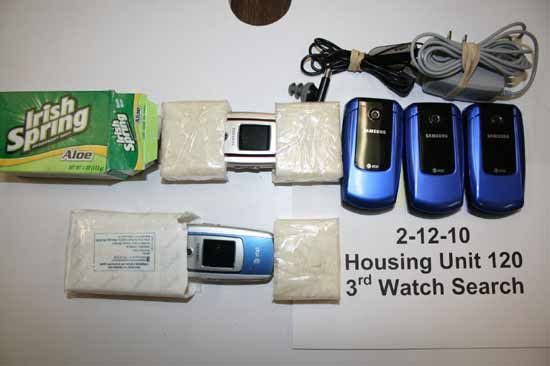
The Federal Communications Commission voted on November 19 to let state and local prisons and jails jam contraband cellphones. For as long as prisons have confiscated phones, the agency read the Communications Act to forbid non-federal jamming. The order replaces that blanket ban with a permission process.

Facilities must test a system, win FCC approval for a defined containment area, and give nearby communities advance notice before switching on. The wireless trade group CTIA says the hardware cannot be that precise: its pilot test blocked 911 calls and reached network equipment 2.5 miles away. A court challenge is the likely next step.

Why it matters

If the order holds, state prisons can legally jam cell signals for the first time, and nearby homes sit inside the testing zone.

Questions about this story

Free account needed to ask — your question is kept and asked for you right after sign-up. Answers are public.

No questions yet — be the first to ask.

Key Indicators

500,000
Inmates with regular access to contraband phones
Estimate cited by FCC Chairman Brendan Carr when announcing the vote.
2.5 miles (4 km)
Interference reach in carrier pilot test
CTIA said its micro-jamming test affected wireless network equipment that far from the prison.
up to 67%
Contraband calls completed in outdoor yards during test
CTIA reported failure rates of one-half to two-thirds in outdoor recreation areas.
20 days
Advance notice to nearby communities
Commissioner Anna Gomez said the order requires at least this much notice before jamming starts.
30,000+
Contraband phones recovered in Florida since 2023
Figure from the Florida Department of Corrections, which backed the FCC order.

Voices

Curated perspectives — historical figures and your fellow readers.

Sign up to generate historical perspectives on this story.

People Involved

Organizations Involved

Timeline

2008 November 2026

5 events Latest: 3 days ago
Tap a bar to jump to that date
  1. FCC approves prison jamming order

    Latest Regulation

    The commission authorized state and local facilities to jam contraband phones under a testing, containment-area and notice process.

  2. AT&T disputes FCC's legal theory

    Filing

    AT&T told the FCC that jammers block every signal on a band, so deauthorizing contraband devices cannot spare lawful calls.

  3. Urban Institute flags gap for staff phones

    Research

    Researchers found jamming cannot exempt authorized cellphones the way managed access systems can, so officers inside could lose service.

  4. Federal prisons test micro-jamming at Broad River

    Test

    The first jamming test at a state facility examined blocking calls inside a South Carolina housing unit.

  5. FCC allows one-time jamming demo in South Carolina

    Demonstration

    A briefcase-sized device blocked cell service inside a prison auditorium; service outside stayed available.

Scenarios

1

Court freezes the jamming order before any prison uses it

Possible Resolves by Q2 2027

Discussed by: CTIA, which has argued the FCC has no authority to allow jamming under the Communications Act, and AT&T, which disputes the legal rationale

A carrier or trade group petitions a federal appeals court and asks for a stay. If granted, the FCC's approval process stops while the case proceeds, and no state system can move from testing to operation. The order's defenders would have to show that jamming deauthorized contraband devices without touching lawful calls.

2

First state prison system wins authorization to switch on jammers

Likely Resolves by End of 2027

Discussed by: State corrections agencies, including Florida and South Carolina, and FCC Chairman Brendan Carr

A state system completes experimental-license testing, applies for FCC approval of a containment area, notifies nearby communities, and begins operations. That would turn the order from a rule on paper into a working installation, and give carriers their first real-world interference data.

3

FCC reopens inmate calling rates to cover jamming costs

Uncertain Resolves by Q2 2028

Discussed by: Commissioner Anna Gomez, in her partial dissent

Gomez argued the order left open whether prisons and their phone contractors could recover jamming expenses through the per-minute prices families pay for calls. If the FCC later revises its rate caps to account for security costs, the cost of blocking phones lands on the people the phones connect to.

Historical Context

2 moments from history that rhyme with this story — and how they unfolded.

2008

South Carolina prison jamming demonstration (2008)

The FCC granted a one-time demonstration at a maximum-security South Carolina prison. A briefcase-sized device blocked cellphone service inside an auditorium while service outside remained available, according to the Associated Press.

Then

The test showed jamming could be confined to a room, but it produced no general authority for prisons to use it.

Now

The FCC kept its ban on non-federal jamming for another 18 years, leaving prisons to rely on detection, searches and managed access systems.

Why this matters now

It set the template the new order formalizes: prove containment with a test, then operate inside a defined area.

2019

Broad River micro-jamming test (2019)

The federal Bureau of Prisons ran a micro-jamming test at South Carolina's Broad River Correctional Institution. It was the first such collaboration at a state facility, and it examined whether micro-jamming could stop contraband calls inside a housing unit.

Then

Results fed a debate over whether low-power jamming could be targeted enough for routine use.

Now

Carriers later pointed to pilot data from the same state system showing interference beyond prison walls and gaps inside them.

Why this matters now

The containment questions raised in 2019 are the same ones the FCC now makes facilities answer through testing.

Sources

(8)