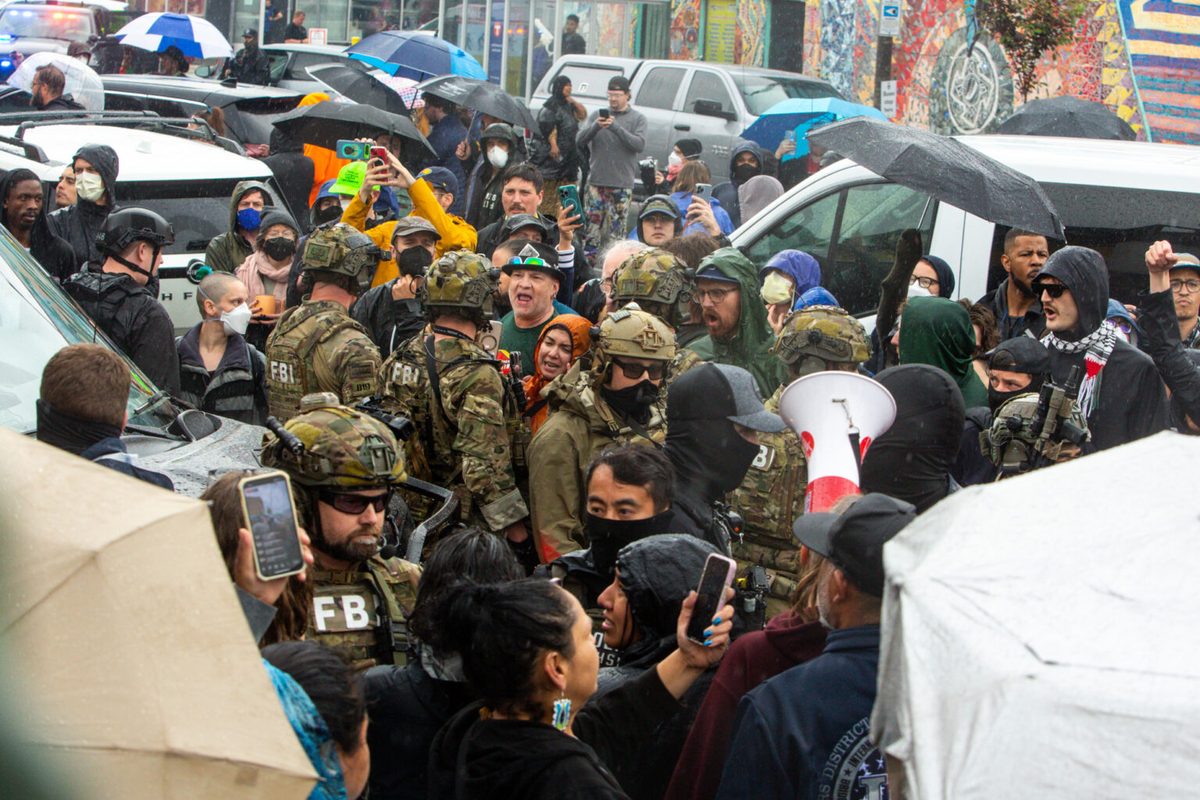
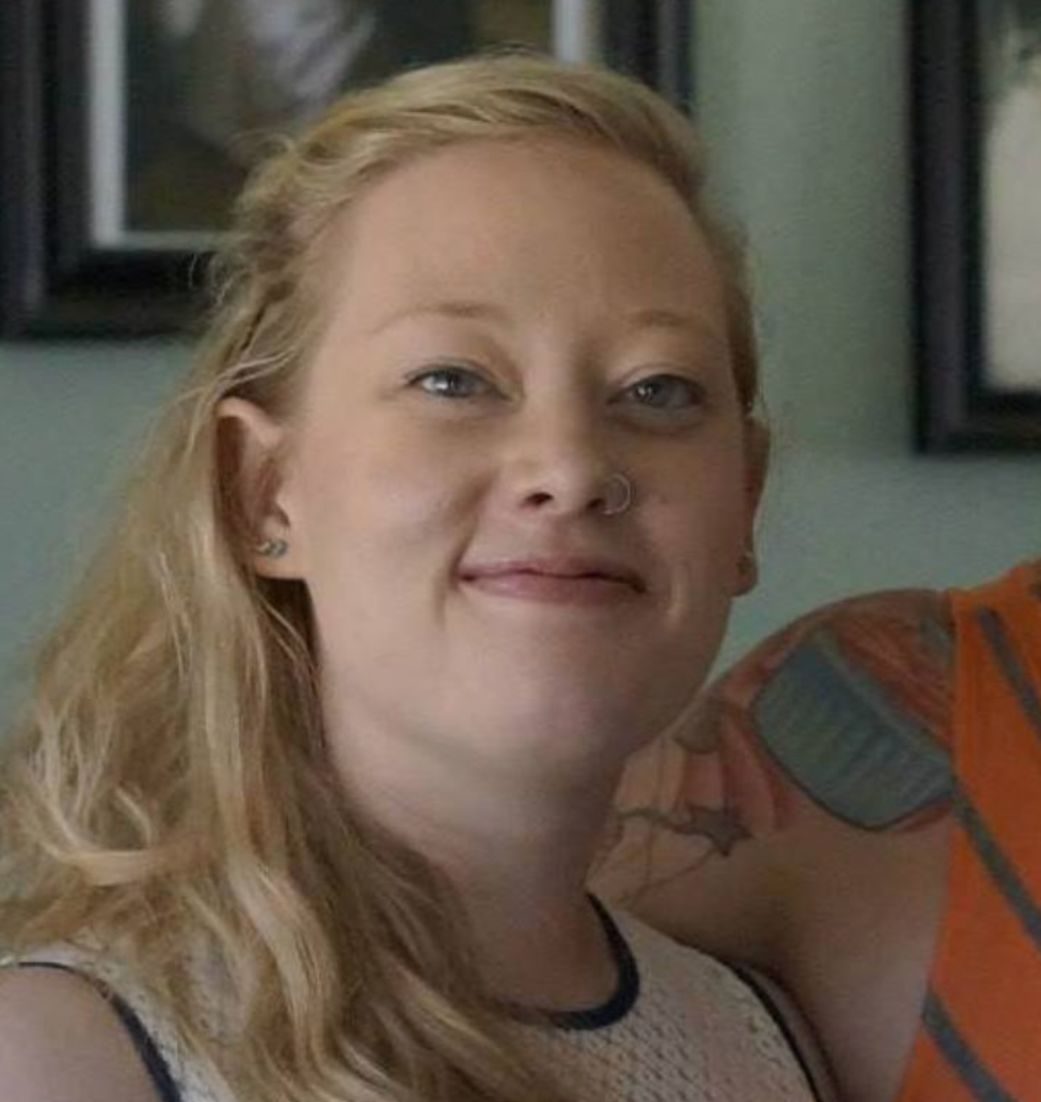
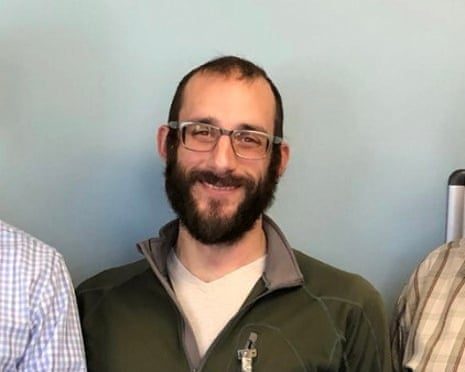
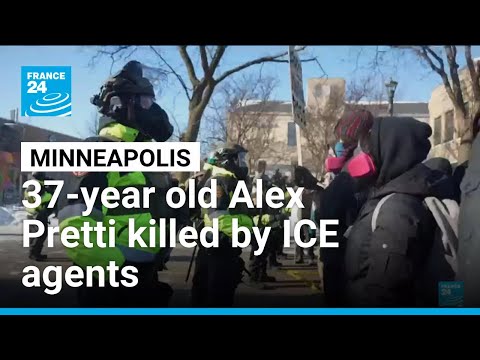
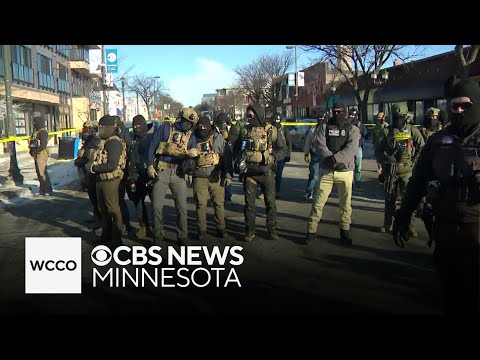
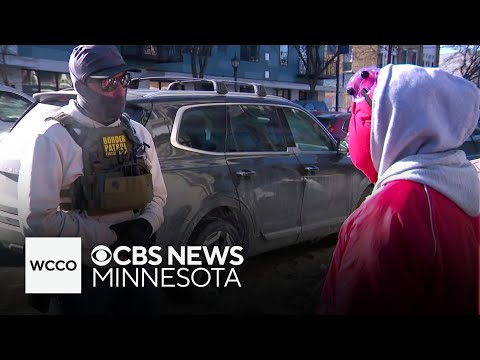
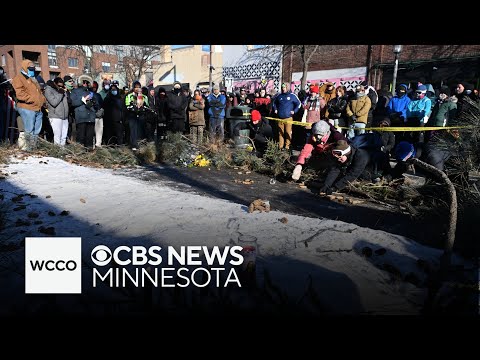
The Department of Homeland Security deployed 3,000 federal agents to Minneapolis in what it calls the largest immigration enforcement operation in U.S. history. Two months in, two U.S. citizens are dead: Renee Good, 37, shot January 7, and Alexander Pretti, 37, an ICU nurse, shot January 24; DHS claims self-defense in both cases, but witness videos contradict that.
Within 72 hours of Pretti's death, Trump removed Border Patrol Commander Gregory Bovino and sent Border Czar Tom Homan to Minneapolis. Homan arrived January 27, met with Governor Walz and Mayor Frey, and on January 29 announced that federal withdrawal depends on state cooperation — specifically, access to undocumented immigrants in jails and prisons. Bovino departed Minnesota January 28.
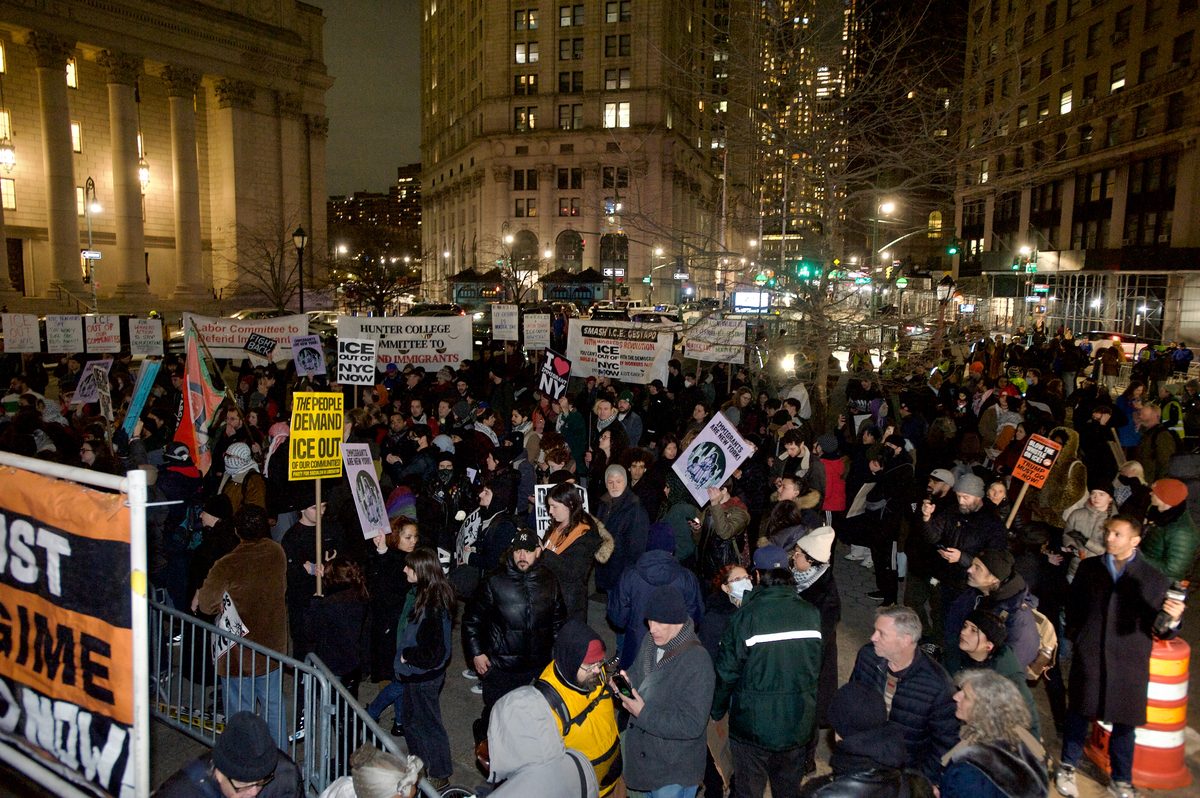
On January 30, activists held a 'National Shutdown': a nationwide day of no work, no school, no shopping. Hundreds of Minnesota businesses closed and students walked out across all 50 states. That same day, Attorney General Keith Ellison publicly denied Homan's claims of any jail-access agreement and said Homan's statements were misleading.
Hours later, the Justice Department announced a federal civil rights investigation into Pretti's death. Trump called Pretti an 'agitator and, perhaps, insurrectionist' in a 1:26 a.m. social media post after video of an earlier confrontation with agents surfaced.
Chief U.S. District Judge Patrick Schiltz documented that ICE violated 96 court orders in 74 cases in January 2026 alone. He stated that 'ICE has likely violated more court orders in January 2026 than some federal agencies have violated in their entire existence.' He threatened contempt against ICE Acting Director Todd Lyons but canceled the January 31 hearing after ICE released the detained immigrant; he warned future noncompliance may result in show cause orders.
On January 31, the Senate passed a funding deal 71-29 that separated DHS funding from the broader spending package. It extends current DHS funding for two weeks until February 13. Negotiations continue on body camera requirements, mask bans, warrant standards, and use-of-force rules.
The House remained in recess until Monday, February 3. The gap caused a brief partial government shutdown over the weekend.
The Justice Department revolt continues. FBI supervisor Tracee Mergen resigned after Washington leadership pressured her to end a civil rights investigation into the agent who killed Renee Good. She joined at least six senior prosecutors who quit in protest.
The FBI assumed lead investigative authority for the Pretti shooting on January 30, with Homeland Security Investigations in a supporting role. Deputy Attorney General Todd Blanche announced the civil rights probe, saying investigators are 'looking at everything that would shed light on what happened that day.'
Questions about this story
Free account needed to ask — your question is kept and asked for you right after sign-up. Answers are public.
No questions yet — be the first to ask.
Key Indicators
3,000
Federal agents deployed
More than 2,000 ICE officers plus hundreds of Border Patrol and DOJ agents now in Minnesota.
3,000+
Arrests (6 weeks)
DHS claims over 10,000 total arrests; 3,000 in past 6 weeks (figures disputed by immigration advocates).
3
Active federal lawsuits
Minnesota AG, Twin Cities, and ACLU have all filed constitutional challenges.
2
U.S. citizens killed
Renee Good (Jan 7) and Alexander Pretti (Jan 24), both shot by federal agents; videos contradict DHS self-defense claims.
6+
Federal prosecutors resigned
Senior prosecutors quit in protest over DOJ orders to investigate shooting victims rather than agents.
$18M
Weekly cost
Study shows Operation Metro Surge costs taxpayers $18 million per week.
50-80%
Business revenue losses
Customer-facing businesses report 50-80% revenue drops; hundreds of businesses closed Jan 30 in National Shutdown solidarity.
16
DHS shootings since July
Washington Post investigation found 16 shooting incidents by ICE/Border Patrol since July 2025; no agents charged in any case.
96
Court orders violated
Chief Judge Schiltz identified 96 court orders ICE violated in 74 cases during January 2026 alone; contempt warning remains active.
71-29
Senate vote on funding deal
Senate passed compromise separating DHS funding, extending current levels to Feb 13 while negotiating ICE reforms.
Feb 13
New DHS funding deadline
Senate compromise extends DHS funding two weeks while negotiations continue on body cameras, warrants, use-of-force rules.
Images from Openverse under Creative Commons licenses.
Videos from YouTube.
Voices
Curated perspectives — historical figures and your fellow readers.
George Orwell
(1903-1950) ·Modernist · satire
Fictional AI pastiche — not real quote.
"They've discovered that the swiftest way to turn citizens into enemies of the state is to shoot them first and declare self-defense after. Meanwhile, the investigators who insist on investigating are themselves investigated, and those who demand evidence of conspiracy become the conspiracy. One notes that eighteen million per week buys rather a lot of Newspeak, though apparently not enough to make the bodies disappear from view."
100% found this insightful
James Baldwin
(1924-1987) ·Civil Rights · politics
Fictional AI pastiche — not real quote.
"America has always preferred the fiction of self-defense to the reality of its own cruelty—and it will deploy three thousand agents to defend that fiction before it will examine the mirror it has spent centuries refusing to look into. The bodies pile up, the investigations vanish, and still we pretend not to know what we are witnessing."
100% found this insightful
Ever wondered what historical figures would say about today's headlines?
Sign up to generate historical perspectives on this story.
76 events
Latest: January 31st, 2026 · 8 months ago
Showing 8 of 76
JK to step
Tap a bar to jump to that date
Jump to
January 2026
Senate Passes Funding Deal 71-29, Separates DHS Funding Through February 13
LatestPolitical
Senate passes legislation funding most federal departments through September but extending DHS funding only two weeks to February 13. Deal allows Democrats to negotiate body camera mandates, mask bans, warrant requirements, and use-of-force standards for ICE/CBP agents. House in recess until Monday, causing brief partial shutdown over weekend.
Brief Partial Government Shutdown Begins as House Remains in Recess
Political
Government partially shuts down early Saturday after Senate passes funding deal but House remains in recess until Monday, February 3. Shutdown expected to be brief as Speaker Mike Johnson plans Monday vote on Senate-passed compromise.
Thousands Protest at 'ICE Out' March; Bruce Springsteen Performs Benefit Concert
Political
Second weekend of major protests in Minneapolis following January 30 National Shutdown. Bruce Springsteen joins Tom Morello and others for benefit concert at First Avenue raising funds for families of Alex Pretti and Renee Good. Vigils and demonstrations continue across Minnesota demanding end to Operation Metro Surge.
National Shutdown: Nationwide Anti-ICE Strike and Economic Boycott
Political
Activists across United States stage 'National Shutdown' calling for no work, no school, no shopping in protest of Operation Metro Surge. Organized by coalition including University of Minnesota labor unions, Black Student Union, and endorsed by Harvard, MIT, CAIR, and local politicians. Movement spans Minneapolis to Cleveland to New York City and Los Angeles.
National Shutdown: Nationwide Anti-ICE Economic Boycott and Protests
Political
Activists stage nationwide 'day of no work, no school, no shopping' protesting Operation Metro Surge. Hundreds of Minnesota businesses close; schools in Tucson and other cities cancel classes. Actors Pedro Pascal and Hannah Einbinder, rapper Macklemore amplify the movement. University of Minnesota Student Unions organize second general strike. Electronic Frontier Foundation closes offices in solidarity.
National Shutdown Protests Execute Nationwide
Political
Student walkouts, business closures, and protests occur in all 50 states including New York City, Los Angeles, Boston, Seattle, Cleveland, Atlanta, Chicago, Philadelphia, and Tucson. Actors Pedro Pascal and Hannah Einbinder, rapper Macklemore amplify movement. Hundreds of Minnesota businesses close; schools in multiple cities cancel classes or see student walkouts.
Senate Reaches Compromise Deal to Avert Immediate Shutdown
Political
Senate agrees to remove DHS funding from six-bill spending package, extending DHS funding at current levels for two weeks while negotiations continue on immigration enforcement reforms. Democrats demand body cameras, mask bans, warrant requirements, and uniform use-of-force policies. Deal faces obstacles from Sen. Lindsey Graham and must pass House, making brief partial shutdown still possible.
Multiple Investigations Continue into Pretti Shooting, No Charges Filed
Legal
Homeland Security Investigations, CBP Office of Professional Responsibility, and DHS Inspector General continue investigating Pretti shooting. Federal investigators have no documented chain of custody for Pretti's handgun. Preliminary DHS report to Congress makes no mention of Pretti attacking officers or threatening them with weapon, contradicting administration's public claims. Policing experts state tactics 'probably violate modern policing guidelines.'
FBI Takes Lead Role in Pretti Shooting Investigation
Legal
FBI assumes primary investigative authority for Alex Pretti shooting, with Homeland Security Investigations now in supporting role. Previously DHS had stated Homeland Security Investigations was leading with FBI assisting. Investigation continues to examine body camera footage and evidence contradicting federal claims about the shooting.
Trump Calls Pretti 'Agitator and, Perhaps, Insurrectionist' in Overnight Post
Political
President Trump posts on Truth Social at 1:26 a.m., calling Alex Pretti an 'agitator and, perhaps, insurrectionist' after video emerges of January 13 confrontation where Pretti shouted at, spat at, and kicked agents' vehicle. Post contradicts Trump's earlier calls to 'de-escalate' and description of Pretti's death as 'very unfortunate.'
DOJ Opens Federal Civil Rights Investigation into Pretti Death
Legal
Deputy Attorney General Todd Blanche announces Justice Department has opened federal civil rights investigation into Alex Pretti shooting. Blanche states investigators are 'looking at everything that would shed light on what happened that day and in the days and weeks leading up to what happened.' Investigation runs parallel to FBI criminal probe.
FBI Assumes Lead Role in Pretti Shooting Investigation
Legal
Department of Homeland Security confirms FBI will lead federal probe into Alex Pretti shooting, with Homeland Security Investigations in supporting role. Represents shift from earlier announcement that HSI would lead investigation. FBI taking primary authority follows pattern of civil rights investigations in officer-involved shootings.
Video Emerges of Pretti's January 13 Confrontation with Federal Agents
Political
CBS News publishes video showing Alex Pretti confronting federal immigration officers on January 13, 2026—11 days before his fatal shooting. Video shows Pretti shouting at officers, spitting at them, and kicking rear of their vehicle as it pulls away. Family confirms man in video is Pretti. Trump cites video as justification for calling Pretti 'agitator and, perhaps, insurrectionist.'
AG Ellison Publicly Denies Homan's Jail Agreement Claims
Political
Minnesota Attorney General Keith Ellison issues statement flatly denying Border Czar Tom Homan's claims that they reached agreement on county jails notifying ICE of release dates. Ellison states: 'I did not make, and could not have made, any agreement with him about how sheriffs share with ICE information about people in their county jails.' Dispute undermines Homan's stated basis for drawdown plan.
Senate Compromise Deal Separates DHS Funding, Extends to February 13
Political
Senate reaches compromise to separate DHS funding from six-bill spending package, extending current DHS funding for two weeks until February 13 while negotiations continue. Democrats secured shorter timeframe (Republicans sought six weeks) and will negotiate on three demands: end roving patrols and tighten warrant rules, create uniform code of conduct for federal agents, and implement 'masks off, body cameras on' policy. Five other appropriations bills funded through September 30, averting immediate shutdown.
Homan Announces Drawdown Plan Contingent on Local Cooperation
Political
Border Czar Tom Homan holds first press conference in Minneapolis, announcing federal agents working on 'drawdown plan' to reduce 3,000+ agent presence, but says withdrawal depends on cooperation from state and local officials. Says he met with Gov. Walz, AG Ellison, and local sheriffs, claiming Ellison agreed to notify ICE when jails release 'violent illegal aliens.' Homan vows to stay 'until the problem is gone' and conduct only 'targeted' enforcement operations.
Judge Reveals ICE Violated 96 Court Orders in 74 Cases
Legal
After canceling contempt hearing following Tobay Robles's release, Chief Judge Schiltz identifies 96 court orders ICE violated in 74 cases during January 2026 alone. Judge states 'ICE has likely violated more court orders in January 2026 than some federal agencies have violated in their entire existence.'
Federal Investigators Have No Chain of Custody for Pretti's Firearm
Political
Investigation reveals federal investigators have no documented chain of custody for Alex Pretti's handgun. Officials acknowledge the firearm was placed on the seat of a vehicle rather than sealed in required plastic evidence bag, raising serious questions about evidence handling and investigation integrity.
National Shutdown Gains Endorsements from Major Organizations
Political
January 30 National Shutdown gains endorsements from student organizations at Harvard and MIT, Council on American-Islamic Relations (CAIR), Boston Education Justice Alliance, LA Tenants Union, and local politicians including Assemblymember Isaac Bryan (D-Los Angeles) and State Senator Sasha Renee Perez (D-Pasadena). Movement spans from Minneapolis to Cleveland to New York City.
ICE Contempt Hearing Canceled After Detainee Release
Legal
Chief Judge Schiltz cancels January 31 contempt hearing for ICE Director Todd Lyons after agency releases Juan Tobay Robles from Texas facility. Despite cancellation, judge issues detailed finding that ICE violated 96 court orders across 74 cases during January 2026 alone, warning 'future noncompliance with court orders may result in future show cause orders' requiring personal appearances of Lyons or other officials.
Senate votes 45-55 to block six-bill funding package, with eight Republicans joining all Democrats. Senate separates DHS funding into two-week continuing resolution while demanding new restrictions on federal immigration enforcement: body cameras, mask bans, warrant requirements, use-of-force rules. Partial government shutdown likely past January 30 deadline as House remains in recess until Monday.
Judge Cancels Contempt Hearing, Documents 96 ICE Court Order Violations
Legal
Chief Judge Schiltz cancels January 31 contempt hearing for ICE Director Todd Lyons after agency releases Juan Tobay Robles from Texas facility. Judge issues detailed finding that ICE violated 96 court orders in 74 cases during January 2026 alone, stating 'ICE has likely violated more court orders in January 2026 than some federal agencies have violated in their entire existence.' Warns 'future noncompliance may result in future show cause orders' requiring personal appearances of Lyons or other officials.
Homan Announces Conditional Drawdown Plan: Federal Withdrawal Depends on State Cooperation
Political
Border Czar Tom Homan holds first Minnesota press conference, announcing federal agents working on 'drawdown plan' contingent on cooperation from Gov. Walz and AG Ellison. Says withdrawal depends on access to undocumented immigrants in jails and prisons: 'More agents in the jail means less agents in the street.' Vows to stay 'until the problem is gone' and conduct only 'targeted' enforcement. Mayor Frey responds: 'I'll believe it when I see it.'
Gregory Bovino Departs Minnesota as Homan Takes Command
Political
Border Patrol Commander Gregory Bovino and some Border Patrol agents departed Minnesota, as planned. Tom Homan officially took over command of Operation Metro Surge after arriving January 27 and meeting with Gov. Walz and Mayor Frey. Bovino expected to return to California's El Centro sector.
Senators Smith and Klobuchar Deliver Senate Floor Speeches Condemning Operation
Political
Sen. Tina Smith and Sen. Amy Klobuchar deliver speeches on Senate floor about Operation Metro Surge at approximately 3 p.m. CT. Smith says she's 'imploring colleagues (regardless of party) to use our power to rein in ICE's lawlessness.' Both senators announce opposition to ICE funding bill and call for 'full and transparent investigation with state officials.'
Gov. Walz Visits Alex Pretti Memorial Site
Political
Gov. Tim Walz and his wife Gwen visit memorial site for Alex Pretti in Minneapolis Wednesday morning, paying respects to the 37-year-old ICU nurse fatally shot by Border Patrol agents January 24.
DHS Report: Two Agents Fired Weapons, No Mention of Pretti Reaching for Gun
Political
DHS report to Congress confirms two Border Patrol agents discharged firearms during Alex Pretti shooting—one Glock 19 and one Glock 47—approximately five seconds after officer yelled 'He's got a gun!' Report makes no mention of Pretti attempting to reach for his weapon, contradicting administration's public claims he threatened agents. Multiple civilian videos show Pretti was disarmed by law enforcement just before first shot.
Two Border Patrol Agents Placed on Administrative Leave After Pretti Shooting
Political
DHS confirms two Customs and Border Protection agents who fired weapons during Alex Pretti shooting placed on administrative leave immediately after incident, standard procedure. Initial confusion arose when Border Patrol Commander Bovino said over weekend agents were still working 'in other locations for their safety,' but DHS later clarified leave status. Homeland Security Investigations and FBI leading probe; CBP conducting internal review.
Senate Democrats Threaten to Block DHS Funding Over Minnesota Shootings
Political
Senators Tina Smith and Amy Klobuchar deliver Senate floor speeches announcing opposition to Department of Homeland Security funding bill over Alex Pretti and Renee Good killings. Smith says 'Not voting to fund ICE is a great place for us to start'; both call for 'full and transparent investigation.' Klobuchar cites ICE killing 'two constituents,' taking '2-year-old from mother's arms,' and detaining 'elderly Hmong man in his underwear' before discovering wrong person. Six-bill government funding package at stake with partial shutdown looming Friday midnight.
ICE Agents Attempt Warrantless Entry to Ecuador Consulate in Minneapolis
Incident
Video posted to social media shows ICE agents attempting to enter Ecuadorian Consulate on Central Avenue in Northeast Minneapolis, allegedly without a warrant. Ecuador files formal diplomatic protest over the incident. Violation of consular immunity raises international law concerns.
Student Absences Spike 417% Among Non-English Speakers During ICE Operation Peak
Community Response
Minneapolis schools report during two-week period in January when ICE enforcement activity highest, excused absences increased 81% among all students but 417% among students whose first language is not English. Data demonstrates operation's chilling effect on immigrant communities' willingness to send children to school.
Activists Storm Minnesota Capitol Protesting Walz Meeting with Homan
Political
Around 200 activists storm Minnesota Capitol, angry that Governor Tim Walz met with border czar Tom Homan. Protesters demand criminal charges against agents who shot Alex Pretti and Renee Good. DFL State Sen. Doron Clark contradicts Trump's de-escalation claims, stating 'We've seen ICE activities up and down Central Avenue.'
Washington Post: 16 DHS Shootings Since July, No Charges Filed
Political
Washington Post investigation reveals DHS officers fired shots 16 times during enforcement operations since July 2025. In each case, Trump administration declared actions justified before investigations completed. No federal agents charged with crimes in any incident. Police experts reviewing cases told reporters nearly every officer acted outside deadly-force guidelines accepted by most U.S. law enforcement.
Rep. Ilhan Omar Attacked During Minneapolis Town Hall
Incident
Rep. Ilhan Omar was sprayed with an unknown liquid by Anthony Kazmierczak, 55, who charged the stage during a Minneapolis town hall. Kazmierczak was arrested on suspicion of third-degree assault. Omar was uninjured and resumed the event. The attack occurred shortly after Omar called for abolishing ICE, amid tensions over Operation Metro Surge.
Chief Federal Judge Orders ICE Director to Appear, Threatens Contempt
Legal
Chief U.S. District Judge Patrick Schiltz ordered ICE Acting Director Todd Lyons to personally appear in court January 31 to explain why he should not be held in contempt. Schiltz accused ICE of failing to comply with 'dozens of court orders' on bond hearings for detainees, including an Ecuadorian man who remained detained despite January 14 court order for bond hearing within seven days. Judge wrote 'The Court's patience is at an end,' calling the order 'extraordinary' but necessary after 'lesser measures have been tried and failed.' The detainee was released January 27.
Tom Homan Meets with Minnesota Officials, No Policy Changes Announced
Political
Border Czar Tom Homan met with Gov. Tim Walz and Mayor Jacob Frey on his first full day commanding Minnesota operations. Walz reiterated need for impartial investigations into federal shootings and reducing agent numbers. Frey told Homan Minneapolis would not change sanctuary policies in exchange for ICE departure. No substantive policy changes announced. Homan described as 'tough but fair' by White House.
National Shutdown Protest Announced for January 30
Political
Coalition of University of Minnesota labor unions and student organizations announced January 30, 2026 'National Shutdown'—expansion of January 23 Minnesota general strike into nationwide protest against ICE operations. Coalition includes UMN Graduate Labor Union, AFSCME Local 3800, Black Student Union, and UMN Student Government. Organized in response to Alex Pretti killing and two fatal shootings of U.S. citizens. Businesses and organizations across multiple cities pledging to close in solidarity.
Customer-facing businesses in Minneapolis report revenue decreases of 50-80% due to Operation Metro Surge, with customers avoiding public spaces. Many Latin businesses in northeast Minneapolis closed due to ICE presence. Restaurants like Tejaban, Michoacana Ice Cream and Burgers, and Somali restaurant Sanag reporting severe losses. Over 700 businesses closed January 23 in solidarity with general strike.
ICE Releases Detainee After Contempt Threat, Lyons Hearing Likely Canceled
Legal
Juan Hugo Tobay Robles released from ICE custody in Texas after Chief Judge Schiltz threatened to hold ICE Acting Director Todd Lyons in contempt. Tobay Robles, an Ecuadorian man detained January 6, was subject to January 14 court order requiring bond hearing within seven days. Release came hours after judge's Monday order requiring Lyons to appear in court Friday to show cause why he shouldn't be held in contempt. Judge indicated if detainee released, hearing would be canceled and Lyons would not need to appear.
NPR Investigation: Internal Review Contradicts White House Pretti Narrative
Political
NPR obtains preliminary internal DHS assessment of Pretti shooting that contradicts administration's public statements. Assessment makes no mention of Pretti attacking officers or threatening them with weapon, as Noem and White House officials claimed. Document appears to match witness video and testimony showing Pretti filming with phone, not brandishing gun. Contradicts Noem's claim Pretti engaged in 'domestic terrorism' and Miller's description of him as 'would-be assassin.'
Trump Announces Tom Homan Replacing Bovino as Minnesota Operation Chief
Political
President Trump announces Border Czar Tom Homan will take direct control of Minneapolis-St. Paul ICE operations, replacing Border Patrol Commander Gregory Bovino. Trump says Homan will report directly to him and be 'tough but fair.' Bovino, who falsely claimed Alex Pretti intended to 'massacre' agents, expected to leave Minnesota January 28. White House distances itself from inflammatory statements by Noem and Bovino about Pretti shooting.
Federal Judge Hears Arguments, Declines Immediate Ruling on State Lawsuit
Legal
U.S. District Judge Katherine Menendez hears arguments on Minnesota's request for temporary restraining order against Operation Metro Surge. Judge skeptical of both DOJ rationale for deployment and state's legal arguments. Menendez questions AG Pam Bondi's letter stating 'Minnesota, your day of retribution is here,' saying it 'strongly suggests if the state does three things... then this will end.' Judge says she will take time 'to do everything I can to get it right,' orders supplemental briefing. No immediate ruling.
Court Orders DHS to Preserve All Evidence in Pretti Shooting
Legal
Judge Eric C. Tostrud approves temporary restraining order in lawsuit filed by Hennepin County and Minnesota Bureau of Criminal Apprehension, ordering all evidence related to Pretti shooting be preserved. DHS confirms Border Patrol agents wore body cameras capturing multiple angles of shooting. Trump administration lawyer assures judge footage is preserved but stops short of promising to share with state investigators. Minnesota AG lawyer cites 'serious irregularities' in federal evidence handling, including denying local police access to crime scene.
Republican State Rep. Nolan West: Operation Metro Surge 'Must End'
Political
Republican State Representative Nolan West breaks with party, posting on social media: 'It's clear that operation Metro Surge is causing more harm than good' and must end. West supports refining deportation focus to criminals rather than mass rapid removals. Statement comes as growing number of Republicans, including Trump allies and Sen. Ted Cruz, criticize administration's inflammatory rhetoric about shootings and question agents' tactics.
Sen. Ted Cruz: Trump Administration Should Be 'More Measured' on Shootings
Political
Republican Senator Ted Cruz says on his podcast that Trump administration should be 'more measured' in describing Pretti killing and other incidents. 'Escalating the rhetoric doesn't help, and it actually loses credibility,' Cruz says. 'I would encourage the administration to be more measured, to recognize the tragedy and to say, we don't want anyone, anyone's lives, to be lost.' Criticism comes as Republicans question officials' rush to justify shootings before investigations complete.
Two Women Charged with Assaulting Border Patrol Agents After Pretti Shooting
Legal
Federal prosecutors charged Claire Louise Feng, 27, of St. Paul, and Emily Duchateau Baierl, 37, of Minneapolis, with assault after allegedly biting fingers of Border Patrol agents in moments after Alex Pretti's fatal shooting. Feng allegedly bit agent's finger tip off while resisting arrest; Baierl bit agent's glove-covered middle finger after throwing objects at officers. Both released on own recognizance January 26.
Dinkytown Hotel Protest Turns Violent, Federal Agents Deploy Tear Gas
Incident
Protesters gather outside Home2 Suites by Hilton in Dinkytown after social media posts allege ICE agents housed there. Demonstrators vandalize hotel, spray-paint windows, drag barricades into street, throw debris. Minnesota State Patrol and Minneapolis police work to encircle group for arrests. Federal agents arrive without coordinating with state/local authorities and deploy tear gas, flash-bang grenades, clearing crowd. At least one protester arrested; two others detained, released pending investigation.
60+ Minnesota CEOs Demand Federal-State Cooperation and De-escalation
Political
More than 60 CEOs of major Minnesota corporations including Target, Best Buy, 3M, General Mills, and UnitedHealth Group sign open letter on Minnesota Chamber of Commerce website calling for immediate de-escalation and cooperation between state, local, and federal officials. Letter follows second fatal shooting. Some Minnesota businesses report sales drops up to 80% amid enforcement operations and protests.
Border Patrol Shoots Second U.S. Citizen: ICU Nurse Alexander Pretti Killed
Incident
Border Patrol agents fatally shoot Alexander Jeffrey Pretti, 37-year-old U.S. citizen and ICU nurse at Minneapolis VA Medical Center, near 26th Street West and Nicollet Avenue. DHS claims self-defense after Pretti approached with handgun; witness videos show him holding only a phone. Third federal agent shooting this month.
100 Clergy Arrested at MSP Airport; 50,000 Rally in Subzero Temperatures
Political
Around 100 clergy members arrested at Minneapolis-St. Paul International Airport for blocking road during hymn-singing protest. Separately, organizers estimate 50,000 protesters attend 'ICE Out of Minnesota: Day of Truth and Freedom' rally in downtown Minneapolis despite temperatures of -9°F with wind chills to -35°F. Over 700 businesses statewide close in solidarity.
FBI Supervisor Tracee Mergen Resigns After Pressure to End ICE Shooting Investigation
Political
FBI supervisor Tracee Mergen, head of Public Corruption Squad in Minneapolis field office, resigns after Washington leadership pressured her to discontinue civil rights investigation into ICE agent Jonathan Ross. At least six senior prosecutors in Minneapolis U.S. attorney's office had already resigned in protest, along with five prosecutors in DOJ Civil Rights Division in Washington.
VP JD Vance Visits Minneapolis, Calls for Local Officials to 'Lower the Temperature'
Political
Vice President JD Vance travels to Minneapolis for roundtable with ICE agents and business leaders. Criticizes state and local officials for not cooperating with federal immigration enforcement, saying they are source of 'chaos.' Mayor Frey responds that pulling citizens off streets and targeting schools are not 'targeted actions.'
Three Church Protesters Arrested, Including Civil Rights Attorney
Legal
Attorney General Pam Bondi announces arrests of Nekima Levy Armstrong (civil rights attorney), Chauntyll Louisa Allen (St. Paul school board member), and William Kelly for disrupting January 19 worship service at Cities Church. Federal magistrate grants bond but government appeals; protesters remain in custody. Judge rejects prosecutors' attempt to charge journalist Don Lemon.
Study Shows Operation Costs $18 Million Per Week
Political
North Star Policy Action releases study showing Operation Metro Surge costs taxpayers $18 million weekly: $9 million for agent compensation, $4.5 million for lodging/meals, $1.6 million for detention fees. Minneapolis police overtime alone exceeded $2 million between January 8-11.
DOJ Serves Grand Jury Subpoenas to Five Minnesota Government Offices
Legal
FBI serves grand jury subpoenas to offices of Gov. Walz, AG Ellison, Mayors Frey and Her, and county attorneys Choi and Moriarty, investigating alleged conspiracy to impede federal immigration officers under 18 USC 372. Subpoena orders Minneapolis custodian of records to testify February 3.
Noem Claims Over 10,000 Total Arrests in Minneapolis
Enforcement
DHS Secretary Noem announces over 10,000 arrests of 'criminal illegal aliens' in Minneapolis, including 3,000 in the past six weeks. Immigration advocates dispute figures as 'HIGHLY inflated' and 'VERY likely false.' Rep. Ilhan Omar accuses Noem of 'lies and propaganda.'
DOJ Appeals Preliminary Injunction Restricting Federal Agents
Legal
Department of Justice files notice of appeal challenging Judge Menendez's order barring federal agents from using pepper spray, nonlethal munitions, or arresting peaceful protesters. DOJ also files memorandum calling Minnesota's lawsuit claims 'legally frivolous.'
Protesters Disrupt Church Service, DOJ Opens Investigation
Incident
30-40 protesters interrupt worship service at Cities Church in St. Paul, chanting 'ICE out' and 'Justice for Renee Good.' Protesters allege pastor David Easterwood is acting ICE field office director. DOJ Assistant Attorney General Harmeet Dhillon announces civil rights investigation into 'desecration of a house of worship.'
Weekend Protests Proceed with Minimal Violence
Political
Demonstrators in subfreezing temperatures rally at downtown Minneapolis and the Whipple Federal Building. Physical altercations erupt between opposing protest groups outside City Hall, but National Guard remains on standby and is not deployed.
DOJ Investigating Becca Good for Allegedly Impeding Federal Officers
Legal
Federal investigation into Renee Good's partner Becca Good revealed, examining whether she impeded ICE agents by shouting 'Drive, baby, drive' before the shooting. Investigation focuses on her potential ties to activist groups under December memo from AG Pam Bondi targeting those who 'assault, resist or impede federal officers.'
Judge Issues Preliminary Injunction Restricting Federal Agents
Legal
U.S. District Judge Katherine Menendez issues preliminary injunction barring ICE and federal agents from arresting, detaining, or pepper-spraying peaceful protesters and legal observers in Minnesota. The ruling prohibits retaliation against demonstrators exercising First Amendment rights.
Governor Mobilizes National Guard for Weekend Protests
Political
Gov. Tim Walz mobilizes Minnesota National Guard to support State Patrol ahead of anticipated weekend protests. Hundreds of troops placed on standby at bases, wearing reflective yellow vests to distinguish them from federal agents.
Community School Patrols Expand Across Twin Cities
Community Response
Volunteers organize street patrols around elementary and high schools using walkie-talkies, Signal group chats, and whistles to warn families of ICE enforcement activities. Some school districts cancel classes or offer online learning in response to heightened enforcement.
Gang Member Charged with Stealing FBI Rifle During Protests
Legal
Federal prosecutors charge Raul Gutierrez, 33, alleged Latin Kings gang member, with theft of government property and felon in possession of firearm. Protesters ripped open weapons locker in FBI vehicle trunk during January 14 unrest, stealing rifle, ammunition, and body armor. FBI offers $100,000 reward for information.
ACLU Files Hussen v. Noem Class-Action Lawsuit
Legal
ACLU files class-action lawsuit alleging ICE engaged in racial profiling, warrantless arrests, and unlawful detention of U.S. citizens.
Trump Threatens Insurrection Act
Political
President Trump threatens to invoke the Insurrection Act to deploy military forces if Minnesota 'doesn't obey the law.'
Federal Agents Deploy Tear Gas at Protests
Incident
Federal agents use tear gas and percussion grenades against protesters at the Bishop Henry Whipple Federal Building.
Second ICE Shooting: Venezuelan Man Wounded
Incident
ICE agent shoots a Venezuelan man in the leg in north Minneapolis during a traffic stop. Large protests erupt.
At Least Six Senior Federal Prosecutors Resign in Protest
Political
Senior prosecutors in Minneapolis U.S. attorney's office resign over DOJ pressure to investigate Renee Good and widow Becca for activist ties rather than ICE agent Jonathan Ross. Resignations include acting U.S. Attorney Joe Thompson, Harry Jacobs, Melinda Williams, Thomas Calhoun-Lopez, Ruth Schneider, and Tom Hollenhurst. Five additional prosecutors in DOJ Civil Rights Division in Washington also resign.
Federal Judge Denies Restraining Order
Legal
Judge Kate Menendez denies Minnesota's request for temporary restraining order against ICE operations.
Minnesota and Twin Cities Sue DHS
Legal
AG Keith Ellison files federal lawsuit on behalf of Minnesota, Minneapolis, and Saint Paul, alleging Operation Metro Surge violates the Constitution.
Governor Proclaims 'Renee Good Day'
Political
Minnesota Governor Tim Walz proclaims January 9 'Renee Good Day.' Family's GoFundMe closes at $1.5 million.
Renee Good Shot and Killed by ICE Agent
Incident
ICE agent Jonathan Ross fatally shoots 37-year-old U.S. citizen Renee Good in south Minneapolis. Federal officials claim self-defense; video evidence disputed.
2,000 Additional Agents Deployed
Enforcement
DHS Secretary Noem announces surge of additional agents, bringing total to approximately 3,000.
December 2025
U.S. Citizen Mubashir Hussen Detained
Incident
ICE agents detain 20-year-old Hussen while he walks to lunch in Cedar-Riverside, ignoring his citizenship claims.
November 2025
Operation Metro Surge Begins
Enforcement
DHS launches what it calls the 'largest immigration enforcement operation ever' in Minneapolis-Saint Paul.
Scenarios
1
Court Issues Injunction, Operation Scaled Back
Possible
Discussed by: ACLU attorneys, constitutional law professors quoted in Star Tribune and CNN
A federal judge grants injunctive relief in one of the pending lawsuits, ordering DHS to halt specific practices like suspicionless stops or require warrants for arrests. This would not end the operation but would force significant tactical changes and establish precedent limiting federal enforcement power.
2
Trump Invokes Insurrection Act, Military Deploys to Minnesota
Possible
Discussed by: White House officials, Homeland Security Secretary Noem, legal analysts at Washington Post and Al Jazeera
If protests escalate or state officials refuse cooperation, Trump invokes the 1807 Insurrection Act. AG Ellison immediately challenges in court. The constitutional showdown would test whether federal government can deploy military for immigration enforcement over state objections—a question courts have never directly resolved.
3
Operation Winds Down After Political Costs Mount
Possible
Discussed by: Political analysts at NBC News, MinnPost
Federal prosecutors resigning, prolonged litigation costs, sustained protests, and polling showing majority opposition to the operation's tactics create political pressure to quietly reduce agent numbers. DHS declares victory, arrests slow, and the crisis deescalates without judicial resolution.
Federal courts rule that immigration enforcement is within executive authority and deny standing or relief to plaintiffs. Operation Metro Surge becomes a model for similar deployments in other states. Constitutional questions remain unresolved at appellate level.
5
Federal Criminal Charges Against State Officials
Possible
Discussed by: Legal analysts at CBS News and Washington Post; former federal prosecutors
The grand jury investigation results in criminal indictments against Gov. Walz, AG Ellison, or Mayor Frey under 18 USC 372 for conspiring to impede federal officers. This would be unprecedented—federal prosecution of sitting state officials for criticizing and resisting federal law enforcement. The legal theory is the same statute used against January 6 Capitol rioters. Constitutional scholars would challenge whether policy statements and lawsuits constitute criminal conspiracy.
6
Third Fatal Shooting Triggers Federal Court Intervention
Possible
Discussed by: ACLU attorneys, constitutional law scholars at University of Minnesota, civil rights advocates quoted in Star Tribune
With two U.S. citizens already killed and witness videos contradicting official accounts in both cases, a third fatal shooting could force Judge Menendez or appellate court to impose emergency restrictions beyond the preliminary injunction—potentially including suspension of enforcement operations pending investigation. Internal DOJ revolt and prosecutor resignations strengthen plaintiffs' claims of civil rights violations requiring immediate judicial intervention.
7
Mass Prosecutions of Protesters Under Federal Conspiracy Charges
Possible
Discussed by: Legal analysts at Washington Post, civil liberties organizations, former federal prosecutors
Following arrests of church protesters and investigation of Becca Good under AG Bondi's 'impede federal officers' memo, DOJ could bring federal conspiracy charges against dozens of protest organizers and participants. This would parallel the grand jury investigation of state officials under 18 USC 372, creating unprecedented federal prosecution of First Amendment-protected protest activity. Could trigger Supreme Court review of limits on federal power to criminalize dissent.
8
Tom Homan De-escalation Reduces Federal Presence
Possible
Discussed by: Political analysts at Star Tribune, CNN, NPR; Minnesota state officials quoted in multiple outlets
Homan's appointment signals Trump administration pivot toward tactical de-escalation after Bovino's inflammatory rhetoric backfired. Homan, described as 'tough but fair,' could reduce agent numbers, improve coordination with state/local authorities, and avoid inflammatory public statements. If protests subside and no additional shootings occur, operation could wind down gradually while administration claims victory. Trump's phone calls with Walz and Frey, described as having 'more collaborative tone,' suggest potential for negotiated drawdown.
9
Pattern of Impunity: Systemic Failure to Hold Agents Accountable
Possible
Discussed by: Washington Post investigation, ACLU attorneys, civil rights advocates, police use-of-force experts
With 16 shooting incidents since July 2025 and no agents charged or disciplined in any case, the Pretti and Good killings may become part of established pattern rather than catalysts for change. If federal investigations again find shootings 'justified' despite contradictory video evidence, and no structural reforms are implemented, agents may continue using lethal force with impunity. Could trigger Supreme Court challenge on whether federal immigration agents are exempt from state criminal jurisdiction and constitutional use-of-force standards that apply to local police.
10
Federal Judge Holds ICE Director in Contempt, Escalating Judicial Confrontation
Possible
Discussed by: Legal analysts at Washington Post, CNN, CNBC; constitutional law scholars; former federal judges
If ICE Acting Director Todd Lyons cannot satisfactorily explain the agency's failure to comply with 'dozens' of court orders on bond hearings, Judge Schiltz could hold him in contempt—a unprecedented sanction against a sitting federal agency director. Contempt could include fines or theoretically jail time, though more likely would involve appointing a special master to oversee ICE compliance or issuing broader injunctive relief restricting operations. Could trigger constitutional crisis over whether federal courts can compel executive branch compliance during immigration enforcement.
11
January 30 National Shutdown Triggers Federal Crackdown on Organizers
Possible
Discussed by: Civil liberties organizations, labor law experts, protest organizers quoted in Newsweek and Minnesota Daily
Building on church protest arrests and investigation of Renee Good's widow under AG Bondi's 'impede federal officers' memo, DOJ could respond to January 30 National Shutdown by bringing conspiracy charges against labor union leaders and student organizers under 18 USC 372. Would parallel grand jury investigation of state officials and church protesters, creating federal prosecution of organized labor and student activism. Could trigger Supreme Court review of First Amendment limits on federal power to criminalize coordinated protest activity.
12
Senate Democrats Block DHS Funding Over Pretti Shooting
Possible
Discussed by: PBS News, Sen. Tina Smith, Sen. Amy Klobuchar quoted in Fox News live updates
Minnesota senators and other Democrats follow through on threat to vote against Department of Homeland Security funding bill over Alex Pretti killing and pattern of shootings. Could trigger partial government shutdown or force negotiations requiring independent investigations, operational changes, or restrictions on Operation Metro Surge as condition for funding. Smith and Klobuchar publicly stated January 28 they 'oppose the ICE funding bill' and call for 'full and transparent investigation.'
13
Partial Government Shutdown Over DHS Restrictions Forces White House to Negotiate
Possible
Discussed by: Congressional analysts at NPR, Washington Post; Senate Democratic leadership
With Senate Democrats blocking DHS funding and demanding body camera requirements, mask bans, and use-of-force standards, partial government shutdown extends past January 30. White House faces choice: accept new restrictions on immigration enforcement or sustain shutdown. Eight Republicans already voted with Democrats, signaling potential bipartisan coalition. Could force first-ever congressional limits on federal immigration agent tactics.
14
Ecuador Consulate Incident Triggers International Diplomatic Crisis
Possible
Discussed by: International law experts, Ecuador government officials quoted in Axios
ICE agents' alleged warrantless attempt to enter Ecuador Consulate in Minneapolis violates Vienna Convention on Consular Relations. Ecuador's formal diplomatic protest could escalate to Organization of American States complaint or International Court of Justice referral. Could trigger broader Latin American diplomatic response and complicate U.S. foreign relations across hemisphere.
Discussed by: Mayor Frey, political analysts at Star Tribune and MPR News
Homan's stated conditions for drawdown—state cooperation on jail access—may prove unacceptable to Minnesota officials committed to sanctuary policies. If Walz and Frey refuse terms, operation continues indefinitely with Homan claiming state obstruction justifies ongoing presence. Mayor Frey's response 'I'll believe it when I see it' signals skepticism about genuine de-escalation intent.
Historical Context
3 moments from history that rhyme with this story — and how they unfolded.
1 of 3
December 2007 – August 2016
Melendres v. Arpaio (2007-2016)
The ACLU and MALDEF sued Maricopa County Sheriff Joe Arpaio over immigration enforcement practices. Dr. Ralph Taylor's statistical analysis showed Latinos were stopped at disproportionate rates during 'crime suppression sweeps.' U.S. District Judge Murray Snow found Arpaio's office engaged in racial profiling and illegal detentions.
Then
Court ordered video recording of all traffic stops, appointed a monitor, and mandated training reforms. Arpaio was found in contempt for violating court orders.
Now
Established that local law enforcement immigration sweeps can violate the Fourth and Fourteenth Amendments. Arpaio lost reelection in 2016; Trump pardoned him in 2017.
Why this matters now
Hussen v. Noem makes similar claims—racial profiling, suspicionless stops, detention of citizens—against federal agents. The Melendres precedent shows courts can impose significant restrictions on enforcement practices, though federal agents may have broader authority than local sheriffs.
2 of 3
May 2008
Postville Raid (2008)
ICE deployed 900 agents to raid Agriprocessors meatpacking plant in Postville, Iowa, arresting 398 workers—at the time the largest single-site immigration raid in U.S. history. Agents reportedly handcuffed all Latino employees until status was verified. Workers were processed through mass hearings with scripted plea agreements.
Then
The ACLU documented denial of due process. 98% of those arrested were deported. The town's economy collapsed.
Now
The raid drew widespread criticism and contributed to Obama administration's shift toward workplace enforcement against employers rather than mass worker arrests.
Why this matters now
Operation Metro Surge's scale—3,000 agents, 2,500+ arrests—far exceeds Postville. Critics cite similar concerns about due process and targeting based on ethnicity rather than individual suspicion.
3 of 3
June – Fall 1954
Operation Wetback (1954)
The Eisenhower administration launched a mass deportation campaign targeting Mexican immigrants. INS agents conducted sweeps of Mexican-American neighborhoods, demanding identification from 'Mexican-looking' people, raiding homes at night, and seizing people without hearings. Estimates range from 300,000 to 1.3 million deportations.
Then
Deaths occurred during transport, including drownings when an overcrowded ship caused a riot. U.S. citizens were deported alongside undocumented immigrants. Public outcry in Mexico ended the program by fall.
Now
Unauthorized immigration resumed shortly after. The operation is now viewed as a human rights violation and cautionary example of enforcement-only approaches.
Why this matters now
Trump has repeatedly cited Operation Wetback as a model for mass deportation. Critics of Operation Metro Surge argue the racial profiling documented in Hussen v. Noem—agents targeting people who 'look Somali' or 'look Latino'—echoes the constitutional violations of 1954.