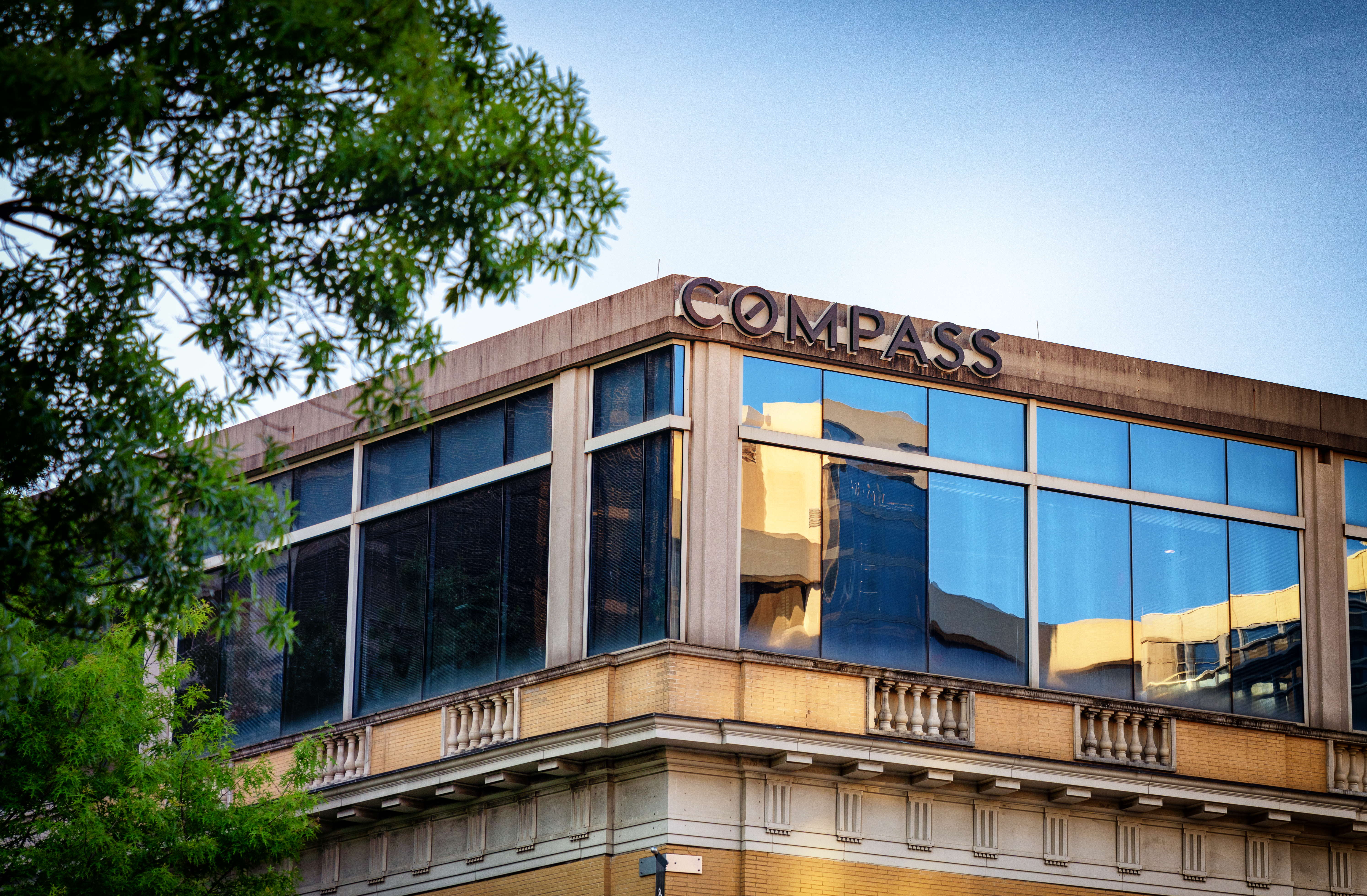
Compass and Anywhere Real Estate closed their $1.6 billion all-stock merger on January 9, 2026, creating Compass International Holdings—the world's largest residential real estate brokerage. The combined entity controls 340,000 agents across every major U.S. city and 120 countries, uniting premium brands like Coldwell Banker, Century 21, Sotheby's International Realty, and Compass under CEO Robert Reffkin. Antitrust review cleared despite senators warning about squeezing independent brokerages.
The merger arrives as the industry reels from an August 2024 settlement ending mandatory buyer-agent commission splits, forcing brokerages to rethink how agents get paid. Compass is betting that scale and technology will win—$225 million in projected cost savings and a $1.8 billion AI-powered platform. Consolidation is accelerating, and 86% of transactions still flow through fragmented small brokerages.
Questions about this story
Free account needed to ask — your question is kept and asked for you right after sign-up. Answers are public.
No questions yet — be the first to ask.
Key Indicators
340,000
Real estate agents unified
Combined workforce spanning 120 countries and every major U.S. city
$10B
Total deal value
Including $2.6 billion in Anywhere debt Compass assumed
$225M
Projected annual cost synergies
Expected savings from operational consolidation
42%
Top 10% market concentration
Largest brokerages' share of U.S. sales volume in 2024
4 months
Deal timeline
From announcement to close, far faster than expected second-half 2026 completion
12%
Stock surge on approval
Compass shares jumped when shareholders voted yes on January 7
Images from Openverse under Creative Commons licenses.
Voices
Curated perspectives — historical figures and your fellow readers.
James Baldwin
(1924-1987) ·Civil Rights · politics
Fictional AI pastiche — not real quote.
"One wonders whether the American genius for concentration—of wealth, of power, of property—will ever be matched by an equal genius for distributing any of it. They promise us technology and efficiency, but I have lived long enough to know that when men speak of "scale," they are usually describing the distance they wish to place between themselves and accountability."
0% found this insightful
Ever wondered what historical figures would say about today's headlines?
Sign up to generate historical perspectives on this story.
16 events
Latest: January 9th, 2026 · 9 months ago
Showing 8 of 16
JK to step
Tap a bar to jump to that date
Jump to
January 2026
Compass-Anywhere Merger Closes
LatestCompletion
Deal officially closes, forming Compass International Holdings. Robert Reffkin becomes CEO of combined entity. Compass stock rises 7.79% on completion news.
Reffkin Issues 'No Mandate Pledge' to 340,000 Agents
Corporate
In first message as CEO of Compass International Holdings, Reffkin pledges to preserve all brand identities and promises 'we will never impose one-size-fits-all' rules, addressing agent concerns about forced technology adoption.
Stock Surges 7.79% on Merger Completion
Market
Compass shares close at $12.84, up 7.79% on merger completion with volume reaching 47.1 million shares—227% above three-month average. Stock had jumped 12% earlier in week on shareholder approval.
Compass Prices $850M Convertible Notes to Finance Deal
Financial
Compass prices $850 million in convertible senior notes with 0.25% coupon and initial conversion price near $15.98 per share, reducing cash burn from stock-only structure.
Douglas Elliman Reports Agent Recruitment Surge
Competitive
Rival brokerage Douglas Elliman announces 'unprecedented inbound interest from agents seeking stability and independence' as Compass-Anywhere merger creates uncertainty among legacy Anywhere agents.
Shareholders Overwhelmingly Approve Deal
Corporate
99% of Compass votes and 72.4% of Anywhere shares approve merger. Compass stock jumps 12% to four-year high at $12.15.
Antitrust Waiting Period Expires
Regulatory
Hart-Scott-Rodino Act waiting period ends without DOJ or FTC challenging merger. Deal clears final regulatory hurdle despite Senate pressure.
December 2025
Senators Warren, Wyden Urge Antitrust Block
Political
Democratic senators write DOJ and FTC warning merger would entrench anticompetitive behavior and squeeze independent brokerages unable to compete with mega-platforms.
September 2025
Compass Announces $1.6B Anywhere Deal
Announcement
Compass and Anywhere announce all-stock merger creating world's largest residential brokerage with 340,000 agents. Deal projects $225M annual cost synergies.
August 2024
Commission Rule Changes Take Effect
Regulatory
Sellers no longer required to advertise buyer-agent compensation on MLS. Buyers must sign written agreements before home tours. Industry enters uncertain transition.
March 2024
NAR Settles for $418M, Changes Rules
Settlement
NAR agrees to pay $418 million and ban MLS commission offers, require written buyer agreements. Changes fundamentally reshape agent compensation model.
October 2023
NAR Found Liable in Commission Conspiracy
Legal
Federal jury in Missouri convicts NAR and brokerages of inflating commissions through cooperative compensation rules that incentivized steering buyers to higher-fee homes.
June 2022
Realogy Rebrands as Anywhere
Corporate
CEO Ryan Schneider rebrands Realogy to Anywhere Real Estate, signaling shift toward digital, integrated home-buying experience amid mounting competitive pressure.
2012
Compass Founded on Tech-First Model
Company Formation
Robert Reffkin and Ori Allon co-found Compass, aiming to replace traditional brokerage model with AI-powered platform. Would ultimately invest $1.8 billion in technology.
2004
Realogy Acquires Sotheby's Brand
Acquisition
Realogy acquires Sotheby's International Realty brand, adding luxury segment to Coldwell Banker and Century 21 portfolio built through decade of consolidation.
1997
NRT Launches Consolidation Wave
Historical
Cendant's NRT joint venture begins aggressive brokerage acquisition strategy, buying the nation's third and fourth largest brokerages and establishing consolidation playbook.
Scenarios
1
Technology Wins: Compass Platform Drives Agent Retention and Market Dominance
Possible
Discussed by: Investment analysts at Benzinga and financial coverage highlighting execution risk
Compass successfully migrates Anywhere's 340,000 agents onto the Compass One platform over 18 months, delivering the promised $225 million in cost synergies. Agents embrace the integrated AI tools over fragmented third-party software, driving productivity gains that justify the premium brand positioning. The combined scale allows Compass to out-invest smaller competitors in technology, creating a flywheel where better tools attract top-producing agents, which generates more data to improve AI, which attracts more agents. Independent brokerages lose talent and market share, accelerating consolidation. Commission rates stabilize as buyers accept paying for integrated digital experiences.
Discussed by: Industry analysts warning about cultural integration challenges and agent retention as critical metric
Anywhere's agents resist the Compass technology mandate, viewing it as corporate overreach that slows them down rather than helps. Top producers at Coldwell Banker and Century 21—accustomed to choosing their own tools and operating independently—defect to high-split competitors like Douglas Elliman or eXp Realty that offer more autonomy. The cultural clash between Compass's tech-startup ethos and Anywhere's traditional franchise model creates friction. Compass fails to capture projected synergies as revenue drops with agent departures. The company is forced to back off integration plans, leaving it operating duplicate systems at higher cost than before the merger.
Discussed by: Senators Warren and Wyden, consumer advocates, and legal analysts tracking DOJ merger policy
A new antitrust case challenges brokerage consolidation, arguing that mega-platforms control MLS access and property data in ways that harm consumers and exclude competitors. DOJ or FTC opens an investigation into Compass International Holdings' market power, potentially seeking divestiture of overlapping brands or imposing conduct remedies that limit platform integration. States with high Compass market share file parallel actions. Regulatory uncertainty freezes further consolidation and forces Compass to operate brands separately, eliminating the strategic rationale for the merger. The industry fragments again as uncertainty drives agents to smaller, more nimble competitors.
4
The Middle Muddle: Partial Integration Delivers Modest Results
Likely
Discussed by: Real estate industry observers tracking brokerage consolidation trends and market performance
Compass achieves some cost savings through back-office consolidation but struggles with technology integration. About half of Anywhere agents adopt Compass tools; the other half continue using legacy systems. The company captures $100-150 million in synergies rather than the projected $225 million. Market share remains relatively stable, with some agent defections offset by recruitment wins. Independent brokerages survive in local markets by offering personalized service and lower splits. Commission rates drift modestly lower as transparency increases but no dramatic transformation occurs. Compass operates as a large, stable but unremarkable conglomerate—profitable but not the dominant force Reffkin envisioned.
5
The Brand Preservation Paradox: Compass Operates as Holding Company Without Integration
Possible
Discussed by: Real estate industry analysts tracking post-merger agent reactions and Reffkin's 'No Mandate Pledge'
Reffkin's 'No Mandate Pledge' and brand preservation commitment forces Compass to operate as a loose holding company rather than integrated platform. Legacy Anywhere brands—Coldwell Banker, Century 21, Sotheby's—continue using separate technology systems to avoid agent defections. The company captures back-office cost savings through shared HR and accounting but fails to migrate agents to the Compass One platform. Without technology consolidation, synergies fall short of projections and Compass becomes a traditional franchise operator rather than the tech-powered disruptor Reffkin envisioned. The merger delivers stability but not transformation.
Historical Context
3 moments from history that rhyme with this story — and how they unfolded.
1 of 3
1997-2006
Cendant's NRT Consolidation Wave (1997-2006)
Cendant created NRT through a joint venture with Apollo Management and embarked on the most aggressive brokerage consolidation in industry history. From 1997-1998, NRT completed multiple acquisitions entering markets in California, Cincinnati, Atlanta, Baltimore, Boston, Denver, Minnesota, and Washington D.C. In 2002, Cendant bought out Apollo and acquired 100% of NRT, then purchased 111 additional brokerage companies through 2006. This built a portfolio including Coldwell Banker, Century 21, ERA, and Sotheby's International Realty—the same brands now part of the Compass merger.
Then
Created the dominant residential real estate platform with massive market share in major metropolitan areas and national brand recognition.
Now
Cendant spun off the real estate division as Realogy in 2006 carrying heavy debt. The business model proved stable but not transformative, ultimately leading to Anywhere's 2026 sale to Compass.
Why this matters now
The Compass-Anywhere merger reunites many of the same brands Cendant assembled 20 years ago. The question is whether technology and current market conditions will produce different results than last era's consolidation.
2 of 3
2006-2025
The Redfin Experiment (2006-2025)
Redfin launched in 2006 as the original real estate disruptor, featuring salaried agents, discounted commissions as low as 1%, and integrated technology meant to make traditional brokerages obsolete. The company went public and positioned itself as a tech platform solving real estate's inefficiencies. Despite two decades of operation and significant investment, Redfin struggled with profitability and accumulated debt. Rocket Mortgage acquired Redfin in 2025 for roughly the same valuation as its 2017 IPO—a flat outcome after years of losses.
Then
Changed consumer expectations around transparency and commission rates, forcing traditional brokerages to modernize digital offerings.
Now
Failed to achieve sustainable profitability, demonstrating that technology alone cannot overcome real estate's relationship-driven, hyper-local, low-frequency transaction model.
Why this matters now
Compass is making a similar bet that technology beats traditional models, but with a different approach: premium positioning and agent empowerment rather than discounting. Redfin's struggles suggest tech platforms face structural challenges in real estate.
3 of 3
2023-2024
NAR Commission Lawsuit and Settlement (2023-2024)
A federal jury in Missouri convicted the National Association of Realtors and several brokerages of conspiring to inflate commissions through cooperative compensation rules. The October 2023 verdict found that NAR's policies requiring sellers to advertise buyer-agent compensation on MLS incentivized steering clients to higher-fee properties. NAR settled in March 2024 for $418 million and agreed to ban MLS commission offers and require written buyer agreements. The changes took effect August 17, 2024, receiving final court approval in November 2024.
Then
Buyer-agent commissions briefly dipped from 2.6% to 2.5% but rebounded to 2.67% by early 2025, with the expected industry-wide collapse failing to materialize.
Now
Created fundamental uncertainty about agent compensation models, accelerating consolidation as brokerages seek scale and technology to compete in the new environment.
Why this matters now
The Compass-Anywhere merger occurs in the immediate aftermath of this settlement. Both companies are betting that size and technology matter more in a world where commission structures are transparent and negotiable rather than standardized.