


Pull to refresh
Logo
Princeton researcher proposes Recurrent Looped Transformer for deeper AI reasoning

Princeton researcher proposes Recurrent Looped Transformer for deeper AI reasoning

New Capabilities

Architecture spec pairs a causal encoder with a recurrent decoder; paper reports no benchmark results

Yesterday: Zhang unveils RLT publicly on X

Overview

Updated Yesterday

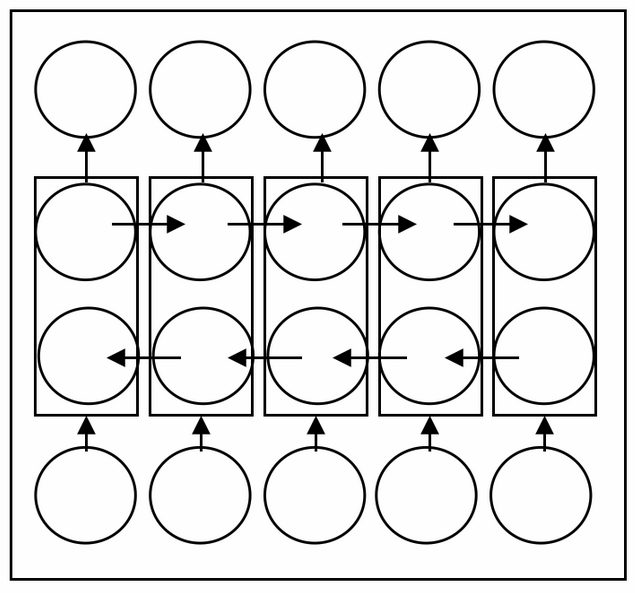
Yifan Zhang, a Princeton researcher, posted a technical report September 12 describing the Recurrent Looped Transformer (RLT). It pairs a causal encoder with a recurrent decoder that carries its hidden state and sliding-window attention cache across every token.

Each token runs 96 logical blocks; after t tokens, the temporal path has traversed 48t decoder blocks. The paper reports no benchmarks — it's a specification, not a tested system. If latent recurrence works, models could reason deeper without spending more output tokens, cutting inference costs.

Why it matters

If latent recurrence works, AI models can reason deeper without generating extra tokens, shrinking inference cost — the industry's biggest expense.

Questions about this story

Free account needed to ask — your question is kept and asked for you right after sign-up. Answers are public.

No questions yet — be the first to ask.

Key Indicators

96
logical blocks executed per token
48 encoder and 48 decoder blocks per token, with attention and FFN weights shared across stages.
48
decoder blocks added to temporal path per token
After t tokens, the temporal path traverses 48t decoder blocks, giving unbounded temporal depth at fixed per-token cost.
0
benchmark results reported in the paper
The RLT report is an architectural and execution specification, with realized reasoning gains still unproven.

Voices

Curated perspectives — historical figures and your fellow readers.

Ever wondered what historical figures would say about today's headlines?

Sign up to generate historical perspectives on this story.

People Involved

Organizations Involved

Timeline

April 2026 September 2026

4 events Latest: Yesterday
Tap a bar to jump to that date
  1. Zhang unveils RLT publicly on X

    Latest Statement

    Zhang shares the RLT paper, framing it as a route to unbounded reasoning depth.

  2. RLT technical report published

    Publication

    Zhang publishes the Recurrent Looped Transformer specification with no benchmark results.

  3. Empirical study updated

    Research

    Updated version reports three-stage grokking and the overthinking failure mode.

  4. Recurrent-depth reasoning paper tests the core idea

    Research

    Kohli et al. submit 'Loop, Think, & Generalize,' training recurrent-depth transformers for implicit reasoning tasks.

Scenarios

1

RLT trains and beats standard transformers on multi-hop reasoning

Possible Resolves by End of 2027

Discussed by: Yifan Zhang (the paper's author) and the recurrent-depth researchers behind Loop, Think & Generalize

A team implements the RLT specification and trains it on reasoning benchmarks. If latent recurrence delivers the depth shown in smaller recurrent-depth studies, RLT could match or exceed transformer results while generating far fewer chain-of-thought tokens. Training runs of this scale typically take months.

2

RLT's overthinking caps gains at scale

Possible Resolves by End of 2027

Discussed by: Kohli et al., who documented the overthinking failure mode in recurrent-depth transformers

When trained, RLT shows diminishing or negative returns as the temporal path deepens — the overthinking effect. More recurrence degrades predictions, limiting the architecture to shallow or mid-depth reasoning. The specification's promise of unbounded depth fails in practice.

3

RLT-style recurrence enters production models

Unlikely Resolves by Q2 2028

Discussed by: Industry watchers citing looped-transformer rumors around GPT-6 Astra

A major AI lab adopts recurrent-depth mechanisms in a shipping model — publicly or via model cards. Reports ahead of GPT-6 Astra's release suggested recurrent depth was under test. If production models carry decoder state across tokens without RLT itself winning benchmarks, the architecture's ideas win even if Zhang's specific design doesn't.

Historical Context

3 moments from history that rhyme with this story — and how they unfolded.

October 2014

Neural Turing Machines (2014)

DeepMind's Alex Graves and colleagues proposed the Neural Turing Machine, adding a differentiable external memory bank to neural networks for algorithmic tasks.

Then

Influenced memory-augmented architectures and later attention mechanisms.

Now

Never became a production workhorse, but seeded the memory-and-attention lineage that led to modern transformers.

Why this matters now

Shows that conceptually attractive memory and recurrence architectures can take years — or never — to prove out in practice.

2022

Overthinking in recursive networks (2022)

Bansal and colleagues showed that letting recursive neural networks iterate too long degrades accuracy, a phenomenon they named overthinking.

Then

Documented the trade-off between computation depth and answer quality.

Now

Recurred in recurrent-depth transformers, where the Loop, Think & Generalize paper found excessive recurrence hurts predictions.

Why this matters now

Directly threatens RLT's promise: if more temporal depth degrades answers, the architecture's central selling point weakens.

December 2023

Mamba and state-space models (2023)

Albert Gu and Tri Dao introduced Mamba, a recurrent architecture promising linear scaling in sequence length against the quadratic attention cost of transformers. It showed strong results at small to moderate scale.

Then

Mamba-style models found niches in long-context and efficiency-focused applications.

Now

Transformers remain dominant in production; recurrent alternatives hold ground but have not displaced attention.

Why this matters now

RLT is the latest attempt to make recurrence competitive with transformers — this time by looping standard transformer blocks rather than inventing new state-space math.

Sources

(9)