



Pull to refresh
Logo
Daily Brief
Following
Why Ranks Sign Up
Russell US stock indexes move to twice-yearly rebuilds

Russell US stock indexes move to twice-yearly rebuilds

Rule Changes

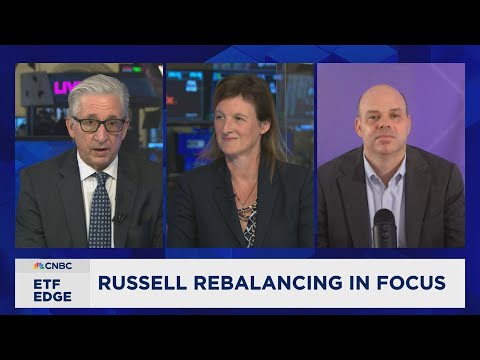
FTSE Russell switches to a twice-a-year index rebuild for the first time since 1989, and newly public SpaceX joins the Russell 1000.

In 3 days: Rebuilt indexes start trading

Overview

After the closing bell on Friday, June 26, FTSE Russell finished rebuilding the US stock indexes that guide trillions of dollars in investment funds. For the first time since 1989, it will now do this twice a year instead of once.

The new schedule forces index-tracking funds to buy and sell more often to match each updated membership list. This year's rebuild also pulled in SpaceX, the newly public rocket company, which analysts estimate triggered $22 billion to $27 billion in forced buying.

Why it matters

Trillions in retirement and index funds now rebalance twice a year instead of once, moving stock prices around on two days a year rather than one.

Questions about this story

No questions yet — be the first to ask.

Key Indicators

62
Companies added to Russell 1000
About 62 firms joined the large-company index in this rebuild.
~$10.6T
Assets tracking Russell US indexes
Money benchmarked to these indexes must follow each membership change.
$22–27B
Estimated forced buying of SpaceX
Index funds had to buy this much SpaceX stock to match the new lineup.
2x
Rebuilds per year
The index now reconstitutes in June and December, up from once a year.
~$1.7T
SpaceX private valuation
SpaceX's pre-IPO valuation made it large enough for fast-track entry.

Voices

Curated perspectives — historical figures and your fellow readers.

Ever wondered what historical figures would say about today's headlines?

Sign up to generate historical perspectives on this story.

Play

Exploring all sides of a story is often best achieved with Play.

Log in to play. Track your picks, climb the leaderboards. Log in Sign Up
Predict 4 ways this could play out. Contrarian picks score more — points lock when the scenario resolves. Log in to play
Higher or Lower Two numbers from this story. Guess which is bigger. 5 rounds to set a streak. Log in to play
Connections Sixteen names from the news. Find the four hidden groups of four. Log in to play

People Involved

Organizations Involved

Timeline

November 2025 June 2026

6 events Latest: In 3 days
Tap a bar to jump to that date
  1. Rebuilt indexes start trading

    Latest Market

    The recalibrated Russell indexes begin trading at the Monday open, with index funds matching the new lineup.

  2. First semi-annual reconstitution takes effect

    Today Rule Change

    FTSE Russell finalizes the rebuild after the close. About 62 companies join the Russell 1000, and SpaceX enters the indexes.

  3. Updated lists confirm SpaceX's fast-track entry

    Disclosure

    Newly public SpaceX qualifies for the Russell 1000 under the rule for very large new listings.

  4. Draft membership lists go public

    Disclosure

    FTSE Russell posts preliminary additions and deletions, then updates them weekly through mid-June.

  5. Rank Day sets the eligibility list

    Procedural

    FTSE Russell ranks companies by market value at the close to decide who qualifies for each index.

  6. FTSE Russell locks in twice-yearly schedule

    Rule Change

    An index notice confirms the rebuild will move to June and December, the first semi-annual cadence since 1989.

Historical Context

3 moments from history that rhyme with this story — and how they unfolded.

1989

Russell shifts to an annual rebuild (1989)

FTSE Russell's predecessor moved the index rebuild from twice a year to once, in June. The annual cadence then held for more than three decades as index funds grew from a niche product into a market force.

Then

The single June rebuild became a fixed event on every trader's calendar.

Now

Reconstitution day grew into one of the year's highest-volume sessions as passive money ballooned.

Why this matters now

The 2026 change reverses a 37-year-old decision, returning to the twice-a-year rhythm the index left behind in 1989.

December 2020

Tesla joins the S&P 500 (December 2020)

S&P Dow Jones added Tesla to the S&P 500 in one step, given its size. Funds tracking the index had to buy roughly $80 billion of Tesla stock to match the new weighting, producing record volume on the inclusion day.

Then

The S&P 500's closing auction that day was the largest on record at the time.

Now

It showed how a single large addition can force tens of billions in mechanical buying.

Why this matters now

SpaceX's entry works the same way: a giant new member triggers forced buying that index funds cannot opt out of.

July 2017

S&P Dow Jones bars new multi-class shares (2017)

After Snap's IPO offered shares with no voting rights, S&P Dow Jones stopped adding new companies with multiple share classes to its main indexes. The move responded to investor pushback over governance.

Then

Snap and similar dual-class firms were kept out of the S&P 500.

Now

It set a precedent for index providers weighing governance, not just size, in inclusion rules.

Why this matters now

It shows index providers can change entry rules under investor pressure, the path some pension funds now urge over SpaceX.

Sources

(6)