
Pull to refresh
Logo
Salt Lake City proceeds with scaled-down sewage odor filter after west-side backlash

Salt Lake City proceeds with scaled-down sewage odor filter after west-side backlash

Built World Salt Lake City, UT local

City cut the facility's height in half after Poplar Grove residents objected; construction is now under way.

Today: Biofilter takes shape on west side

Overview

Updated 1 hour ago

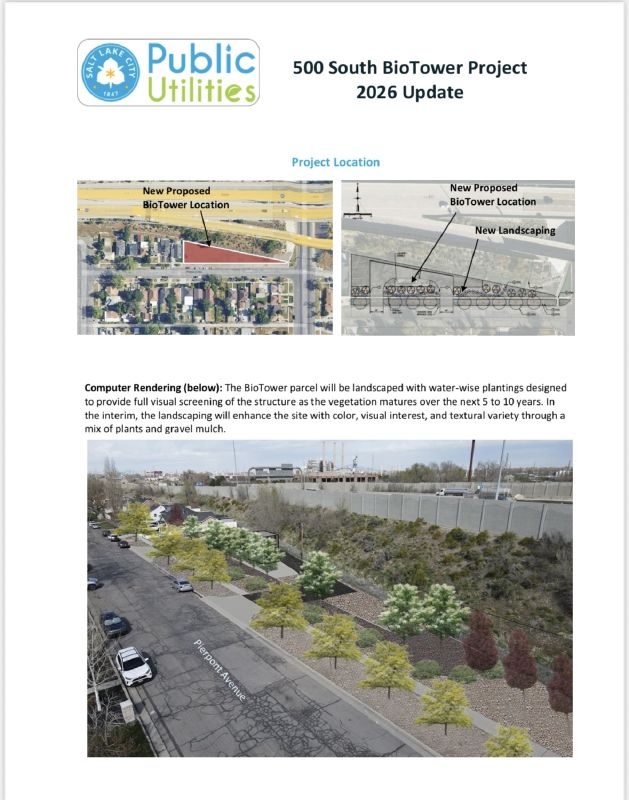
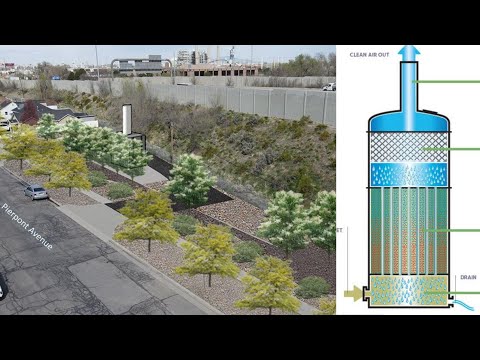
A 30-foot sewage 'biotower' that Salt Lake City planned for Poplar Grove is now a 15-foot biofilter, and construction is visibly under way on the west side. The change came after neighbors objected for months to the tower's height, health risks, and what they called a history of dumping industrial infrastructure on their neighborhood.

The facility at 1020 West Pierpont Avenue will filter hydrogen sulfide from sewer lines that produce rotten-egg smells and corrode pipes. The compromised design, shorter and chimney-free with carbon filters, satisfied neither side, but it let the project move forward.

Why it matters

Residents forced the city to halve the facility; the question now is whether the smaller biofilter performs without the odors neighbors fear.

Questions about this story

Free account needed to ask — your question is kept and asked for you right after sign-up. Answers are public.

No questions yet — be the first to ask.

Key Indicators

50%
Reduction in structure height
City cut the facility from 30 to 15 feet after community backlash.
99.5%
Hydrogen sulfide removal rate
The biofilter's bacteria break down up to 99.5% of hydrogen sulfide from sewer air.
9
Community meetings before construction
City held on-site visits, info sessions, council presentations, and advisory group meetings in early 2026.

Voices

Curated perspectives — historical figures and your fellow readers.

Ever wondered what historical figures would say about today's headlines?

Sign up to generate historical perspectives on this story.

People Involved

Organizations Involved

Timeline

January 2026 September 2026

9 events Latest: Today
Tap a bar to jump to that date
  1. Biofilter takes shape on west side

    Today Construction

    Site grading and concrete pours proceed as the redesigned facility moves toward completion.

  2. Construction begins on filter site

    Construction

    Crews start roadway and utilities work to connect to the 1200 West trunk line.

  3. City swaps biotower for biofilter

    Policy

    Utilities drop the chimney, cut height to 15 feet, and rebrand the facility a biofilter.

  4. Advisory group meets on technical questions

    Engagement

    Residents question safety; experts explain how the biofilter would operate.

  5. Advisory group holds first meeting

    Engagement

    Volunteer residents join a public advisory group to inform project design.

  6. Project paused after backlash

    Policy

    After community complaints, city says biotower project is on hold temporarily.

  7. Poplar Grove council hears biotower plans

    Engagement

    Utilities present the biotower to the neighborhood council; opposition grows.

  8. Community meeting introduces biotower plan

    Engagement

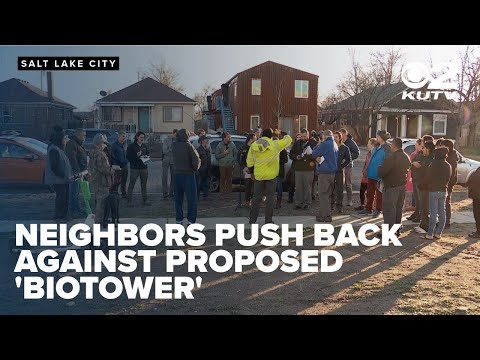
    City presents a 30-foot biotower to residents; odors, health, and property concerns raised immediately.

  9. City inspects proposed biotower site

    Engagement

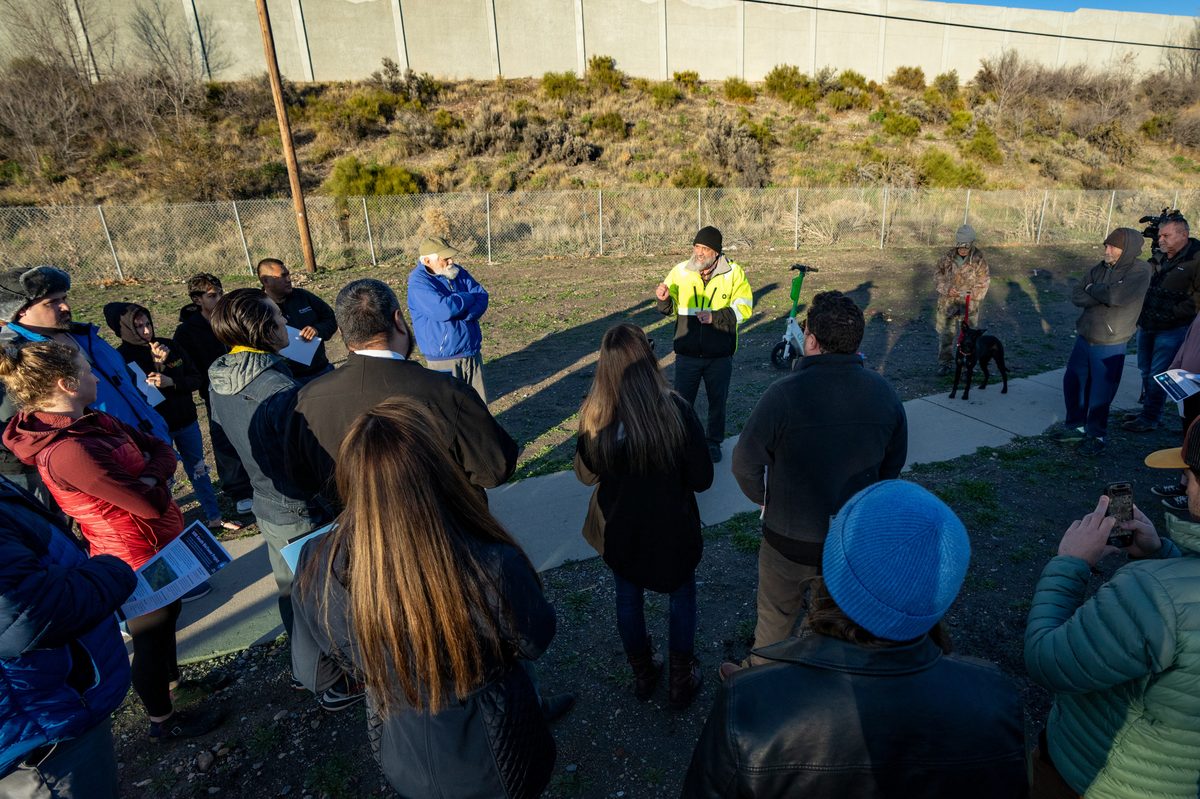
    Utilities hold on-site visit at Pierpont Avenue site for the planned odor-control tower.

Scenarios

1

Biofilter operational by spring 2027

Likely Resolves by Q2 2027

Discussed by: Salt Lake City Public Utilities project schedule

The city's project page says the biofilter equipment arrives in January 2027 and that installation, connection, and testing finish by spring 2027. If crews stay on schedule, the facility goes live around mid-2027 with carbon filters and landscaping in place.

2

Legal challenge halts or relocates the biofilter

Unlikely Resolves by Jan 31, 2027

Discussed by: Alex Ward (project opponent)

Ward argued utilities must meet a higher legal burden to prove the facility is safe. If the Salt Lake City Council or a court accepts that argument, the project could be halted or moved. A judge would need to grant an injunction or the council would need to vote against the current site.

3

Construction delays push completion past spring 2027

Possible Resolves by Q3 2027

Discussed by: SLCDPU project schedule (equipment delivery risk)

The city has said most sitework finishes by October 2026, then construction pauses until the filter equipment arrives in January 2027. Equipment delivery delays or winter weather could push installation and testing into fall 2027 or later.

Historical Context

3 moments from history that rhyme with this story — and how they unfolded.

August 1978

Love Canal (1978)

In Niagara Falls, New York, chemical waste buried by Hooker Chemical decades earlier surfaced in a neighborhood built above it. Heavy rains and construction disturbed the buried solvents, and residents reported health problems. In August 1978, President Carter declared a federal emergency, the first for a man-made disaster.

Then

Families were evacuated and the Love Canal school closed; the company and government faced decades of lawsuits.

Now

The episode established that buried industrial waste near homes is a serious health threat and gave the public reason to distrust utility and chemical facilities.

Why this matters now

It explains why Poplar Grove residents want independent studies and why odor or chemical infrastructure near homes faces resistance.

September 1982

Warren County PCB landfill (1982)

North Carolina buried soil contaminated with polychlorinated biphenyls (PCBs) in a landfill in Warren County, then one of the poorest counties in the state and majority Black. Residents protested for weeks; more than 500 people were arrested while trying to block dump trucks.

Then

The landfill was completed and capped, and the soil was later removed for treatment.

Now

The protests are credited with launching the environmental justice movement, which showed that polluting facilities were often sited in low-income communities of color.

Why this matters now

Ken Funk's complaint that the west side 'gets the short end of the stick' echoes the environmental justice pattern of placing unwanted infrastructure in lower-power neighborhoods.

1985-1998

Deer Island treatment plant (1985-1998)

Under a federal court order, Boston built one of the largest sewage treatment plants in the U.S. on Deer Island in Boston Harbor. The project drew years of complaints about odors and siting. The plant opened piece by piece in the mid-1990s and now treats over a billion gallons of wastewater a day.

Then

The plant resolved Boston's long-standing harbor pollution problem, though construction was controversial and costly.

Now

It showed that large sewage infrastructure can be built and operated with odor controls, but only after sustained public pressure and legal oversight.

Why this matters now

It's a precedent that utility infrastructure can be redesigned to limit local impacts, the same goal Poplar Grove residents pushed for with the biofilter.

Sources

(4)