
Pull to refresh
Logo
Appeals court dismisses LDS tithing fraud class action as too late

Appeals court dismisses LDS tithing fraud class action as too late

Rule Changes Salt Lake City, UT local

10th Circuit ruling likely ends civil suits from 2019 whistleblower report

3 days ago: Salt Lake Tribune reports on ruling

Overview

Updated 56 minutes ago

A federal appeals court affirmed Monday that a class-action lawsuit accusing the Church of Jesus Christ of Latter-day Saints of hiding how it spends tithing money was filed too late. The 10th Circuit ruled the plaintiffs should have known about the church's alleged financial misuse after a 2019 IRS whistleblower report made national headlines.

The ruling doesn't decide whether the church committed fraud. It says the three-year statute of limitations expired years before the suit was filed. That likely closes the book on civil tithing cases, leaving only the IRS's long-running whistleblower review.

Why it matters

Donors who believe the LDS Church misused tithing funds now have no civil remedy, and the 10th Circuit set a precedent that whistleblower reports put potential plaintiffs on notice.

Questions about this story

Free account needed to ask — your question is kept and asked for you right after sign-up. Answers are public.

No questions yet — be the first to ask.

Key Indicators

$1.4B
Donated funds plaintiffs say went to City Creek Mall
The class action alleged the church used tithing money for a shopping mall, not charity.
$100B+
Ensign Peak Advisors portfolio size
The church's investment arm manages this portfolio, per the 10th Circuit opinion.
$5M
SEC fine against church in 2023
The Securities and Exchange Commission fined Ensign Peak without requiring an admission of wrongdoing.
3 years
Utah statute of limitations for fraud
Plaintiffs filed in October 2023; the clock had started before October 2020.

Voices

Curated perspectives — historical figures and your fellow readers.

Ever wondered what historical figures would say about today's headlines?

Sign up to generate historical perspectives on this story.

Play

Exploring all sides of a story is often best achieved with Play.

Most of these play right now — no account needed. Sign up to save scores, keep a streak, and unlock Debate and Predict. Log in Sign Up
Predict 3 ways this could play out. Back the one you believe — contrarian picks score more when a scenario has a resolution date. Log in to play

People Involved

Organizations Involved

Timeline

December 2019 September 2026

8 events Latest: 3 days ago
Tap a bar to jump to that date
  1. Salt Lake Tribune reports on ruling

    Latest Media

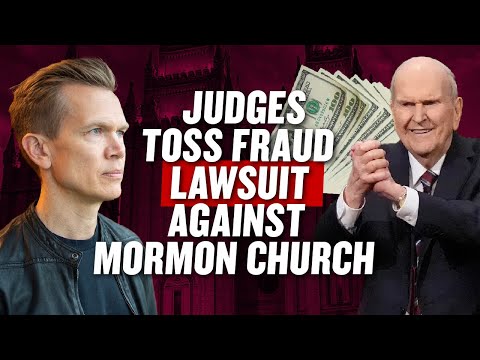
    The Tribune reported the appeals court affirmed dismissal, asking whether this ends the whistleblower's allegations.

  2. 60 Minutes airs tithing investigation

    Media

    A 60 Minutes segment detailed the whistleblower's allegations, introducing many donors to the claims for the first time.

  3. SEC fines LDS Church $5 million

    Regulatory

    The SEC fined Ensign Peak Advisors $5 million over underreporting of the church's investment portfolio, without admitting wrongdoing.

  4. National media coverage of whistleblower report

    Media

    The Washington Post, Wall Street Journal, Forbes, Fox News, and CNN covered the report, making it widely known.

  5. Whistleblower report filed with IRS

    Whistleblower

    Former Ensign Peak employee David Nielsen filed a report alleging the LDS Church underreported assets and misused tithing funds.

Historical Context

3 moments from history that rhyme with this story — and how they unfolded.

1997-2000

Bishop Estate (1997-2000)

The Bishop Estate, which funds Hawaii's Kamehameha Schools, held $10 billion in charitable assets. In 1997, the state attorney general began investigating its five trustees for misusing funds for personal and political purposes.

Then

Courts removed all five trustees and ordered restitution; the trust was restructured.

Now

The case became a template for how large charitable trusts can be held accountable through legal action, even when no criminal charges are filed.

Why this matters now

Both cases involve enormous charitable institutions accused of diverting donor funds. The Bishop Estate was remedied through court action; the LDS Church's tithing suits were barred by the statute of limitations.

2004-2007

Vioxx litigation (2004-2007)

Merck faced thousands of lawsuits over its painkiller Vioxx, which was linked to heart attacks. Courts allowed many claims to proceed because Merck had allegedly concealed data about the risks, meaning the statute of limitations didn't start until plaintiffs discovered the concealment.

Then

Merck paid $4.85 billion to settle claims, and the drug was pulled from the market.

Now

The cases established that concealed wrongdoing can delay the statute of limitations, but public information can also start the clock.

Why this matters now

In Vioxx, concealment delayed the clock. In the LDS case, the 10th Circuit said the 2019 whistleblower report was so widely publicized that it started the clock, even if plaintiffs missed the coverage.

2009-2012

UBS whistleblower case (2009-2012)

In 2009, UBS paid a $780 million settlement and turned over client data to the U.S. after a whistleblower exposed its cross-border tax evasion. The whistleblower, Bradley Birkenfeld, received a $104 million award, the largest in IRS history.

Then

UBS paid the penalty and disclosed thousands of account holders; Birkenfeld received a record award.

Now

The case demonstrated that a single IRS whistleblower can force a major institution to change its financial practices.

Why this matters now

David Nielsen's whistleblower report to the IRS follows the same mechanism. But unlike UBS, the LDS Church has not faced a tax penalty, and the civil suits stemming from the report have now been dismissed.

Sources

(3)